
Polite requests in English: three starting points, a reason and an easy out
Published Updated
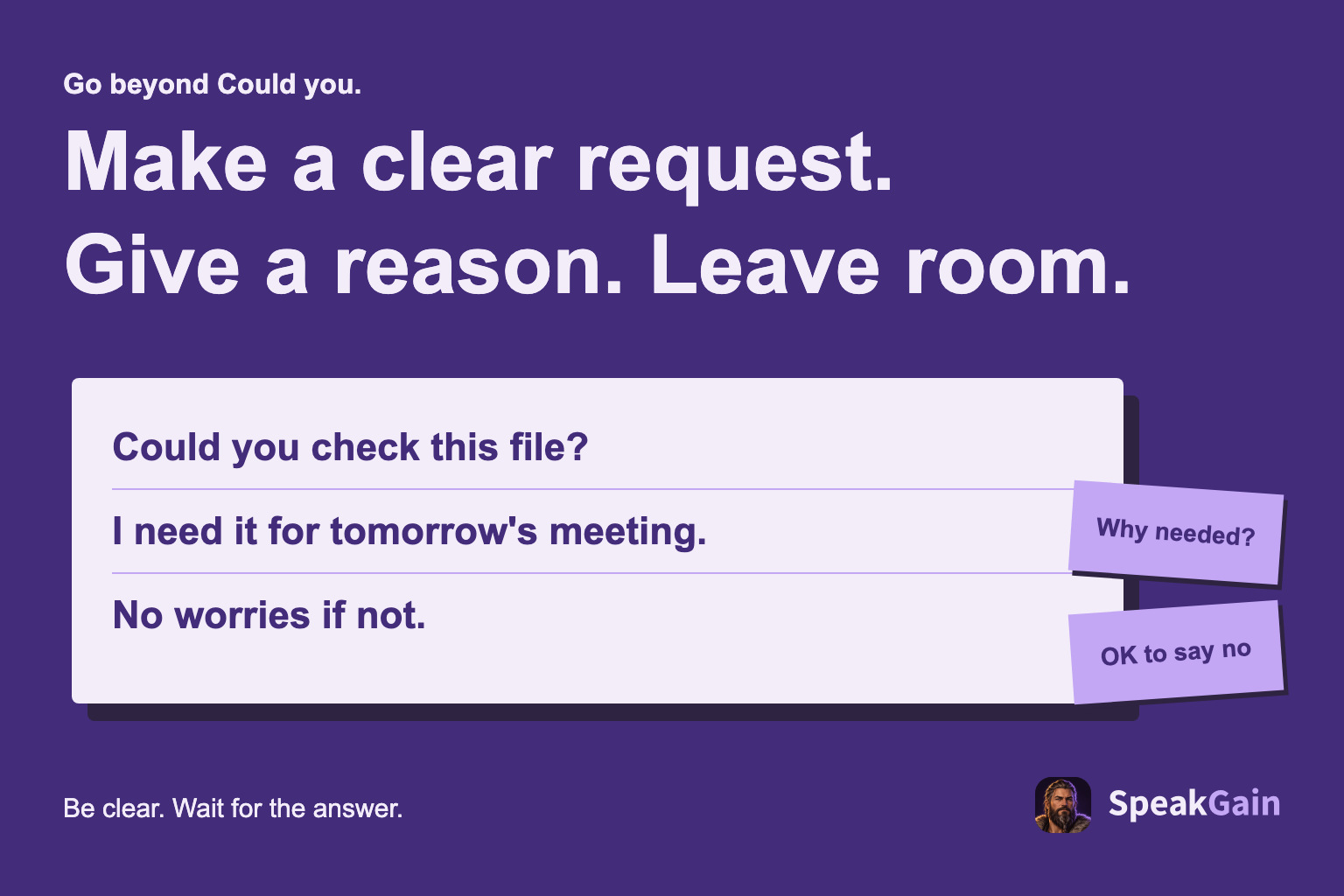
To make a request in English, start with Can you ~? for a familiar request, Could you ~? as a useful default, or Would you mind ~ing? when you want an indirect request that acknowledges the other person’s effort. Add a reason with because ~ or I need it for ~. For an optional favour, give an easy out: if you have time or No worries if not.
If you need to discuss prices, delivery or terms, use English negotiation practice to adapt one sentence per stage to your company and rehearse a reply to push-back before the meeting.
For requests on a trip, use travel English phrases and departure practice to rehearse luggage storage and clarification with your own plans.
Our editorial recommendation is to learn Could you plus one clear reason first. A longer sentence does not automatically suit every situation. I was wondering if you could ~. is another opening for a bigger favour or a discussion about changing plans.
For everyday shower and laundry requests, English for a homestay shows how to personalise a question and check the reply.
1. Choose a starting point
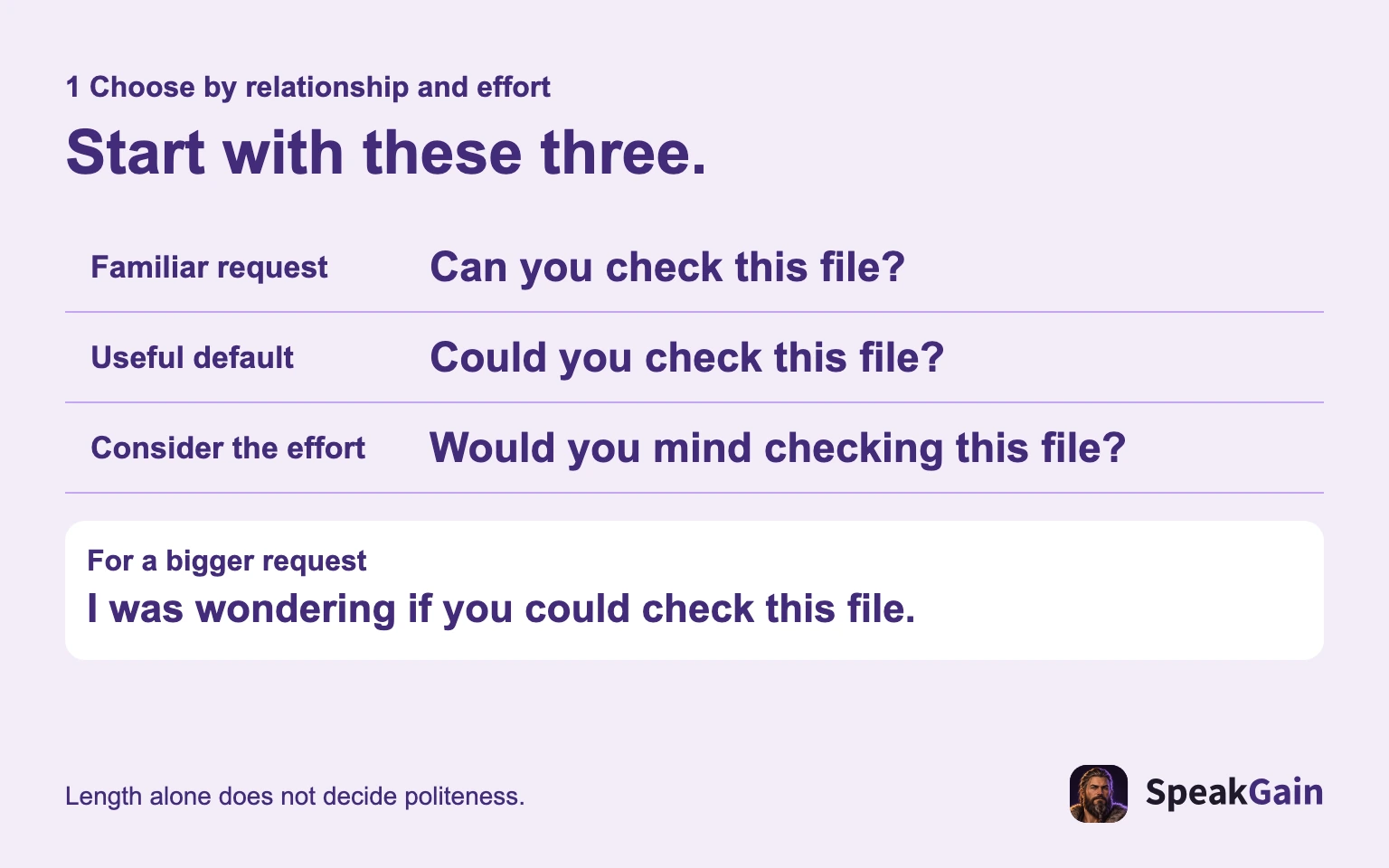
- Can you check this file? — a familiar request to a friend or close colleague.
- Could you check this file? — a neutral starting point for a colleague, manager or client.
- Would you mind checking this file? — an indirect way to ask someone to spend time checking it.
- I was wondering if you could check this file. — a more tentative opening for a larger request.
Cambridge’s Requests guide treats Can you as relatively informal and gives Could you and Would you mind as indirect requests. Its wondering entry includes polite, more formal requests. These three levels are our practical starting guide, not a universal ranking of politeness.
Get the grammar and the person doing the action right
Use the base verb after Can you or Could you: Could you send me the file? Use -ing after Would you mind: Would you mind checking the numbers?; not “mind to check”. Cambridge’s Mind guide explains this pattern.
Would you mind if I opened the window? asks permission for me to open it. Would you mind opening the window? asks you to open it. Keep this distinction clear before adding longer expressions.
2. Consider the relationship and the effort
A job title does not determine the whole sentence. A brief question to a familiar manager can be simple; asking a friend to spend a whole weekend helping deserves an explanation and a genuine chance to decline.
Examples by person
- Colleague: Could you check the numbers on page two? Specify which part needs checking.
- Manager: Could you give me some feedback on this draft? Explain what you want feedback on.
- Client: Could you please send the updated file? Identify the version and deadline.
- Shop assistant: Could you help me find this size? Keep the practical task clear.
- Friend: Can you help me carry this bag? For a bigger favour, ask about availability too.
- Host family: Would you mind showing me how to use the washing machine? Allow for their schedule.
If someone is busy, Is now a good time? may help more than a longer opening. We favour a clear scope over extra polite words. Do not call a full review “a quick check” unless that fairly describes the work.
3. Place please with the whole sentence in mind
Could you check this file, please? and Could you please check this file? are both possible. Cambridge’s Please and thank you describes the end as a usual position with can, could and would. Please can also appear at the beginning or in the middle; those positions can make a request stronger, especially with stress.
Please send me the file. is a valid request, and imperative + please also appears in instructions. It is not always rude. However, a British Council teacher response about work emails describes Please send me… as rather direct in that context and suggests I would appreciate it if you could… . For an unfamiliar work contact, our recommendation is to start with Could you please. Adding please repeatedly does not replace listening to the answer.
4. Add a reason and a genuine easy out
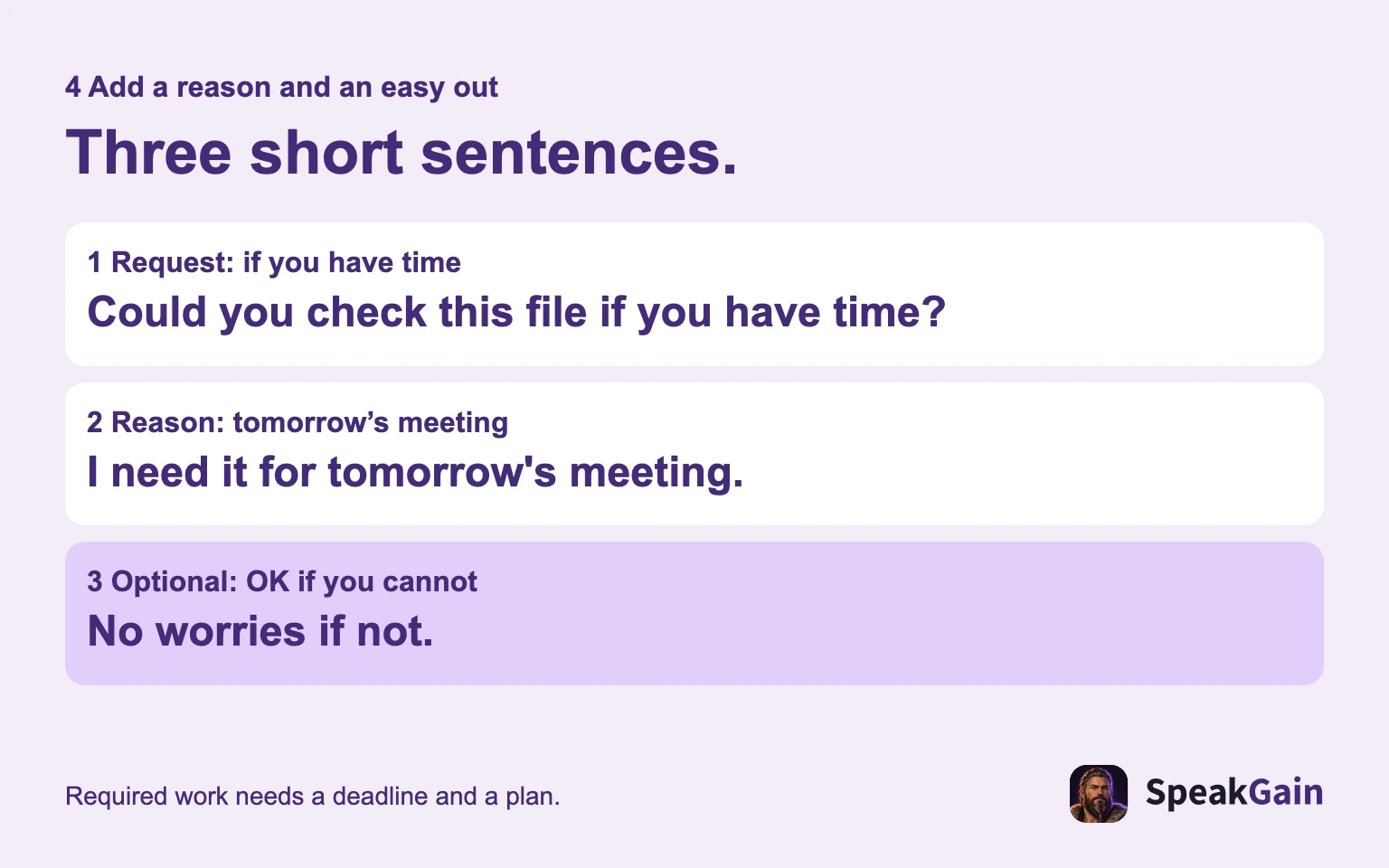
Could you check this file if you have time?
I need it for tomorrow’s meeting.
No worries if not.
because takes a clause: Could you check this file because I’m not sure about the numbers? With I need it for, name the purpose: tomorrow’s meeting, for example. Here I need it explains your situation after the request. We recommend this for clarity; we do not promise that adding a reason makes people agree.
Only say “if you have time” or “no worries if not” when the favour is actually optional. For necessary work, state the deadline and how to discuss a problem: Could you send it by 3 p.m.? I need it for today’s meeting. If that isn’t possible, please let me know. Include the date and time zone when needed. Decide whether a refusal is acceptable or whether you need to negotiate a new time.
5. Write an email people can act on
Could you please ~? is a useful starting point. I’d appreciate it if you could ~. is a more formal option, also supported by the British Council response above. Keep it after appreciate and you could after if.
A client email example
Subject: Updated figures for Friday’s meeting
Dear Alex,
Could you please send the updated sales figures by Thursday afternoon? I need them for Friday’s meeting.
If that timing is difficult, please let me know when you could send them.
Thank you for your help.
Best regards, Kenta
This is our original example using the request pattern. It identifies the figures, the purpose, the deadline and the next step if timing is difficult. Add specific dates for your real situation. You can replace the first request with I’d appreciate it if you could send the updated sales figures by Thursday afternoon. Follow your organisation’s greeting and sign-off conventions.
Choose a closing for the actual purpose instead of translating a fixed Japanese formula: see ways to express yoroshiku onegaishimasu. After receiving the file, practise a specific thank-you with saying thank you in English.
6. Reply with what you can do
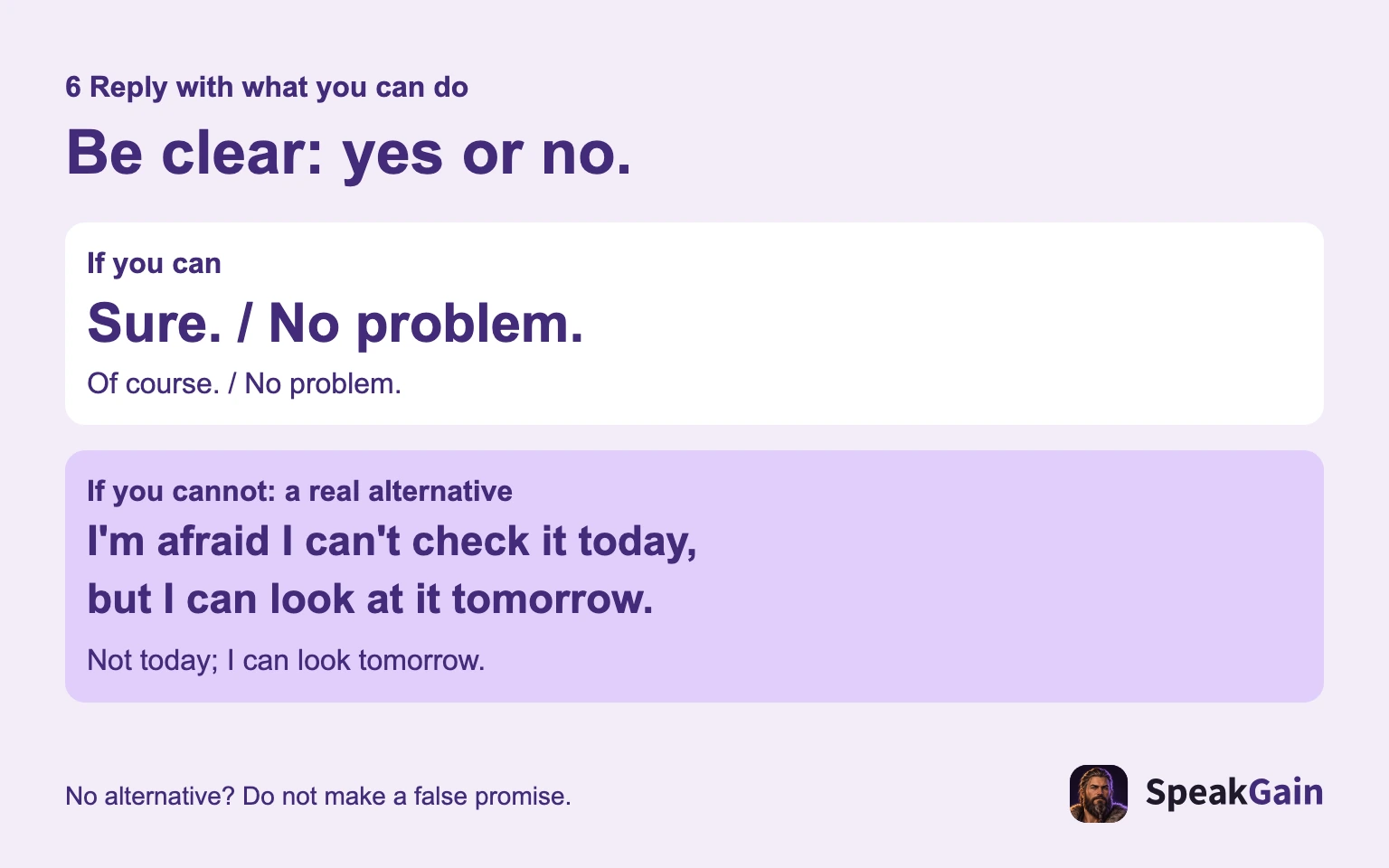
Sure. and No problem. accept a request. You can add timing: Sure. I can check it after lunch. To decline with a real alternative: I’m afraid I can’t check it today, but I can look at it tomorrow. Cambridge’s Ventures unit includes Sure and No problem as replies to requests.
With Would you mind, mind means object to or be bothered by something. Not at all. I can help. makes acceptance clear. A bare Yes can leave your intention unclear. Here I’m afraid introduces unwelcome news, not fear. If you have no alternative, do not invent a promise just to add but. For Sorry and Excuse me, see apologies in English.
7. In a shop, start with the item and please
A coffee, please. or Can I get a coffee, please? can be enough for an order. Cambridge also gives item + please when choosing a drink. An ordinary menu order does not need the same explanation as a substantial favour. For sizes, takeaway and extra items, use ordering in English.
8. Hear and say Kenta’s request
Kenta is a fictional office worker. He is preparing tomorrow’s meeting file and wants Sam, a colleague, to check the numbers on page two. Sam is busy, so Kenta decides that this check is optional. He practises one request, one reason and one easy out, separately at first.
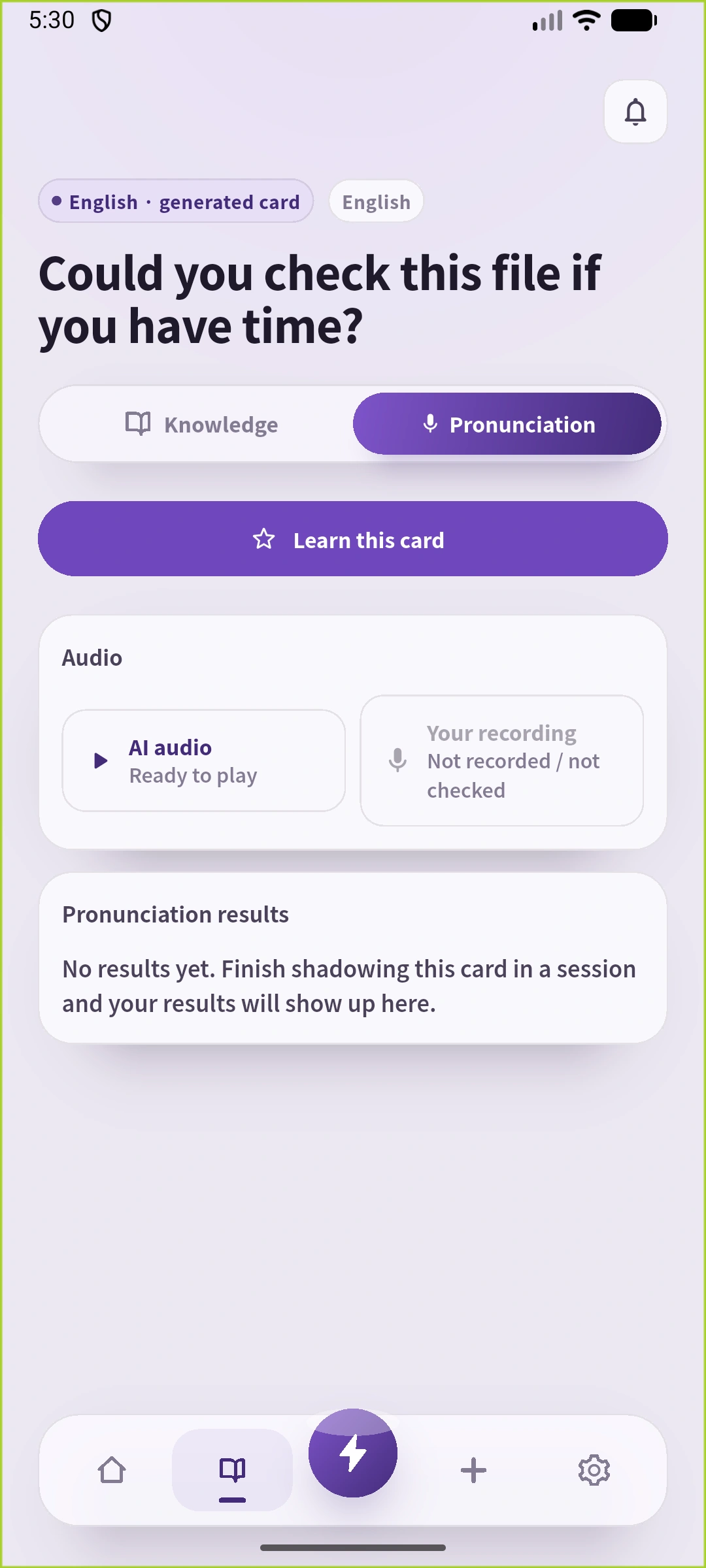
Save the three English sentences below as three cards in SpeakGain’s Create screen. The screenshots use the English interface; they show entering your sentence and playing the saved sentence. Listen to each recording made with SpeakGain’s Deep-voiced Viking, then say it aloud. Aim to communicate the request smoothly rather than imitate that particular voice.
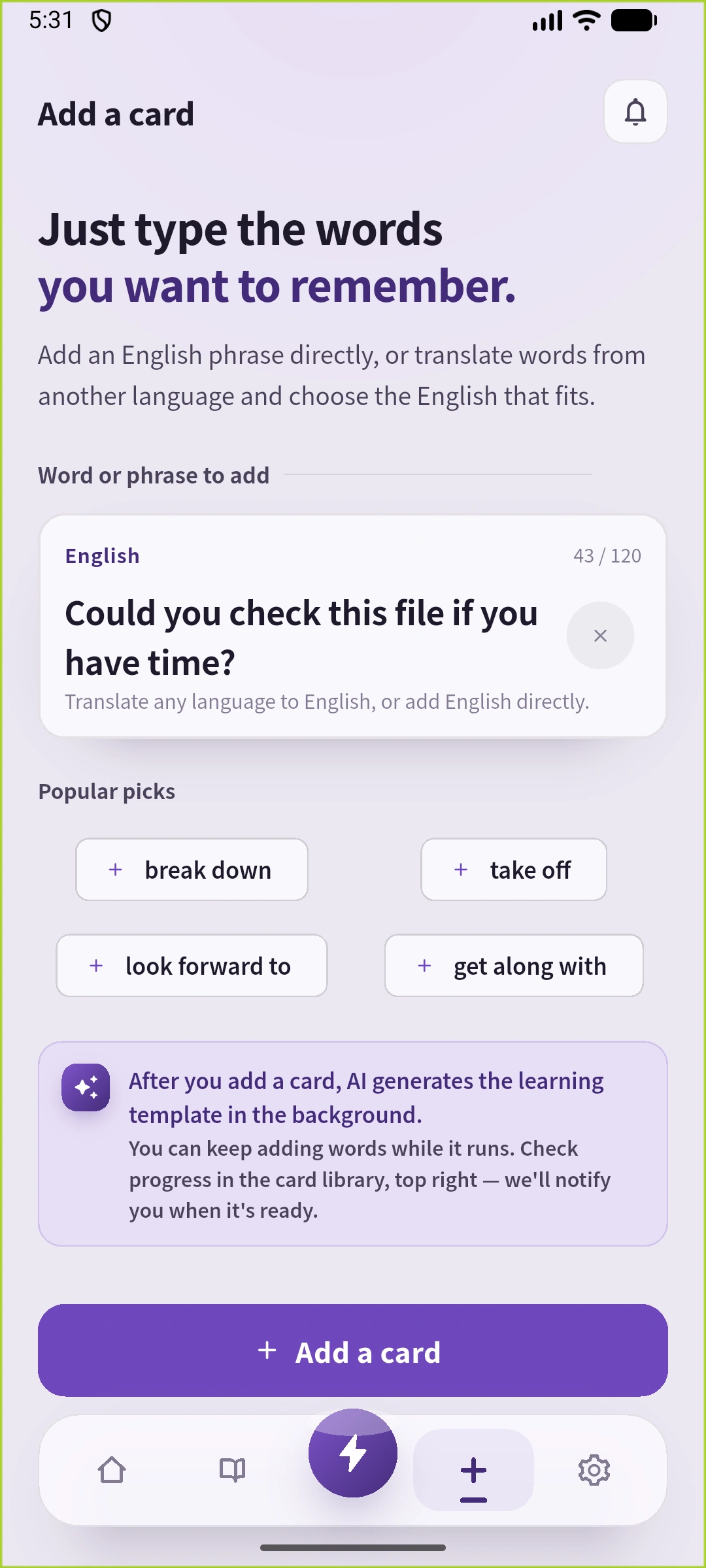
Could you check this file if you have time? — Could you check this file when you have time?
I need it for tomorrow's meeting. — I need the file for tomorrow's meeting.
No worries if not. — It is fine if you cannot do it.
Hide the English and recall each line from the situation: “ask a colleague, if time allows”, “needed for tomorrow’s meeting”, “fine to decline”. Check the sentence you could not recall, then hide it again. Karpicke and Roediger’s 2008 study found an advantage a week later from continued retrieval after first success in university students learning foreign-language word pairs. It did not directly test request conversations or SpeakGain. Our practice suggestion applies that finding cautiously: try recalling rather than only rereading.
If Sam says Sure. I can check it after lunch., Kenta thanks him and waits. If Sam says I’m afraid I can’t today., Kenta accepts that and checks another way. The point is to agree on what is possible. Tomorrow, replace “this file” with “the numbers on page two” and adjust the reason. See a practical English study plan for fitting recall into your routine.
For asking again or requesting directions at an airport, prepare short lines with airport and immigration English.
Questions before your next request
Is Can you always rude to a manager? No universal judgement follows from those two words alone. Use Could you if the relationship is unclear. Is please in the middle always less polite? No; position, emphasis and context matter. Can a client decline? If there is a required deadline, ask them to contact you about difficulties rather than pretend the task is optional. Should every request start with I was wondering? We recommend keeping it for larger discussions, not every small task.
For your next request, name the action, add a useful reason, and offer an easy out only when you mean it. Then wait for the answer.
Sources
For a phrase that can reassure someone or decline an offer, daijoubu in English shows how to choose a line for checking, reassuring, declining, or asking permission.
When you receive a request, use these ways to say “understood” to accept the task and name your next action.