
What Is SpeakGain? Learn English Phrases with a Character Voice
Published

SpeakGain is an English learning app that turns phrases you want to use into cards you can hear in a chosen character’s voice, say aloud, and review later. Type a sentence you found in a film, book, video, or game to get a card with English audio and an AI explanation. If the English has not come to mind yet, start in your own language and choose an English translation.
Here is what happens from choosing a voice to reviewing one sentence. You can try the voices on this page before deciding which one you would like to hear on your cards.
Start by listening: choose a voice from 15 characters
The voice picker groups nine characters and six World English voices, with male and female filters. Below are three pairs: Vikings, rappers, and Indian English speakers. Press a button to play a sample, press it again to pause, or choose another voice to stop the first.
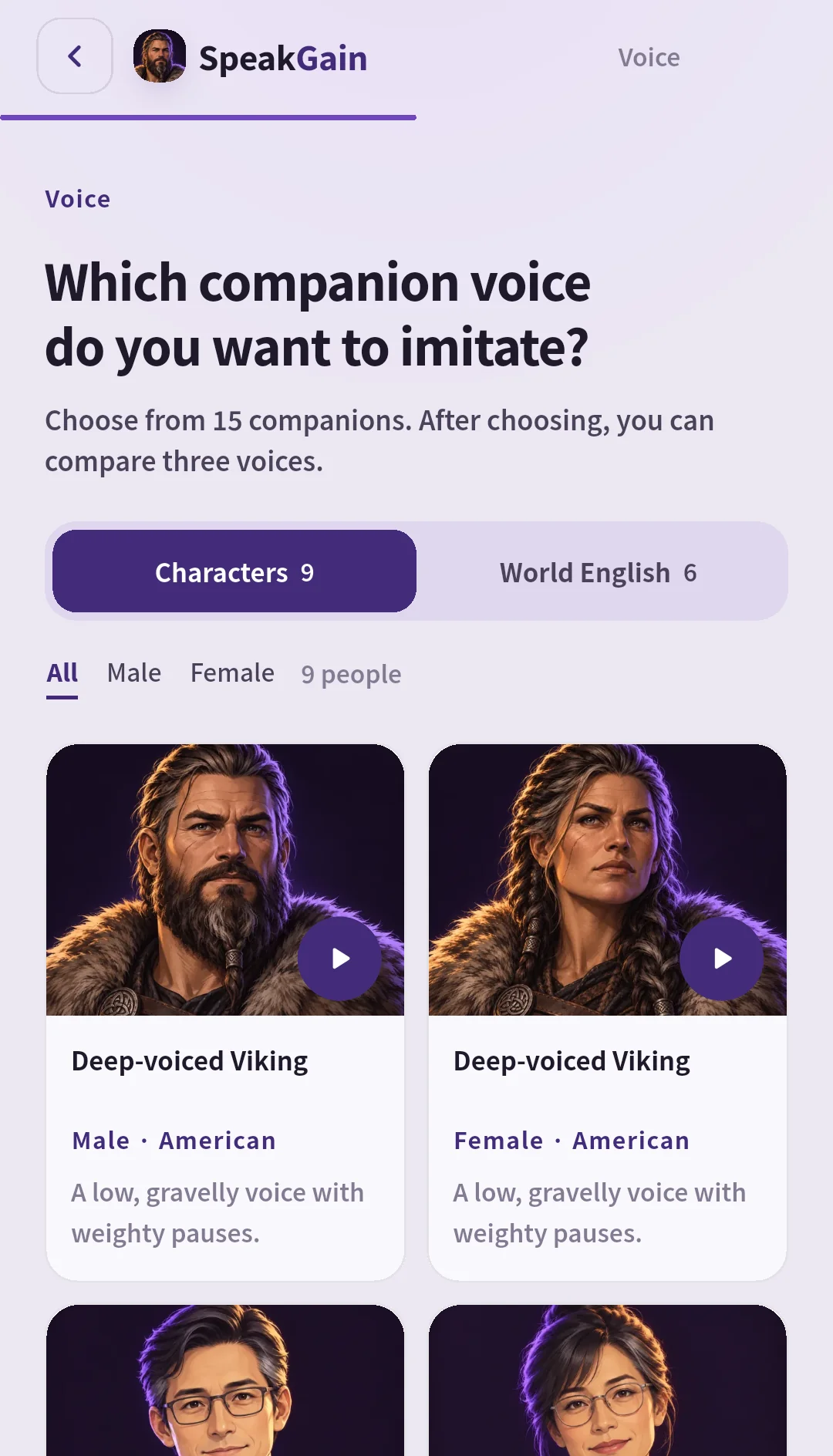
Vikings
 Male
Deep-voiced Viking
A low, gravelly voice with weighty pauses.
 Female
Deep-voiced Viking
A low, gravelly voice with weighty pauses.
Rappers
 Male
Rhythmic rapper
A relaxed voice with a lively rhythm.
 Female
Rhythmic rapper
A relaxed voice with a lively rhythm.
Indian English
 Male
Cheerful Indian founder
Lively intonation and real enthusiasm for ideas.
 Female
Passionate Indian teacher
A warm voice, absorbed in helping ideas land.
The male and female Vikings share a name but sound different, as do the rappers. Other characters include British and Scottish accents. These are selection samples; after you register a phrase, its card audio is generated in the voice of the character you chose.
Save a sentence you actually want to say
Your sentence need not come from a fixed course. Type English you notice in a film, book, Netflix show, YouTube or TikTok video, or game. Pick a short line you could imagine using yourself. For example, “That makes sense.” works as a response when someone’s explanation clicks. The card brings together that sentence, character audio, and an AI explanation of its meaning and structure.
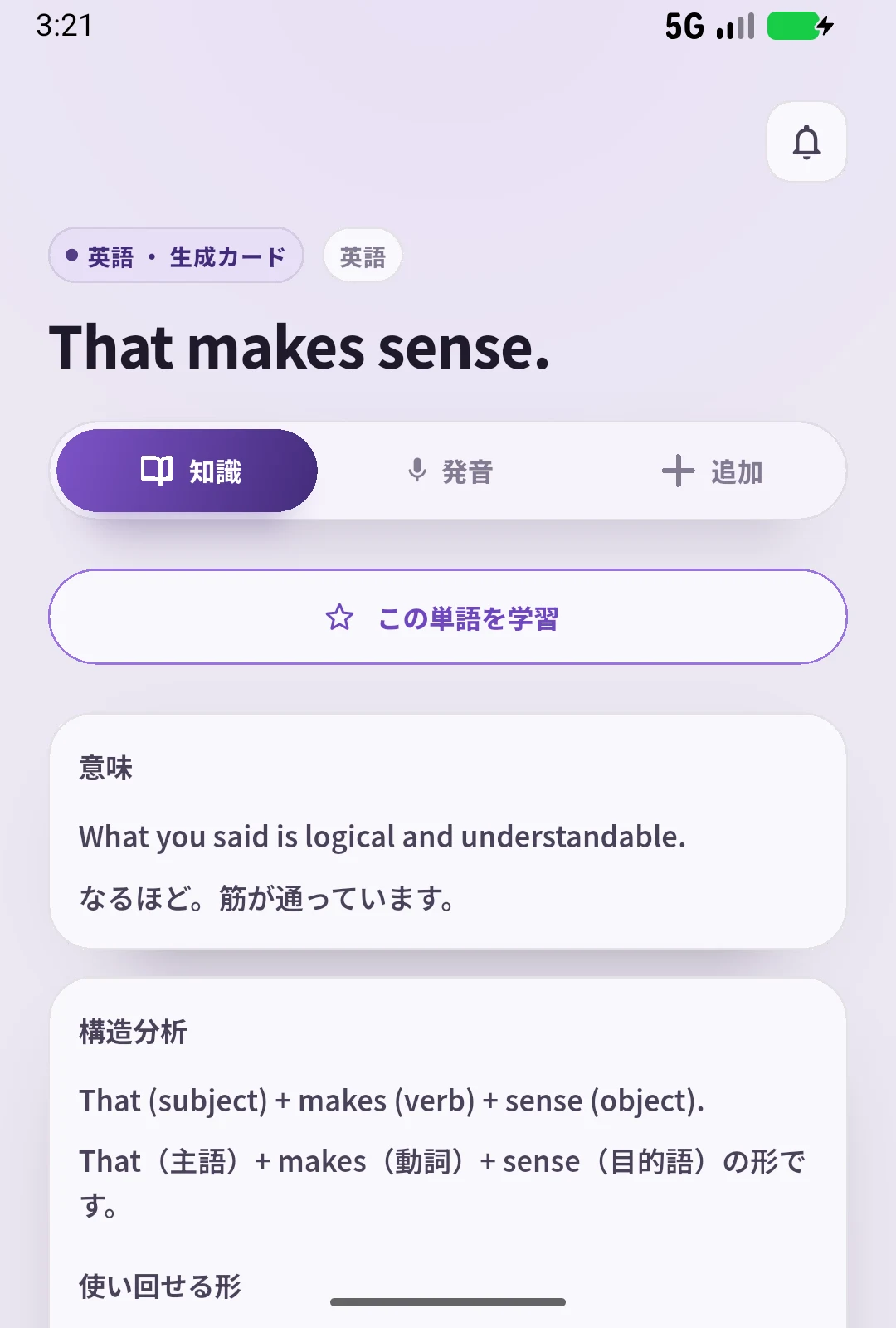
The real card above shows “That makes sense.” Check the wording against the original before saving a line; translated subtitles may not mirror the spoken English. Keeping a small number of useful sentences makes it easier to remember why you chose each one. SpeakGain is not affiliated with the films, books, Netflix, YouTube, TikTok, or games where you may find phrases.
Start in your own language when English will not come
Enter what you want to say in another language. SpeakGain detects non-English input and offers a translation action. It then presents several English candidates with tones such as Polite, Neutral, and Casual. Choose the one that fits your listener and situation before making the card.
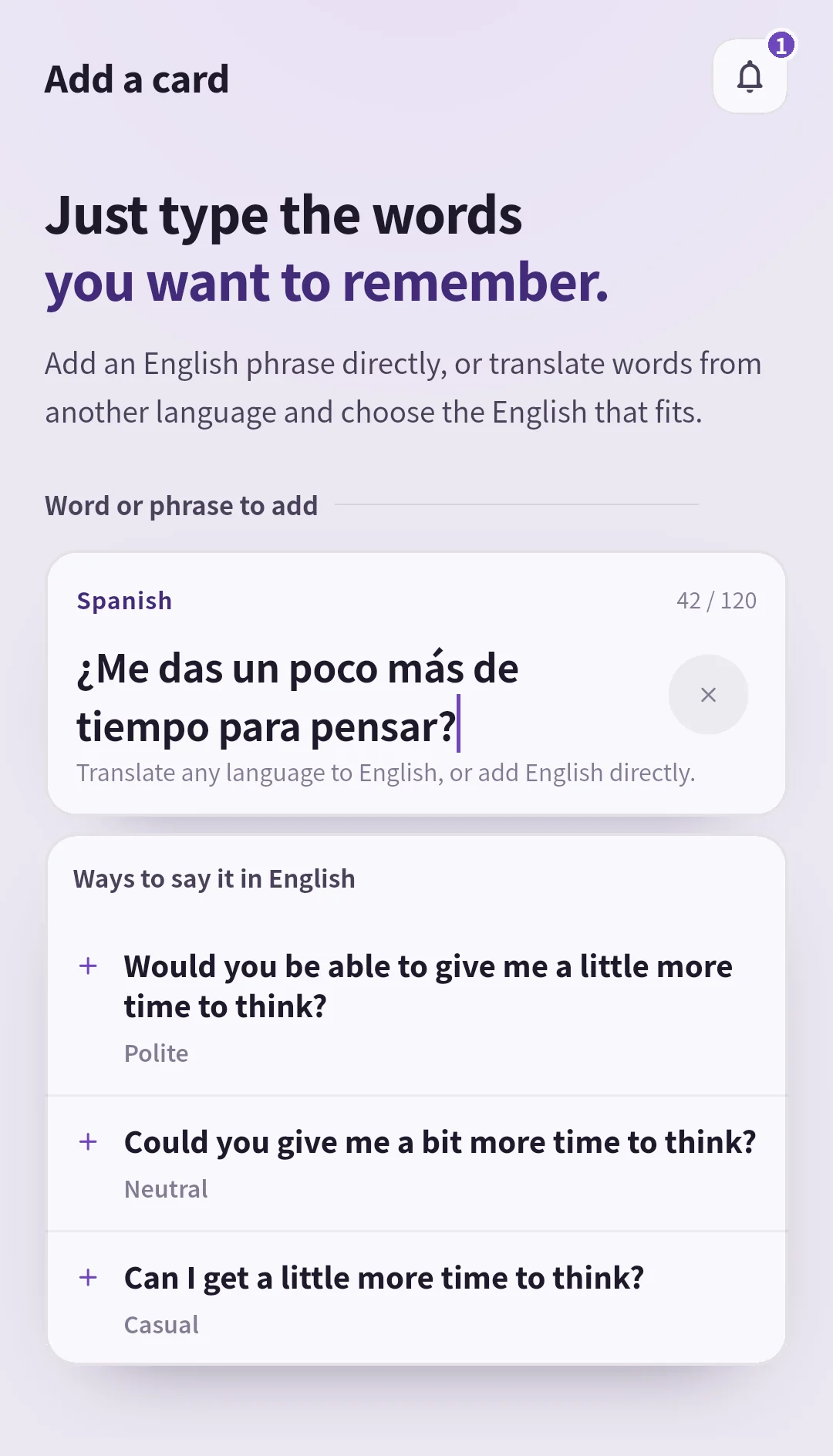
A sentence such as “I’d like a little more time to think” could be a request or a statement, depending on the conversation. Use the suggestions as options, then decide what you intend to say. You can mix this route with saving English you encounter elsewhere.
Listen, speak, and record if you want feedback
Hear the card audio, check the meaning, then say the sentence aloud. Try once while looking at it and again without reading. Recording is optional. If you record, an online pronunciation assessment can show results for individual words. Use that feedback to decide what to listen to and try again; you can still practise with the model audio without recording.
Use FSRS to schedule review
SpeakGain uses the same FSRS algorithm as Anki for review scheduling. When a card appears, try to recall and say the sentence before revealing it. After checking the answer, choose Again, Hard, Good, or Easy. Each choice shows the next interval. The screenshot illustrates one card’s displayed intervals; they are not fixed intervals for every card.
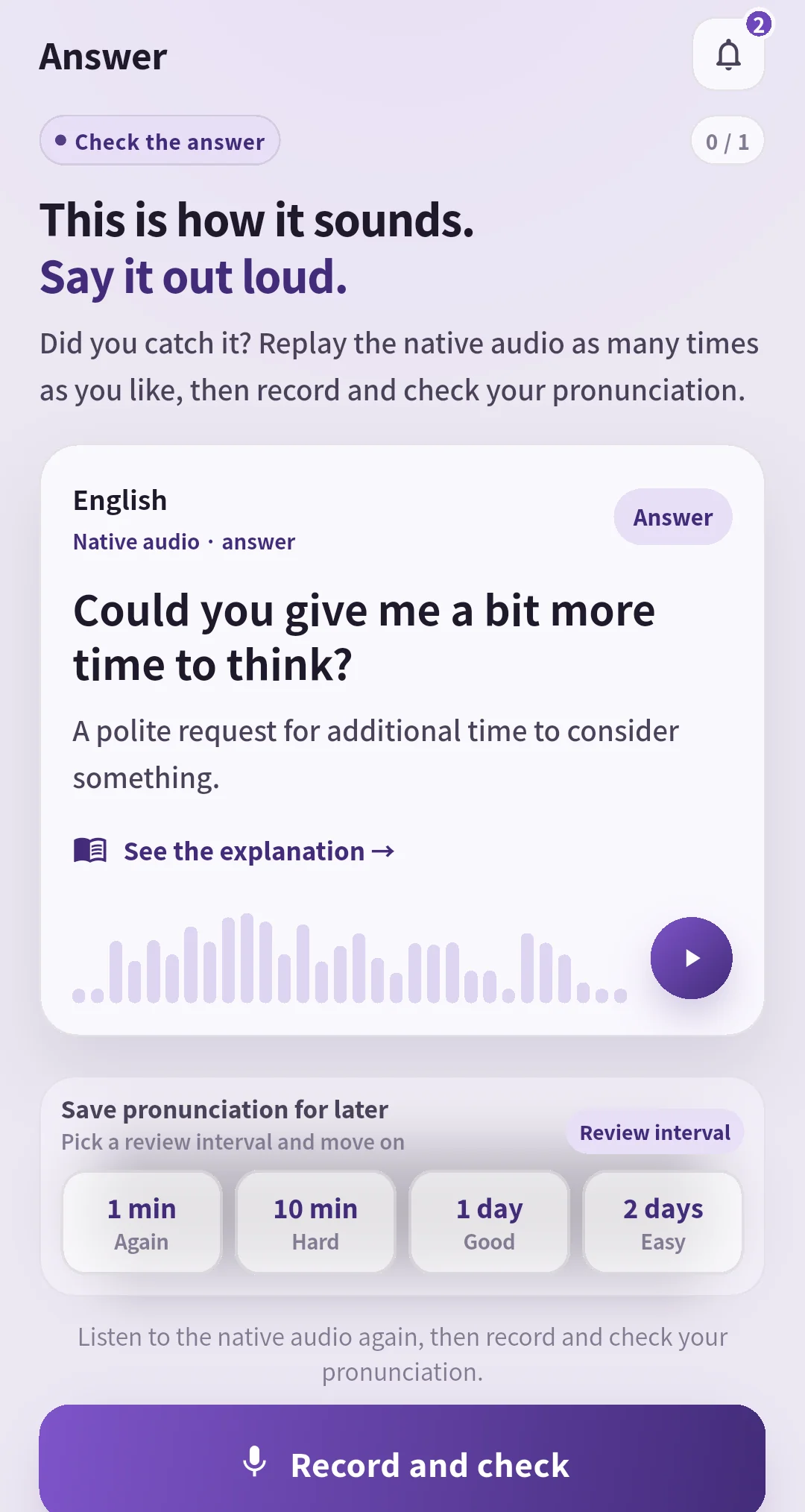
For “That makes sense.”, imagine hearing a friend explain something and answer aloud. If the words do not come, listen to the model, then try again. The schedule tells you when to revisit a card; your practice is to retrieve and say it.
One sentence from discovery to review
Suppose you hear “That makes sense.” in a show. First check the English wording and decide when you would use it. Add it as a card and read the AI explanation. Listen to your selected character, then say the sentence as though replying to someone. Record only if you want pronunciation feedback. When the card returns, recall the situation and speak before looking at the answer. This example is a common phrase, not a quotation from a particular show.
Who is SpeakGain for?
It suits learners who find useful English in things they enjoy and want to say it themselves, rather than just collect it. You can start with one sentence and one voice. If you need a full beginner grammar or vocabulary sequence, use a structured course alongside it. SpeakGain does not replace the source service where you watch or read a work.
Two questions before your first card
Should I memorize a translated suggestion as is?
Check its tone and context first. A request to a friend may sound different from the same request to a stranger. Pick the English candidate that says what you mean.
Must I stick to one accent?
Start with a voice you want to hear repeatedly. Try one sentence with that voice; compare another British, Scottish, or Indian English voice later if you wish.
Try one phrase
Choose one English sentence you found today, or write what you want to say in your own language. Make a card, listen, speak, and say it again when it comes up for review. The store buttons below open the download pages.