
Itadakimasu and gochisosama in English: what to say before and after a meal
Published
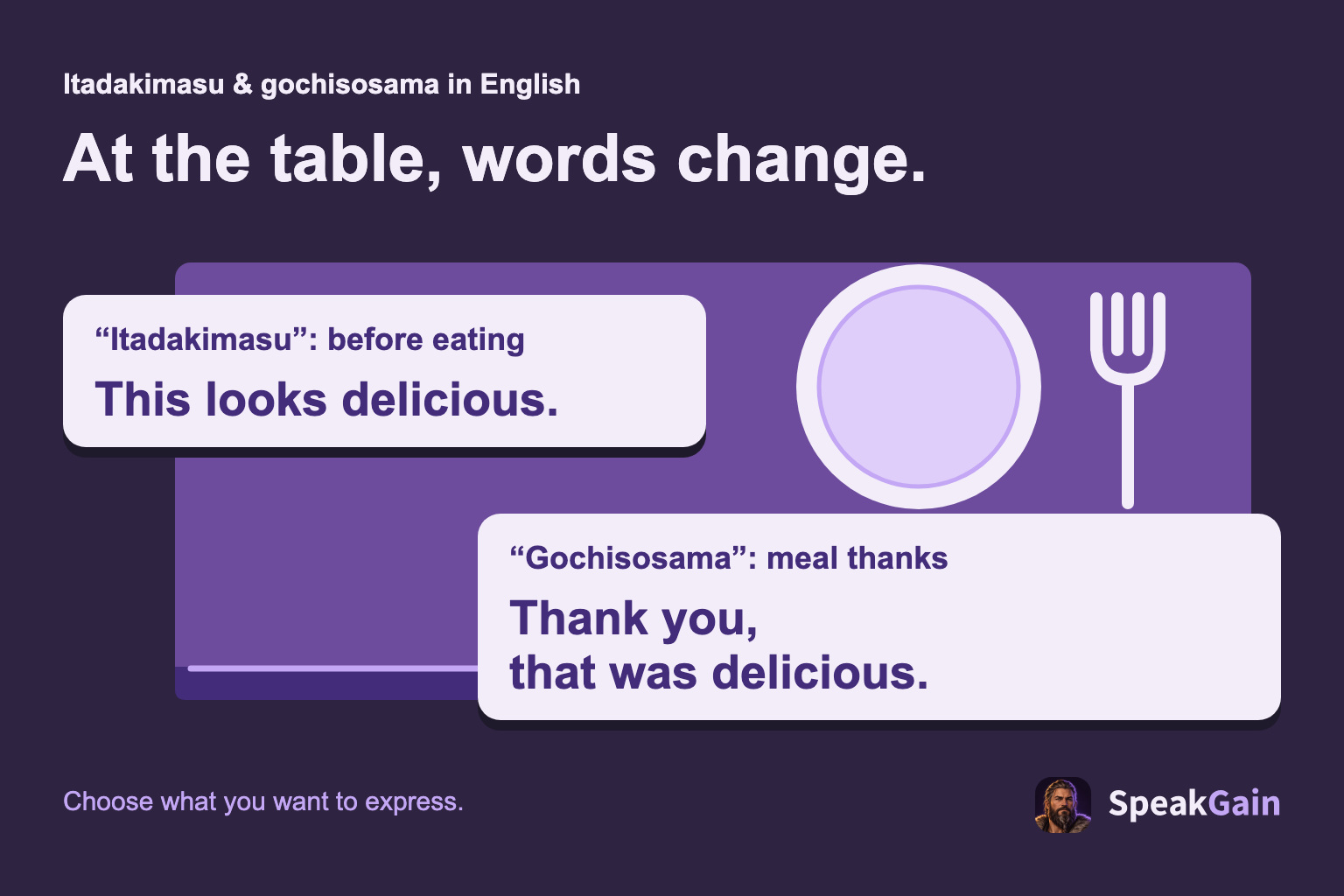
There is no single English phrase that has exactly the meaning and everyday use of Japanese “itadakimasu” and “gochisosama.” Choose what you want to do: start eating together, compliment the food, or thank the person who cooked, hosted or paid. These are useful first choices:
| Moment and speaker | English line | What it does |
|---|---|---|
| Before eating, to fellow diners | Let’s eat. | Invites everyone to start. |
| Seeing the food | This looks delicious. | Compliments its appearance. |
| Serving food to someone | Enjoy. | Wishes them an enjoyable meal. |
| While eating | This is really good. | Compliments the taste. |
| After eating, to your host | Thank you, that was delicious. | Combines thanks and a compliment. |
| To someone who provided dinner | Thanks for dinner. | Thanks them for that meal. |
To explain the Japanese custom, try We say “itadakimasu” before eating. It’s a way of saying thanks for the food. Our editorial choice for a dinner invitation is This looks delicious before eating and Thank you, that was delicious afterward. They are short, purposeful lines, rather than an attempt to recreate a Japanese ritual word for word.
1. Separate the meal cue from gratitude
The Japan National Tourism Organization introduces itadakimasu before eating and gochisosama afterward. The Japanese food education guide, page 16 explains gratitude toward nature and the people who grow and prepare food. It also describes thanks for the work behind a meal.
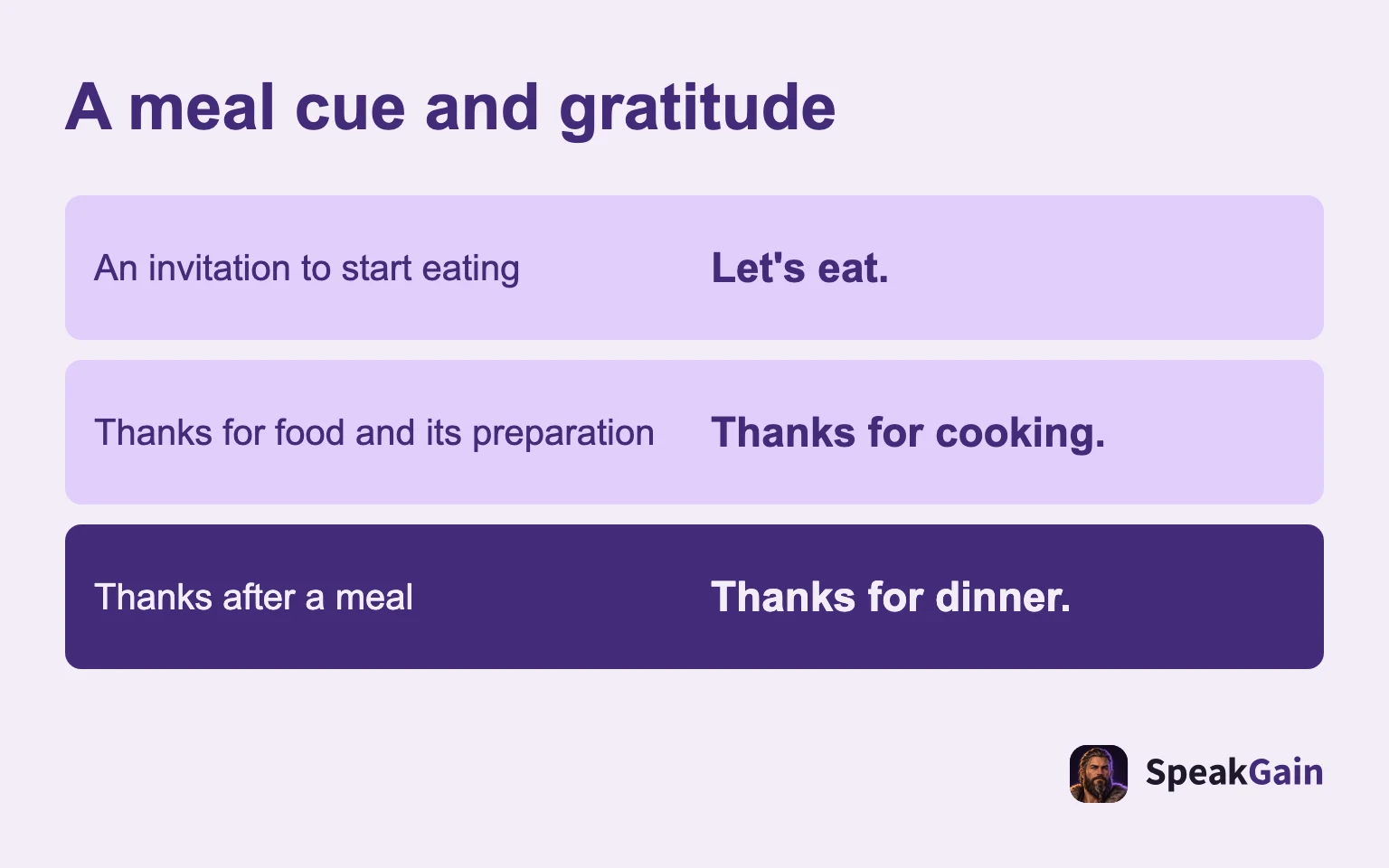
Let’s eat expresses the invitation to start; it does not express every part of that gratitude. Thanks for dinner expresses thanks for a meal; it does not itself invite everyone to start. In an English conversation you can choose a line for the part you actually want to communicate. There is no compulsory group response for every English-speaking table.
2. Before, during and after: change the line with the moment
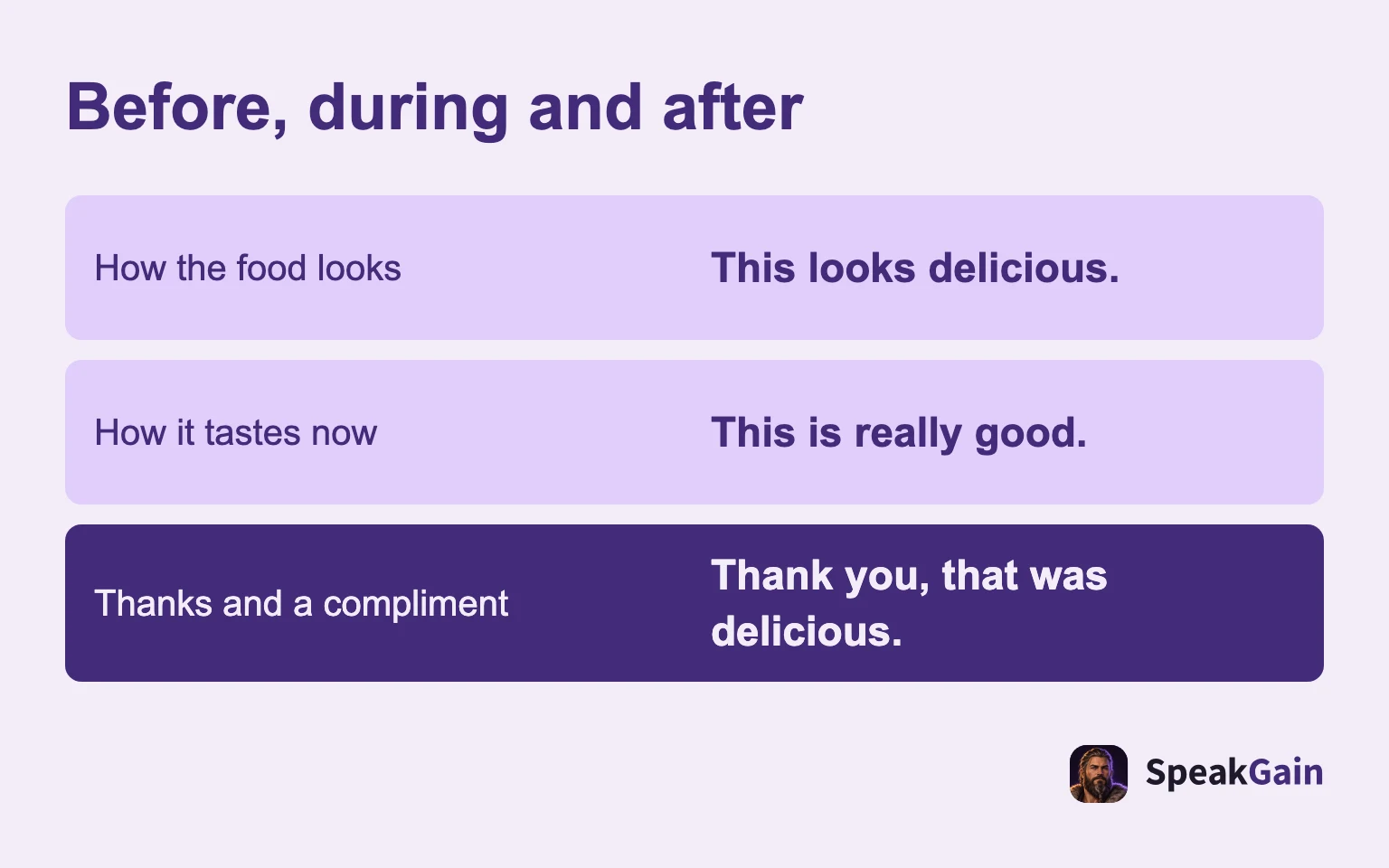
Say This looks delicious while looking at food you have not tasted. Once you are eating, This is really good describes the taste. Afterward, Thank you, that was delicious adds thanks. We recommend remembering the scene with the sentence: a full plate, a first bite, then the end of dinner.
A host can say Dinner’s ready. Let’s eat, or Enjoy while serving. Enjoy your meal is directed toward someone about to eat. A guest can answer Thank you. Add You too when the other person is also about to eat; it need not be added to every server’s greeting. I’m finished describes your state, rather than thanking the host.
3. Five situations: identify the person you are addressing
At a colleague’s home: compliment the food, then thank the host. Thanks for cooking addresses the cook; Thank you for having me addresses the invitation. If different people invited you and prepared dinner, you can acknowledge both. You do not need to stack every possible thank-you sentence.
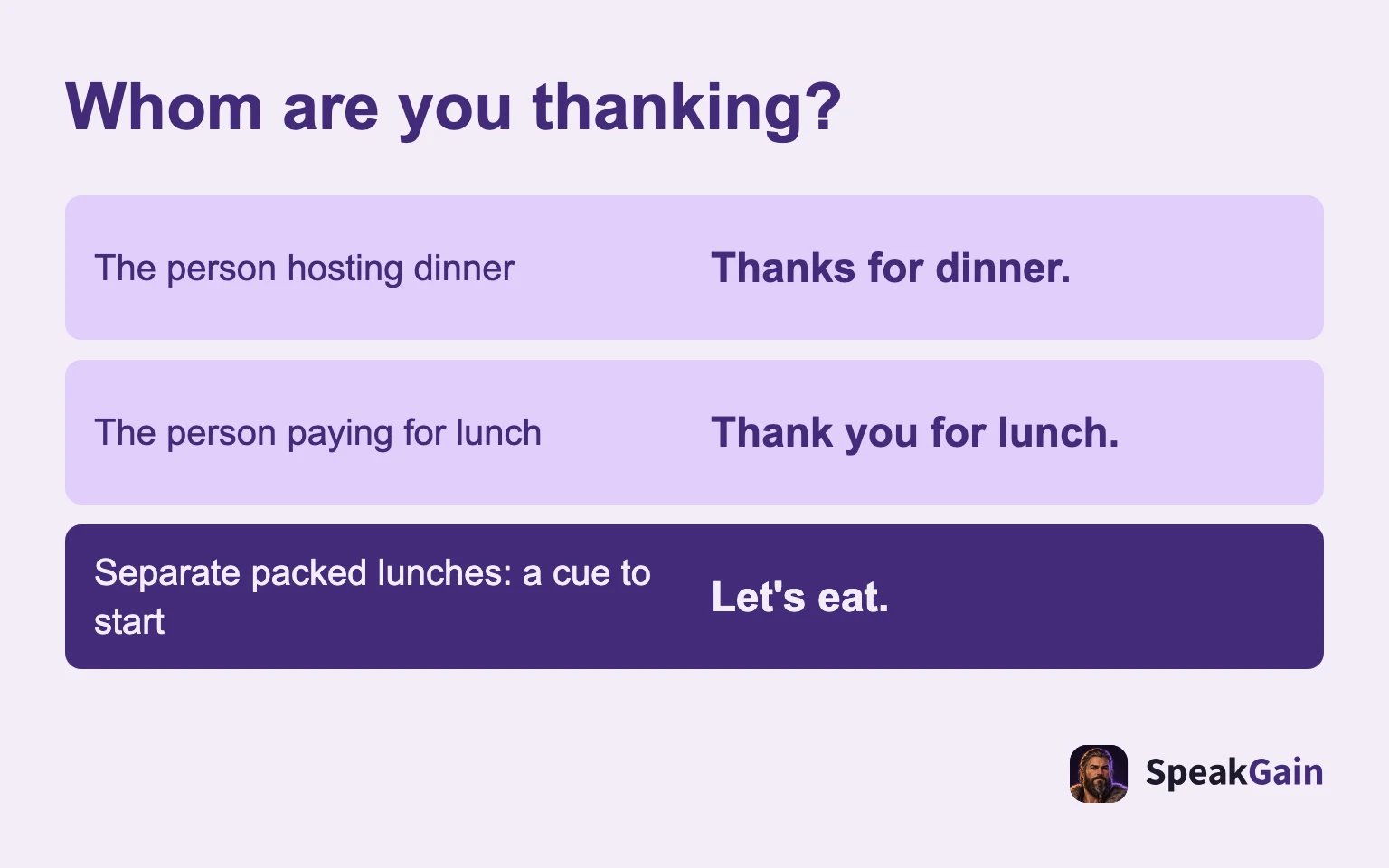
When someone pays: Thank you for lunch or Thank you for dinner works. To make the treat explicit, say Thank you for treating me to lunch. These meal thanks can also apply to home cooking; the situation tells your listener whether you mean payment or preparation. For a first lunch with a client, our choice is Thank you for lunch. See more ways to say thank you.
At a restaurant when you pay: Thank you when food arrives, and Thank you, that was delicious on leaving are options. Thank you for treating me would suggest that someone paid for you. Placing your order is a separate task: see how to order in English.
At a workplace lunch: if everyone has brought their own lunch, Let’s eat can invite a shared start. That looks good comments on a colleague’s food. There is no reason to add Thanks for lunch when nobody supplied or paid for it.
Meal thanks also differ from a work greeting or farewell. See how to express otsukaresama in English when you are acknowledging work or leaving.
Hosting a guest at home: say Dinner’s ready, Let’s eat or Enjoy as appropriate. Your guest might say This looks delicious, Thank you or This is really good. You can answer Thanks, I’m glad you like it; after Thanks for dinner, You’re welcome works. These are practice examples, not a script every visitor must follow.
Keep your own custom if you want. Explain itadakimasu with the sentence above and add It also expresses thanks to the people who grew and prepared the food. Afterward, you can explain After eating, we say “gochisosama” to thank people for the meal. Explain without assuming a guest must repeat it. The same purpose-first approach helps with yoroshiku onegaishimasu.
| You are hosting | Your guest might say |
|---|---|
| Dinner’s ready. Let’s eat. | This looks delicious. |
| Enjoy. | Thank you. |
| You’re welcome. | Thanks for dinner. |
4. Cultural notes, without universal rules
Cambridge’s entry for bon appétit describes wishing someone enjoyment of their food. It is a French-derived expression also used in English, not evidence that every English speaker says it. Enjoy your meal similarly wishes something to the diner; it does not mean the diner’s own gratitude.
Cambridge’s prayer sense of grace describes Christian thanks to God before food. Saying grace is a religious practice, not a direct translation of itadakimasu or a universal English-speaking custom. Our advice when an unfamiliar prayer begins is to respect the pause and, if unsure about participation, ask I haven’t done this before. What should I do? When eating alone, you need not invent an English sentence for an absent listener.
5. Misaki’s dinner and client lunch: listen, stop, say it
Misaki is a fictional office worker. On Friday she visits her colleague Alex for dinner. The following week, her client Ms Lee pays for lunch. Her words change with the situation.
Alex: Dinner’s ready. Let’s eat.
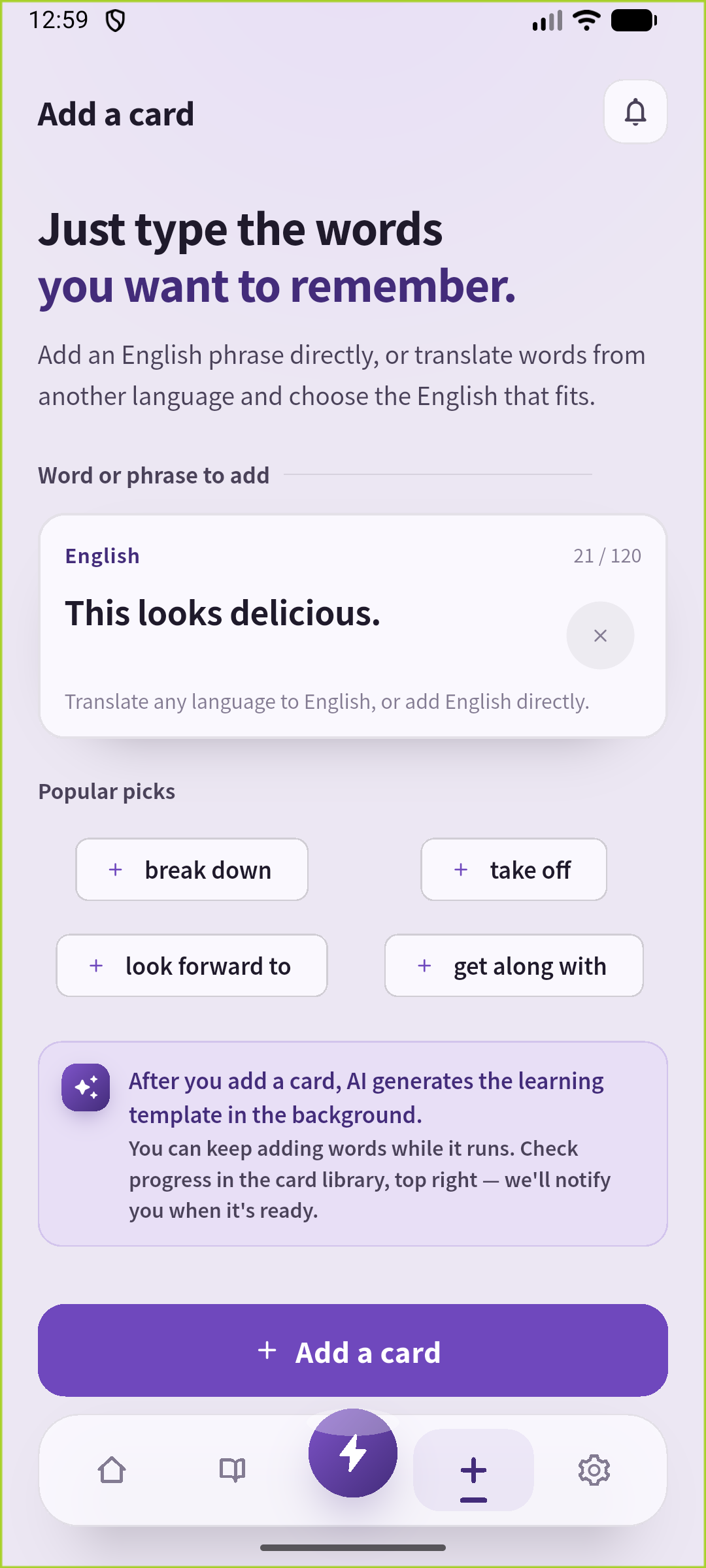
Misaki: This looks delicious.
Listen below, pause, picture the food arriving, and say Misaki’s line yourself. Before tasting, looks fits the scene.
Save the sentence through SpeakGain’s normal Add flow if you want a practice card. All article locales practise the same English sentences and reuse the same audio. See what SpeakGain does.
During dinner, Alex might ask How is it? Misaki can answer This is really good. At the end:
Misaki: Thank you, that was delicious.
Alex: You’re welcome. I’m glad you liked it.
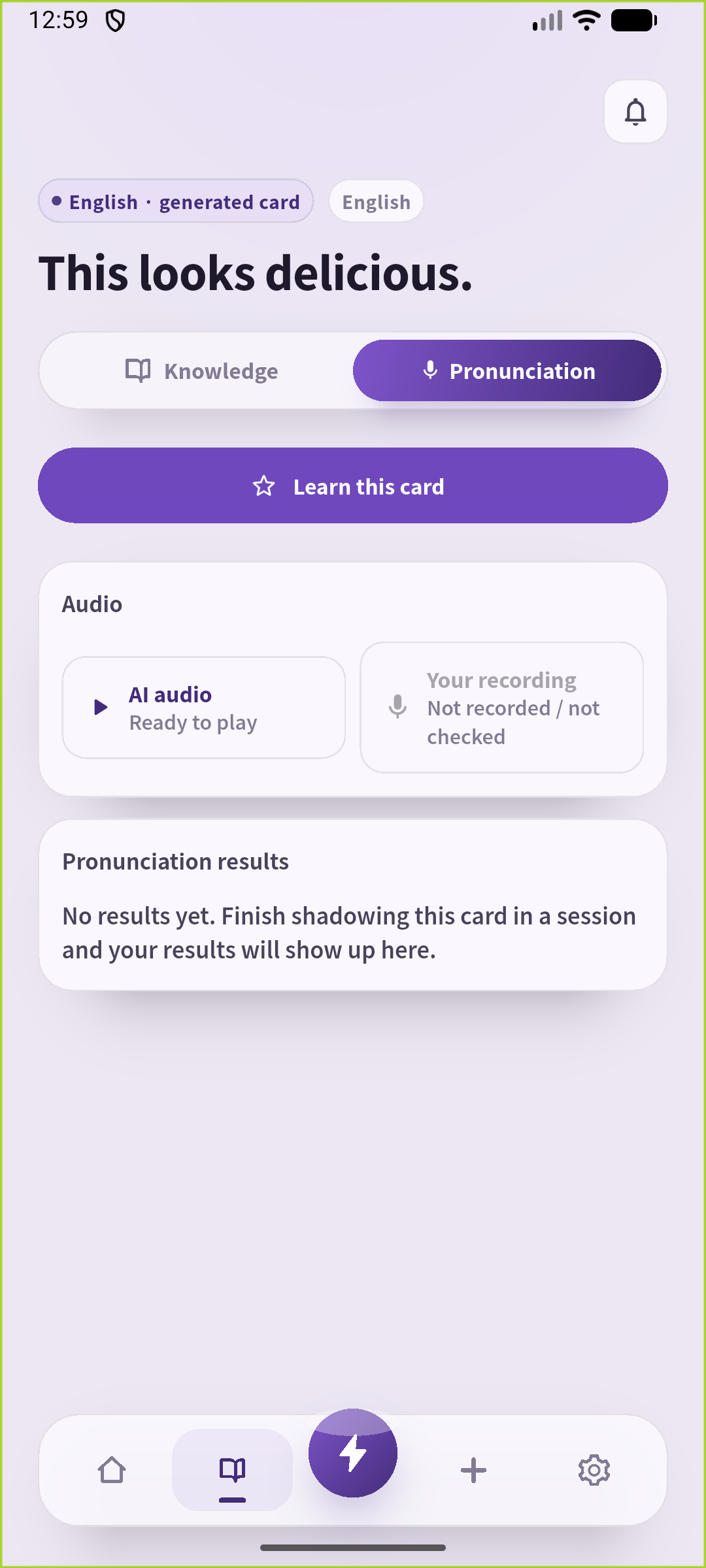
Listen, stop playback, then take your turn. The Pronunciation screen shows the sentence, playback and a separate action to speak. A pronunciation score alone cannot establish politeness or conversational suitability.
At lunch the following week, Ms Lee says Lunch is on me today. Misaki answers Thank you. That’s very kind of you. After the meal she thanks the person who paid:
Misaki: Thank you for lunch.
Ms Lee: You’re welcome.
Hide the English and use three prompts in a different order: seeing dinner, finishing dinner, and a client paying for lunch. Say the matching line; if you cannot, check it and try later. This is our practical application of retrieval practice. Karpicke and Roediger’s 2008 study examined repeated retrieval of foreign-language word pairs, not dining conversations or SpeakGain.
Questions at the table
Is Let’s eat the translation of itadakimasu? It covers a shared start, not the complete gratitude. Can I say Thank you for the meal? Yes; dinner or lunch makes the meal specific. What if my guest says no ritual phrase? Do not infer rudeness from that alone. People and households differ.
Choose two lines for your next actual meal, listen, then say them without playback. Knowing whom you want to thank is more useful than searching for one universal English equivalent.
For everyday conversations at home, see what to say when leaving and coming home, with short exchanges and an explanation of the Japanese greetings tadaima and okaeri.
For food that looks tempting, tastes good or made a great meal, choose a food compliment in English by timing and add one detail you liked.