
How to say food is delicious in English: before, during, and after a meal
Published
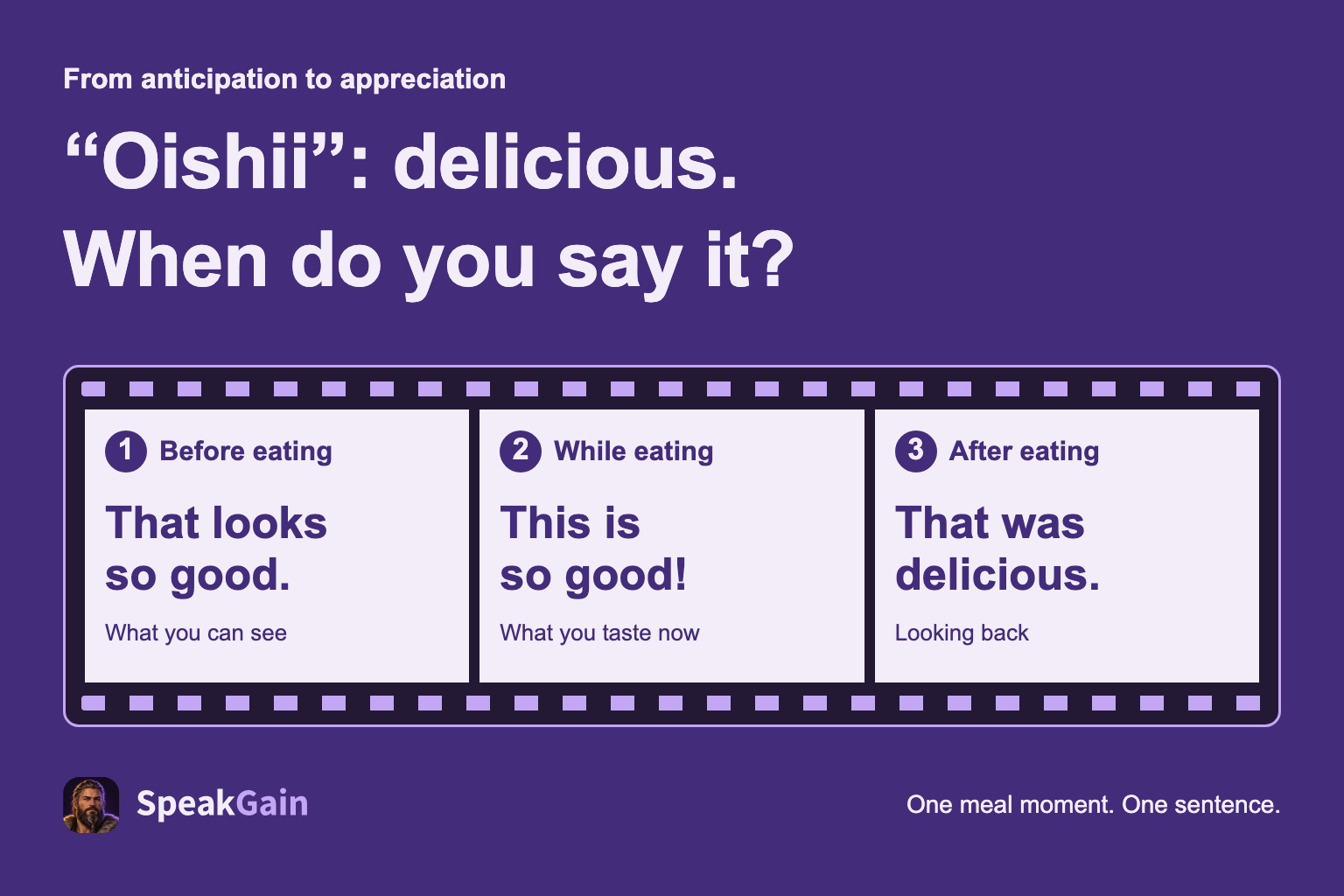
Before eating, say That looks so good.; while eating, say This is so good!; after the meal, say That was delicious. Then add one thing you liked: The sauce is amazing. Japanese oishii means “delicious” or “tasty”, but a useful English response also tells the listener whether you are anticipating the food or have tasted it.
| Moment | English | Meaning |
|---|---|---|
| Before eating | That looks so good. | What you can see |
| Before eating | That smells amazing. | A wonderful aroma |
| Before eating | I can’t wait to try it. | Eager to taste it |
| While eating | This is so good! | What you taste now |
| After eating | That was delicious. | Looking back |
Our editorial recommendation is to start with This is so good! and one detail. A long list of synonyms is less useful at your next meal than knowing when to speak and what you actually enjoyed.
1. Before eating: appearance, aroma, or anticipation
That looks so good. reacts to what you can see. That smells amazing. reacts to an aroma, even when the food is still in the kitchen. I can’t wait to try it. expresses eagerness to taste it. Choose the information you have rather than pretending to have tasted a photograph.
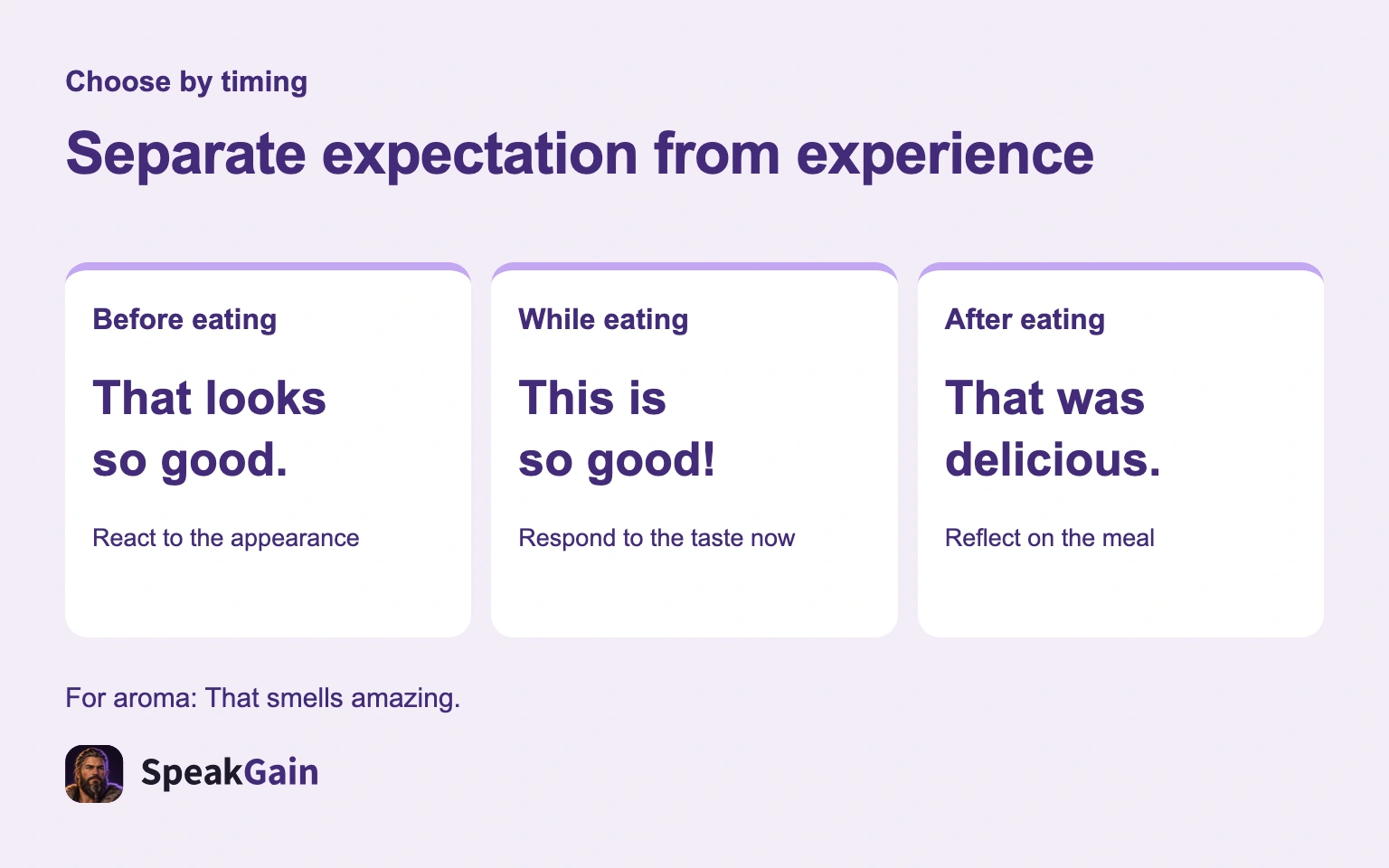
This looks delicious. is another possible reaction before eating. The point is to include looks, rather than ban the word delicious before a meal. Cambridge defines delicious in terms of a very pleasant taste or smell. Can’t wait expresses strong anticipation.
This and that point to something in context; they are not a before/after rule. You might say This looks so good. when your own plate arrives. For greetings and thanks around meals, see saying itadakimasu and gochisousama in English.
2. While eating: give a reaction, then one detail
This is so good!, This is delicious., and Wow, this is amazing. are useful options after a bite. You do not need to act surprised every time you say amazing. Use an intensity that matches how you feel, and swallow before speaking.
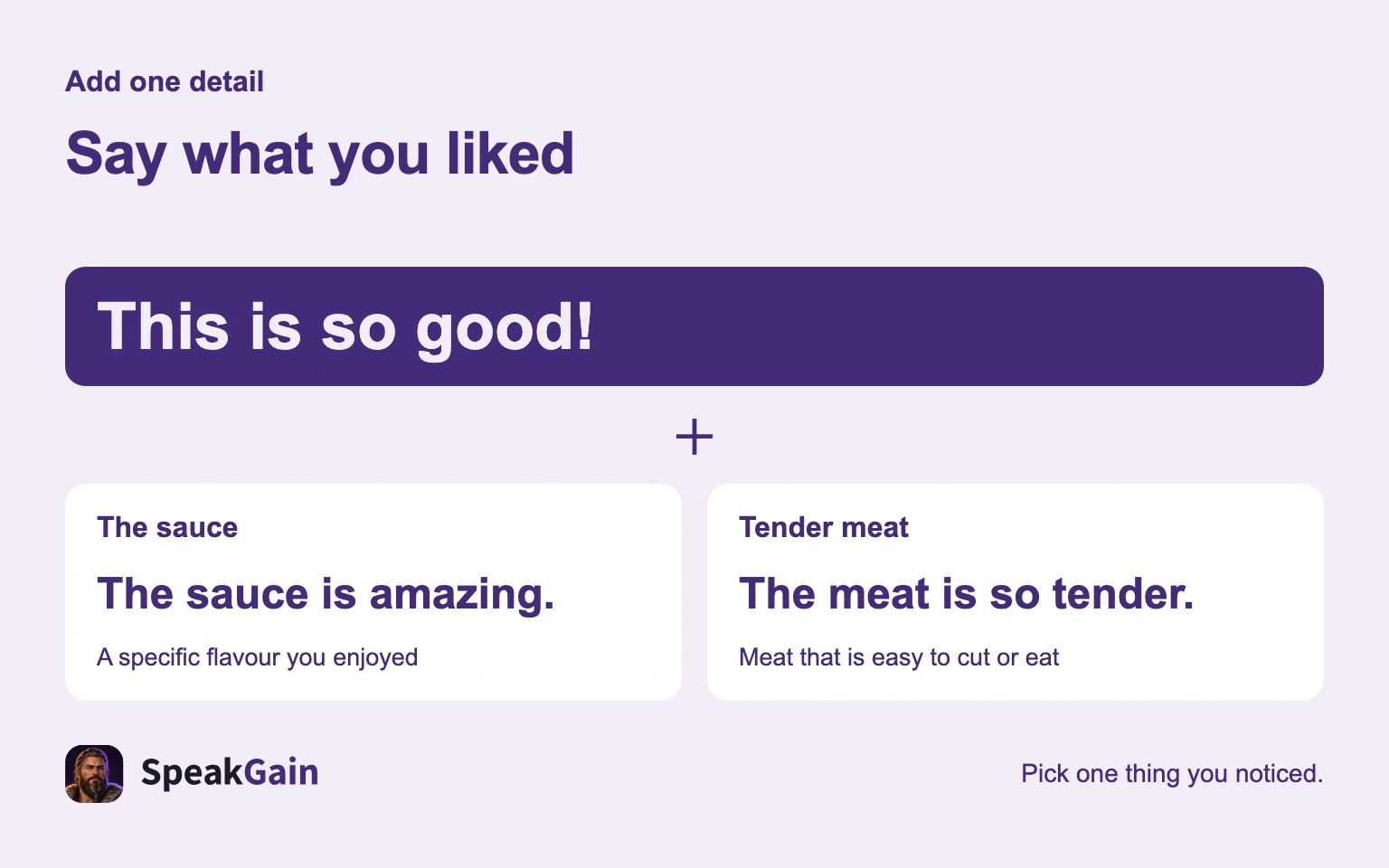
The sauce is amazing. identifies a flavour you enjoyed. The meat is so tender. describes meat that is soft and easy to cut or eat, matching Cambridge’s food sense of tender. Say it when that is what you noticed.
Practise the pair This is so good! The sauce is amazing. Then change sauce to the part you liked. For reactions beyond food, read positive reactions in English; for praising someone’s care or skill, see giving compliments.
3. After eating: look back and thank the person
That was delicious. uses was to look back at the meal. I really enjoyed it. says you took pleasure in the food or the experience; it does not specify taste in the way delicious does. Enjoy has this broader meaning.
Thank you, that was amazing. combines appreciation with a strong positive reaction. A restaurant server asking How was your meal? can hear That was delicious, thank you. If the reference is unclear, name it: The chicken was delicious. Thanks for an invitation or for paying are separate decisions from describing the food.
4. Delicious, good, tasty, and yummy
| Word | Meaning and use | Example |
|---|---|---|
| good | Broad positive evaluation: pleasant or satisfactory. | This is so good! |
| delicious | Very pleasant taste or smell. | This is delicious. |
| tasty | Pleasant flavour; also a strong, pleasant flavour. | This soup is tasty. |
| yummy | Very pleasant taste; informal. | This cake is yummy. |
Cambridge’s food-adjective guide distinguishes tasty, the stronger delicious, and informal yummy. These are not four points on a universal strength scale: so in This is so good! also adds emphasis. Dictionaries do not support a rule that adults never say yummy or that native speakers avoid delicious.
Our editorial starting choices for a colleague’s lunch or a first visit to someone’s home are This is really good. and This is delicious. Yummy is an informal option with people you know. This recommendation is a practice choice, not a ban based on age or nationality.
5. Describe taste and texture without confusing them with liking
| English | Meaning and use | Example |
|---|---|---|
| sweet | A sugar-like taste. | It’s sweet. |
| spicy | Strong spice flavour; can mean a hot flavour. | It’s spicy. |
| salty | Tastes of salt or contains much salt. | It’s salty. |
| sour | Sharp, not sweet, as with lemon. | It’s a little sour. |
| bitter | A sharp, strong bitter taste. | This coffee is bitter. |
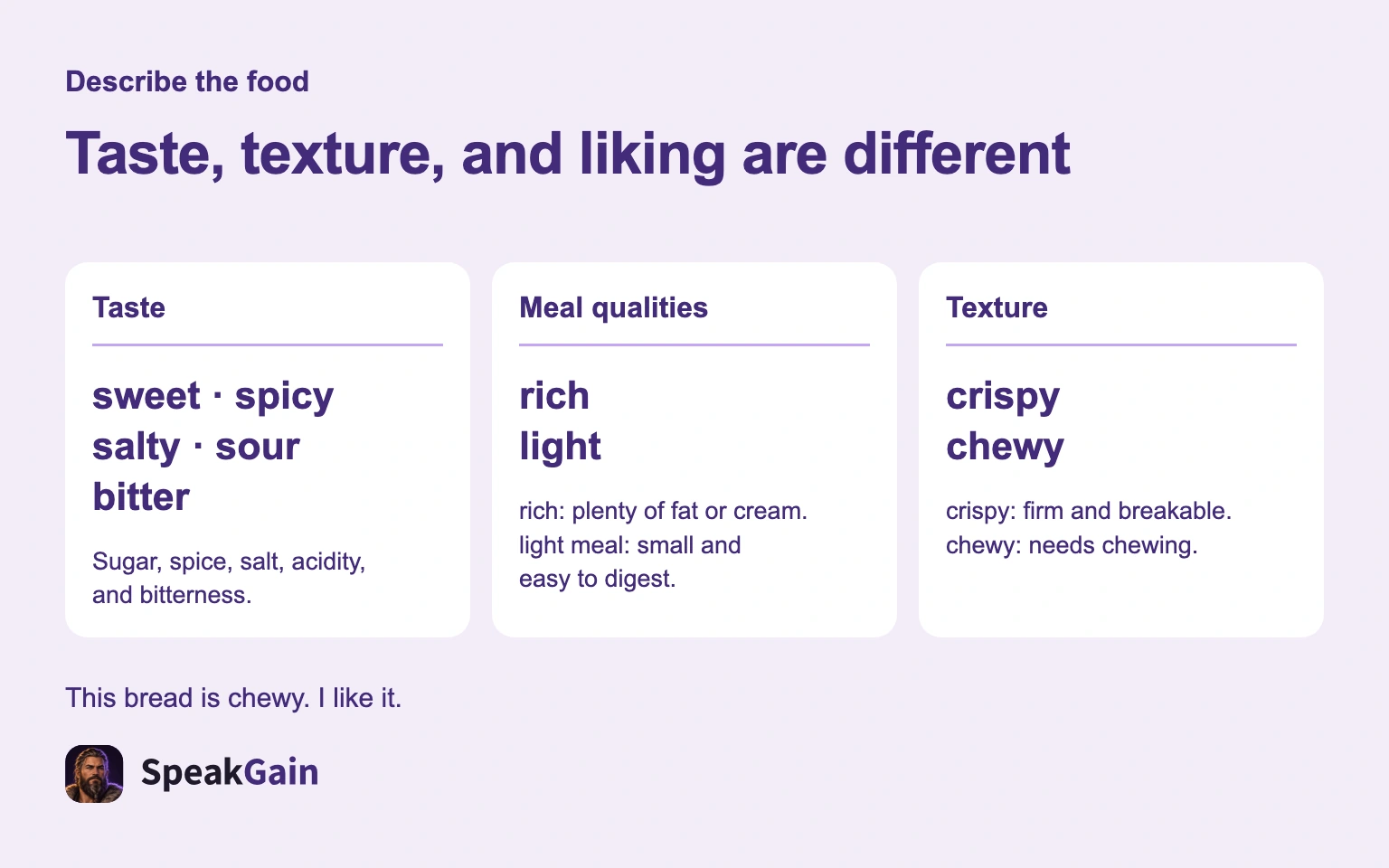
| rich | Plenty of fat, butter, eggs, or cream; can also describe full flavour. | The sauce is rich. |
| light | A light meal is small and easily digested; some foods have less fat or fewer calories. | I’d like a light lunch. |
| crispy | Firm and easily broken: a crisp texture. | The crust is crispy. |
| chewy | Needs a lot of chewing before swallowing. | This bread is chewy. |
Spicy concerns spices and can describe a hot flavour; hot can also mean temperature. Rich does not simply mean “good” and light is not the automatic opposite of a strongly flavoured sauce. A light lunch refers to a small, easily digested meal. Chewy means that something needs considerable chewing; it can describe bread you enjoy or meat you find difficult to eat.
To make your opinion clear, say This bread is chewy. I like it. A property is not automatically praise. Too spicy for me. describes your own limit rather than condemning everyone else’s taste.
6. When it is not your preference, or you are full
It’s not really my thing. expresses a personal preference informally. Cambridge’s explanation supports this meaning, but no phrase guarantees that the other person will not feel disappointed.
No, thank you. I’m full. declines more food because you have eaten enough. If you liked the meal, add I’m full, but it was really good. Full describes having eaten enough, not disliking the dish. Do not praise something you disliked just to copy the example. Before ordering, ask about portions or spice using ordering in English.
7. Practise with Misaki at a host family’s dinner
Misaki is a fictional learner in this worked example, not a customer testimonial. She listens to the host and chooses a response for the moment.
| Moment | What you hear | What you say |
|---|---|---|
| Before eating | Here’s your dinner. Here’s your dinner. |
That looks so good. What you can see |
| While eating | How’s the chicken? How’s the chicken? |
This is so good! The sauce is amazing. What you taste now The sauce in particular |
| After eating | Did you enjoy dinner? Did you enjoy dinner? |
Thank you, that was amazing. Thank you for a wonderful meal |
Listen to these three SpeakGain Deep-voiced Viking samples, then say the sentence with the meal in mind. Check that looks, sauce, and was are audible; copying a deep voice is not the goal. AI audio is a practice model, not a claim about how everyone talks at dinner.
That looks so good.
This is so good! The sauce is amazing.
Thank you, that was amazing.
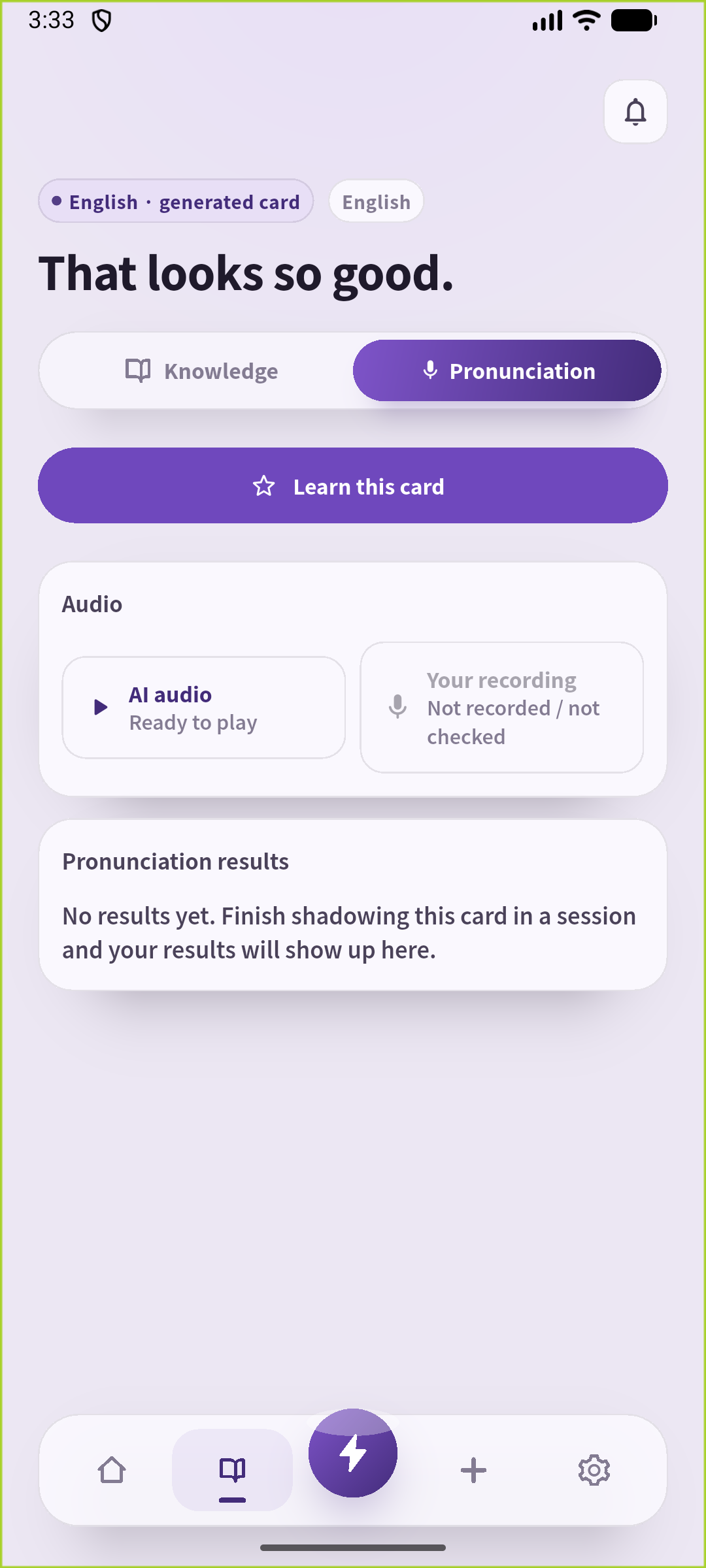
Save one sentence you expect to use next. The real Create screen below shows That looks so good. For the basic workflow, see what SpeakGain is.
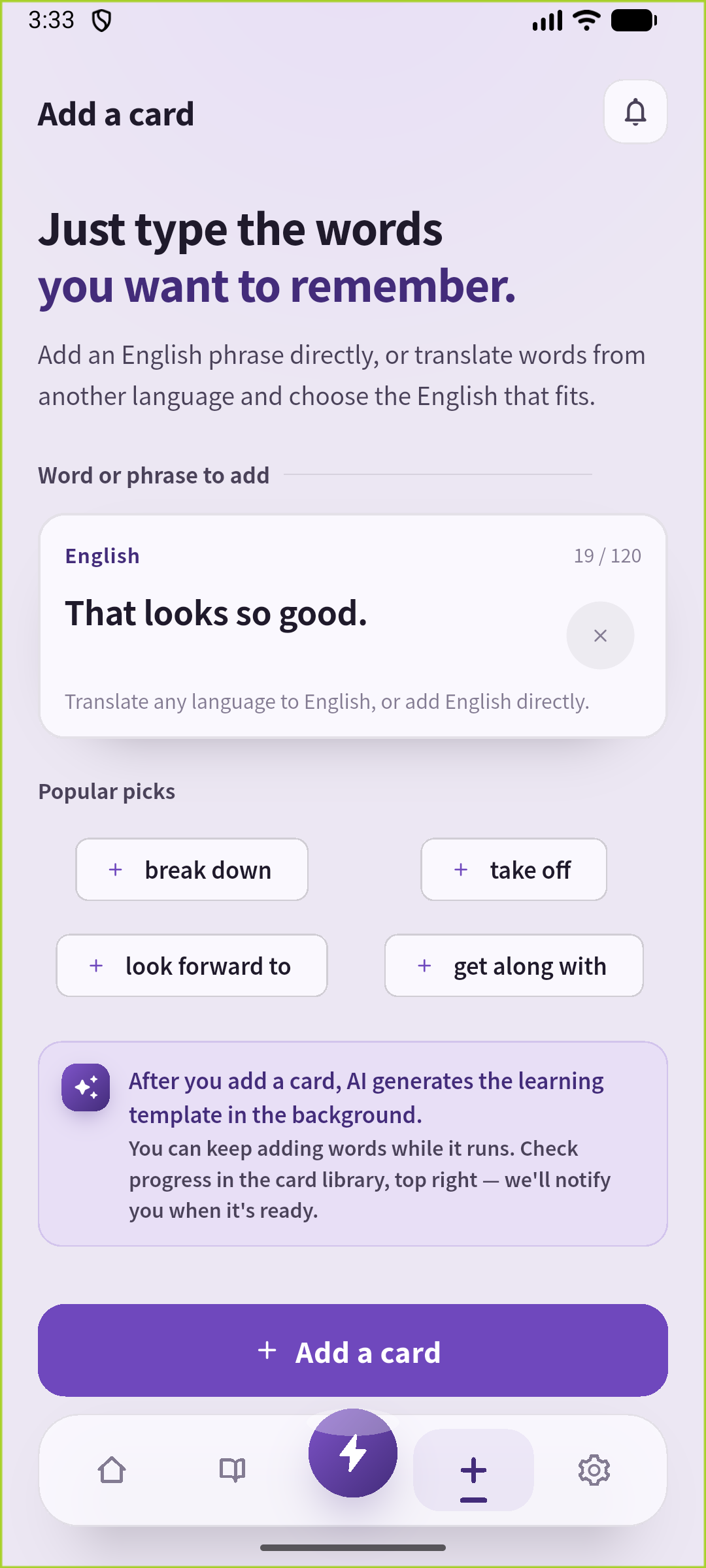
Listen to the saved sentence, hide Misaki’s answers, and respond to the host’s line. First repeat after the audio; then choose a response without seeing it. In a lesson, ask your partner to change the order of serving food, asking about taste, and offering seconds. Change sauce to meat in a second round.
Bavelas, Coates and Johnson’s 2000 abstract reports two experiments with 63 previously unacquainted pairs. Distracting listeners from the story reduced content-specific responses and the quality of the narration. It did not test meal vocabulary or SpeakGain. Our editorial interpretation is to practise responding to what your partner actually said, alongside repeating a model; it is not evidence of a particular learning speed.
Common questions
Can I say Looks delicious! before eating?
Yes, as a short reaction to the appearance. For a full practice sentence, use That looks delicious. or That looks so good. For aroma, choose That smells amazing.
Should I say very delicious?
Start with This is so good., This is really good., or This is absolutely delicious. Cambridge’s guide gives absolutely delicious as an example with a stronger adjective. Learn a short combination rather than adding very to every word.
Can I say It was delicious. afterwards?
Yes, if both people know what it refers to. That was delicious. looks back at the shared meal. The chicken was delicious. specifies the dish.
Try one sentence at each stage of your next meal and add one detail you honestly liked. To fit this practice into a routine, read how to study English.