
Positive reactions in English: choose by target and intensity
Published
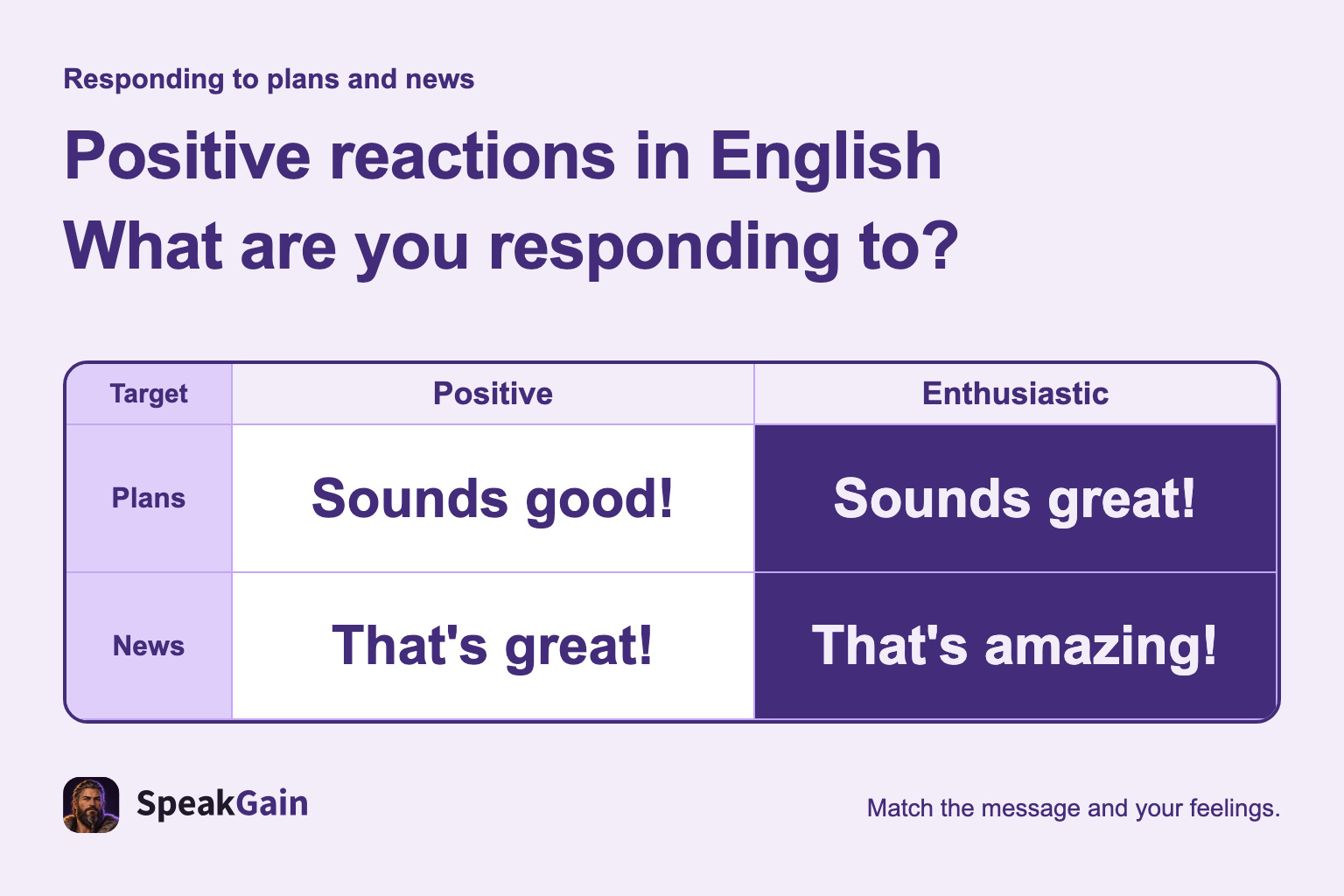
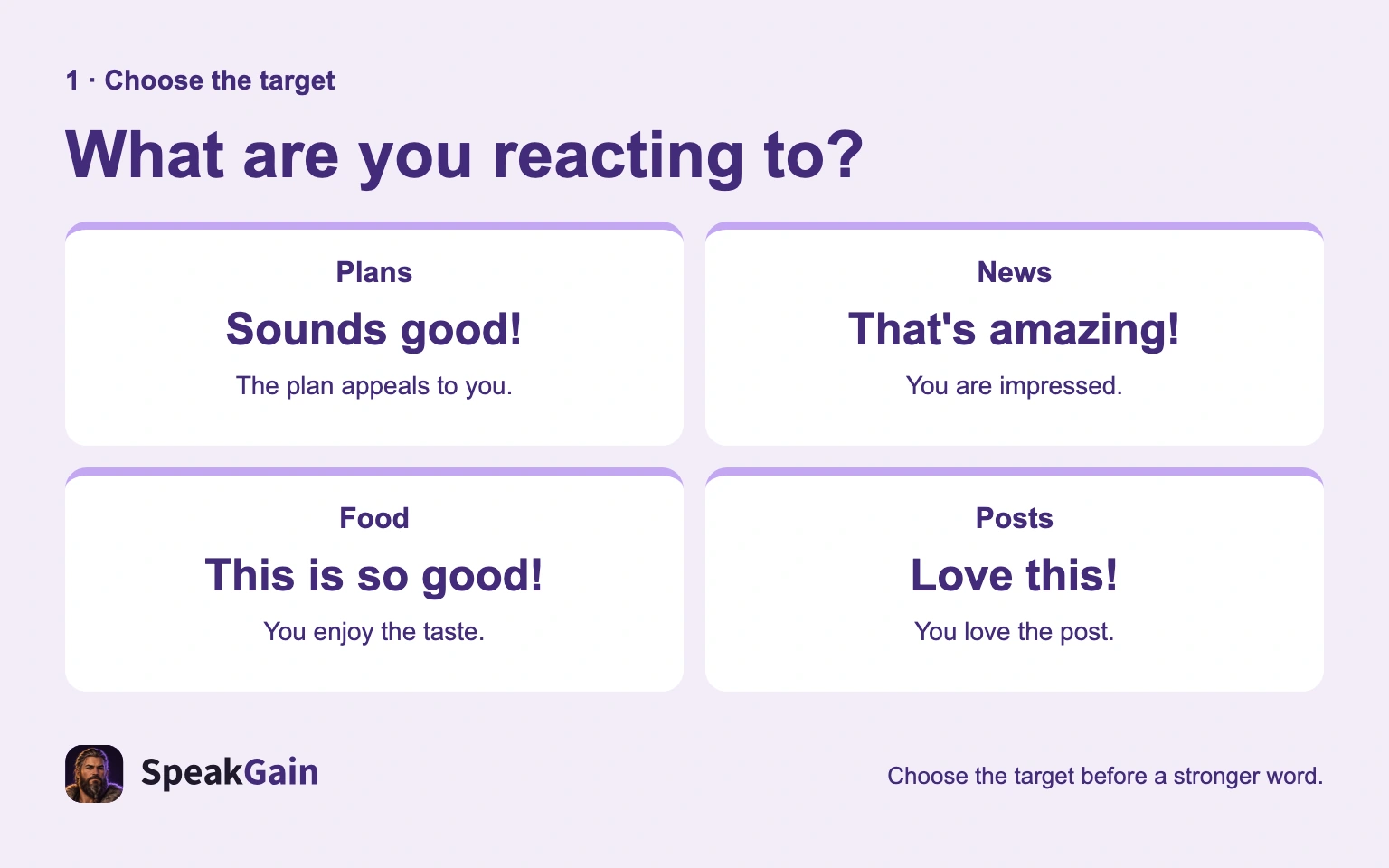
Choose your English reaction by what you are responding to, then by how strongly you feel. Start with Sounds good! for a plan, That’s amazing! for a story or good news, This is so good! for food, and Love this! for a post. Use nice → great → amazing → incredible as practice cues, not a fixed scoring system.
| Target | A useful first line | What it conveys |
|---|---|---|
| A suggestion or plan | Sounds good! | The idea appeals to you. |
| A story or good news | That’s amazing! | You are impressed or surprised. |
| Something you are eating | This is so good! | You really enjoy it. |
| A photo or post | Love this! | You like this particular content. |
Our editorial recommendation: learn Sounds good! and That’s amazing! first, then add one relevant question or detail. A small set tied to tomorrow’s conversations gives you clearer practice than a long list of synonyms.
For a baby, a small item or a thoughtful gesture, choose between cute, adorable and lovely by what you want to praise.
1. Decide what you are reacting to
A colleague suggesting a later meeting needs a different response from a friend describing the northern lights. The first is about accepting a plan; the second is about responding to an experience. Even if your first language uses one broad positive word for both, choose the purpose before the adjective.
This article focuses on reactions to things and messages. For specific praise of someone’s work or taste, use giving compliments in English. For short signals that you are listening, see English backchannel responses. A positive reaction can overlap with either, but it need not evaluate the person.
2. Plans: approval, convenience or joining in?
Sounds good! responds to an idea you have heard. Sounds great! can express more enthusiasm. Cambridge’s sound entry explains this use as seeming a certain way from what is said or written; it is not an assessment of audio quality.
Alex: Let’s try the café near the station.
Misaki: Sounds good! What time shall we meet?
| Phrase | The useful distinction |
|---|---|
| Sounds good! | You approve of the suggestion. |
| Sounds great! | You sound more enthusiastic about it. |
| That works for me. | The time or arrangement suits you. |
| I’m in! | You want to participate. |
That works for me. fits a proposed meeting time. I’m in! fits an invitation to join a hike, rather than simply liking a landscape photo. At work, make the next action clear: Sounds good. I’ll send the updated file by three. If you cannot commit yet, check your schedule first. Warmth does not require accepting a task you have not considered.
3. Stories and news: surprise or happiness for someone?
| Phrase | What to pay attention to |
|---|---|
| That’s amazing! | An impressive experience or surprising story. |
| No way! | Unexpected news; context must make your surprise clear. |
| That’s incredible! | Strong amazement, or something hard to believe. |
| Good for you! | Someone’s success or good fortune. |
Cambridge’s amazing includes surprise and informal positive evaluation. Do not automatically use an upbeat reaction for a painful story simply because it is surprising.
No way! has two important uses: surprise and forceful refusal. The British Council lesson demonstrates the surprised response. Listen to the context and delivery. To a request, the same words can mean you will not do it, as the dictionary confirms.
Alex: I saw the northern lights on my trip.
Misaki: No way! That’s amazing. Where were you?
Our advice for beginners is to add a line that makes the intended surprise clear. Good for you! responds to good fortune for a person; it is not the first choice for admiring the scenery itself. For congratulations, see saying congratulations.
4. Things you see, eat or visit
| Phrase | Example focus |
|---|---|
| This is so good! | The food you have just tasted. |
| That looks lovely. | A photo, a garden or something attractive. |
| This place is amazing. | The place you are experiencing. |
| This is the best! | Strong enjoyment of this experience or item. |
This is so good! is useful at a restaurant: This is so good! I love the sauce. That looks lovely. comments on appearance; a photo does not tell you how the food tastes. This place is amazing. names the place, rather than praising the person who sent the photo.
Cambridge labels the pleasant/beautiful uses of lovely mainly UK. This does not mean other speakers never use it. Best describes the highest quality or suitability. This is the best! can express delighted satisfaction; it does not establish a researched ranking. For a measured comparison, specify the scope: the best meal I’ve had this week.
5. Social media and chat: keep it short and relevant
Love this! works as a reaction to a post; So cool! expresses positive interest; This made my day. says that something made you very happy. The dictionary entries for cool and make someone’s day support those meanings.
Add a detail when you have one: Love this! The colors are beautiful. A short appreciative comment need not become a performance of maximum excitement. LOL relates to laughter, according to its dictionary entry; it is not an all-purpose substitute for agreement or admiration. Emoji can supplement the text, but this article does not assign them a universal meaning. More casual vocabulary is in everyday English slang.
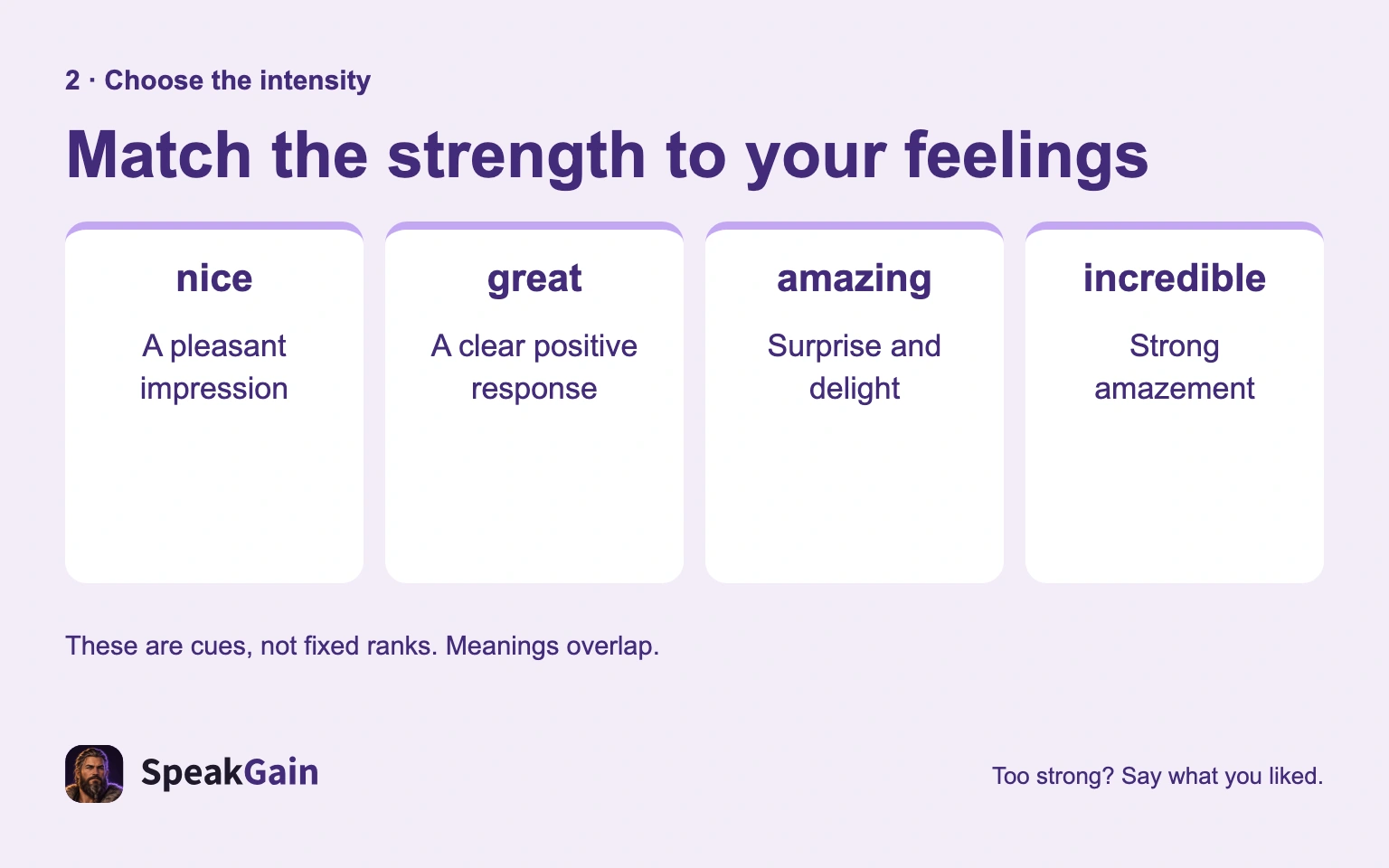
6. Strength: nice → great → amazing → incredible
| Word | A practice cue |
|---|---|
| nice | A pleasant, positive impression. |
| great | Clear positive evaluation. |
| amazing | Surprise and delight. |
| incredible | Strong amazement; also difficulty believing something. |
The dictionary meanings overlap, and voice, relationship and context change the force. Incredible is not always exactly one level above amazing. Our editorial choice for a colleague booking a routine room is Great, thanks., rather than an automatic That’s incredible! Add what helped: That saves us time. For a remarkable travel story, That’s amazing! may match your actual feelings.
Cambridge labels awesome meaning very good as informal. We do not restrict it to Americans or a particular age. Lovely’s regional label is only “mainly UK”; the best has no country preference claimed here. Choose the word for the context, not a stereotype about its speakers.
7. Add one relevant follow-up
That’s amazing! How did you do it? shows your reaction, then asks about the method.
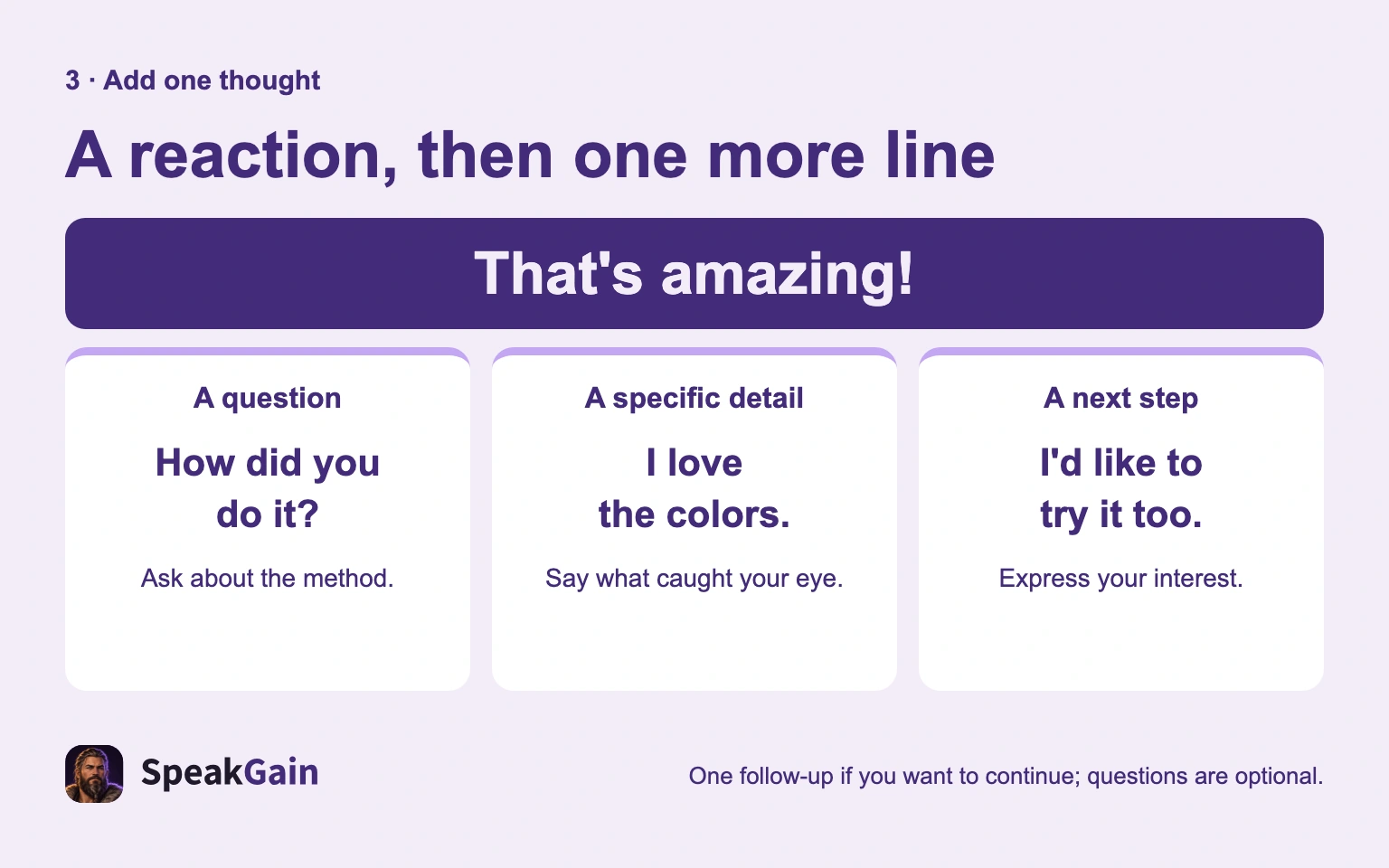
Try That looks lovely. Where was this taken? for a photo; This is so good! I love the sauce. for food; Sounds good! I’ll send the invitation. for a plan. If your friend won a prize by chance, What did you win? fits better than asking how they achieved it. Listen to the complete story first. Questions are optional; a specific impression is enough when you do not need more information.
8. Hear and say the lines in Misaki’s day
Misaki is a fictional practice character, not a customer testimonial. She uses three settings to practise choosing the target.
| What she hears | What she says |
|---|---|
| Colleague: Let’s move the meeting to three. | Sounds good! That works for me. |
| Friend, showing travel photos: I planned the whole trip myself. | That’s amazing! How did you do it? |
| Restaurant: How’s your meal? | This is so good! |
Listen to the three samples generated with SpeakGain’s Deep-voiced Viking, then say each line. Focus on phrasing and stressed words, rather than copying the low pitch. Return to the other person’s line and choose a response without looking at Misaki’s answer.
Sounds good! That works for me.
That's amazing! How did you do it?
This is so good!
You can save the short English lines you intend to use in SpeakGain. The real capture below shows the normal Add flow. Use the phrase to recall a situation, not merely to store an isolated positive adjective. See what SpeakGain is for the product basics.
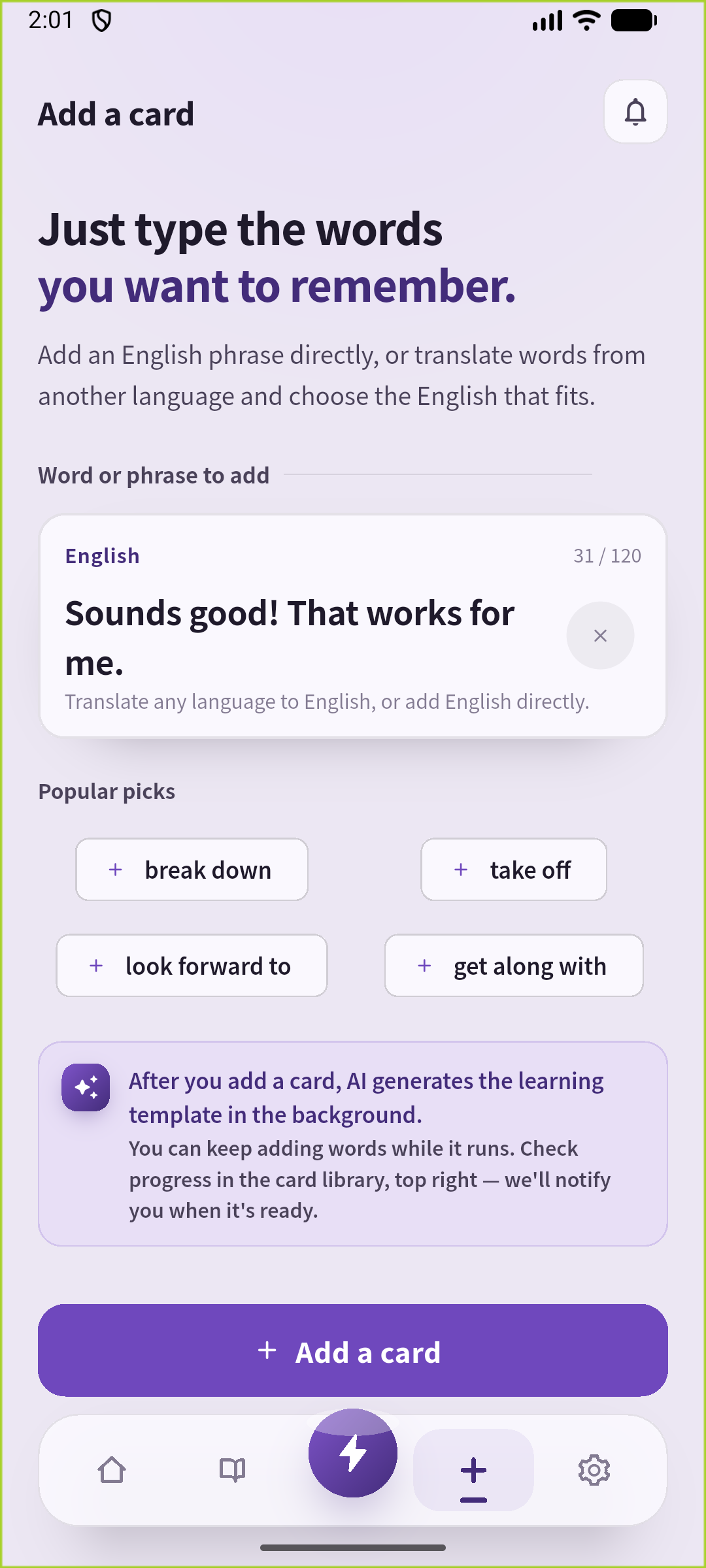
Listen to the saved phrase, say it, then respond to the colleague’s suggestion again. Distinguish copying the recording from choosing a response that fits a live conversation.
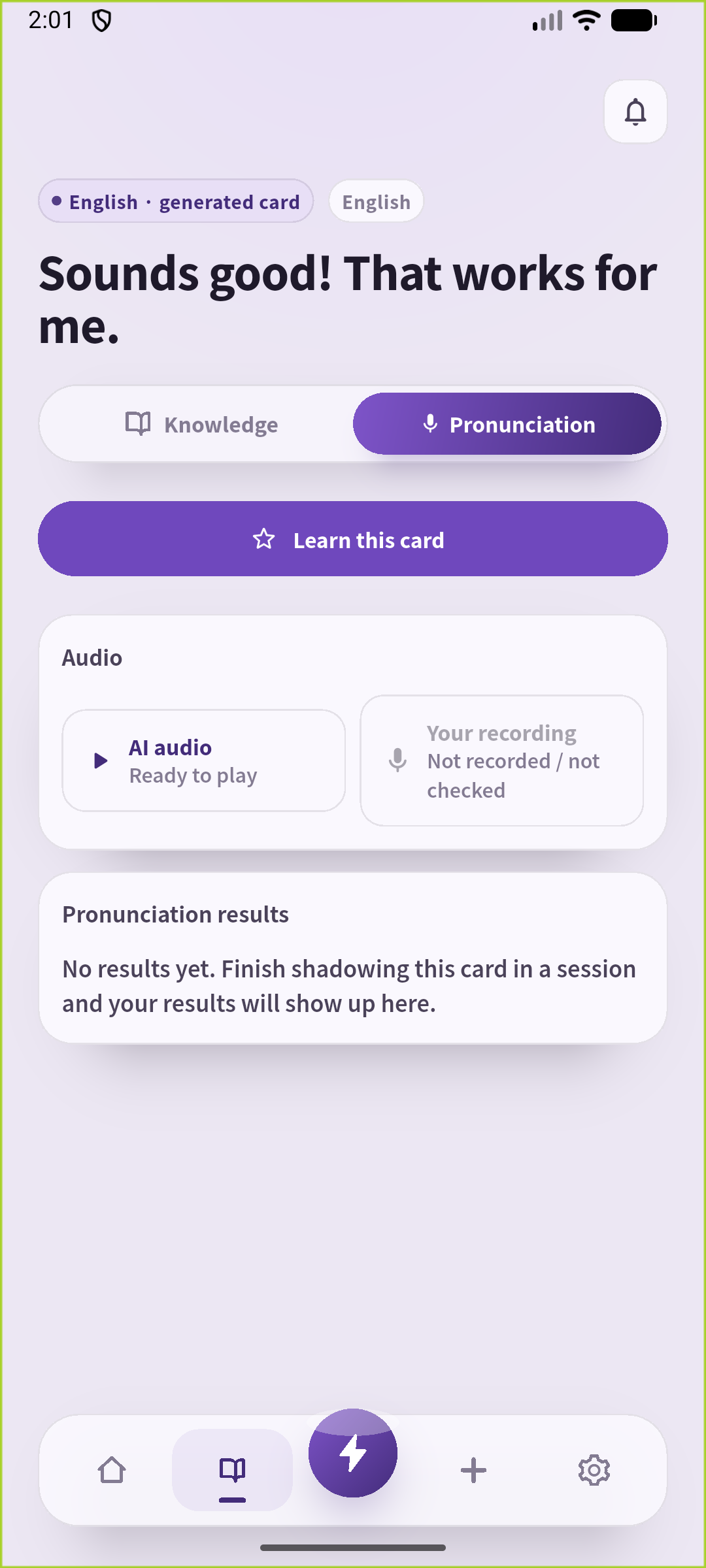
In a lesson, ask your teacher to suggest a plan and tell a travel story. Try the two reactions, then ask Did that sound too strong? Review the target, intensity and relevance of your follow-up. Our aim is a response connected to what you heard, not the longest sentence possible. Fit this practice into your routine with how to study English.
What the research supports
Bavelas, Coates and Johnson (2000) reported two experiments with 63 pairs of strangers. Distracting listeners reduced responses tied to the story and worsened the storytelling. We inspected the PubMed abstract, not an English-learning-app trial. Practising content-linked reactions is our editorial interpretation. The study does not establish that Viking audio or these three sentences will improve fluency by a measured amount.
For food that looks tempting, tastes good or made a great meal, choose a food compliment in English by timing and add one detail you liked.
Common questions
Can I just say Good!?
Sometimes, with shared context. We recommend Sounds good! for approving a plan and That works for me. for confirming that an arrangement suits you, because the purpose is clearer.
Is incredible always stronger than amazing?
No. It is a cue for strong amazement, but meanings overlap. Choose a sincere reaction and add a relevant detail instead of treating adjectives as scores.
Should I always say the best for strong approval?
This is the best! can express satisfaction. For joining a proposed outing, Sounds great! or I’m in! communicates your decision more clearly.
What fits at work?
Sounds good. for a suggestion and That’s great news. for a good result are useful starting points. For evaluating someone’s work, give a specific compliment. Louder enthusiasm alone does not make a response more professional.
Start with two targets and two reactions, then add food and posts. Notice whether your words fit the message before reaching for a stronger adjective.