
Cute, adorable or lovely? Choose the English word for what you mean
Published
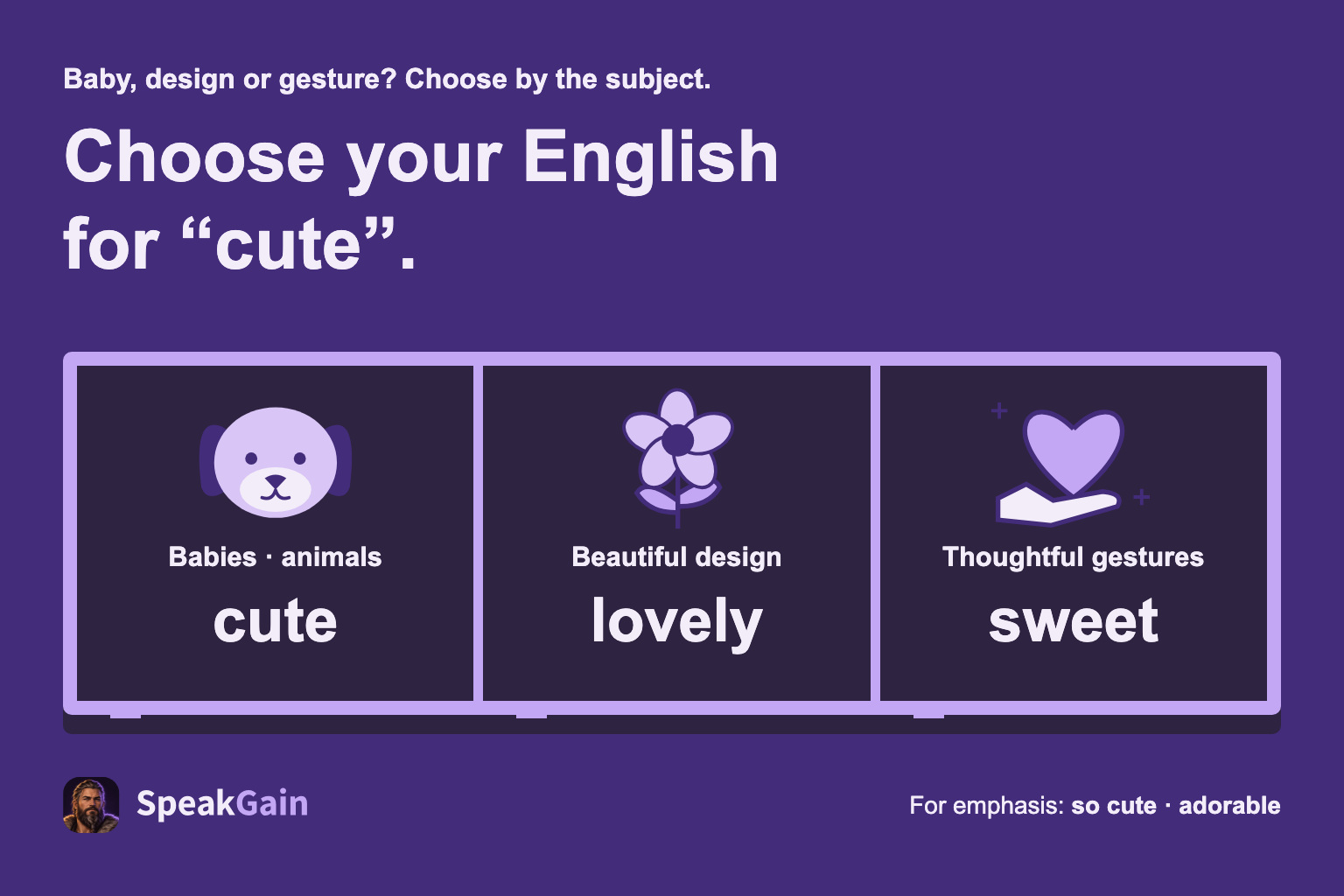
Choose cute or adorable for a baby or pet, cute or lovely for a small item or design, pretty or beautiful for visual beauty, and sweet or charming for kindness or personal charm. Decide what you are praising before deciding how strongly to say it. Japanese kawaii covers several of these everyday reactions; English does not give you one word that expresses all of them in every situation.
| What caught your attention? | Starting words | A sentence to try |
|---|---|---|
| A baby or animal | cute / adorable | She’s so cute! |
| A bag, clothes or a design | cute / lovely / pretty | That’s such a cute bag. |
| Someone’s appearance or outfit | pretty / beautiful / lovely | You look lovely. |
| A thoughtful gesture | sweet / charming | That’s so sweet of you. |
Our editorial recommendation is to start with three sentences: She’s so cute! That’s such a cute bag. That’s so sweet of you. They give you a response to a baby, an item and a kind action. Collecting ten synonyms is less useful at the beginning than knowing which of these three situations you are in. With adults, also ask whether a comment about appearance belongs in the conversation.
1. Babies and animals: start with cute
Cute describes something pleasant and attractive, especially someone young or something small. “Especially” is not a rule excluding large dogs or adults. A friend’s baby photo is a useful starting scene: the friend says This is my daughter. You answer She’s so cute!
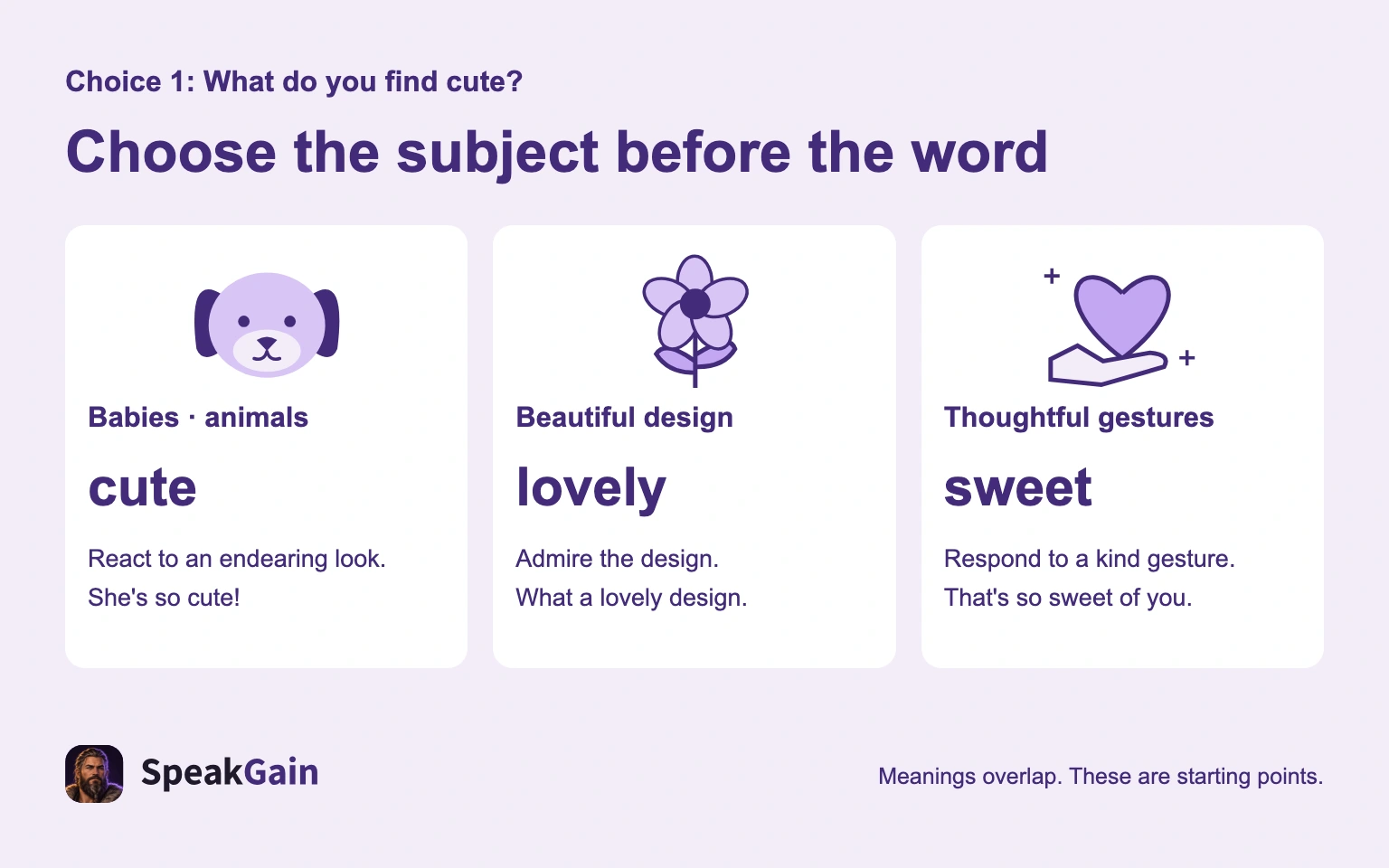
Use He’s so cute! if he is the pronoun used for the baby, or They’re so cute! for two kittens. If you do not know the pronoun, What a cute baby! or What a cute puppy! names the subject. You do not have to guess.
Adorable describes an endearing person or thing that makes you like or love it, often because it is attractive and small. What an adorable puppy! is a good candidate when you feel that affectionate delight. It is not a numerical “twice as cute,” and it does not always outrank a warmly delivered so cute.
| Sentence shape | Example | What to notice |
|---|---|---|
| React with a pronoun | She’s so cute! | You already know whom she refers to. |
| Name the subject | What an adorable puppy! | Say an adorable as one group. |
Compare What a cute puppy! with What an adorable puppy! The initial sound of adorable calls for an; cute starts with a consonant sound and takes a. Practice the whole short phrase, not just the adjective.
2. Things, designs and clothes: cute, lovely or pretty
You might like a bag’s playful shape, its delicate pattern or its overall design. These impressions can overlap. Several words may fit the same object, so the table is a way to choose your focus, not a test with only one correct answer.
| Your focus | Example | What you are praising |
|---|---|---|
| An endearing, playful item | That’s such a cute bag. | The bag itself |
| A design you admire | What a lovely design. | Its overall look |
| Delicate visual beauty | That’s a pretty dress. | How the dress looks |
That’s such a cute bag. comments on the item, even when its owner is beside you. You’re cute. comments on the person. Naming bag, dress or hat helps keep that difference clear. The grammar distinction is such a cute bag but so cute: you can say That bag is so cute., rather than so a cute bag.
Lovely can describe beauty or something enjoyable; those senses carry a mainly UK label in Cambridge. That is not a claim that Americans cannot understand it. Our suggestion for a design you like is What a lovely design. If a nuance worries you, I like the design. expresses your actual preference directly.
Pretty as an adjective describes a pleasant or delicate appearance. It is useful for a hat, a pattern or a dress. Do not divide the words into “cute only for children” and “pretty only for adults.”
| Role of pretty | Example | Meaning here |
|---|---|---|
| Adjective | That’s a pretty bag. | The bag is visually attractive. |
| Degree adverb | That bag is pretty cute. | The bag is quite cute. |
In It’s pretty cute., pretty modifies cute. Cambridge’s grammar guide describes this informal use as quite, but not extremely. It is not a pair of adjectives meaning “pretty and cute.”
3. Adults’ appearance: choose the context too
Pretty, beautiful and lovely can praise how someone looks. Cute can convey endearing charm and, about an adult, attraction. Collins includes that attraction sense. A comment about an adult is therefore not guaranteed to carry exactly the same meaning as a reaction to a puppy.
| Word | Practical focus | Example |
|---|---|---|
| pretty | Visual or delicate beauty | You look pretty. |
| beautiful | Beauty you want to praise clearly | You look beautiful. |
| lovely | A beautiful or pleasing impression | You look lovely. |
| cute | Endearing charm, sometimes attraction | You look cute in that hat. |
Adults can be called cute. It is not always flirting or always treating them like children. Relationship, tone and the conversation matter. Nor does beautiful automatically certify “inner and outer beauty,” or pretty create an absolute gender rule. Dictionary senses describe possibilities; they do not predict an individual’s reaction.
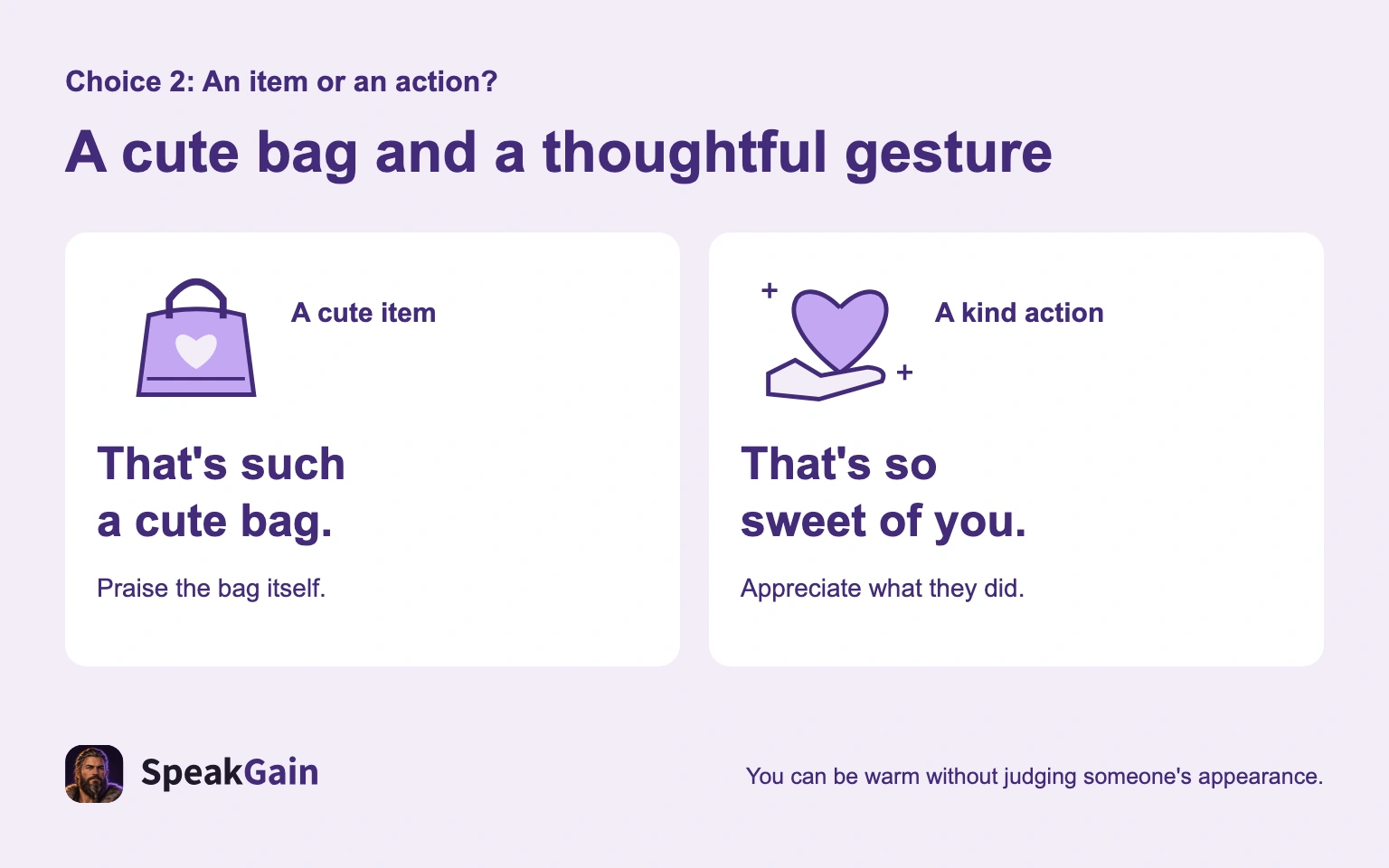
Our editorial advice at work or at a first meeting is to prefer a specific contribution or action when appearance is not already a comfortable topic. If someone helps you, Thank you for your help. addresses what happened. Replacing cute with lovely does not make every appearance comment appropriate. For ways to give and receive a specific compliment, see compliments in English; this is conversational advice, not a universal rule for every workplace or culture.
4. Gestures and personality: sweet and charming
A friend remembers your favourite snack and saves one for you. If what touches you is the kindness, That’s so sweet of you. is a useful reply. Sweet can mean kind and pleasant, not only sugary.
Friend: I saved one for you. I know you like these.
Aya: That’s so sweet of you. Thank you!
That’s refers to the action; You’re so sweet. moves the focus toward the person. We recommend the first sentence when you want to respond to this particular thoughtful gesture. It gives you something concrete to appreciate.
| Focus | Sentence |
|---|---|
| What they just did | That’s so sweet of you. |
| Their kind manner | You’re so sweet. |
| Appealing personal charm | He’s charming. |
Charming means pleasant and attractive. Here it is a candidate for a manner or personality you find appealing: He’s charming. It is not simply “small and cute.” Sweet also has endearing senses, and charming can describe places; the categories are useful entry points, not sealed compartments.
5. Very cute: so cute, super cute and adorable
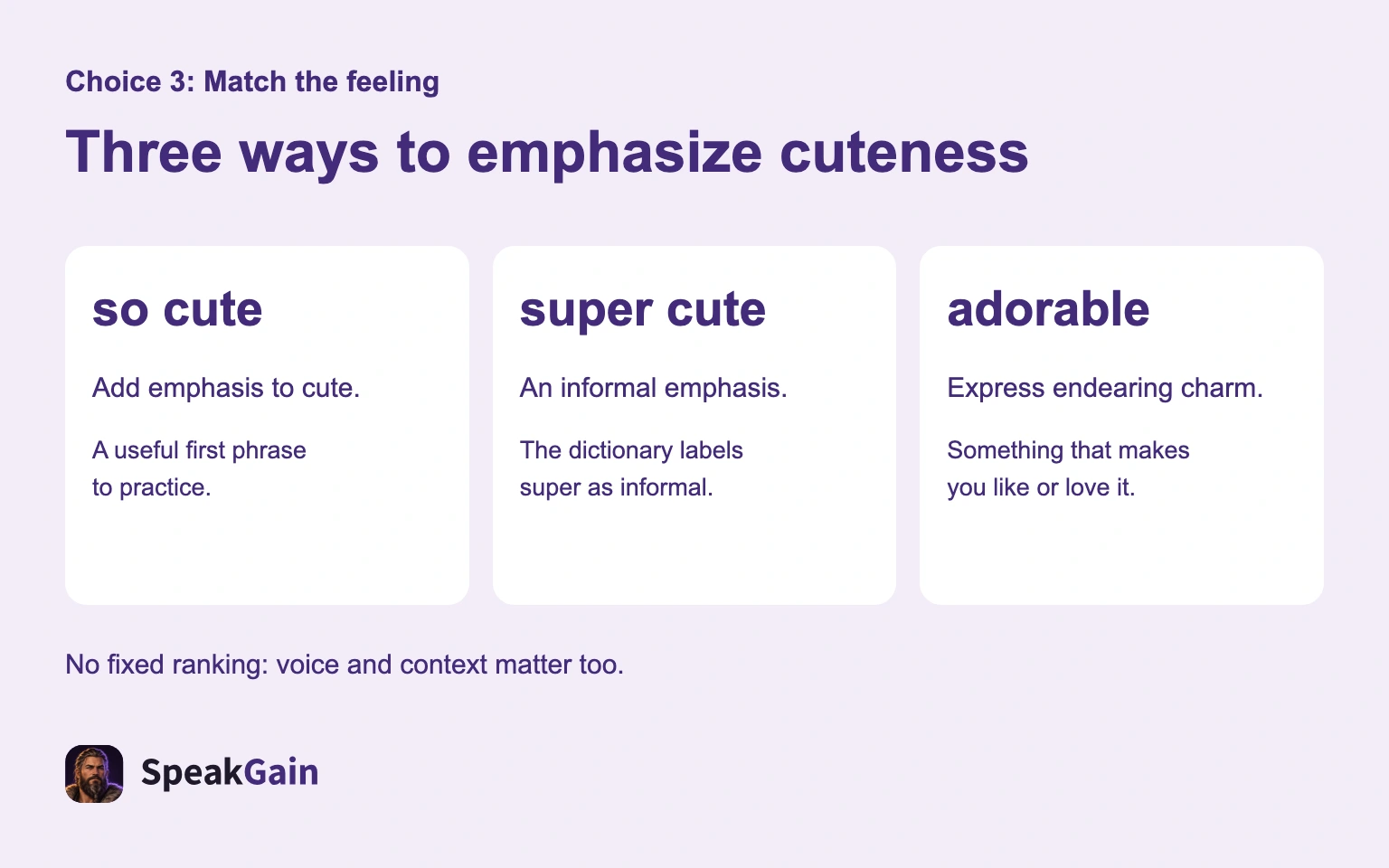
After choosing the subject, choose an intensity that matches your feeling. You can emphasize cute rather than learning a new slang word for every strong reaction.
| Expression | How to use it | Example |
|---|---|---|
| cute | A simple positive reaction | That’s cute. |
| so cute | Stronger emphasis | She’s so cute! |
| super cute | Informal emphasis | That bag is super cute. |
| adorable | Affectionate delight | What an adorable puppy! |
Super as a degree adverb is marked informal. Our first choices are so cute for practice and super cute for a casual exchange. Do not force these into a strict strength ladder.
One dictionary-supported slang example is adorbs, a shortened adorable marked slang. Dictionary inclusion does not prove that every generation or region uses it. We suggest understanding it before making it your default. Start your own replies with so cute or adorable. For other casual expressions, see everyday English slang; for reactions beyond cuteness, see positive reactions in English.
6. Is kawaii an English word?
Cambridge lists kawaii as a noun and adjective relating to Japanese cuteness culture or style, including simple drawings of small people, animals and things. The dictionary entry supports talking about that style. It does not show that everyone understands the borrowed word or that kawaii replaces cute in every conversation.
| Topic | Starting choice |
|---|---|
| Japanese cuteness culture or style | kawaii |
| A baby or pet photo | cute / adorable |
For a friend’s pet, we recommend a direct English reaction first. For an object you like, It’s cute. I like the design. separates the endearing look from your personal preference. Decide whether you are describing a Japanese style or simply responding to something in front of you.
7. Practice with Aya’s day: listen, choose and say
Aya is a fictional learner, not a testimonial. In the morning she sees a friend’s baby photo; at lunch, a colleague’s puppy photo; on the way home, she visits a small-goods shop. Let each scene cue a different reply.
Morning: the friend’s daughter
Hear This is my daughter., then answer She’s so cute! Listen once, say the line while looking at it, and then hide the English. Can you recall it from “a friend’s baby photo”? If not, check the answer and try again.
Lunch: a colleague’s puppy
The colleague says This is our new puppy. Aya replies What an adorable puppy! She is reacting to the pet being shown, not the colleague’s body or face. Name puppy if you do not know its pronoun. You only need one sincere reaction, not three adjectives for every photograph.
After work: a small bag in a shop
Aya spots a bag and says That’s such a cute bag. Her subject has changed from the baby to an item. After listening, try replacing bag with hat: That’s such a cute hat.
The friend then points out something Aya would like. The object may be cute; the friend’s thoughtfulness deserves a different reply: That’s so sweet of you. Add Thank you! if you wish.
8. Save the three sentences in SpeakGain
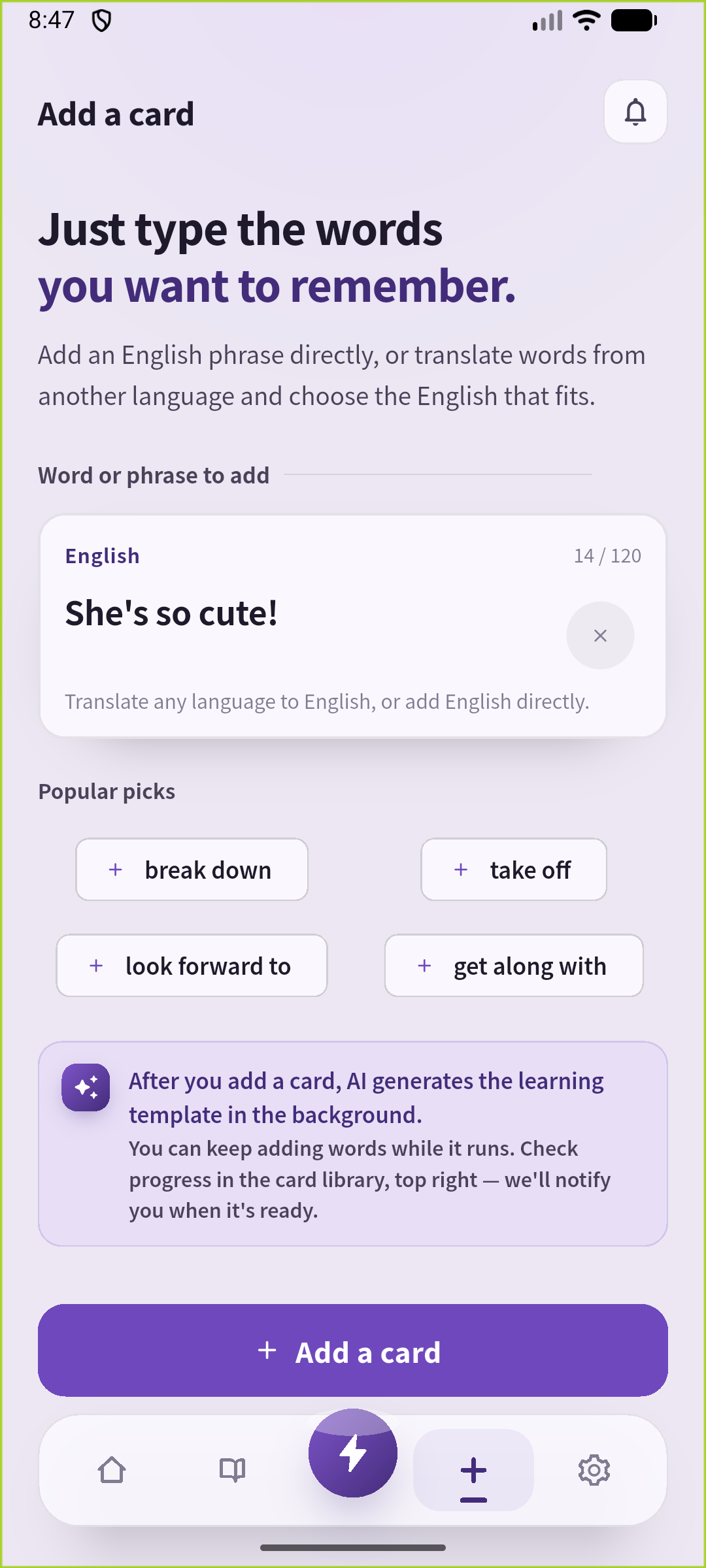
In SpeakGain’s Add screen, enter the English sentence and save a card. We recommend choosing the next scene before saving: a baby photo, a bag or a kind action. These three examples keep the wording attached to something you can actually say.
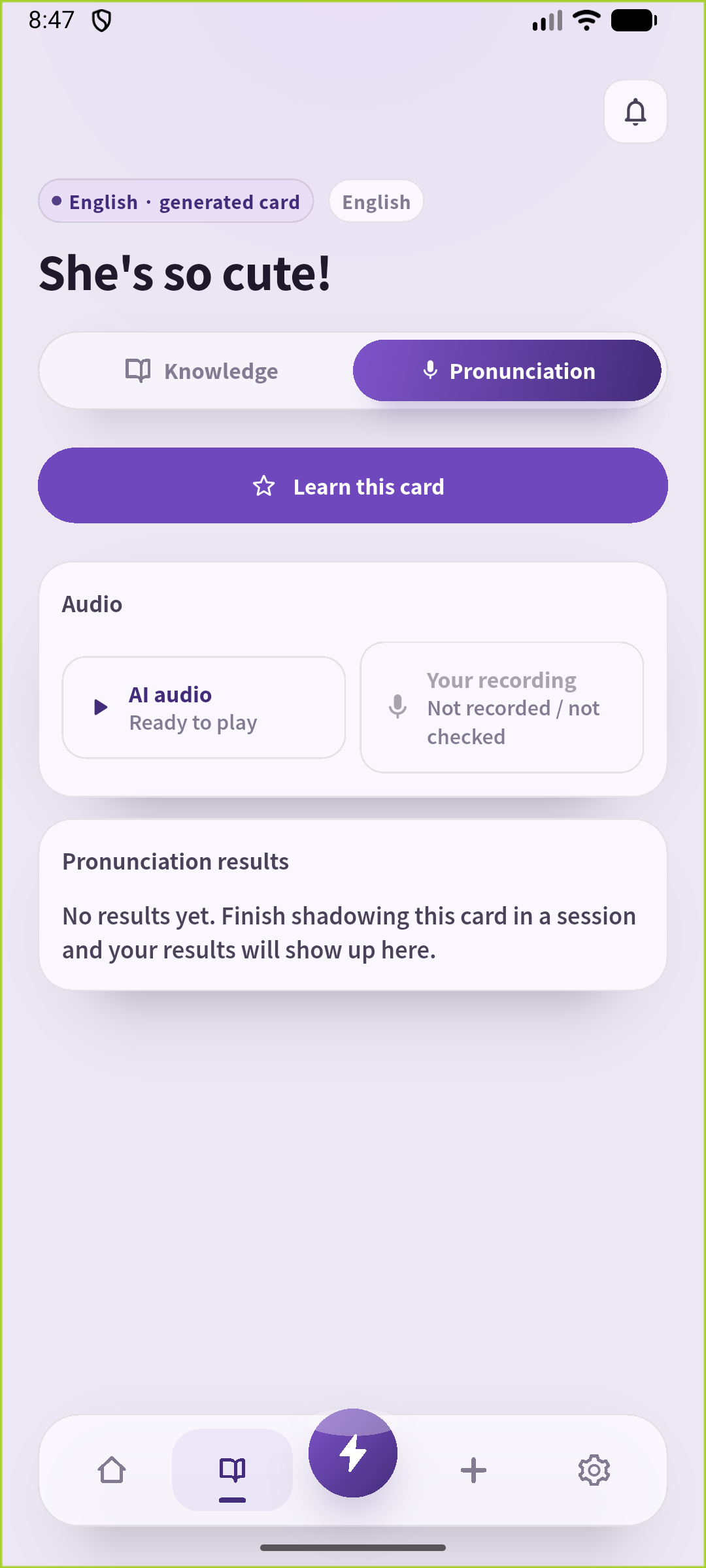
Open the saved card’s audio screen to hear it, then say it yourself. The three clips here were generated with Deep-voiced Viking. You do not need to imitate the voice’s depth or dramatic character when talking to a friend; use your natural voice.
Try recalling, not only rereading
Karpicke and Roediger’s vocabulary study supports repeated retrieval for delayed recall; it did not test SpeakGain or compliment conversations. Our practical interpretation is to hide the sentence and use a scene as a cue, then check the answer. One successful attempt is not a guarantee of fluent use.
Try another scene the next day. If the words do not come, return to the saved sentence and audio. For a broader routine, see how to study English.
Questions people ask
Can I just use cute?
It is a good starting word for babies, animals and endearing items. A kind gesture may call for That’s so sweet of you.; a design you admire may call for What a lovely design. Choose the subject first.
Is adorable forbidden for adults?
No. The dictionary does not make it children-only. But a possible meaning does not make it the best opening at work or with someone you have just met. When unsure, appreciate an item or action instead of evaluating appearance.
Do I need slang to say something is very cute?
So cute and informal super cute already give you useful options. Adorbs is dictionary-listed slang, not a universal default. Understand its context before adopting it.
Can kawaii replace cute?
Not automatically. Its dictionary description relates to Japanese culture and style. For an ordinary baby or pet photo, practice She’s so cute! or What an adorable puppy! first.
Choose what you are praising, then choose your emphasis. Attach She’s so cute!, That’s such a cute bag. and That’s so sweet of you. to one real scene you expect to encounter next.