
Leaving and coming home in English: tadaima, okaeri and a short exchange
Published
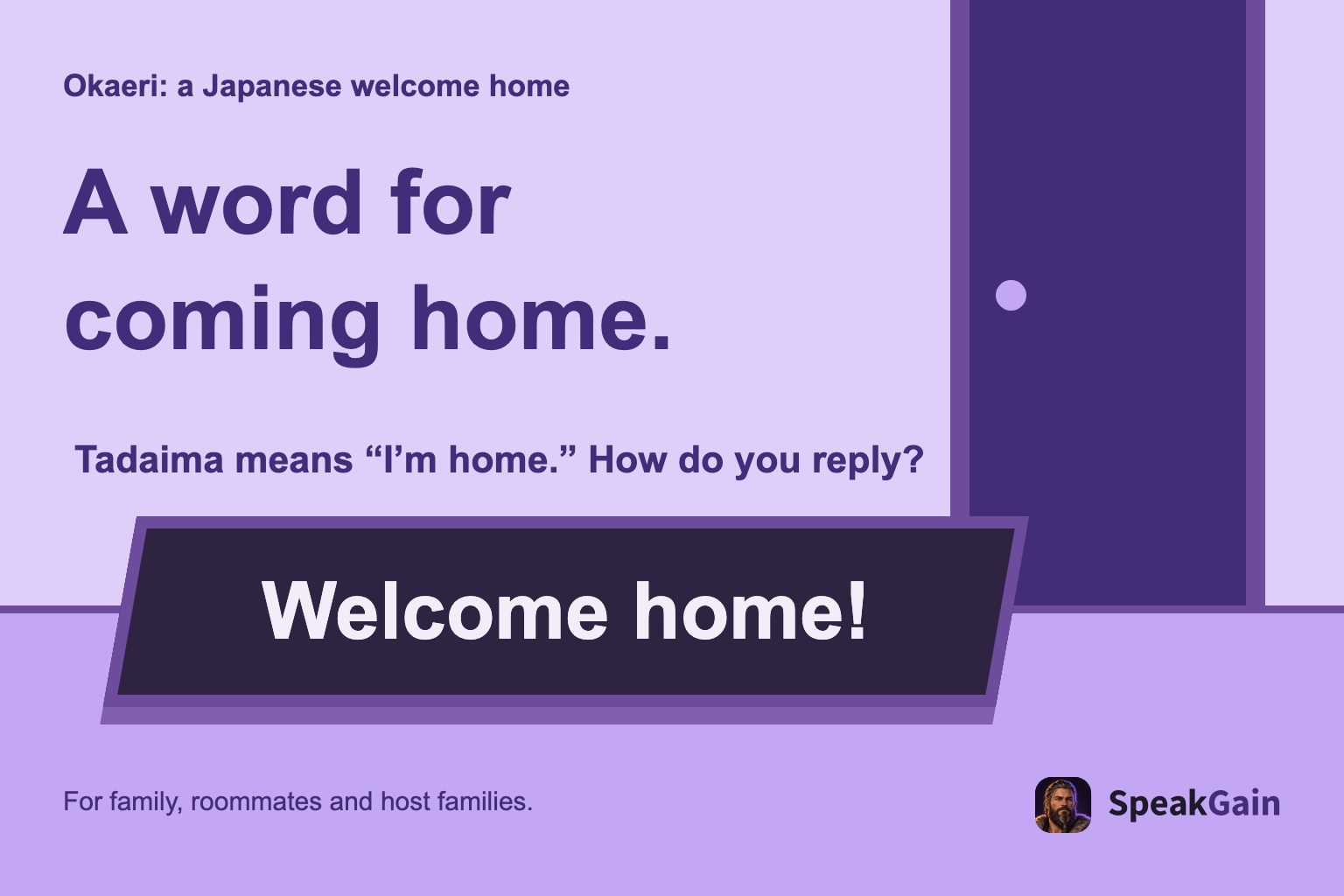
English has no compulsory pair equivalent to Japanese tadaima/okaeri or ittekimasu/itterasshai. When leaving, try I’m heading out. See you later. → Have a good day! When returning, try I’m home! → Welcome home!, or Hi, I’m back. → Hey, how was your day? These are practice choices, not a script every English-speaking household follows.
If you already say “I’m off” or “I’m home” in your own household, start with that purpose: tell someone you are leaving or returning, then greet them. Our recommendation is to learn one departure line and one return line before collecting alternatives. A response can be Hi!, a question, or simply a later conversation when the person is free.
For words of care at the end of a conversation, practice choosing between a farewell, a warning, and your own promise, including what to say before a trip or a journey home.
1. Choose the line by who is speaking
In Japanese, ittekimasu is said by the person leaving home; itterasshai by the person seeing them off. Tadaima announces a return; okaeri welcomes the returning person. The Japan Foundation illustrates the first pair in a morning at home and the second in coming home.
An English sentence can do the same job without becoming a permanent translation. I’m heading out. announces departure; Have a good day! wishes someone well. I’m home! announces being home; How was your day? starts a conversation. You can explain your Japanese custom without expecting your host to use the same response every day.
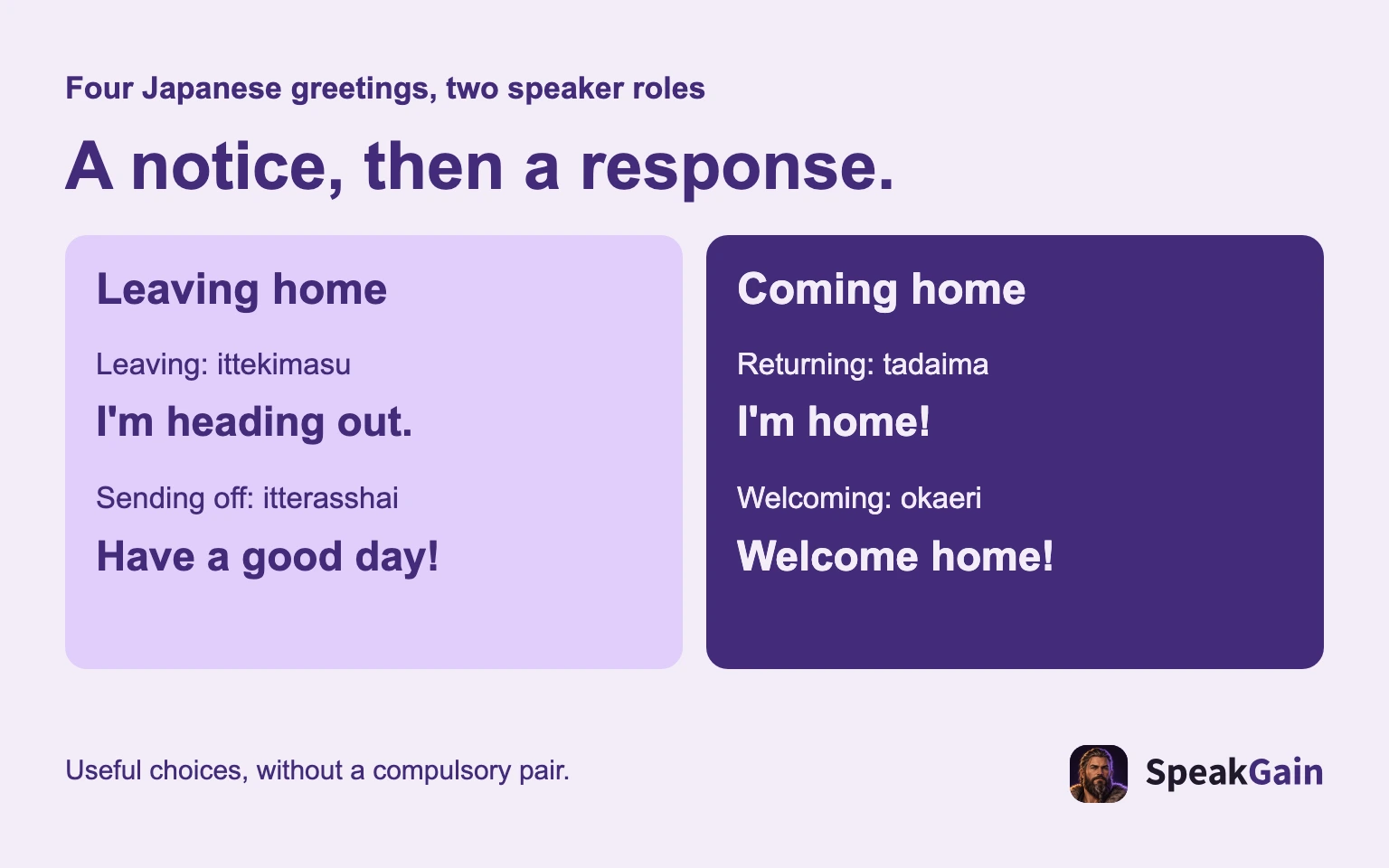
2. Leaving: a notice, then a good wish
Leaving: I’m heading out. See you later.
Staying: Have a good day!
Leaving: Thanks, you too!
See you later. signals an expected later meeting; it does not give a return time. If dinner plans depend on you, add I’ll be back around six. For a shopping trip, I’m going to the store. Do you need anything? offers practical help. Only offer it if you can actually bring something back.
Have fun! suits a planned outing for fun; Good luck! can suit an exam. We recommend Have a good day! as the first response to practise on an ordinary morning. Learn the purpose before memorising a longer list.
3. Returning: I’m home! or Hi, I’m back.
Returning: I’m home!
Family: Welcome home!
Returning: Hi, I’m back.
Roommate: Hey, how was your day?
Returning: It was good, thanks. How about yours?
The question is not a literal translation of okaeri. Either person can ask it. On a tiring day, It was a long day. can be enough before a longer conversation later. I’m home. also describes being at home in other contexts; it is not a password restricted to the instant you enter. I’m going home. describes heading home, before you arrive.
4. Welcome home and Welcome back: use the meanings
Merriam-Webster’s welcome conveys a warm reception. Home refers to one’s residence, or to/at it; back includes returning to a previous place. From those meanings, Welcome home! is a candidate for someone arriving home, and Welcome back! can greet a return to home, work or school. This is a conversational application of dictionary meanings.
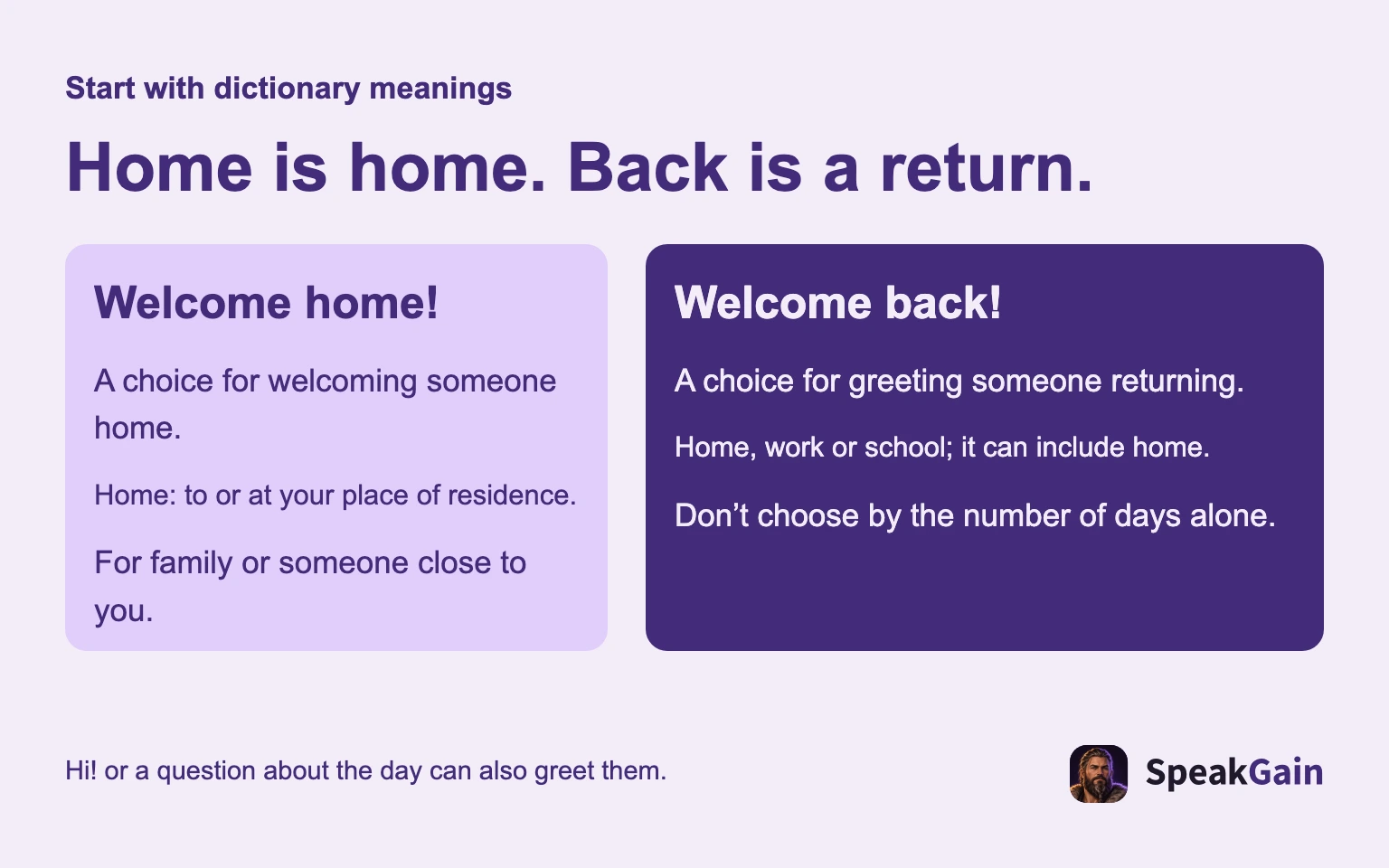
The dictionaries do not establish an absence-length cutoff or prove that one phrase is always more polite. Welcome back! can include a return home. For a colleague returning from an errand, we would start with Hi! or Welcome back!, rather than describe the office as home. Our editorial choice for practice is Welcome home! with family, while keeping Hi! available for everyday encounters with roommates.
5. Adapt to family, roommates, hosts and children
Family or a partner:
I’m home! How was your day? → Pretty good. How about yours?
Split the notice and the question: you can use just the first when busy.
Roommates:
I’m going to the store. → Okay, see you later.
You need not report every movement unless that is your agreement. Add useful information about shared keys or meals separately.
A host family: I’m heading out to school. See you later. Add an agreed return time. On return, Hi, I’m back. How was your day? → Good, thanks. How was school? Use the names or forms of address the family introduces. If you miss the reply, try Sorry, could you say that again?
Children:
I’m home! → Hi! How was school?
A tired child can be welcomed without immediately answering a question. We suggest treating the line as part of home life, rather than turning every arrival into a language test.
At work, use I’m back from the meeting. → Hi. How did it go? If someone waited, add I’m back. Thanks for waiting. Follow any actual reporting agreement too. For a different workplace farewell, see English options for otsukaresama at work; introductions and cooperation are covered in English options for yoroshiku onegaishimasu.
6. When nothing is said, look at the situation
An empty house offers nobody to answer. Someone asleep, in a call or wearing headphones may be unable to talk. You can greet them when you next meet. No reply alone proves neither rudeness nor a mistake in your English.
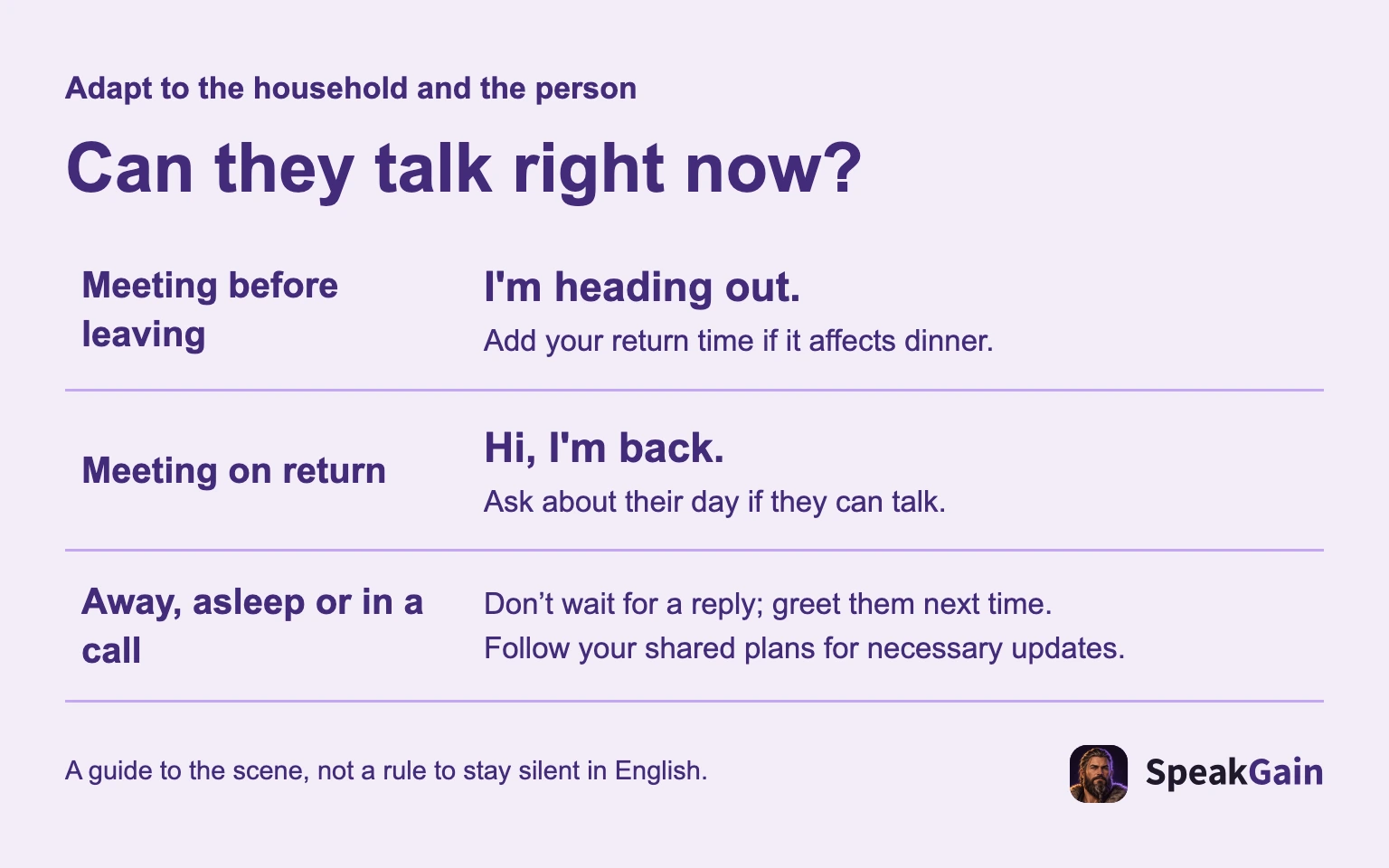
These are situational guides, not rules about all English-speaking homes. When moving in, ask Should I let you know when I head out? Keep any necessary updates separate from the greeting. We recommend checking your shared arrangements before explaining silence as a cultural difference.
7. Yui’s homestay: hear a morning and say an evening
Yui and her host Sam are fictional practice characters. Yui is leaving for school. She hears the first recording, stops it and says I’m heading out. See you later. If needed, she adds her actual return time. Focus on sending two ideas, rather than saying the line fast.
In SpeakGain’s Add screen, she can enter that English sentence and create a card for her own planned use.
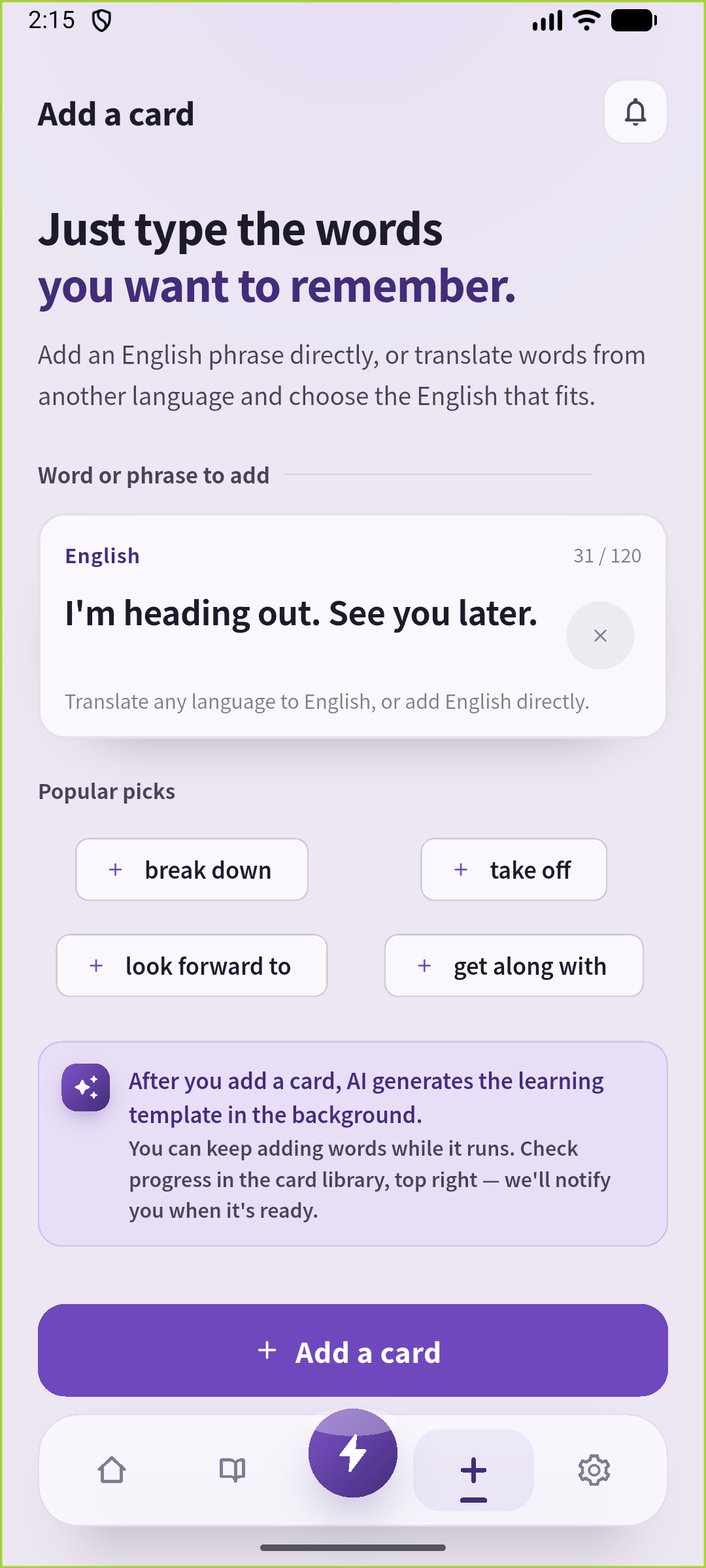
Sam says Have a good day! Yui listens to the response as well as her own line, then tries Thanks, you too! with the recording stopped.
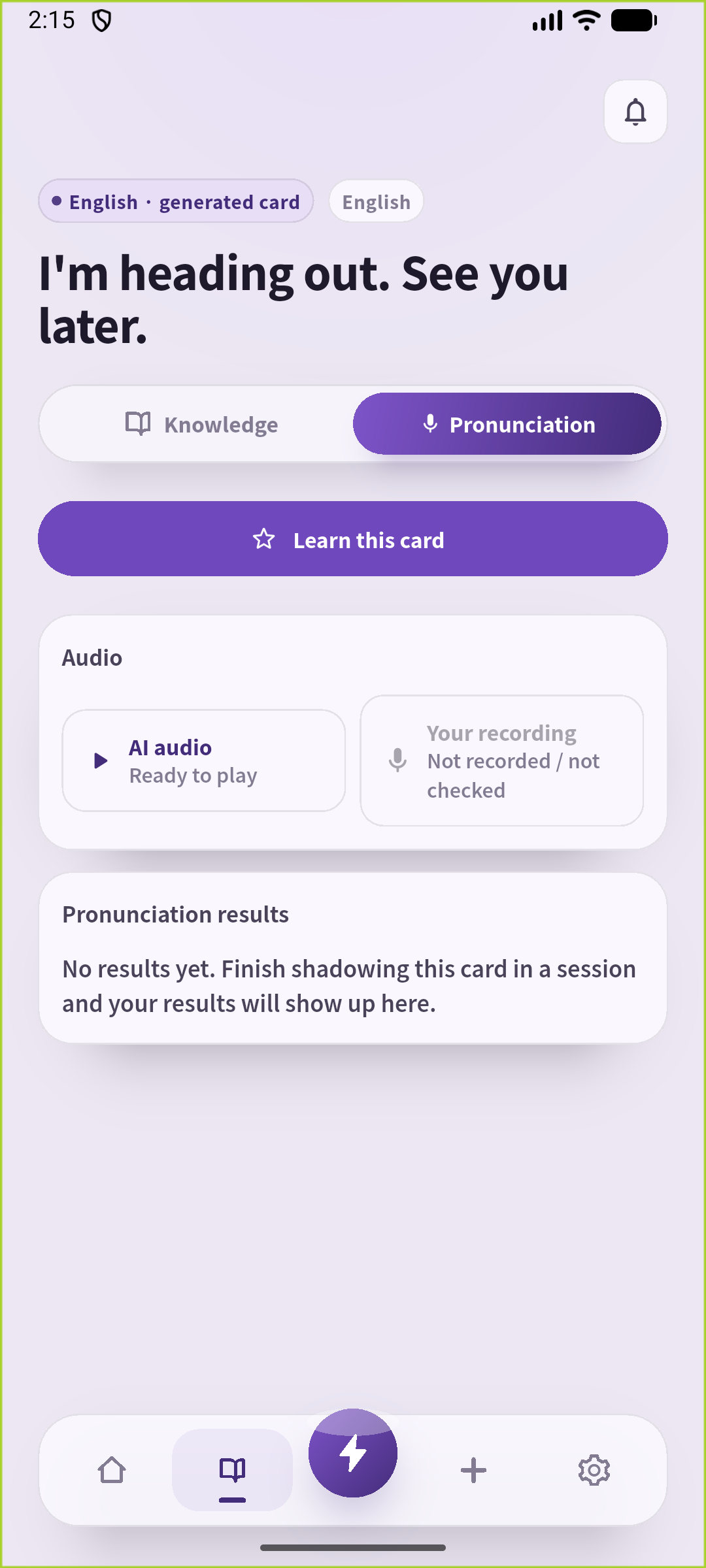
The saved card’s pronunciation screen lets her listen to the AI voice and go to practice. The capture below has no personal recording or score yet. A pronunciation result would not decide whether a greeting fits this household.
In the evening Yui says I’m home! How was your day? Sam replies Good, thanks. How was school? She can answer It was good. We had a short test. only if it fits what really happened; she need not repeat a fictional report.
Finally hide the sentences and recall a line from each scene: putting on shoes, hearing a good wish, coming home. Karpicke and Roediger’s 2008 study found better one-week recall when college students continued retrieval practice on foreign-language word pairs after a successful answer. It did not test these greetings, homestay fluency or SpeakGain. Our practical suggestion is to add a short recall attempt after listening, and try again before leaving tomorrow.
Questions you may still have
Must I always say Welcome home? No. Hi! or a question can also greet someone. Choose by your relationship and their availability.
Can the leaving person say Have a good day? Yes, as a good wish to the other person. It does not itself tell them you are leaving; use I’m heading out. for that job.
Do I need to give my destination every time? Not as part of the greeting itself. Share information that affects dinner, keys, childcare or an agreement with your host.
For everyday openings and answers to How are you?, see everyday English greetings and replies. For a homestay meal, see English phrases at the table: itadakimasu. Choose a scene you will actually use tomorrow and practise both sides once.