
What a shame: meaning, sympathetic replies, and what to say next
Published
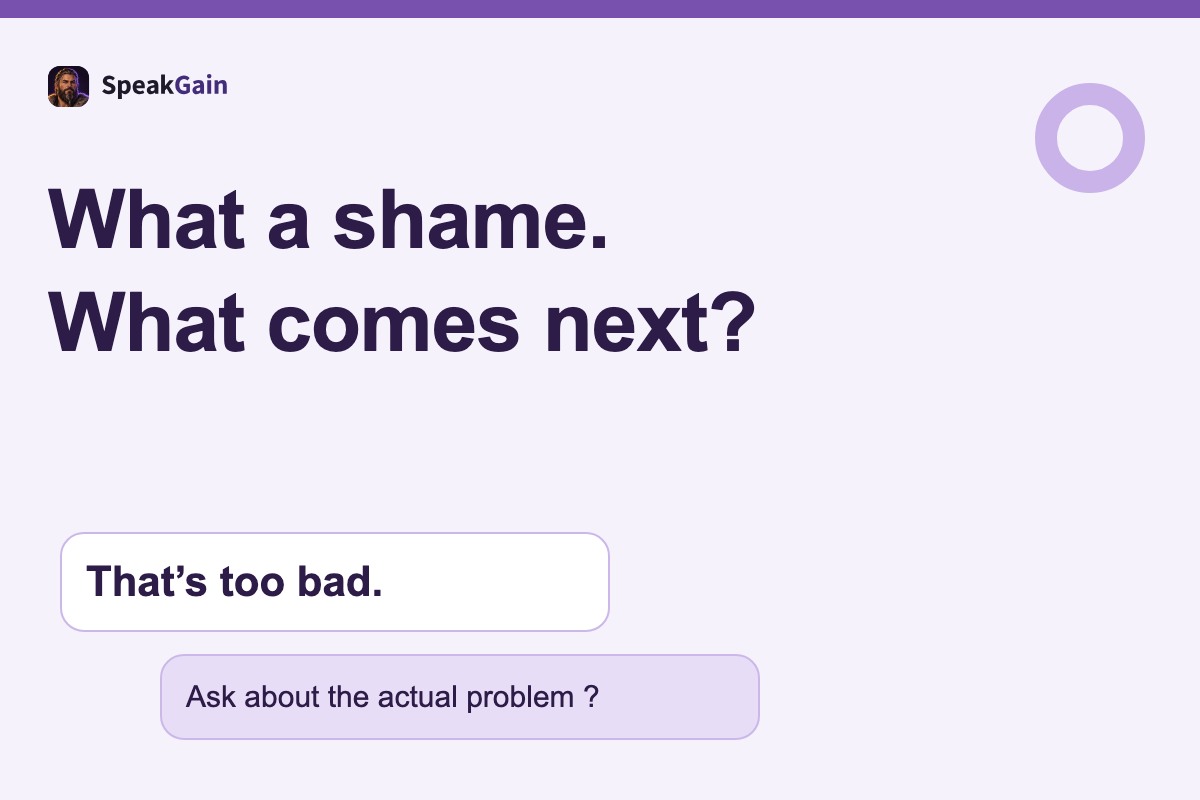
What a shame! means that something is disappointing or unfortunate; it often expresses regret about a situation. Here, shame does not mean that someone should feel guilty. Use I'm sorry to hear that to acknowledge someone’s trouble, I'm disappointed for your own unmet expectations, and Unfortunately, … when you are giving unwelcome news.
Choose whose disappointment you mean
Shame has a disappointing-situation sense as well as a guilt sense. This article uses the first. The listener and seriousness columns below are practical choices for these scenes, rather than a fixed ranking of emotional strength.
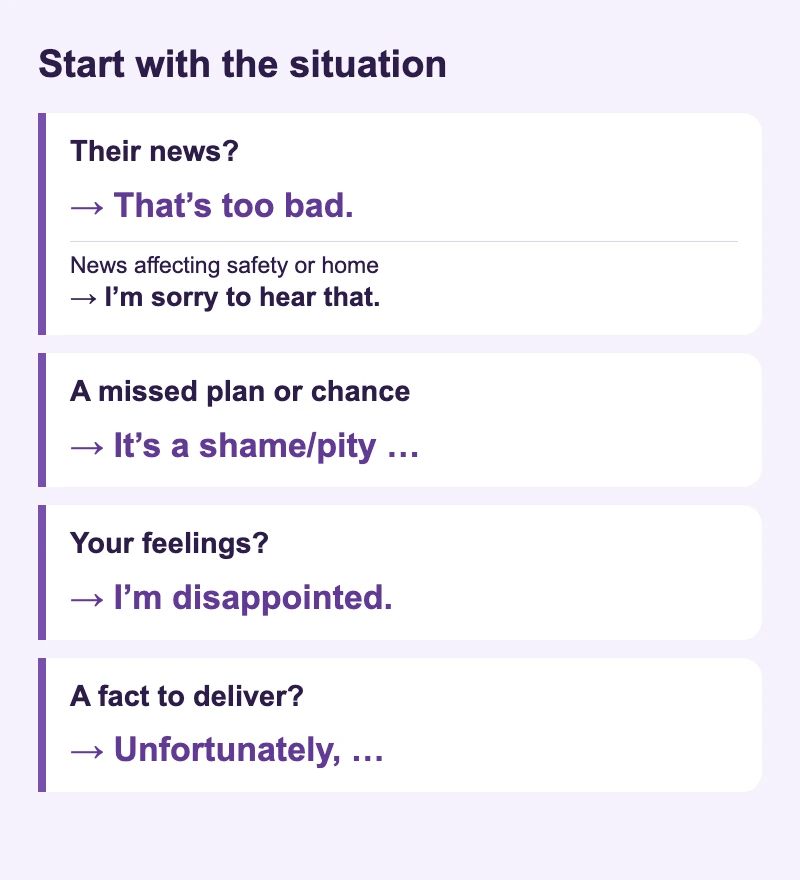
| Situation Listener and seriousness | Starting phrase |
|---|---|
| Someone else’s trouble A friend’s everyday setback / News affecting safety or home | That's too bad. / I'm sorry to hear that. |
| A missed plan or chance A missed meeting or cancellation | It's a shame/pity … |
| Your unmet expectations An unsatisfactory result | I'm disappointed … |
| News you are giving Visitors or a customer | Unfortunately, … / I'm afraid … |
Respond to the news, then make room for an answer
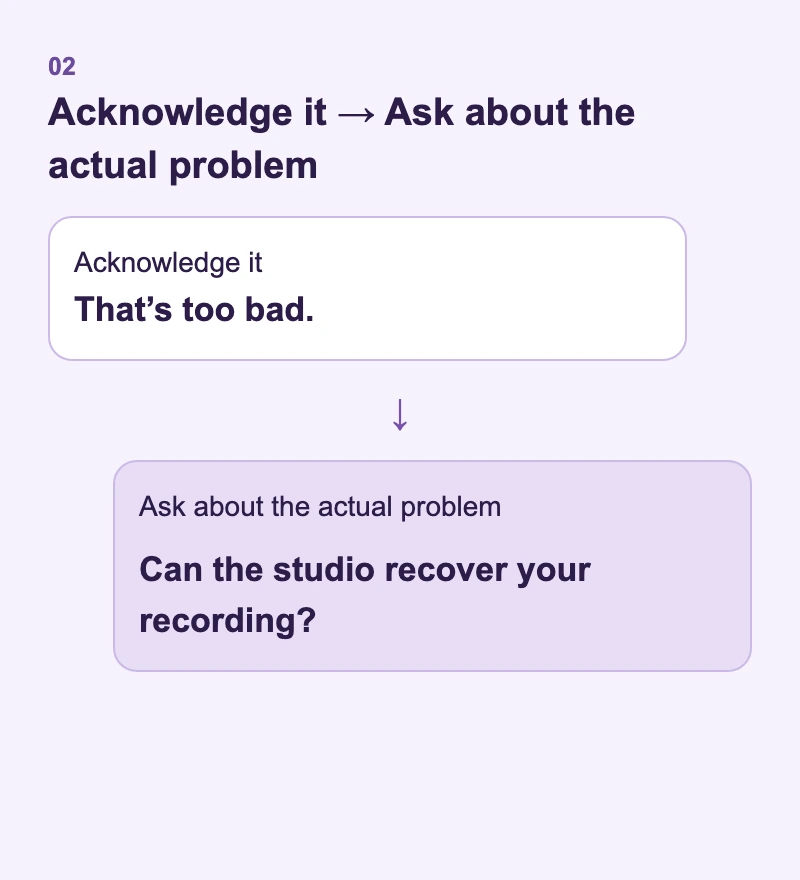
01 That's too bad. Can the studio recover your recording?
A studio recording has been lost: ask about recovering it.
07 I'm sorry to hear that. Have you found somewhere safe to stay?
A friend cannot safely return home: ask about shelter.
A friend has lost an edited recording at a studio. In example 1, the reaction leads to a question about recovery. If a burst water pipe has made their home unsafe, example 7 turns instead to whether they have somewhere safe to stay. Sorry includes sympathy. For a serious problem, our recommendation is to ask about the person’s immediate needs instead of ending with a brief exclamation.
For a wider set of listening reactions, see Listening responses.
Missing a meeting or an opportunity
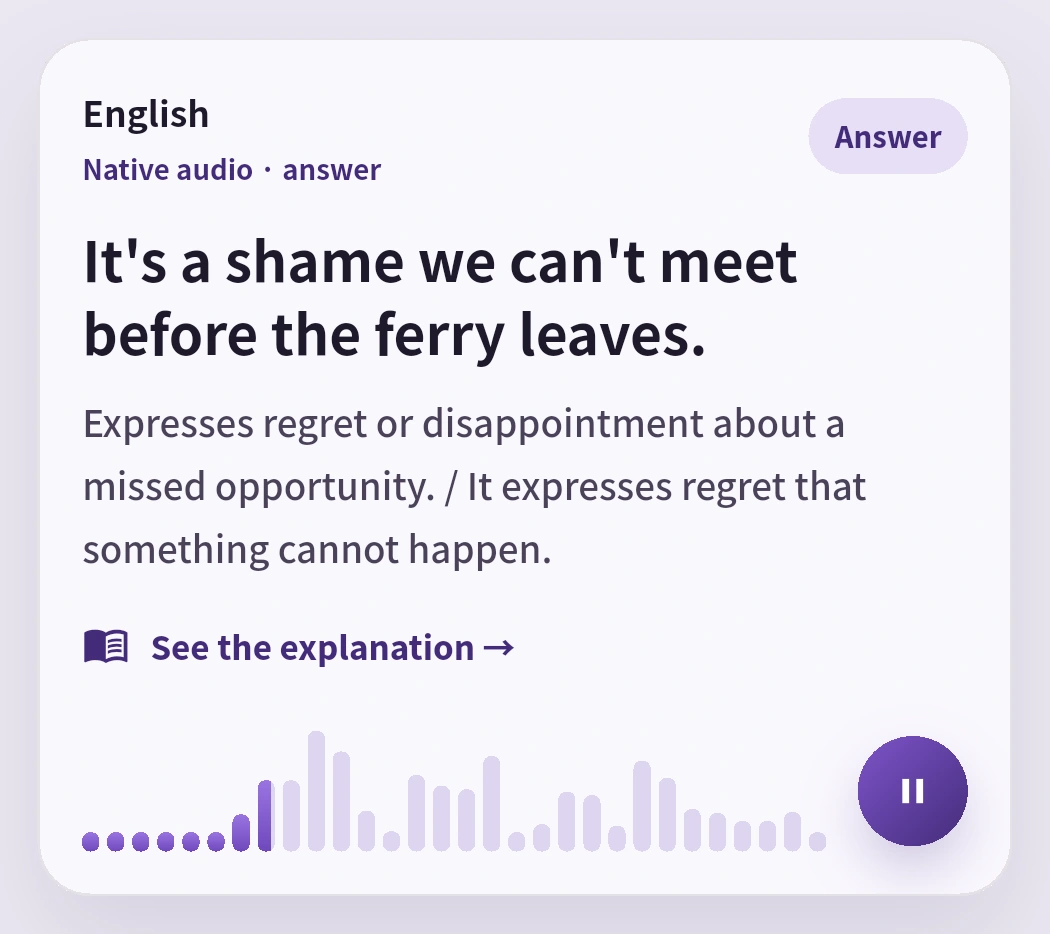
02 It's a shame we can't meet before the ferry leaves.
A ferry leaves before you can meet.
05 It's a pity the tide-pool walk was cancelled.
The tide-pool walk is no longer happening.
You cannot attend an upcoming event
It's a shame I can't attend the tide-pool walk.
The tide-pool walk is still ahead; you cannot join it.
You could not attend a past event
It's a shame I couldn't attend the tide-pool walk.
The tide-pool walk is over; you missed it.
Example 2 concerns a ferry departure that prevents a meeting; example 5 concerns a cancelled tide-pool walk. Shame and pity can both describe a disappointing situation. Use It's a shame/pity (that) + subject + verb to name it. For an event you cannot attend, use I can't attend; looking back at one you missed, use I couldn't attend.
If you are turning down an invitation, see Declining politely.
Disappointed: the person; disappointing: the cause
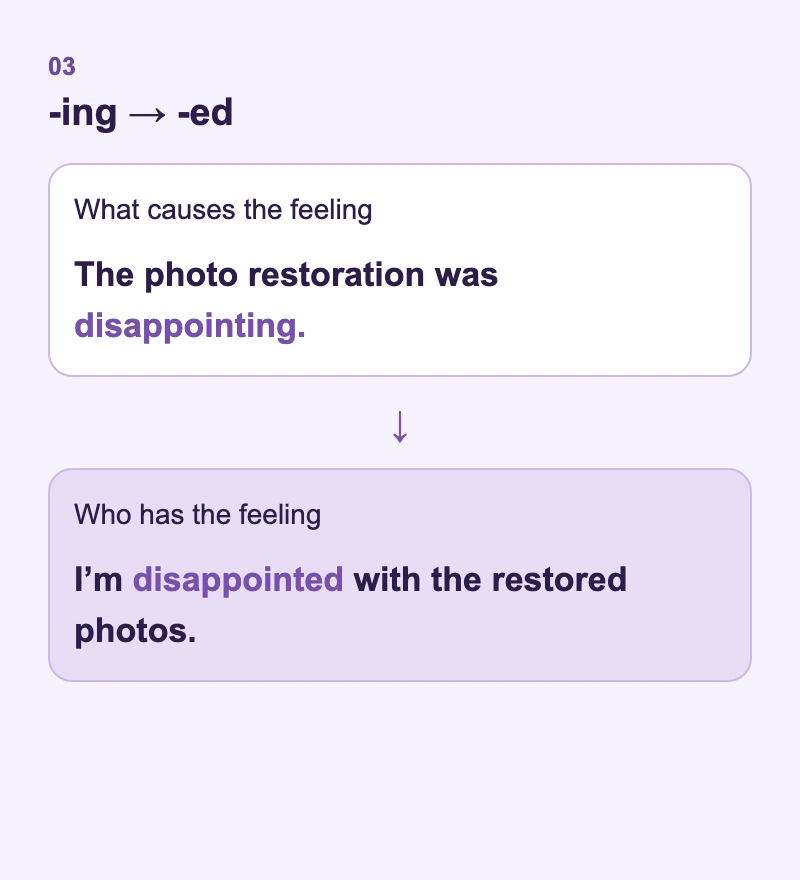
03 I'm disappointed with the restored photos.
You are unhappy with the restored photos.
06 The photo restoration was disappointing.
The restoration caused disappointment.
You paid to restore old family photographs, but the result fell short. Disappointed describes how you feel; disappointing describes something that causes that feeling. Examples 3 and 6 show these two perspectives. A little disappointed softens the degree, while very disappointed increases it. Saying I'm disappointed in you evaluates the person; name the photos if the finished work is your concern.
When you are giving the bad news
04 Unfortunately, the observatory lift is out of service.
Visitors need to know that the observatory lift is broken.
08 I'm afraid the replacement lens won't arrive until Monday.
A customer must wait until Monday for a replacement lens.
Unfortunately introduces something sad, disappointing or harmful. Example 4 gives observatory visitors a concrete fact about the lift. In an email, follow the fact with an available alternative if you know one.
I’m afraid can politely introduce bad news. Example 8 tells a customer when a replacement lens will arrive. Neither expression is restricted to writing or speaking: make the outcome and timing clear.
Bummer and Oh well at work
09 Bummer! The last atlas has just been sold. Oh well, we'll look for a different edition.
An atlas has sold out; choose another edition.
Bummer is informal and names something unpleasant or annoying. Cambridge’s Oh well section describes acknowledging disappointment, often followed by a suggestion. Example 9 moves from a sold-out atlas to looking for another edition. The work choices below are editorial guidance for this situation.
| English | A choice at work |
|---|---|
| Bummer! | Possible in friendly colleague chat |
| Oh well, … | Do not hurry someone past a loss |
| Unfortunately, … | Give customers the concrete facts |
Let the concern reach your voice
The British Council explains that pitch movement conveys attitudes. Listen to example 1: notice the prominence of bad and the space before the question. Try giving both the reaction and the question without rushing past your friend’s news. Record yourself and compare the words that carry your concern, rather than aiming for one supposedly sympathetic pitch.
Rehearse three disappointments from this week
Recall one problem someone told you about, one meeting you missed, and one result that disappointed you this week. Pick a pattern for each and replace the recording, ferry or photos with the thing that actually happened. Say the full response, including the question when one fits.
Keep the ferry sentence you wish you had said in a card in our app, SpeakGain; its audio gives you a starting point for saying it before the next departure.
Questions learners ask
What a shame or It’s a shame?
What a shame is a compact exclamation. It’s a shame lets you continue with a that-clause explaining the problem. In this use, neither means that someone is disgraceful.
Is What a shame sarcastic?
Its dictionary meaning here is regret about a disappointing situation. The words alone do not establish sarcasm; listen to the surrounding conversation and delivery. Too bad explicitly has both sympathetic and uncaring uses in Cambridge, so it particularly benefits from a clear follow-up.
Does sorry always apologise?
No. Sorry also expresses sympathy. When someone else has suffered a setback, acknowledging it does not by itself say that you caused it.
For taking responsibility for your own mistake, see Apologising.
Choose your next line
First decide whether you are responding, describing your feelings or delivering news. Then add the detail that makes the line useful to the other person.