
Happy New Year wishes in English: what to say, when, and how to reply
Published
For a simple New Year greeting, say Happy New Year! Before you part for the year, Have a peaceful New Year! makes the forward-looking wish clear; in January, add one sentence about what you hope to do together. If someone wishes you a happy year or holiday, You too! is an easy reply.
Choose by timing and relationship
Start with the moment, then think about the person. A colleague finishing a shift may still be working through the holidays; a wish for the coming year fits without assuming a vacation.
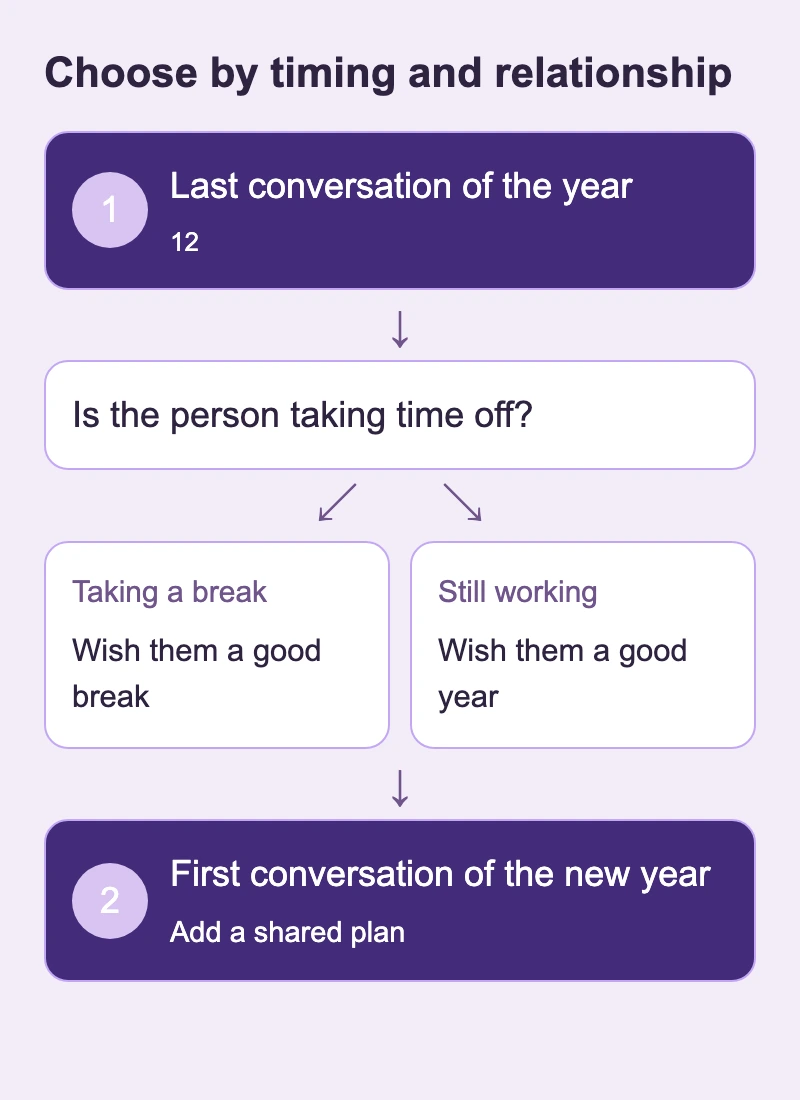
| When Who |
Expression |
|---|---|
| Last conversation of the year Colleague |
Have a … New Year! |
| First conversation of the new year Project partner |
Happy New Year! + I hope … |
| First conversation of the new year Teacher |
Happy New Year! + I am excited … |
| Before a break Colleague |
Happy holidays! |
| Christmas celebrant Friend |
Merry Christmas! |
Before the year ends: a wish for what comes next
Imagine putting away tools at a shared workshop. Lena is leaving, and you will not meet again until January.
Have a peaceful New Year, Lena!
A year-end farewell to Lena, a colleague at a shared workshop.
Cambridge’s New Year entry includes both the year about to begin and the one just begun, and gives a combined Christmas and New Year wish. You can therefore wish someone a happy new year before January arrives. In a farewell, the Have a … form makes that future wish particularly clear. For a dated example before January, the Welsh Government’s New Year message published on December 30 opens with Happy New Year!
Have a restful break. focuses on time off; See you in January. refers to your next meeting. Neither statement by itself is specifically a New Year wish. Choose the meaning you actually want rather than attaching every seasonal expression to one goodbye.
After New Year: add a sentence about your relationship
When Omar returns to discuss a project, try this:
Happy New Year, Omar! I hope our next project goes smoothly.
A January greeting to Omar, a project partner.
The second sentence connects the greeting to your work. With a teacher or a friend, choose a different shared activity:
Happy New Year! I am excited to keep learning with you.
A greeting to your teacher before the next course.
Happy New Year! Let us make time for another long walk.
A New Year message to a walking companion.
A general wish does not need to promise success, money, or a perfect year. A realistic hope about learning or spending time together can sound warmer than a long list of impressive adjectives.
Christmas, Happy holidays, or Season’s greetings?
Use Merry Christmas! with someone you know celebrates Christmas. For a mixed group, or when you do not know the person’s traditions, Happy holidays! offers a broader seasonal wish. VOA’s explanation also describes Season’s greetings as a way to include different traditions, often seen on cards and displays.
Happy holidays! Enjoy the time with your family.
A holiday wish for someone spending time with family.
A close friend who has told you about their Christmas baking might enjoy a specific detail:
Merry Christmas! Save me a slice of that ginger cake.
A Christmas message to a friend who bakes.
For pronunciation, Cambridge’s merry audio places the stress on the first syllable, /ˈmer.i/. The difference from Mary and marry depends on accent: the World Englishes survey records both merged and distinct pronunciations. Follow one speaker’s model rather than forcing a three-way distinction into every accent.
Return the wish, then continue the conversation
Think of the reply as returning a gift: the other person wished you well, and you send the wish back.
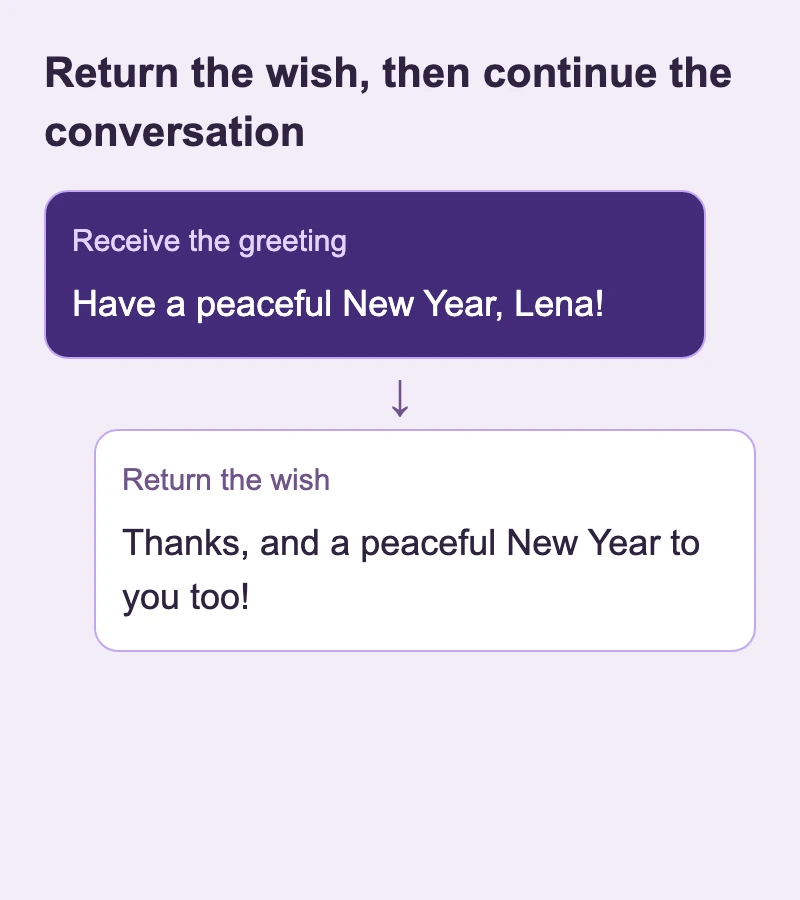
Thanks, and a peaceful New Year to you too!
Return Lena’s wish with thanks.
You can stop there. If you have time to talk, add one easy question:
You too! Are you staying in town for the break?
A short return wish followed by a question.
You too! works when the wish applies to both people. It is a reply to the wish, rather than a complete answer to the question about staying in town. (BBC Learning English)
Build a short message
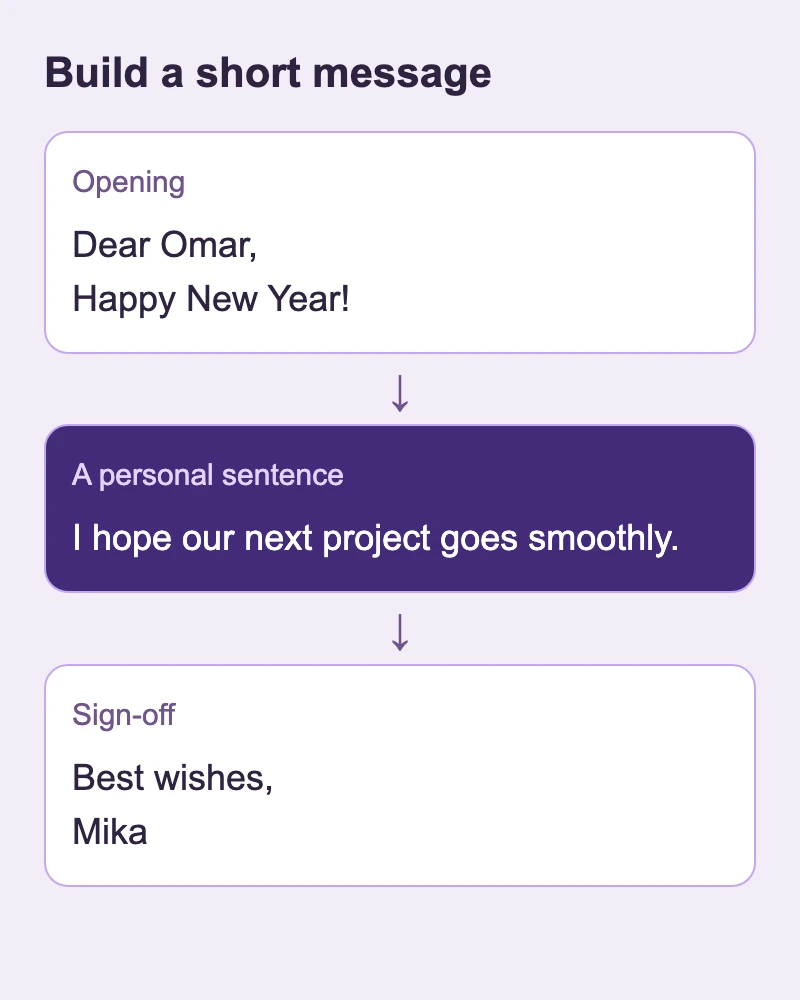
For a project email, put Dear Omar, before example 3 and Best wishes, plus your name after it. For a teacher, use example 4; for a walking friend, example 5 needs no formal salutation. This gives you a short message whose middle sentence actually belongs to the recipient.
The Government of Canada’s holiday-writing quiz covers seasonal spelling and capitalization. Remember the apostrophe in Season’s greetings. Do not copy a year number from an old greeting card; the wishes here work in any year.
Rehearse your last December and first January conversation
Choose the person you will see on your last December visit and someone you will speak to in January. Play examples 1 and 2, hide the text, and act out both turns. Then practise example 3 with a short return wish, replacing Omar with your own contact’s name.
In our app SpeakGain, keeping this workshop exchange ready lets you listen and speak as though Lena were by the door. Record your version to check the New Year phrase, then try both turns again when the FSRS review comes up.
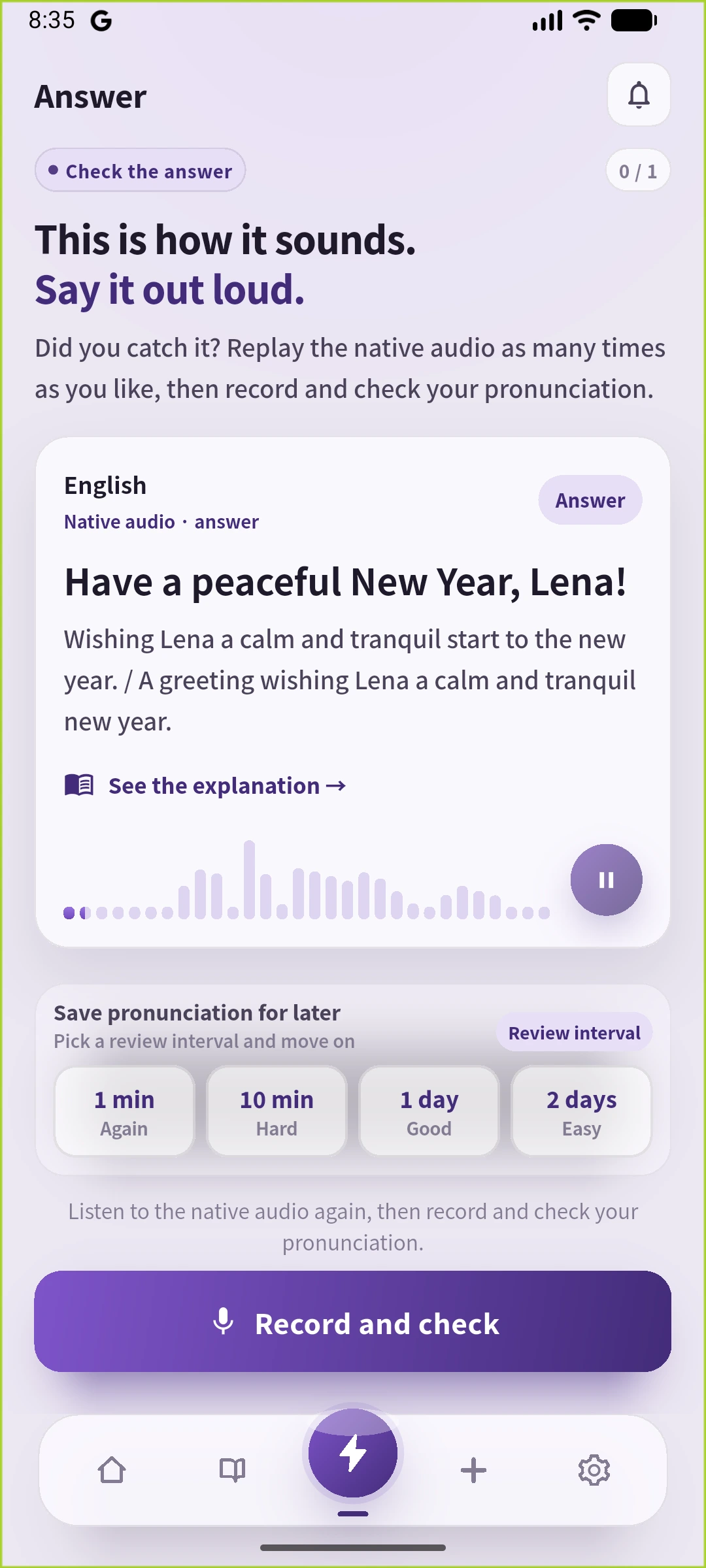
The clips use synthesized speech. Listen for a small pause between the greeting and the personal sentence, then leave the same space in your own delivery.
Questions learners ask
Can I say Happy New Year before January 1?
Yes, as a wish for the approaching year. At midnight it can celebrate the beginning itself; in a December farewell it looks ahead.
When should I stop saying it?
For practical purposes, use your first conversation of the year as the cue. If much time has passed, start with an ordinary greeting and ask about the person instead of treating a particular January date as a universal deadline.
What about Lunar New Year?
Happy Lunar New Year! names the occasion explicitly. Ask which celebration the recipient observes; Taiwan’s Tourism Administration describes the family gatherings surrounding Lunar New Year.
Is a long card necessary?
No. A greeting and one relevant sentence can carry the message. In a business email, include the normal name and sign-off you use with that person.
One wish, one sentence about the recipient, and a reply you can say aloud: that is enough preparation for a real seasonal conversation.