
Envy vs jealous: the difference, friendly replies and useful forms
Published
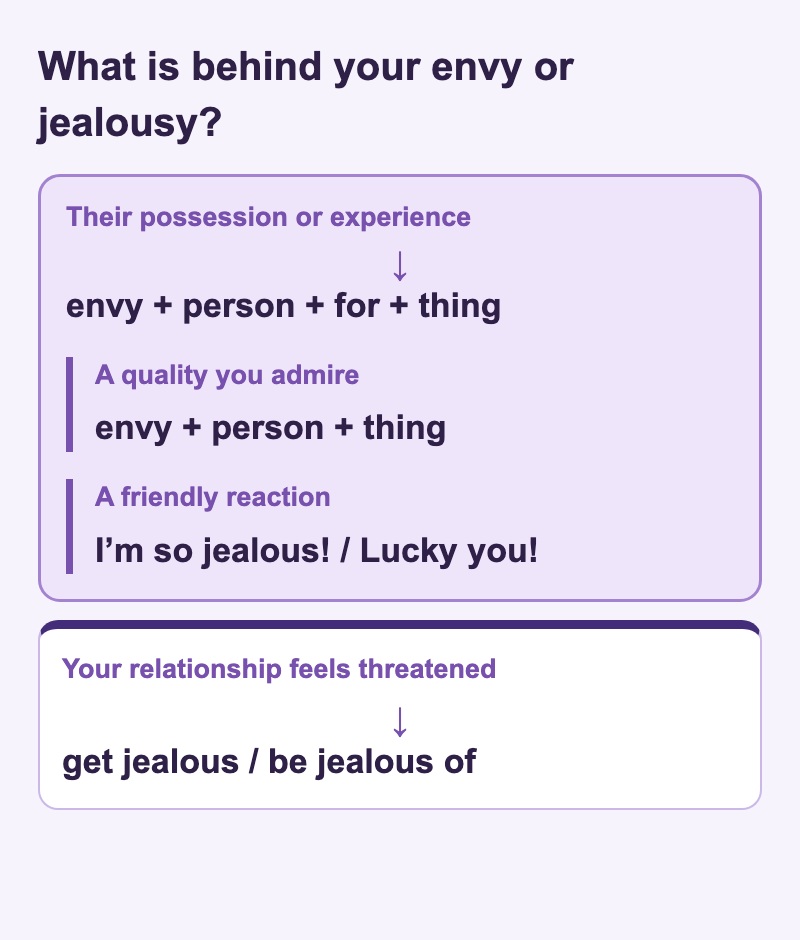
Envy means wanting something another person has; jealous can mean worrying about losing someone’s affection, but it also means envious. For a light response to a friend’s good news, “I’m so jealous!” or “Lucky you!” can work when the context and tone are friendly.
Choose by the feeling
| What you mean | Useful choice | Tone |
|---|---|---|
| You want an advantage someone has | I envy you for having a rooftop herb garden. | Direct about the desire |
| You admire a quality you would like | I envy you your patience with the telescope. | Specific admiration with envy |
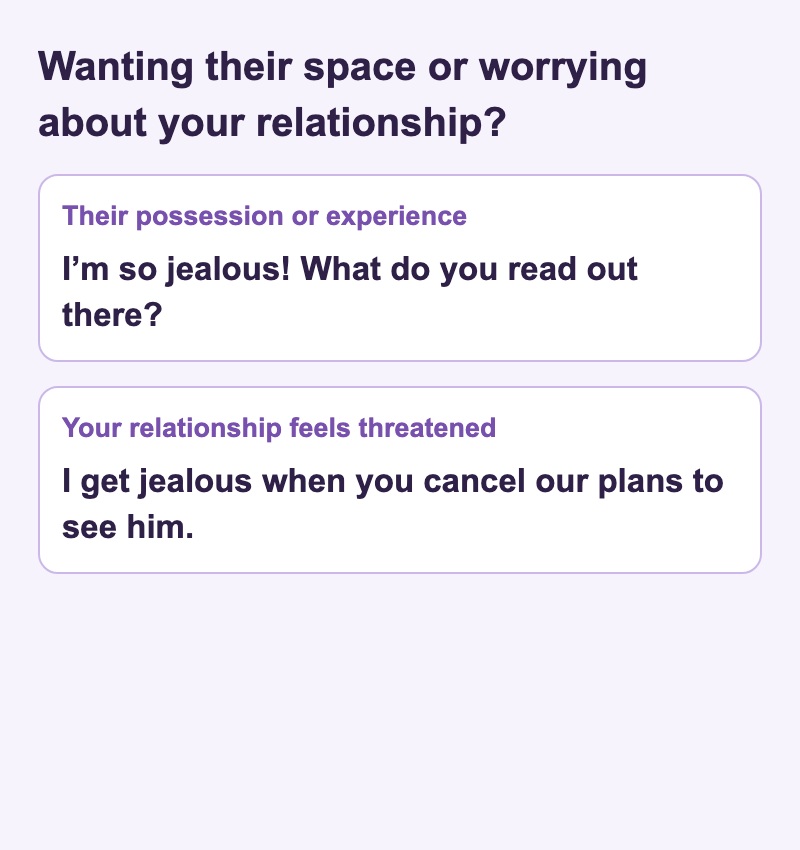
| A friend has something appealing | I'm so jealous! What do you read out there? | Light, with a warm voice |
| You fear losing someone’s attention | I get jealous when you cancel our plans to see him. | Serious; explain the situation |
Wanting their space or worrying about your relationship?
A balcony big enough for a hammock is an advantage you would like yourself. That is envy, even if you describe it with jealous. A cancelled plan to spend time with a possible rival gives jealous its relationship meaning. The word alone does not tell you which feeling is intended: look at what follows it.
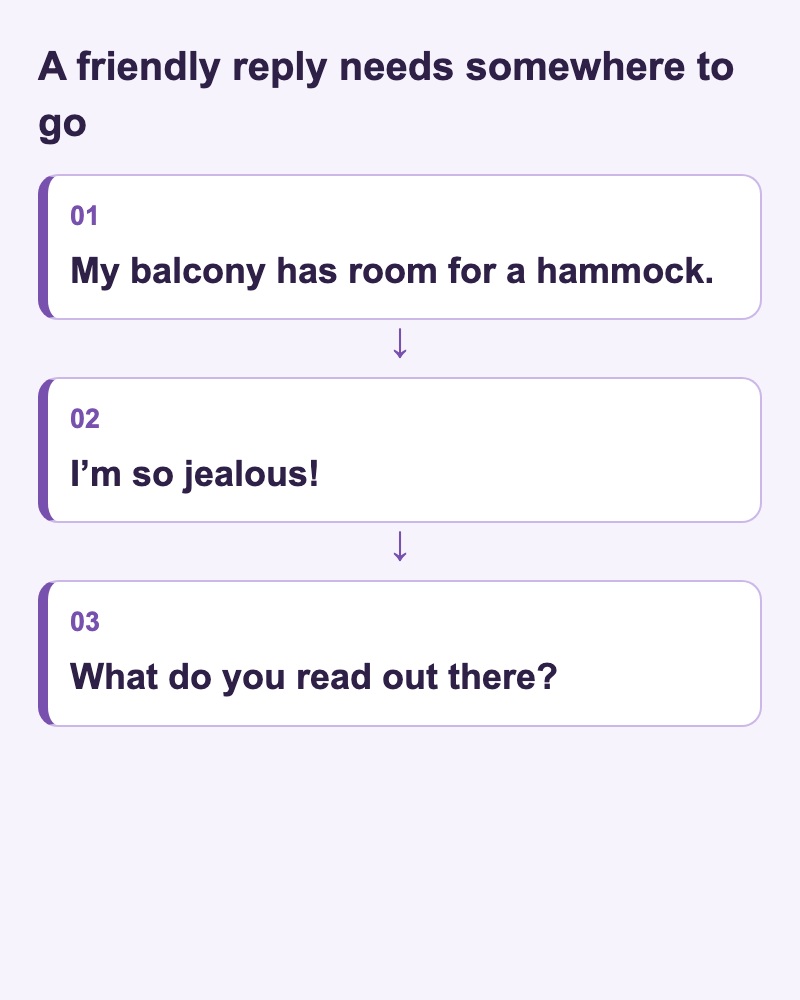
My balcony has room for a hammock.
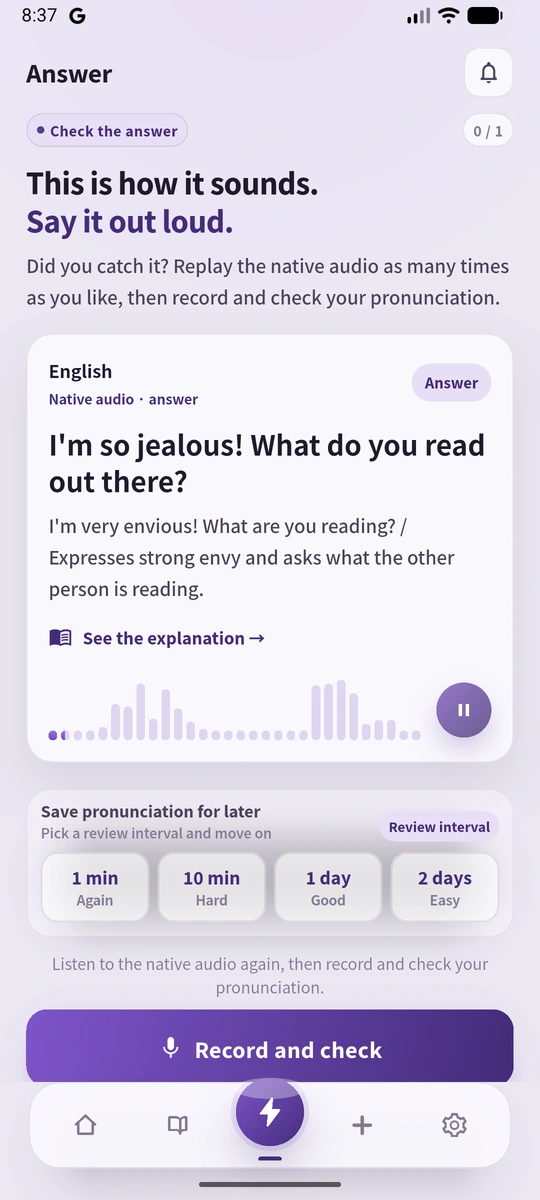
I'm so jealous! What do you read out there?
The question about reading keeps the balcony conversation focused on your friend. Compare that interest with the relationship sentence below: there the speaker names a situation that makes them jealous.
Keep the verb and adjective shapes separate
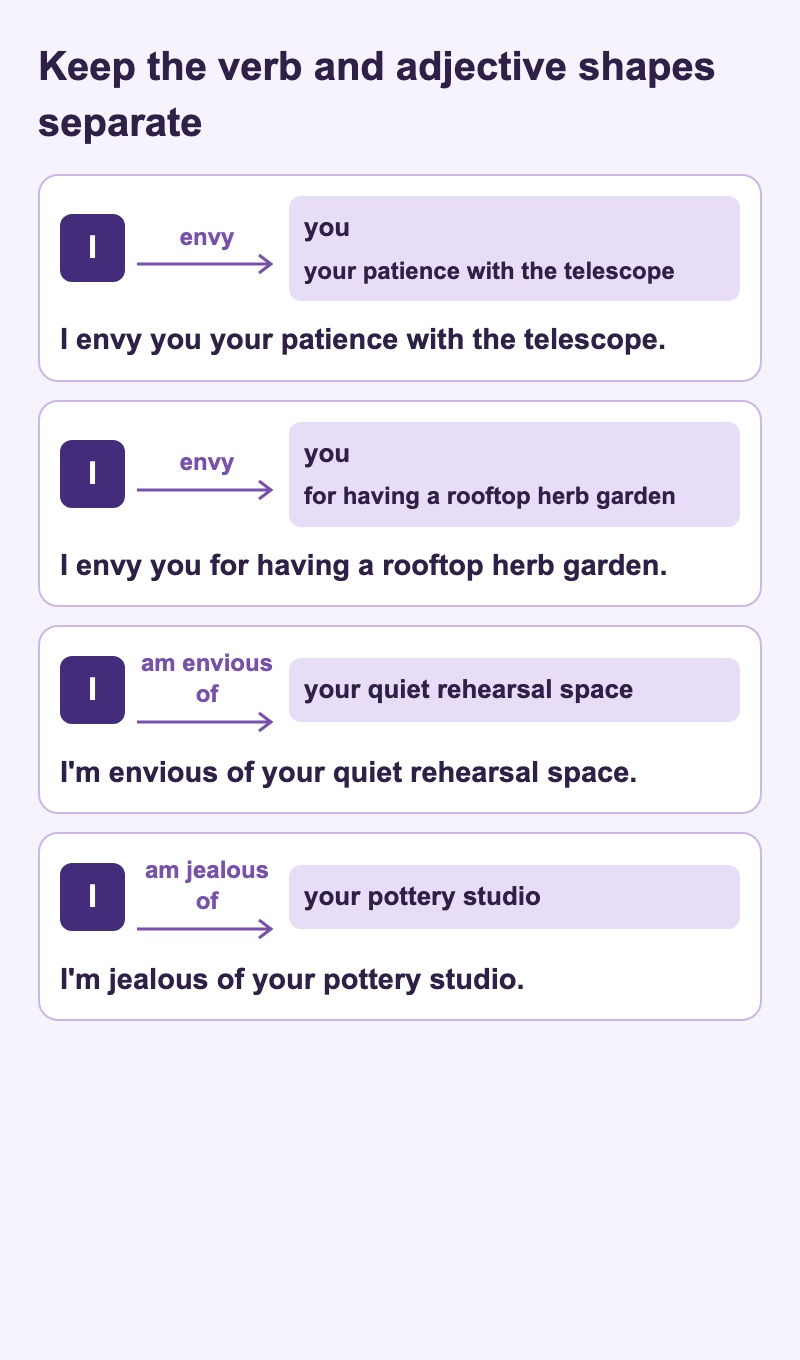
Envy is a verb as well as a noun. With the verb, use the person directly; a second object can name what you envy. Oxford records both envy somebody something and envy somebody for something. Adding be before envy does not make it an adjective.
I envy you your patience with the telescope.
I envy you for having a rooftop herb garden.
Envious and jealous are adjectives: they need be or another linking verb, and of introduces the person or thing. Envious makes the “wanting what they have” sense explicit; jealous can carry either meaning.
I'm envious of your quiet rehearsal space.
A friendly reply needs somewhere to go
Picture a friend showing you a hammock on their balcony. Reply warmly, then ask about something they actually do there. A question gives the other person a clear next turn; the words alone cannot guarantee that a joke will land.
My balcony has room for a hammock.
I'm so jealous! What do you read out there?
Lucky you! is another short reaction. In a rooftop-garden conversation, the question can turn admiration into curiosity about what grows there.
Lucky you! Which herbs grow best up there?
When jealous means relationship jealousy
Get jealous describes becoming jealous; a jealous partner describes a person. To express your own feeling, name the situation after when instead of turning the sentence into a label for the other person.
I get jealous when you cancel our plans to see him.
How strong or formal does it sound?
A little softens the stated amount. So can add emphasis, but neither word fixes whether the tone is playful or resentful. Envious can suit a more deliberate description; it is not a guaranteed politeness upgrade. Green with envy is a vivid idiom for strongly wanting another person’s advantage.
I'm a little jealous of your lakeside cabin.
I'm green with envy over your vinyl collection.
Pronounce the first syllable clearly
Jealous /ˈdʒel.əs/ starts with /dʒ/, like the beginning of job, followed by /e/; the first syllable takes the stress. Envy /ˈen.vi/ has two syllables, and envious /ˈen.vi.əs/ has three in these dictionary transcriptions. Keep /v/ in both words and let the last syllable of jealous stay weak.
Rehearse the balcony exchange
Read the balcony owner’s line, turn away from the text, and answer with both the reaction and the reading question. On a second turn, keep the question interested rather than letting jealous take all the emphasis.
The balcony reply’s audio in SpeakGain, our app, lets you hear the shift from reaction to question. Try matching that boundary when you say your own response.
Questions learners ask
Is “I’m jealous” rude?
It can be friendly in an obviously playful exchange, or serious in another context. Add a sincere question and pay attention to your relationship with the listener.
Is “I envy you” wrong?
No. It is a grammatical way to state that you want an advantage someone has. Naming that advantage often makes the intended meaning clearer; it is not always an insult.
Are envy and jealousy nouns?
Yes. Envy names the desire for another person’s advantage. Jealousy can name that feeling too, and also the relationship feeling. Envious and jealous are adjectives.
Bring the distinction into your reply
For wanting another person’s advantage, envy and envious are precise choices; jealous also works in that sense. In a friendly exchange, let your interest show in the question that comes next.