
5 English pronunciation apps: our picks, and who should skip them
Published
Start with ELSA Speak if you need help finding which sounds to work on. Choose BoldVoice first if you already know the problem but need to see how to move your mouth. Our deciding factor is whether an app makes your next attempt more purposeful, rather than simply giving it a number.
For supplied sentences and human model recordings, consider Speechling. Japanese readers wanting a free starting point can try StudySwitch’s English Pronunciation Training. For your own sentences and later review, consider SpeakGain. SpeakGain is our product. We would choose another app first for a systematic course in phonetic symbols or mouth positions.
To choose a sound, ending or stress pattern to fix, follow our English pronunciation practice method and compare one feature in a recorded sentence.
For individual sounds, use our English consonant practice guide to choose a word ending, L/R or th contrast and compare one short recorded sentence.
After choosing your tools, use the tongue twister routine to compare one spot in a model and your recording.
Compare the five choices
Features and prices checked October 2, 2026 against official pages and accessible Android screens. Prices retain the currency and purchase route observed; availability, trials and billing can vary by storefront. Confirm the term and total before subscribing. All five have official Android and iOS distribution; this review does not establish iOS feature parity or availability in every country.
| App | Our verdict | Feedback | Models and replay | Your own text | Free access / observed price |
|---|---|---|---|---|---|
| ELSA Speak | First stop for locating sound problems | Sound correction and word stress; broader analysis depends on feature/plan | Lesson audio and selectable AI voices; current recording retention/replay not tested | Custom Study Sets officially supported | Limited free use. Japan NOVA web campaign: Premium ¥8,960/year or ¥6,440/3 months |
| BoldVoice | Best fit here for learning how to form sounds | Sound-by-sound analysis; word and sentence feedback | Coach videos, mouth diagrams, recording/model comparison | Personal-text practice listed | First lesson free on Play; web US$24.99/month or US$149.99/year; 7-day annual-plan trial |
| StudySwitch English Pronunciation Training | Free starting point if you read Japanese | Pronunciation checks; phoneme/prosody weighting not disclosed | Models and Japanese tips; recording retention/replay unverified | Unverified | Free; includes advertising. No paid plan verified |
| Speechling | Compare your voice with recorded short sentences | Self-comparison and optional human coaching, rather than an AI-score pick | Male/female professional recordings and side-by-side playback | Not our choice for generating audio from personal text | Curriculum/comparison free; English excluded from 10 free coaching sessions. Unlimited from US$19.99/month |
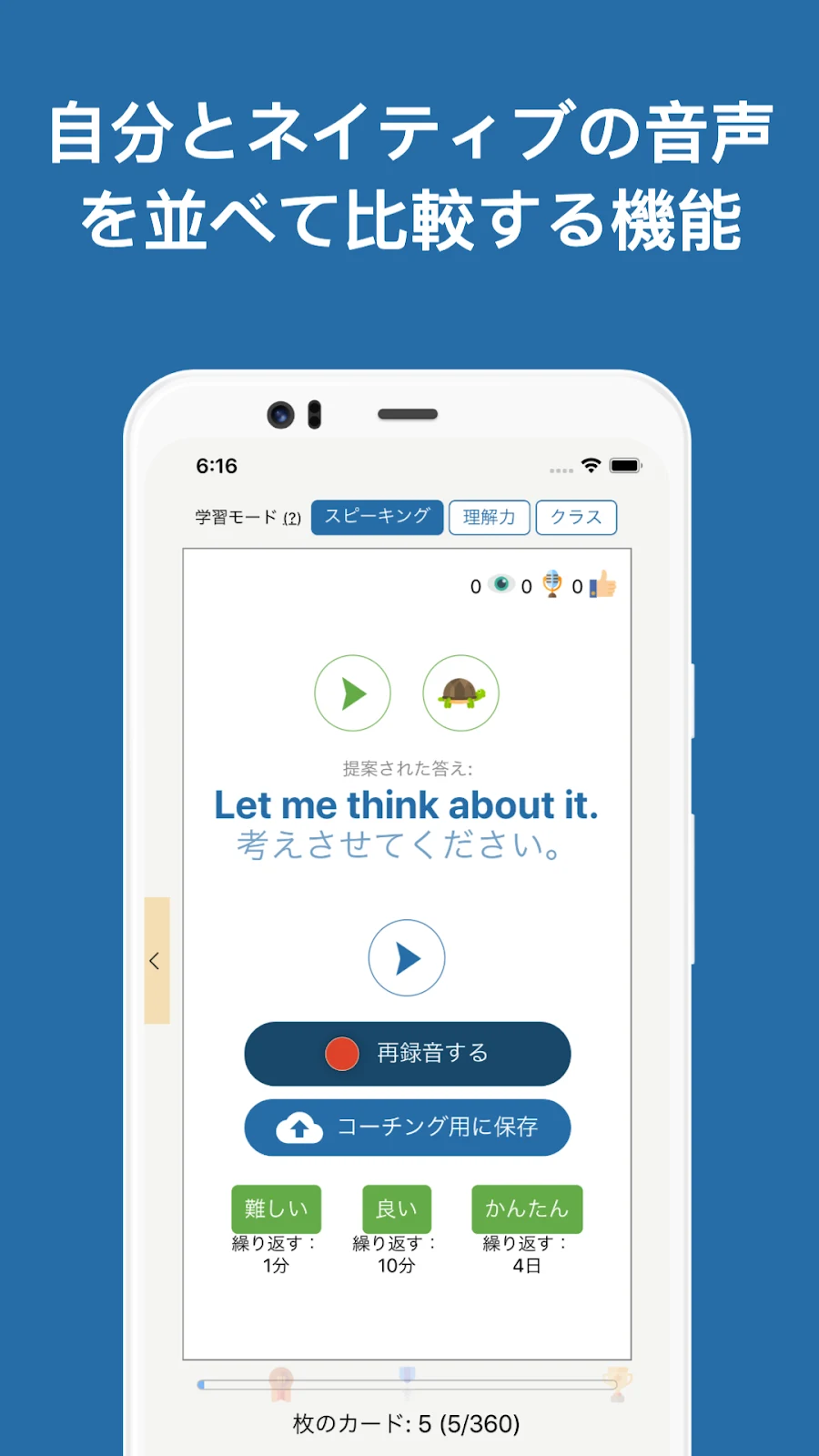
| SpeakGain — ours | Keep and revisit sentences you actually want to say | Online word-level results; not an articulation course | Generated character voices, recording and playback | Personal English cards | Japan published price: ¥980/month or ¥9,800/year, initial 2-week trial |
Sources: ELSA plans and Japan campaign, ELSA features, BoldVoice web plans, BoldVoice Play listing, StudySwitch, Speechling pricing, SpeakGain Japan pricing.
Decide what “better pronunciation” means today
Individual sounds: if you want to distinguish light from right, feedback on the relevant sound is more useful than a single paragraph score. Try ELSA to locate a problem; consider BoldVoice when you need a demonstration of how to change it.
Word stress: listen for which syllable carries the emphasis. ELSA explicitly advertises word-stress guidance. We do not assume every product labelled “AI scoring” provides the same analysis.
Sentence rhythm and intonation: prioritize easy recording comparison. Speechling supplies human recordings; SpeakGain lets you return to your own sentence. Being able to record a sentence does not prove that a system measures its intonation accurately. If your main goal is following longer audio, use our shadowing app guide.
Being understood: a machine score is not a listener’s report. Hatsuon Hakase’s official explanation says its acoustic model is based on American-English samples and can flag differences even in understandable speech. That is a concrete example, not a claim that all apps share its algorithm. For a work introduction, asking a listener what name and purpose they heard checks something a score alone cannot establish.
ELSA Speak: find a specific practice target
Verdict: our first pick for locating sound problems. Suits learners who struggle to hear their own weak spots; skip it if you need unlimited free access or a precisely specified non-American scoring target. Its official listing covers pronunciation, word stress and custom Study Sets, so personal text is not a SpeakGain-exclusive feature.
Separate the model voice from the scoring reference. The current listing offers American, British and Australian accent choices, while an official product explanation says the evaluation uses American English even when the AI voice changes. We therefore do not promise British-accent scoring just because a British voice is selectable.
The Japan web price above is a page-specific campaign, not a universal renewal or in-app price. We recommend trying the feedback before paying. Our selection rests on the type of guidance offered, not a demonstrated accuracy advantage. Current recording storage and replay conditions were not verified, so we would not select it primarily as a recording archive.
BoldVoice: see how a sound is made
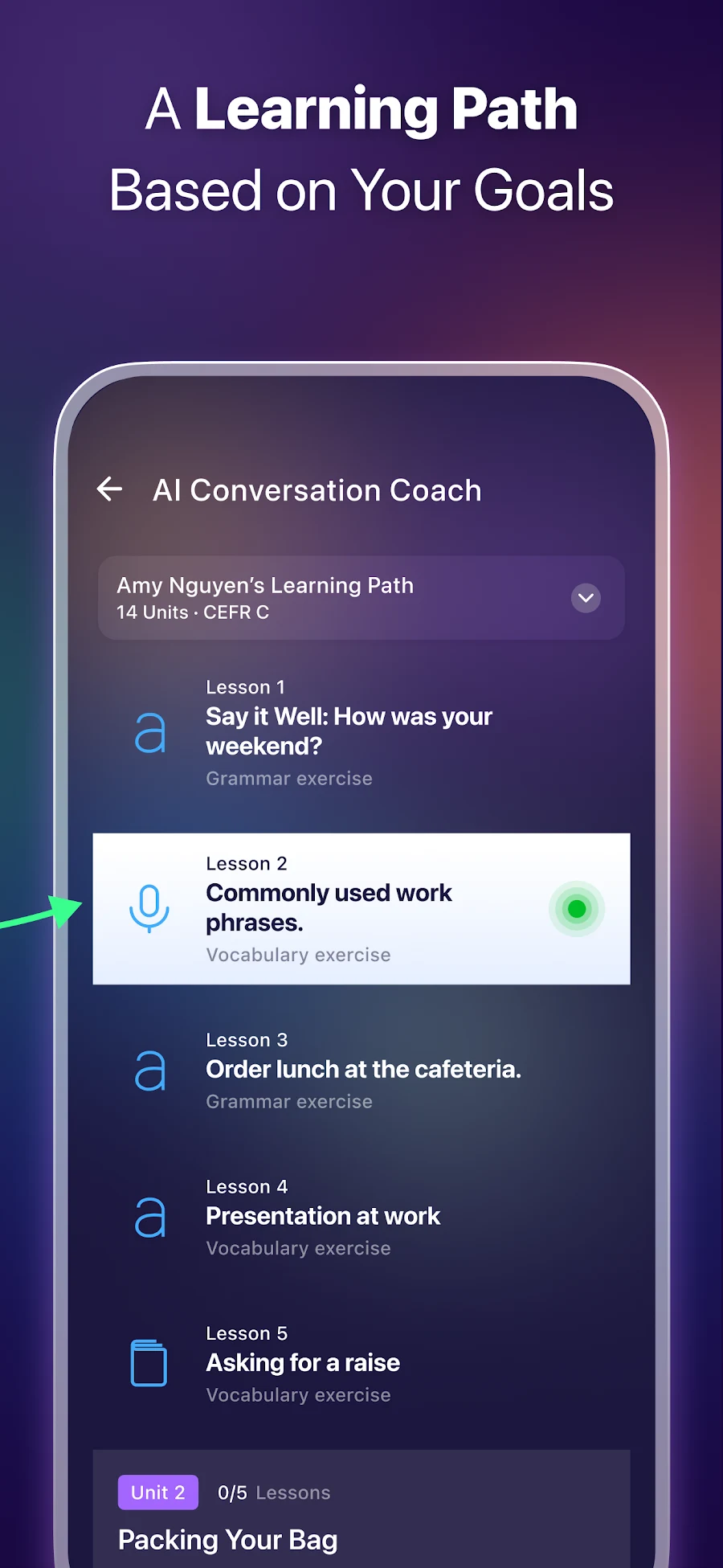
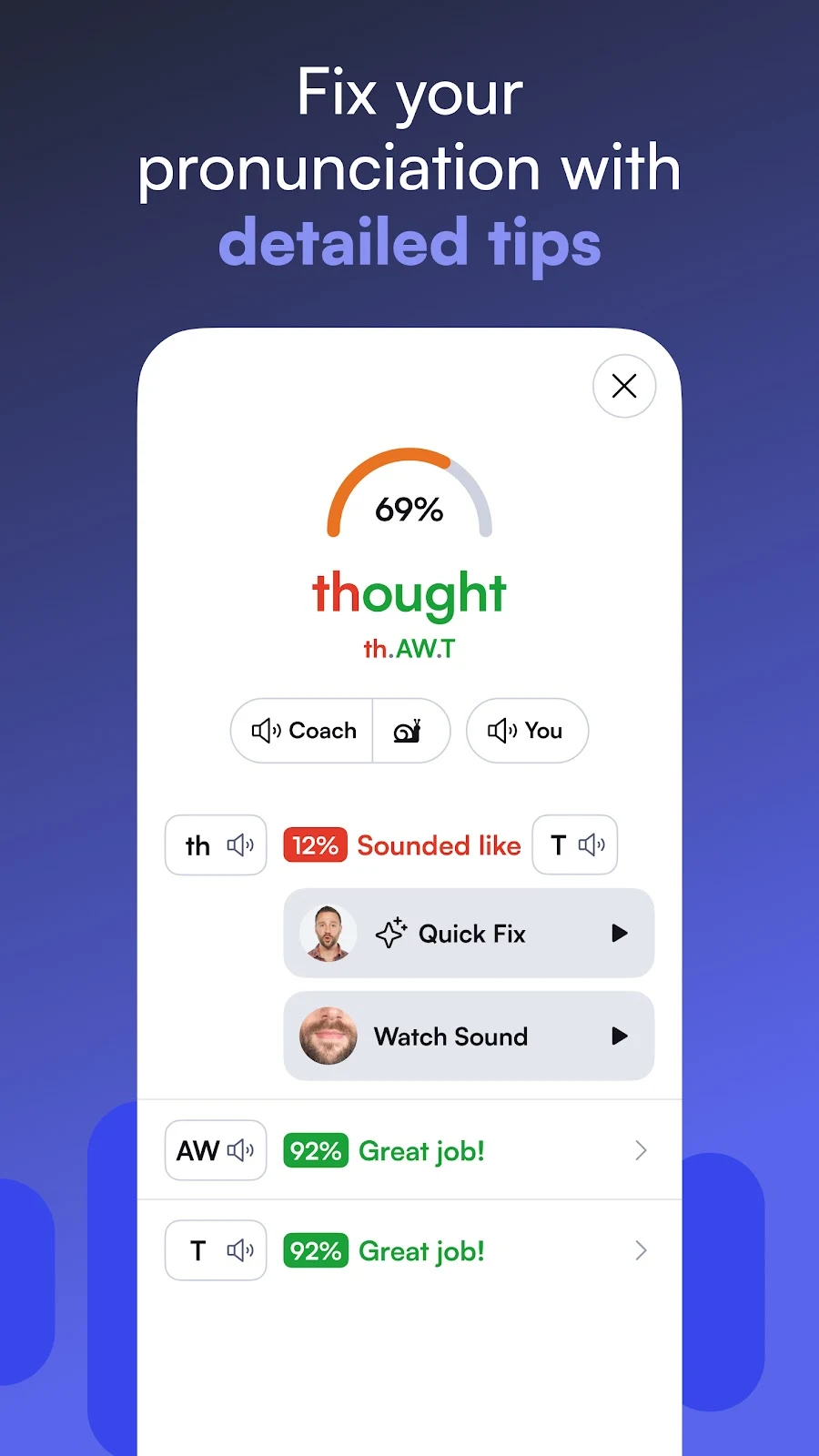
Verdict: choose it ahead of ELSA when a highlighted error leaves you wondering what to do with your mouth. Suits learners comfortable using coaching videos; skip it for a British-accent target or a large permanently free course. The official description lists coach videos, mouth diagrams, sound analysis and voice comparison, with an American-accent focus.
A coach appearing in a video is not the same as that person individually reviewing each recording. The web feature table also lists practice with your own text. For personal sentences that require articulation instruction, we would choose BoldVoice before our SpeakGain.
Play says the first lesson is free. The web annual plan is US$149.99 billed annually; its US$12.49 monthly equivalent is not monthly billing. Actual monthly billing is US$24.99. Check whether the explanations help you before choosing the annual plan and its seven-day trial.
StudySwitch: a free Japanese-language entry point
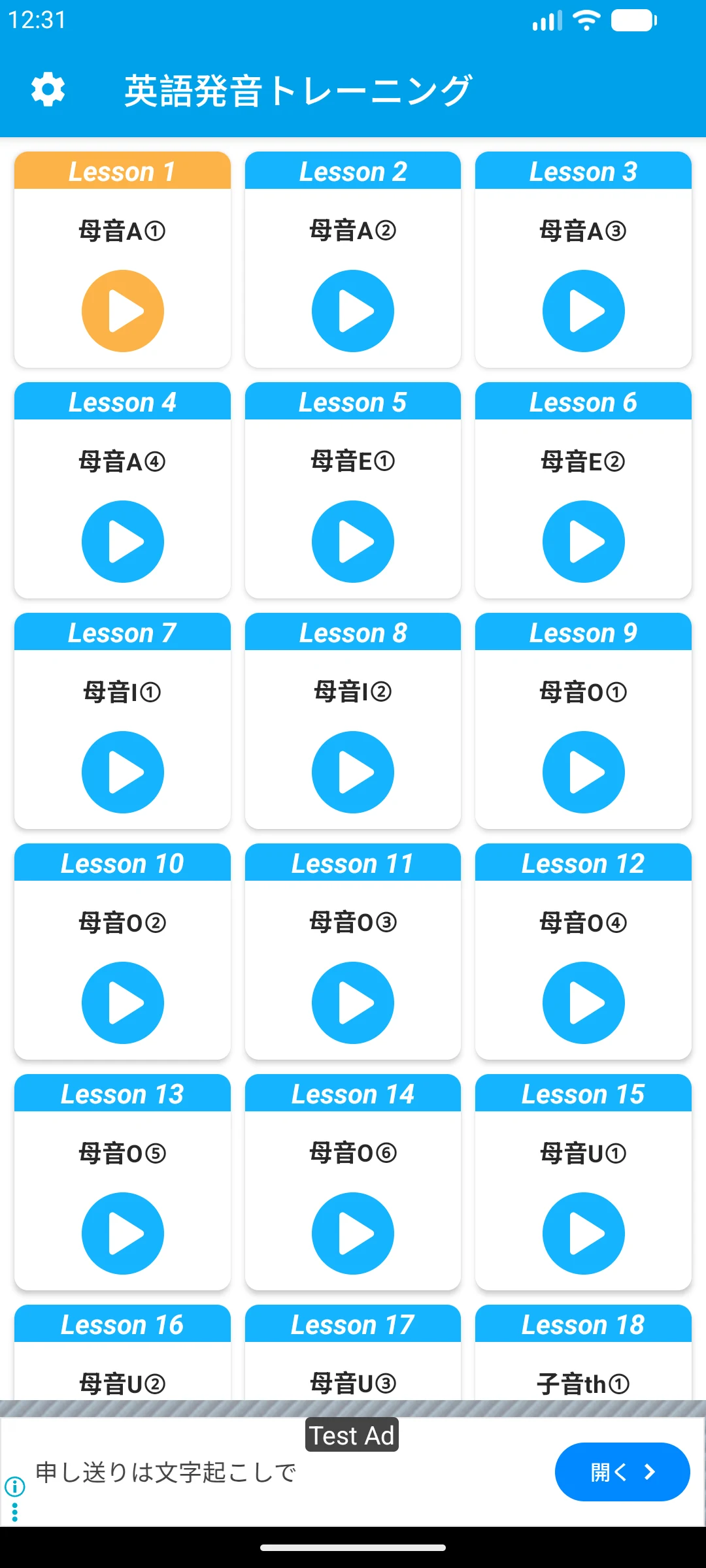
Verdict: useful before adding another subscription if you read Japanese. Suits people happy with supplied exercises; skip it if you need English-only guidance, arbitrary scripts or documented phoneme-level diagnosis. The developer listing provides free practice, model audio, Japanese tips and immediate checks.
We could not establish custom-text entry, long-term recording storage or how much each sound or intonation contributes to its score. Those are unknowns, not claims that the features definitely do not exist. Its value here is the free, guided starting point. We do not treat the developer’s “five minutes” marketing as a measured learning outcome.
Speechling: listen to your recording, not just a number
Verdict: choose it for short supplied sentences and human model voices. Suits learners who want side-by-side comparison; skip it for instant phoneme scores, custom voice generation or free English coaching. The pricing page includes the curriculum, male/female professional recordings and voice comparison in the free offer.
The allowance of up to ten free coaching sessions explicitly excludes English, French, Chinese and German. Unlimited is advertised from US$19.99/month; that is not a verified month-to-month checkout price. The quickstart explains listening, recording, replay and submission. We did not create an account or submit work, so this is not a first-hand verdict on coach quality or turnaround.
SpeakGain: keep your sentence for another day
Verdict: useful when you already know what you want to say. Suits people collecting work or everyday sentences; skip it if you want a systematic phonetics course, a supplied curriculum or human correction. Our app turns personal English into audio cards, using a selected character’s generated voice, and supports speaking and later review. Optional online assessment provides word-level results. See what SpeakGain does.
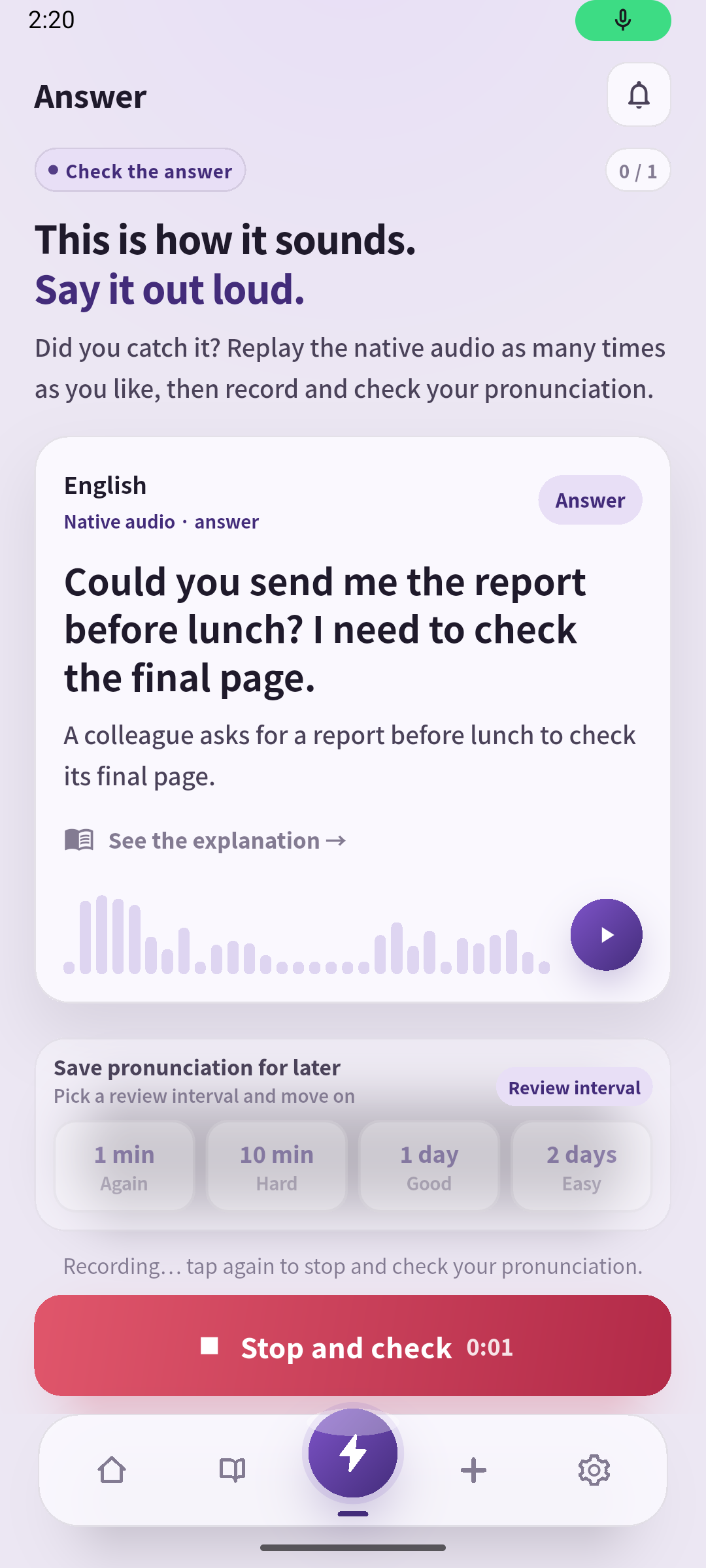
Japan’s published price is ¥980/month or ¥9,800/year, with an initial two-week trial. This is not our pick for permanently free learning. Character voices offer variety, but they are generated audio, not human-recorded articulation lessons.
We would choose ELSA first for finding weak sounds, BoldVoice for mouth-position instruction, Speechling for supplied human recordings, and StudySwitch for a free Japanese-language start. ELSA and BoldVoice also accept personal material. SpeakGain earns its place when saving a sentence as an audio card and revisiting it later fits your routine.
Also considered
- Hatsuon Hakase: a strong alternative for Japanese readers who want word drills and phonetic-symbol feedback. Official features include Jones/IPA display, up to four saved recordings per phrase and model comparison. We prioritized five distinct jobs instead of adding another word-drill slot. Consider it if you read phonetic symbols; do not choose it on an unverified assumption that it accepts long personal scripts.
- Speak: offers pronunciation coaching alongside conversation and role-play. We left it out because this selection focuses on targeted sounds and recording comparison, not because it lacks pronunciation features. If your real difficulty is deciding what to say in a conversation, consider Speak before collecting sentences in SpeakGain.
For a closer look at vowel contrasts, use the English vowel chart and priority-pair drills to check schwa, vowel quality and length in a recorded sentence.
Use scores as clues, then test the workflow
Check what the score compares, whether you can replay the same sentence, and whether the criterion fits your goal. An 80 in one app is not directly comparable to a 90 in another. Hatsuon Hakase explicitly warns about noise and playback/transcoded audio; we did not feed synthetic speech into an emulator and call the outcome a pronunciation test. Any scores in credited official images are the developer’s examples.
Before subscribing, choose one short sentence you understand, listen, say it, inspect one correction and try again. Can you explain what you changed? Can you reopen the sentence tomorrow? If the free tools support that loop, there is no need to buy a year immediately. If you cannot work out how to improve, consider a demonstration or human feedback instead of repeating the same score request. For longer follow-along practice, see how to practise shadowing.
To check meaning and pronunciation with the text visible, follow the English reading-aloud guide through one short passage, from understanding to recording comparison.
To turn a dictionary lookup into spoken practice, use our guide to reading English phonetic symbols for the main symbols, notation differences and a practical learning order.
Common questions
Can I start free?
Yes: StudySwitch for Japanese readers or Speechling’s curriculum and comparison tools. Speechling’s English coaching is not in its free coaching allowance. ELSA’s limited access, BoldVoice’s first lesson and SpeakGain’s timed trial are different offers.
Should I keep trying until I get 100?
We would not. Pick one change you understand. If the reason for the result remains unclear, return to an explanation or ask a person; repeating a judgement is not itself evidence of improvement.
Is SpeakGain the only option for my own sentences?
No. ELSA lists custom Study Sets and BoldVoice lists personal-text practice. Choose between their instruction and SpeakGain’s audio-card review workflow according to the job you need done.
Our final choice: ELSA for finding the issue, BoldVoice for forming the sound, StudySwitch for a free Japanese start, Speechling for recorded comparison, SpeakGain for personal sentences you revisit. Start with one, and judge it by whether you know what to change on your next attempt.
For practising a whole sentence from its meaning, see our English sentence-building app comparison, including free limits and our editorial verdicts.