
Ways to say nervous: choose the feeling, time and request
Published
To describe your feeling now, say I’m nervous. Add about + a noun to name the reason. Use I get nervous when … for a recurring situation and I was nervous. afterwards; other ways to say nervous depend on whether you mean worry, anticipation or physical tension.
Choose a time and a feeling
| Time | Nerves / anticipation | Worry | Physical tension |
|---|---|---|---|
| Now | I'm nervous. | I'm worried. | I'm tense. |
| Recurring situation | I get nervous when … | I get worried when … | I tense up when … |
| Afterwards | I was nervous. | I was worried. | I was tense. |
Build a sentence around nervous
Be nervous describes a state; get nervous describes entering that state. A when-clause specifies the recurring trigger. Cambridge’s nervous entry illustrates feel/get nervous and nervous about.
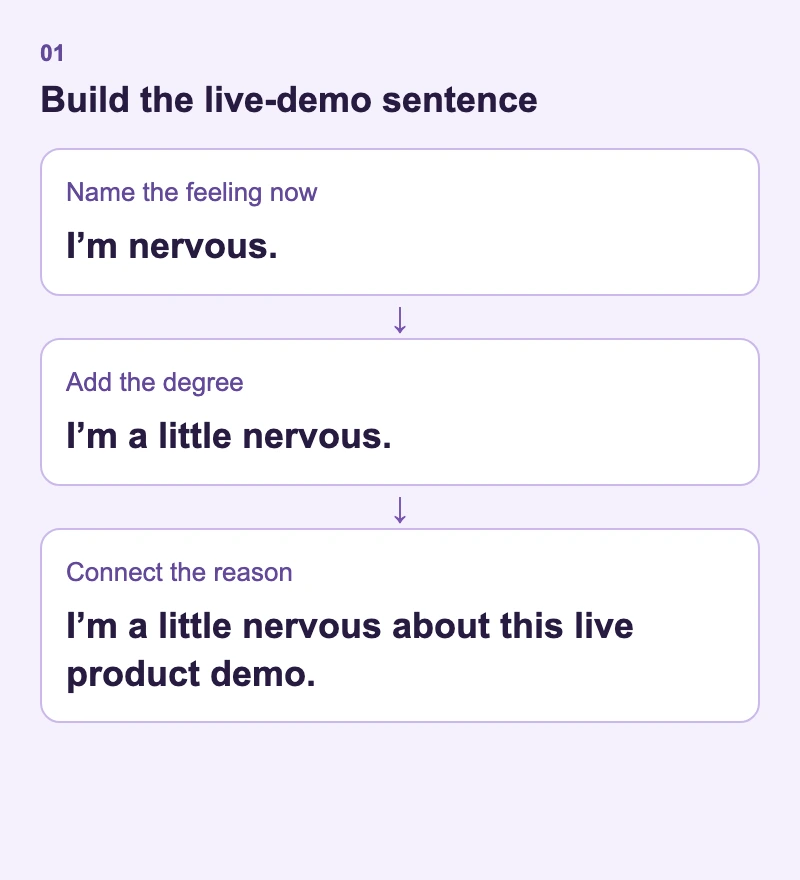
After about, use a noun or an -ing form: about introducing the prototype. Add a little to soften the degree or very to make it stronger. Nervous is an adjective: a present feeling needs I’m nervous, with the verb, rather than I nervous. A list of synonyms cannot make these time choices for you.
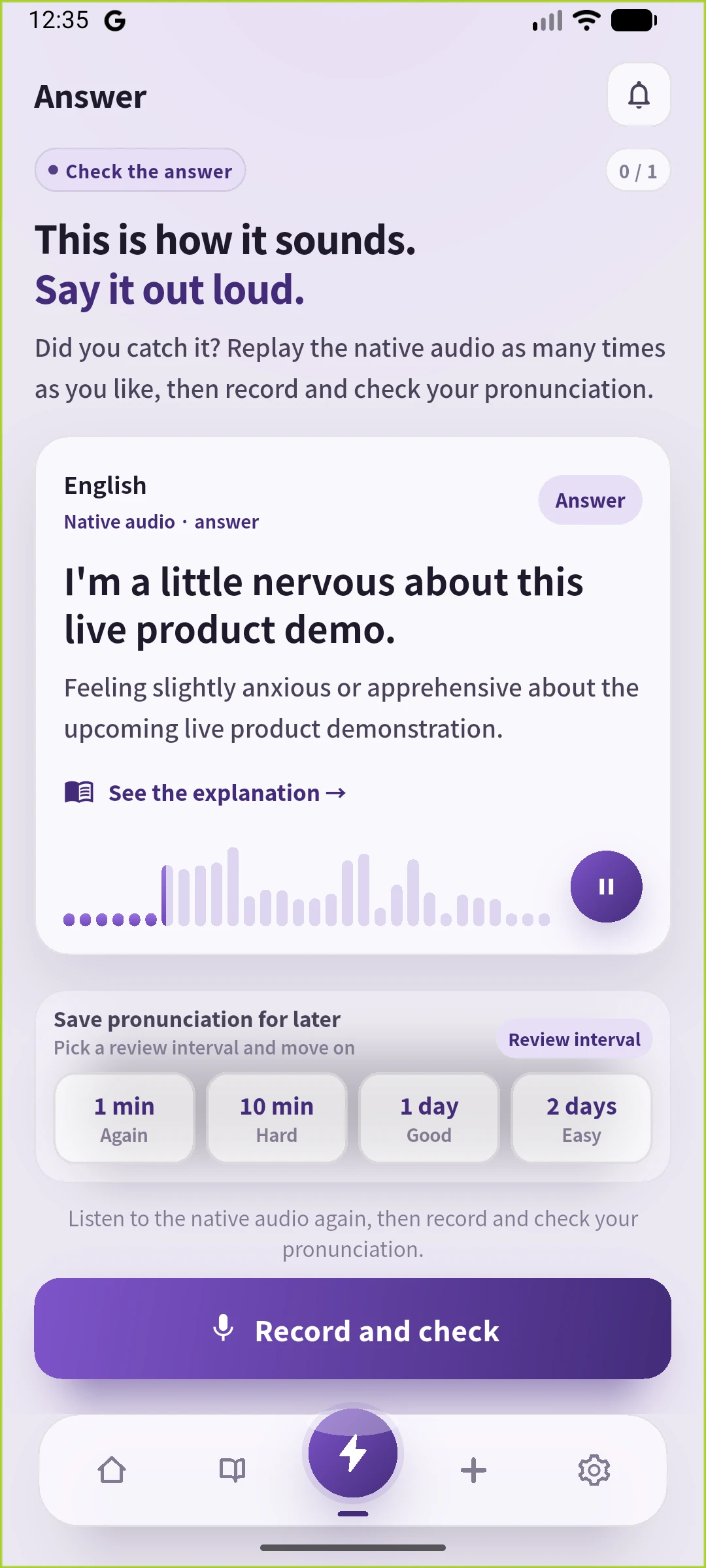
I'm a little nervous about this live product demo.
A small amount of nervousness before a live demonstration.
I get nervous when a caller asks me to spell a long address.
A recurring reaction when spelling an address over the phone.
I was very nervous before the gallery tour began.
Looking back on the start of a gallery tour.
Excited, worried or physically tense?
Excited highlights happy, enthusiastic anticipation. If you welcome meeting people but feel nervous about your part in the conversation, name both feelings and their different objects. This is more precise than replacing every nervous with a more impressive synonym.
I'm excited to meet the design team, but I'm nervous about explaining my sketches.
Welcoming a meeting while feeling nervous about the sketch explanation.
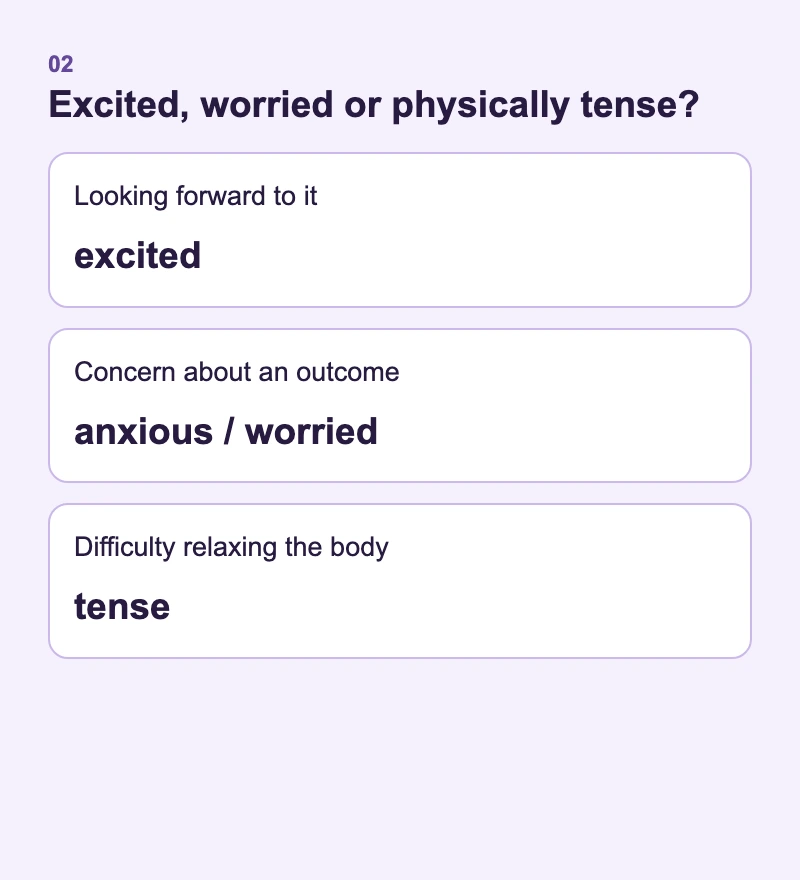
Anxious overlaps with nervous in the worried sense; there is no fixed short-term versus long-term boundary. Anxious to do something also has an eager sense. Cambridge: anxious
Worried puts attention on problems or unpleasant possibilities. Name what you think could go wrong to make the sentence specific. Cambridge: worried
Tense can describe being unable to relax or muscles that are tight and stiff: My shoulders are tense. Cambridge: tense
Have butterflies in my stomach is an informal image for feeling very nervous about something you are about to do. Cambridge: butterflies
The jitters is an informal plural noun for nerves before something important. Stage fright narrows the situation to performing or speaking to an audience. Cambridge: jitters Cambridge: stage fright
Tell the listener what would help
A feeling alone leaves the listener guessing. Pair it with one manageable action: a moment to consult your notes before a prototype introduction, or a yes-or-no question to start a lesson without text chat. Choose the request that fits what is happening now.
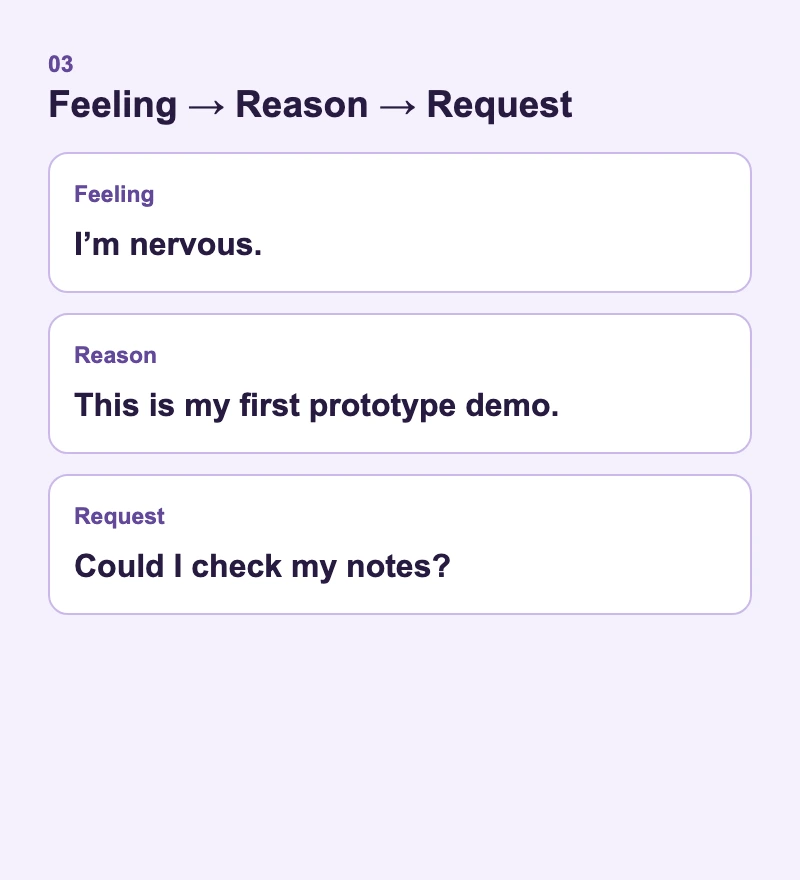
I'm nervous about introducing the prototype. Could I have a moment to check my notes?
Asking for time to consult notes before showing a prototype.
I'm nervous about speaking without the chat box. Could we start with a yes-or-no question?
Asking for a yes-or-no starting question in a lesson without text chat.
Opening an interview: ask for a pause before describing your work history
I'm nervous about describing my work history. Could you give me a few seconds to begin?
On a delivery call: ask the caller to slow down while you check the address
I'm nervous about getting the delivery address wrong. Could you speak a little more slowly while I check it?
Ask about someone else’s nerves
Are you nervous about the demonstration? names the event without guessing the answer. I feel nervous before demonstrations too. offers shared experience. For a separate encouraging response, see English ways to say “ganbatte”.
Hear the two syllables of nervous
Cambridge’s pronunciation page gives UK /ˈnɜː.vəs/ and US /ˈnɝː.vəs/. The stress is on the first syllable. The US first vowel is r-coloured; the UK form shown has no pronounced r there. Keep the second vowel weak, /ə/, and make /v/ with the upper teeth near the lower lip. Try the word, then the live-demo sentence, keeping the second syllable light.
Rehearse for the event on your calendar
Picture the table where you will show your prototype. Say the feeling, explain the task, then ask for time with your notes. Repeat using only “prototype / notes” as a prompt; check whether the request still makes sense without the script.
In our app SpeakGain, keeping the live-demo sentence ready gives you an audio cue before you enter the room. Play the card once, then cover your notes and supply your own next sentence.
Questions learners ask
How do I say the nerves have eased?
I feel more relaxed now. describes the current change. I was nervous. looks back at the earlier feeling; it does not itself say how you feel now.
Can I mention nerves in an interview?
If you choose to, keep it brief and follow with the specific request needed to continue. The phrase does not guarantee a particular reaction from the interviewer.
What if I lose my words?
The request for time to consult notes gives you something prepared to say. For a separate practice plan, read when English words won’t come out.
Take one sentence with you
Choose the time before the synonym. For your next event, keep a sentence about the feeling beside a request the listener can act on.
Cambridge: nervous · anxious · worried · tense · excited · butterflies · jitters · stage fright · nervous / UK / US