
Silent letters in English: patterns, exceptions and words worth checking
Published
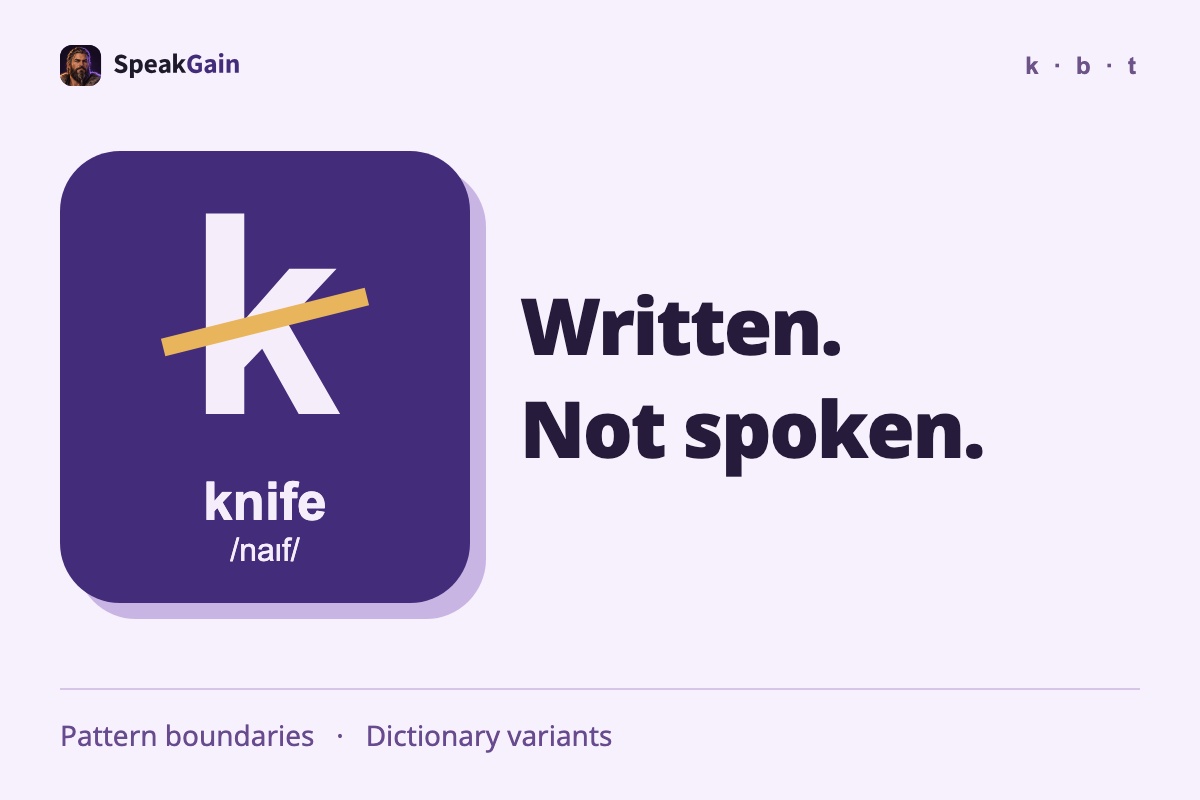
Silent letters are letters written in a word but not pronounced in that word, such as k in knife, b in comb and t in listen. Some letter sequences are useful clues, but others need learning word by word, and accents can change the answer. Check the dictionary’s pronunciation and audio, then say the word inside a sentence.
A small pattern atlas, with its boundaries
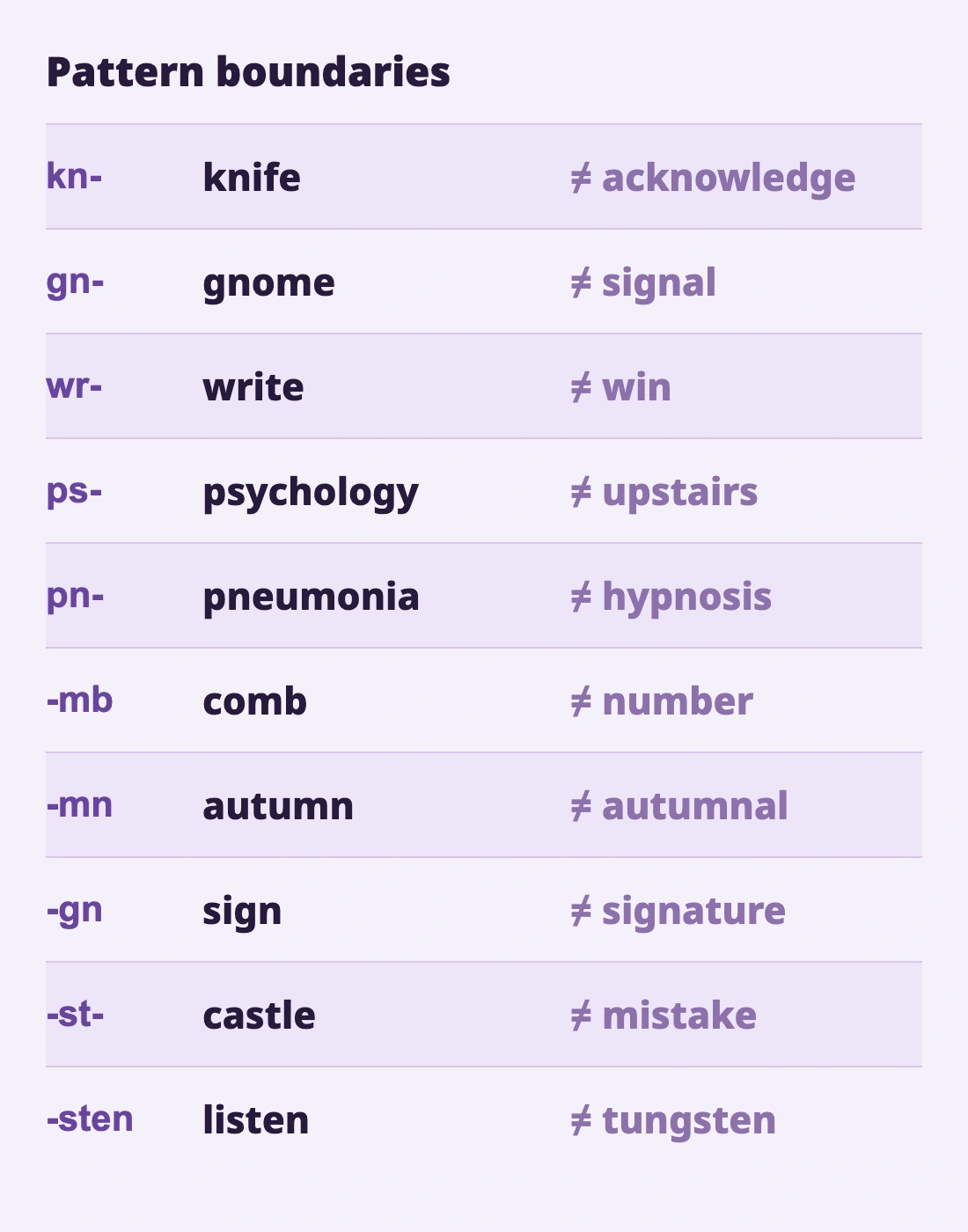
Use the left column to predict, then use the right to limit that prediction. The dash marks position: kn- is at the beginning, -mb at the end. These are clues from the linked dictionary entries, not rules for deleting a letter wherever it appears. Each word cell gives British IPA first and American IPA second, exactly in Oxford’s notation.
| Pattern / UK · US | Boundary / UK · US |
|---|---|
| kn- knife /naɪf/ /naɪf/ |
acknowledge /əkˈnɒlɪdʒ/ /əkˈnɑːlɪdʒ/ |
| gn- gnome /nəʊm/ /nəʊm/ |
signal /ˈsɪɡnəl/ /ˈsɪɡnəl/ |
| wr- write /raɪt/ /raɪt/ |
win /wɪn/ /wɪn/ |
| ps- psychology /saɪˈkɒlədʒi/ /saɪˈkɑːlədʒi/ |
upstairs /ˌʌpˈsteəz/ /ˌʌpˈsterz/ |
| pn- pneumonia /njuːˈməʊniə/ /nuːˈməʊniə/ |
hypnosis /hɪpˈnəʊsɪs/ /hɪpˈnəʊsɪs/ |
| -mb comb /kəʊm/ /kəʊm/ |
number /ˈnʌmbə(r)/ /ˈnʌmbər/ |
| -mn autumn /ˈɔːtəm/ /ˈɔːtəm/ |
autumnal /ɔːˈtʌmnəl/ /ɔːˈtʌmnəl/ |
| -gn sign /saɪn/ /saɪn/ |
signature /ˈsɪɡnətʃə(r)/ /ˈsɪɡnətʃər/ |
| -st- castle /ˈkɑːsl/ /ˈkæsl/ |
mistake /mɪˈsteɪk/ /mɪˈsteɪk/ |
| -sten listen /ˈlɪsn/ /ˈlɪsn/ |
tungsten /ˈtʌŋstən/ /ˈtʌŋstən/ |
For wr-, win is a contrast with a different following letter, not an exception to wr-. Internal kn, gn, ps and pn show why word position matters. The t in castle and listen does not justify removing every t after s: mistake and tungsten retain /t/.
Listen before looking at the spelling. For each clip below, write the two words that match patterns in the table; open the sentence only afterwards. Circle the silent letters on paper, then say each word and read the sentence aloud. The sentence players throughout this page use an AI-synthesized Deep-voiced Viking voice from SpeakGain. For the sound of a word on its own, follow its dictionary link and play that recording.
Show the sentence
Listen to the castle bells.
Show the sentence
Write your name beside the sign.
Show the sentence
The knife is beside the comb.
Seven words to keep as whole sound shapes
Do not stretch a pattern to explain everything. In this set, keep the spoken word together with its spelling. The two pronunciations of Wednesday below are both listed; the shorter last vowel is not a new silent-letter rule.
| Word / UK · US | What to notice |
|---|---|
| Wednesday /ˈwenzdeɪ/ · /ˈwenzdi/ /ˈwenzdeɪ/ · /ˈwenzdi/ |
The first d (Wed-) is silent; the d in -day remains /d/. Both final-vowel versions occur. |
| island /ˈaɪlənd/ /ˈaɪlənd/ |
s is absent. |
| receipt /rɪˈsiːt/ /rɪˈsiːt/ |
p is absent. |
| debt /det/ /det/ |
b is absent. |
| salmon /ˈsæmən/ /ˈsæmən/ |
l is absent. |
| business /ˈbɪznəs/ /ˈbɪznəs/ |
The middle written i does not add a syllable. |
| colonel /ˈkɜːnl/ /ˈkɜːrnl/ |
The first l (in col-) has no /l/ sound; the final -nel is /nl/, including /l/. |
Now hide the table as well as the transcripts. Can you write the day and the document in the first clip, and the animal and the place in the second? Check the spellings afterwards: the missing sounds do not mean missing letters. Say the target word using its dictionary model, then record the complete sentence on your phone. Listen back for any consonant you added because you saw it on the page.
Show the sentence
I left the receipt on Wednesday.
Show the sentence
We saw a lamb on the island.
Keep the spelling error beside its sound
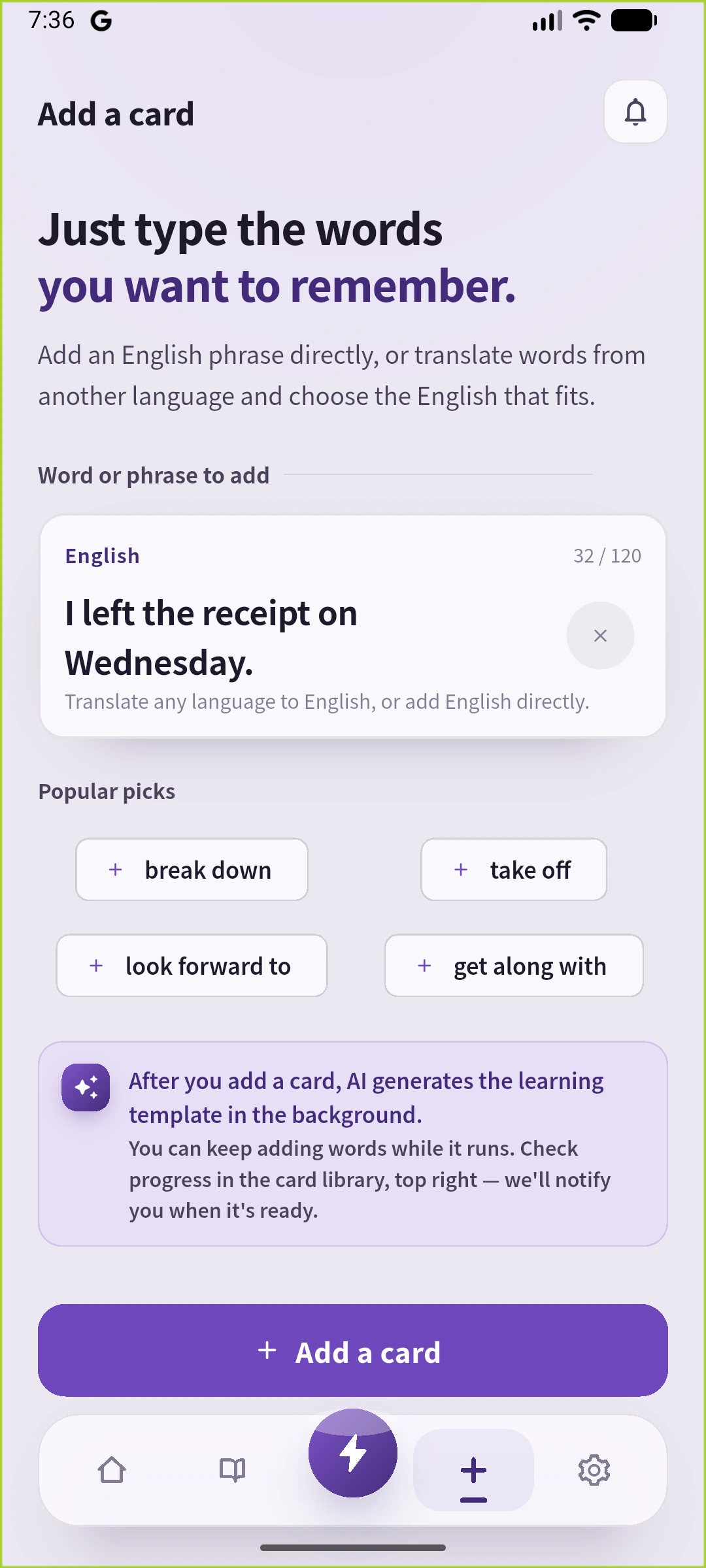
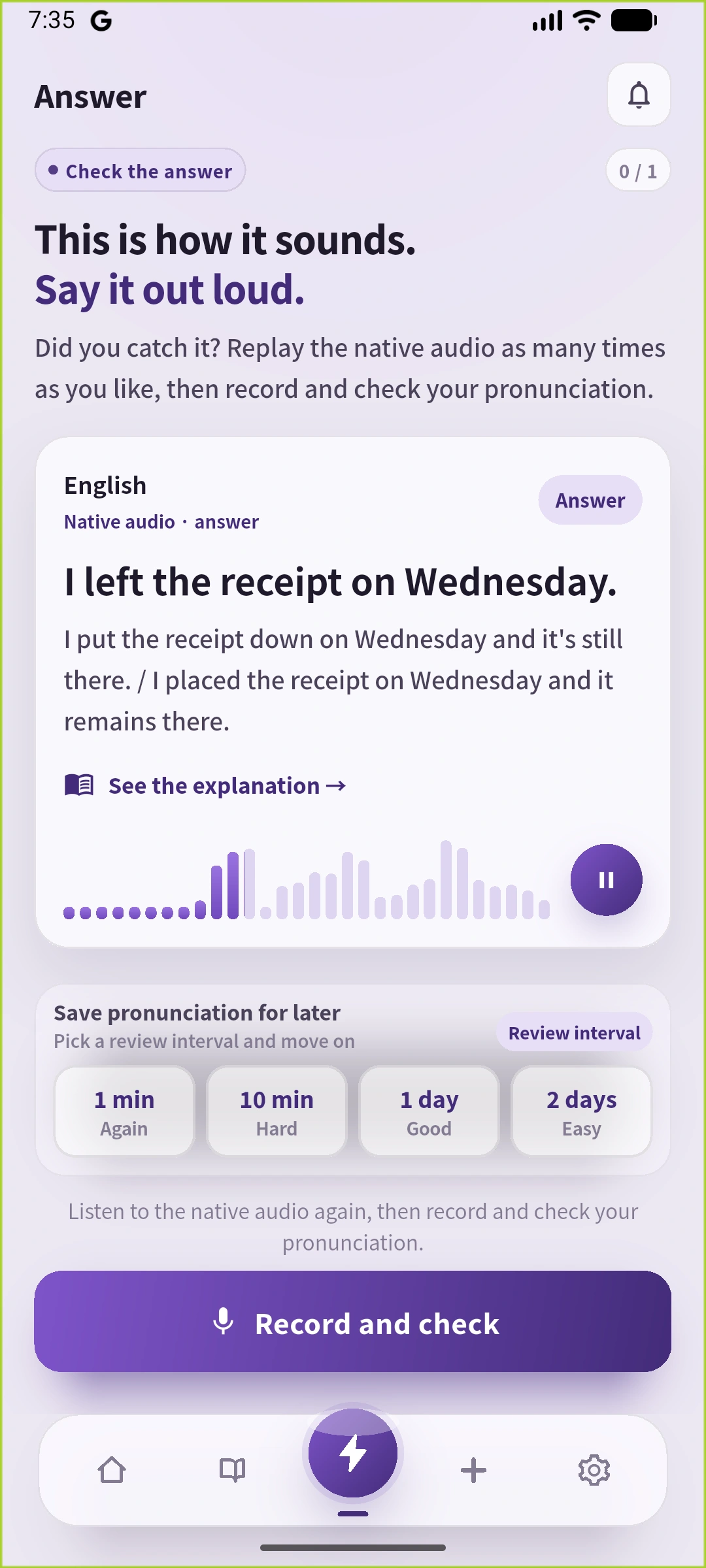
A dictation error gives you a useful reason to save a sentence: if you wrote the wrong spelling for receipt, keep the receipt/Wednesday line rather than the entire list. The two English-interface screens show that line being entered and its saved audio being replayed in our app, SpeakGain. FSRS brings saved cards back for review, so you can try the dictation again later. You can also use Record and check to investigate a troublesome word; its feedback score is a practice clue and cannot certify correct pronunciation.
A silent letter can return in a relative
Read across each pair before assuming a letter stays silent in every member of a word family. The g in sign, c in muscle, final b in bomb and n in autumn are audible in the corresponding relative. Vowels and stress can change too; these pairs are reminders to look up the new word, not a rule for predicting every derivative.
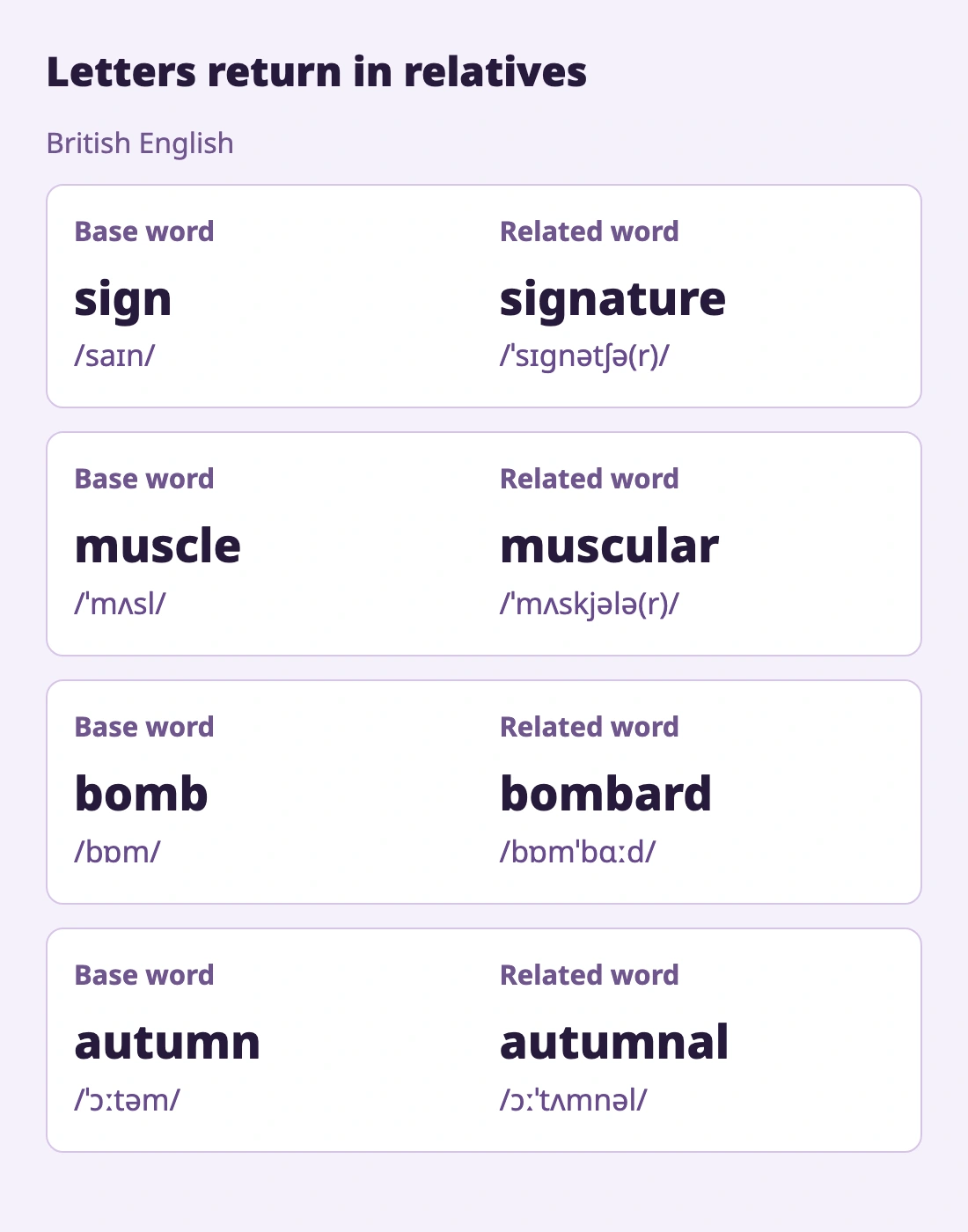
| Base word | Related word |
|---|---|
| sign /saɪn/ /saɪn/ |
signature /ˈsɪɡnətʃə(r)/ /ˈsɪɡnətʃər/ |
| muscle /ˈmʌsl/ /ˈmʌsl/ |
muscular /ˈmʌskjələ(r)/ /ˈmʌskjələr/ |
| bomb /bɒm/ /bɑːm/ |
bombard /bɒmˈbɑːd/ /bɑːmˈbɑːrd/ |
| autumn /ˈɔːtəm/ /ˈɔːtəm/ |
autumnal /ɔːˈtʌmnəl/ /ɔːˈtʌmnəl/ |
For the next clip, write the season without opening the transcript. Then compare autumn with autumnal in the dictionary recordings: which one includes /n/? Say the pair separately before returning to the sentence; the sentence contains autumn, not autumnal.
Show the sentence
Climb up and look at the autumn sky.
An accent choice is not automatically a mistake
Oxford lists herb with /h/ in British English and both with and without /h/ in American English. Often has versions with and without /t/ in both varieties. For car, its British /kɑː(r)/ notation marks an r that is not always pronounced; American /kɑːr/ includes it. Do not call every post-vowel r silent across English accents.
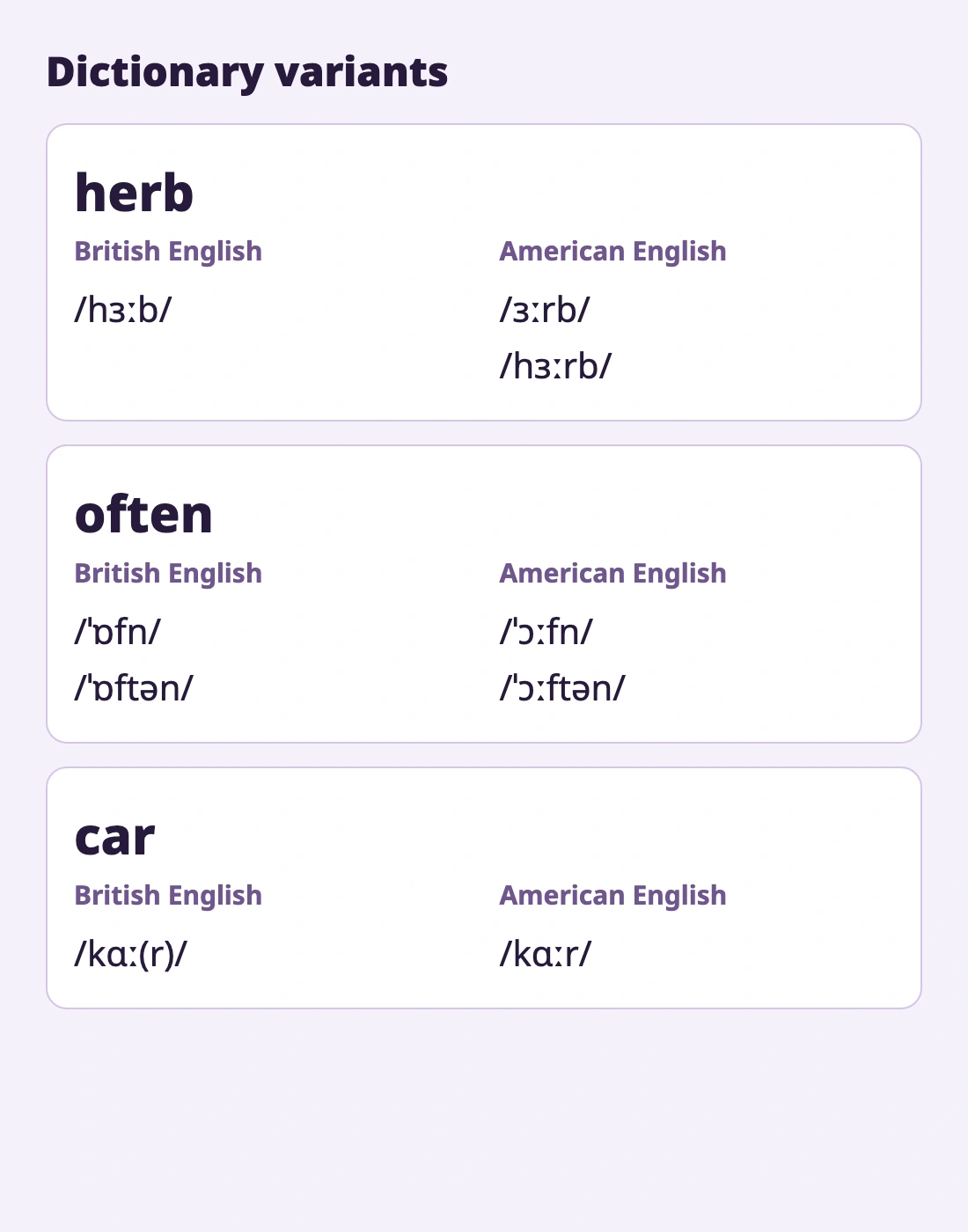
| Word / UK · US | What to notice |
|---|---|
| herb | British English /hɜːb/ American English /ɜːrb/ · /hɜːrb/ |
| often | British English /ˈɒfn/ · /ˈɒftən/ American English /ˈɔːfn/ · /ˈɔːftən/ |
| car | British English /kɑː(r)/ American English /kɑːr/ |
The useful distinction is between a positional clue, a whole-word spelling to learn, and a pronunciation variant to check. A new relative needs a new lookup; a listed accent variant needs no correction. Final silent e belongs to vowel-spelling patterns too, covered in the phonics guide below, while the examples here focus on consonants without their own sound.