
Minimal pairs in English: 30 pairs with audio and sentence practice
Published
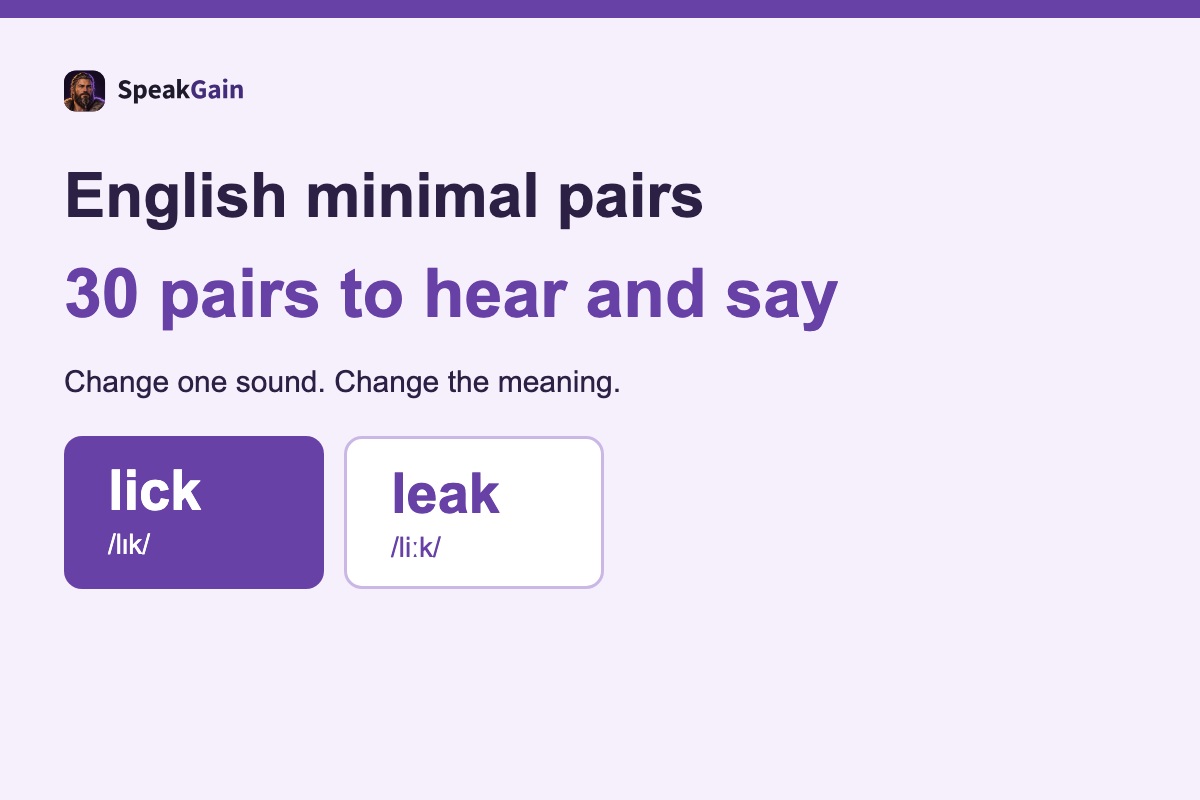
English minimal pairs are two words with different meanings that differ by just one sound, such as lick and leak. Choose a contrast you confuse, identify a word you hear, say both words, then use them in a sentence and compare a recording. The 30 pairs below include UK/US dictionary transcriptions, sentences and practice audio.
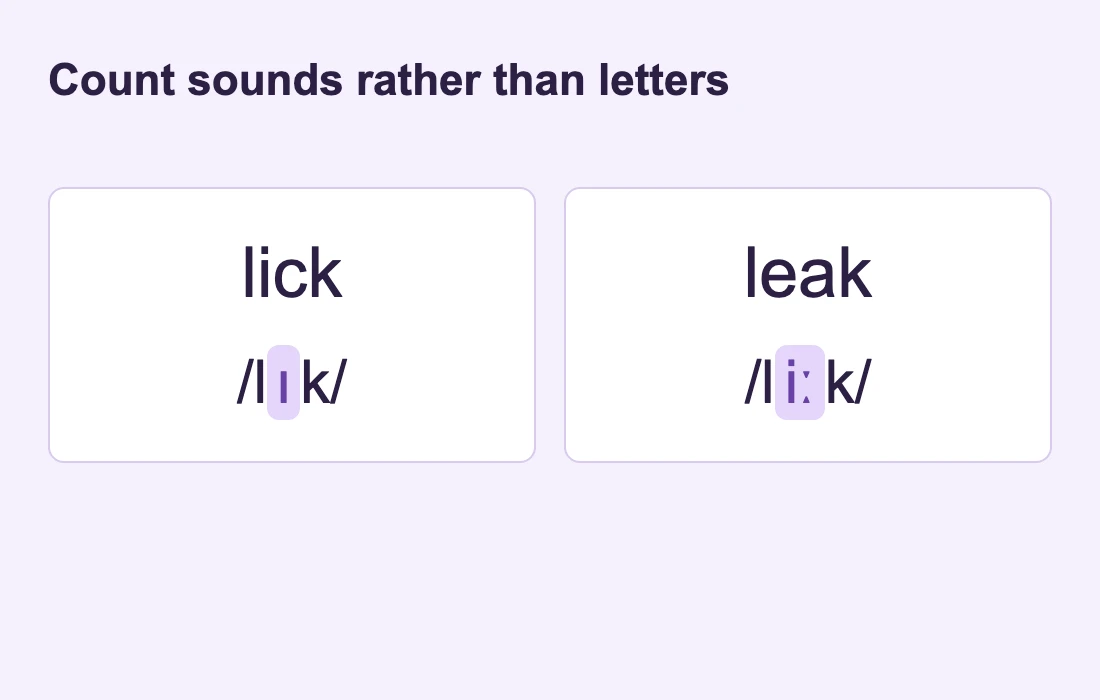
Count sounds rather than letters
In lick /lɪk/ and leak /liːk/, the beginning /l/ and ending /k/ stay in place while the vowel changes. The two written letters ea represent one vowel sound here. Check a dictionary entry and its accent label rather than counting spelling changes. An affricate such as /tʃ/ also counts as one sound in this analysis.
Find a contrast that changes what you hear
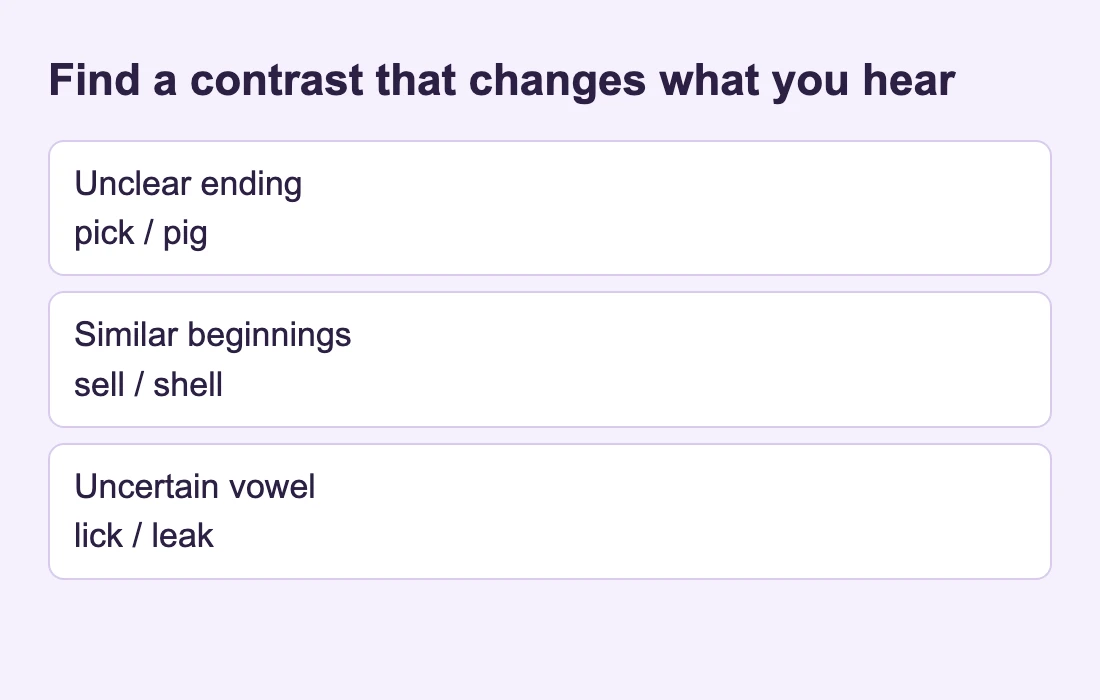
Start with a word someone actually misheard. If you have no example, our editorial suggestion is to sample one vowel contrast, lick/leak, and one final-consonant contrast, pick/pig. Ask a partner to say either word unpredictably while hiding the text and their mouth; commit to an answer before checking. Your errors choose the next contrast.
30 pairs with sentences and audio
The word links open Oxford Learner’s Dictionaries for meanings and model audio. Transcriptions were checked on 24 October 2026. UK = US means the listed broad transcriptions match. Lock, rock, sock and shock have different UK/US vowels, but each pair remains a contrast within either accent. Keep both words in one accent when listening.
These are AI-generated Deep-voiced Viking clips created through SpeakGain, not recordings of a human native speaker. Each reads two pairs and their two sentences in table order. Use them for repetition; use a partner or dictionary models for unpredictable identification. Knowing this fixed sequence is not a listening test.
1–10 · Vowel changes
| Words · transcription | Sentence to say |
|---|---|
| 1 · lick / leak UK = US /lɪk/ · /liːk/ | Do not lick the cup near the leak. |
| 2 · grin / green UK = US /ɡrɪn/ · /ɡriːn/ | That green puppet has a crooked grin. |
| 3 · hip / heap UK = US /hɪp/ · /hiːp/ | She rested her hip against a heap of cushions. |
| 4 · bit / beet UK = US /bɪt/ · /biːt/ | A tiny bit of beet stained my apron. |
| 5 · ten / tan UK = US /ten/ · /tæn/ | Ten minutes outdoors gave him a tan. |
| 6 · beg / bag UK = US /beɡ/ · /bæɡ/ | Do not beg for another shopping bag. |
| 7 · mess / mass UK = US /mes/ · /mæs/ | The mass of clay made a mess. |
| 8 · hum / ham UK = US /hʌm/ · /hæm/ | Hum a tune while slicing the ham. |
| 9 · luck / lack UK = US /lʌk/ · /læk/ | We lack equipment but have plenty of luck. |
| 10 · buck / back UK = US /bʌk/ · /bæk/ | A buck appeared behind the back fence. |
Audio · pairs 1–2 · lick / leak · grin / green
Audio · pairs 3–4 · hip / heap · bit / beet
Audio · pairs 5–6 · ten / tan · beg / bag
Audio · pairs 7–8 · mess / mass · hum / ham
Audio · pairs 9–10 · luck / lack · buck / back
11–20 · Initial consonants
| Words · transcription | Sentence to say |
|---|---|
| 11 · pin / bin UK = US /pɪn/ · /bɪn/ | Drop that bent pin into the bin. |
| 12 · tie / die UK = US /taɪ/ · /daɪ/ | Tie the ribbon before the flowers die. |
| 13 · came / game UK = US /keɪm/ · /ɡeɪm/ | My cousin came early for the board game. |
| 14 · peach / beach UK = US /piːtʃ/ · /biːtʃ/ | We shared a peach on the empty beach. |
| 15 · cave / gave UK = US /keɪv/ · /ɡeɪv/ | She gave us a map of the cave. |
| 16 · pack / back UK = US /pæk/ · /bæk/ | Pack a spare battery in the back pocket. |
| 17 · leaf / reef UK = US /liːf/ · /riːf/ | A leaf floated above the shallow reef. |
| 18 · lock / rock UK /lɒk/ · /rɒk/ US /lɑːk/ · /rɑːk/ | Hide the spare lock behind the smooth rock. |
| 19 · sock / shock UK /sɒk/ · /ʃɒk/ US /sɑːk/ · /ʃɑːk/ | Finding a sock in the freezer was a shock. |
| 20 · sell / shell UK = US /sel/ · /ʃel/ | Will you sell that painted shell? |
Audio · pairs 11–12 · pin / bin · tie / die
Audio · pairs 13–14 · came / game · peach / beach
Audio · pairs 15–16 · cave / gave · pack / back
Audio · pairs 17–18 · leaf / reef · lock / rock
Audio · pairs 19–20 · sock / shock · sell / shell
21–30 · Initial and final consonants
| Words · transcription | Sentence to say |
|---|---|
| 21 · chest / jest UK = US /tʃest/ · /dʒest/ | He tapped his chest as he spoke in jest. |
| 22 · chin / gin UK = US /tʃɪn/ · /dʒɪn/ | He touched his chin before tasting the gin. |
| 23 · thin / tin UK = US /θɪn/ · /tɪn/ | Put a thin brush beside the biscuit tin. |
| 24 · thick / sick UK = US /θɪk/ · /sɪk/ | The sick child chose a thick blanket. |
| 25 · vet / wet UK = US /vet/ · /wet/ | The vet dried the wet kitten. |
| 26 · best / vest UK = US /best/ · /vest/ | My best hiking vest has six pockets. |
| 27 · rip / rib UK = US /rɪp/ · /rɪb/ | A rip in his shirt exposed a bruised rib. |
| 28 · cap / cab UK = US /kæp/ · /kæb/ | I left my cap inside the cab. |
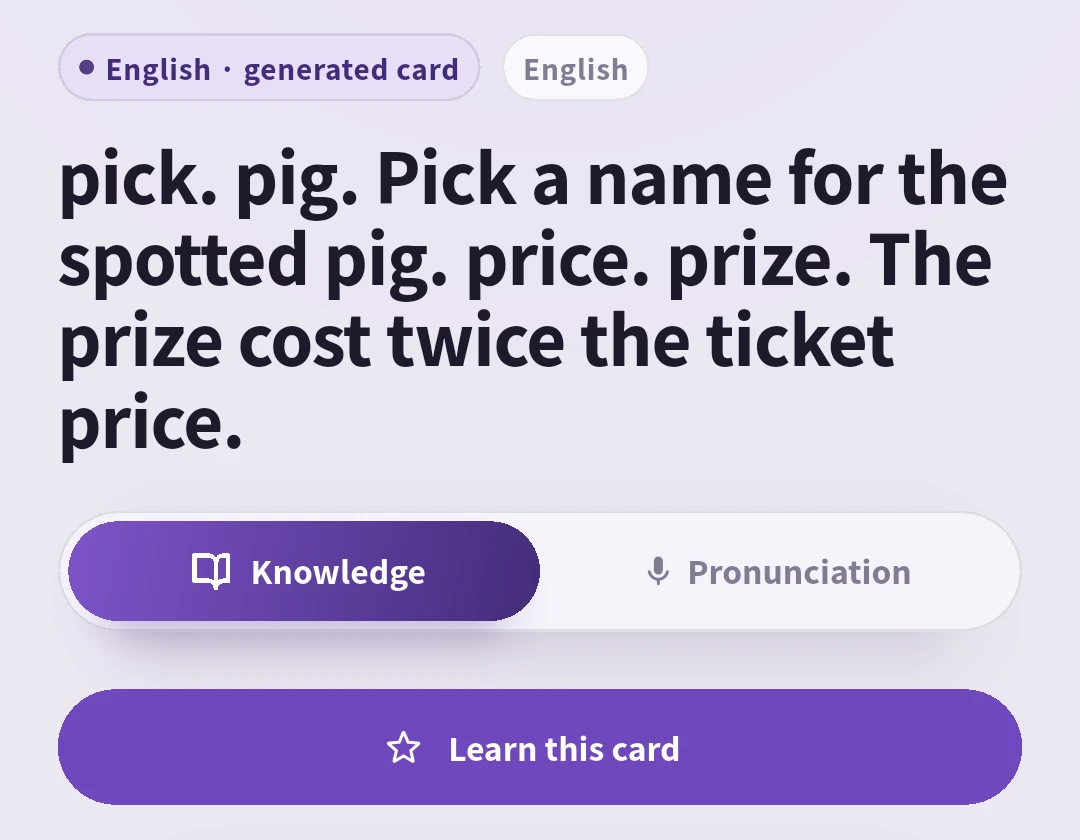
| 29 · pick / pig UK = US /pɪk/ · /pɪɡ/ | Pick a name for the spotted pig. |
| 30 · price / prize UK = US /praɪs/ · /praɪz/ | The prize cost twice the ticket price. |
Audio · pairs 21–22 · chest / jest · chin / gin
Audio · pairs 23–24 · thin / tin · thick / sick
Audio · pairs 25–26 · vet / wet · best / vest
Audio · pairs 27–28 · rip / rib · cap / cab
Audio · pairs 29–30 · pick / pig · price / prize
Listen without seeing the answer
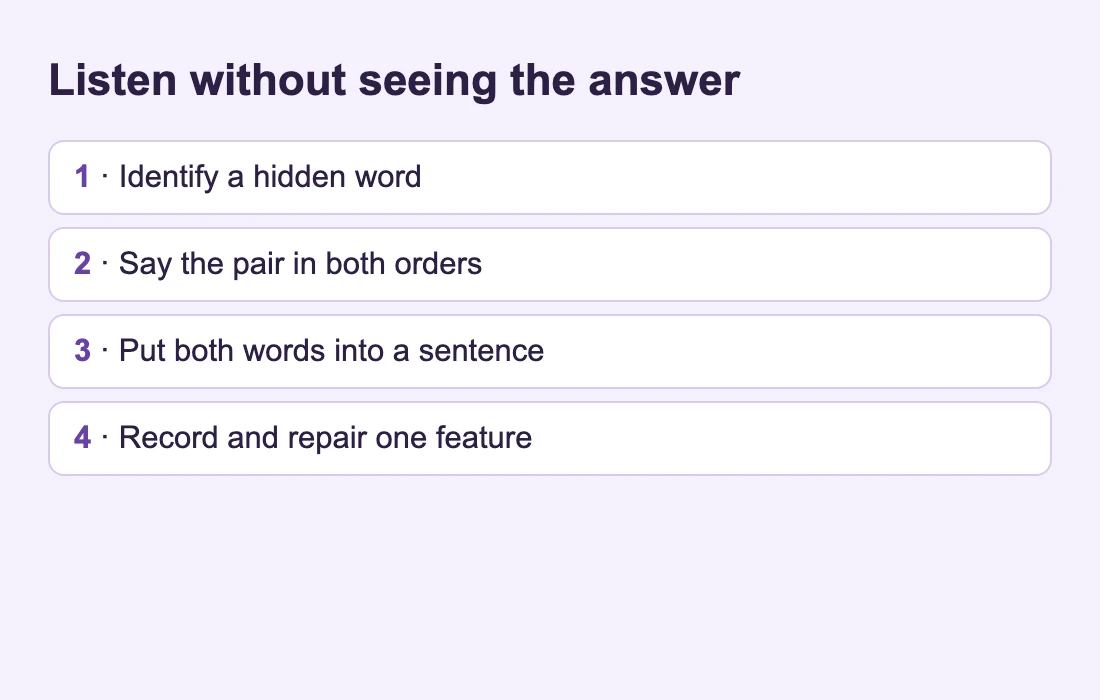
Work with one pair. Open both dictionary entries and choose the same UK or US audio label. Listen to the models separately, then have a partner select either word across several unpredictable turns with the answer hidden. Write A or B before checking and mark the turns you confused. Alone, dictionary playback is useful familiarization, but clicking a word whose identity you already know does not measure blind identification.
Contrast the words, then keep them distinct in a sentence
Say each word, then reverse the sequence: lick–leak, leak–lick. For this vowel contrast, compare quality as well as duration with the model. Next, say the complete table sentence while retaining both words. The vowel and consonant guides linked below cover articulation; the job here is to preserve a distinction when the words enter a sentence.
Pronuncian: short i /ɪ/ · Pronuncian: long e /iː/
Imagine reporting a lost item after a taxi ride: “I left my cap inside the cab.” If a listener hears cap where you intended cab, mark the final /b/ in cab and work on that word. Return to the full sentence and ask the listener to repeat the two target words without seeing your script.
Record what the listener actually receives
Make two brief recordings: the words without context, and a sentence containing both. Alternate the model with your recording at similar volume. A listener recovering the meaning from the sentence does not establish that the isolated pair is distinct. Repair one feature, such as the ending of cab, record again and retain the first take for comparison. Ask a teacher about that exact contrast if you cannot hear what changed.
A two-week trial you can adjust
Days 1–3: select one pair from listening errors and save a first recording. Days 4–6: reverse the word order and move into its sentence. Day 7: ask for blind word identification. Days 8–10: try a different sentence with that contrast. Days 11–13: revisit the first pair after a break; add a second only if you can still check both. Day 14: compare recordings and name any remaining confusion.
Keep the sentence in SpeakGain
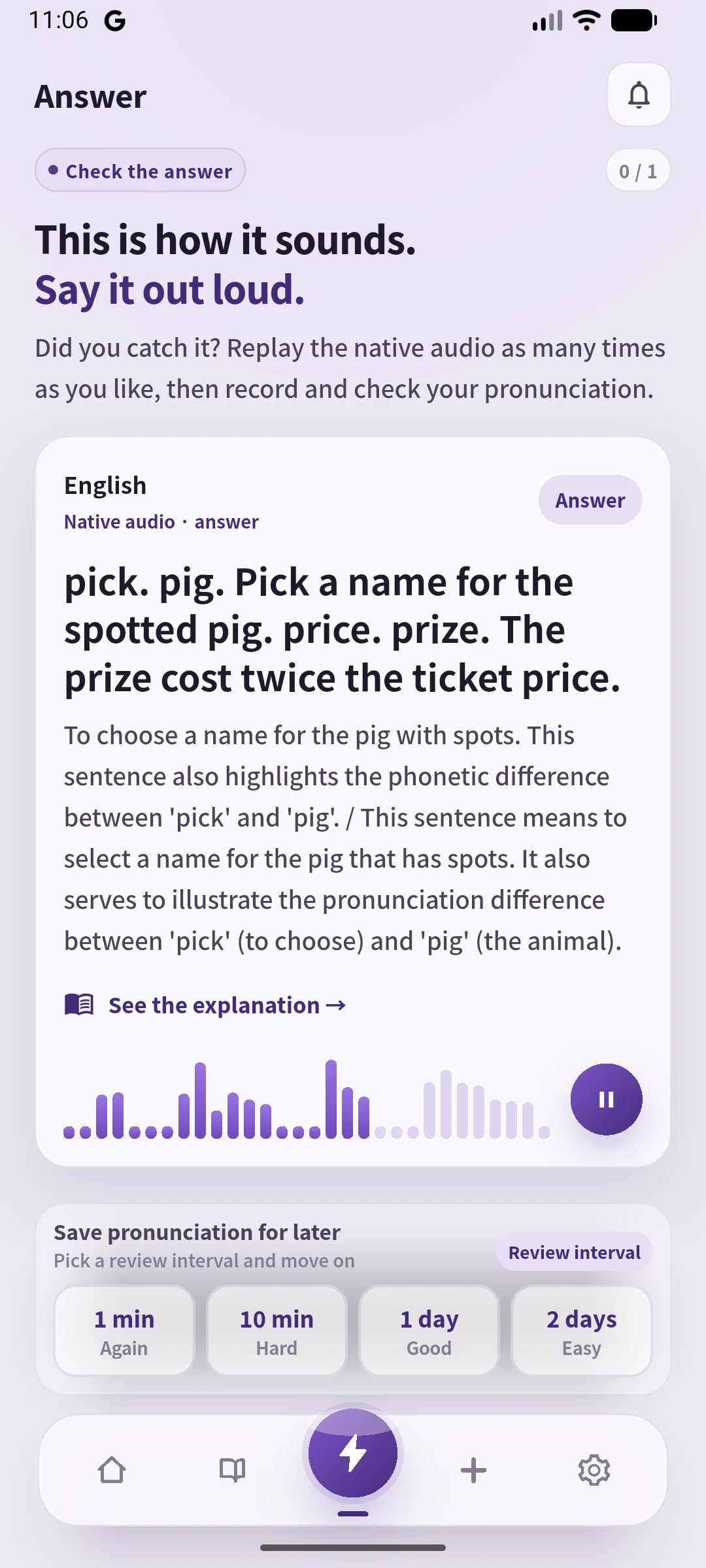
We develop SpeakGain; here, its role is to keep the contrast sentence available for later speaking practice. Save a sentence containing your target contrast, replay its model audio, say it and use recording and word-level feedback to choose a place to review. The English-interface images show a saved card and its audio playing. For the separate question of whether someone hears one word or the other, ask a listener to identify the words without seeing them.
After practice, the review-interval choices let you schedule a later return to the sentence.
Questions about minimal-pair practice
How many pairs should I work on?
Choose one contrast that caused a listening error or an unclear recording.
Can I speak before I hear the difference reliably?
Try production with a model and feedback. If both words still sound identical, return to known, answered examples rather than drilling an uncertain sound repeatedly.
Can an accent change whether words form a pair?
Yes. Keep both dictionary entries in the same accent. The pairs here remain contrasting in both checked transcriptions; lock/rock changes its vowel by accent while keeping the L/R contrast.
Is this the same as minimal pairs in speech therapy?
The term also appears in speech and language therapy. This page is for adult English learning, not an assessment or treatment plan.
Carry one useful contrast into your next conversation
Take a real misunderstanding, select its contrast and keep one model accent. Compare your first and later recordings. Once the words remain distinct both alone and in a sentence, test another sentence before expanding the sound list.