
How to invite someone in English: patterns, details and replies
Published
To invite someone in English, ask Do you want to + verb? for a more informal invitation, or Would you like to + verb? for a more formal one. Add a specific activity, time or place, and an easy way to decline when needed. For example:
Would you like to visit the design exhibition with me on Saturday? It’s fine if you’re busy.
Listen: an invitation to an exhibition
The practice clips use AI-generated speech.
Put the invitation together in three parts
You do not need to use the word invite when speaking directly to the person. Ask whether they want to share an activity. Cambridge’s Invitations guide distinguishes formal would you like (to) from more informal do you want (to).
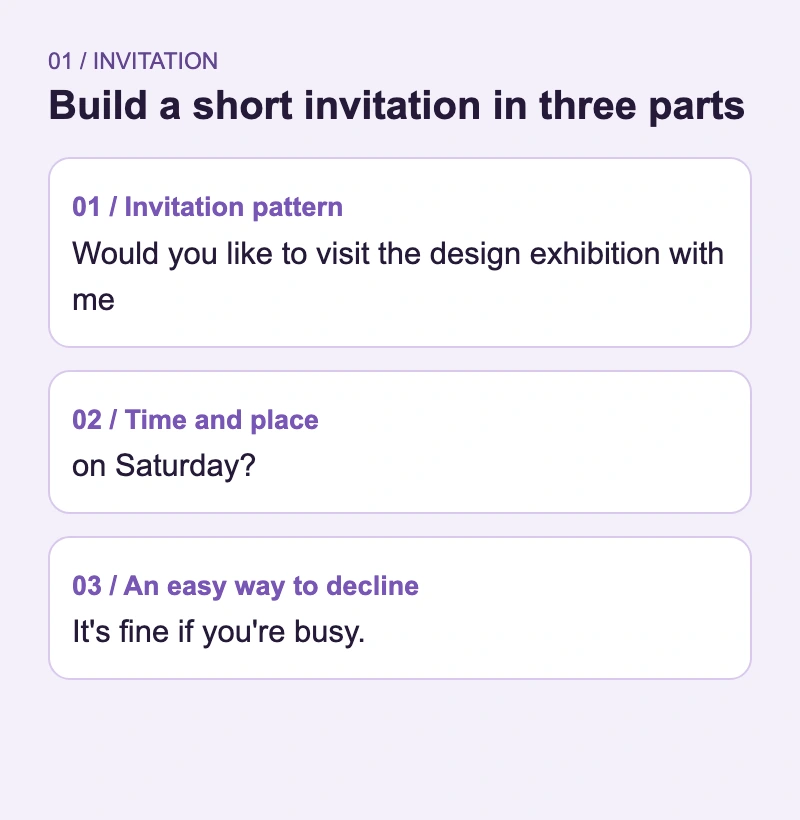
Start with the activity: visiting a design exhibition together. Then add Saturday. The final sentence is optional: use it when you want to make clear that being busy is an acceptable answer. It cannot make an invitation comfortable if you then demand an immediate yes.
Choose by relationship and room to decline
Think about how you normally speak to the person and whether they might feel obliged to accept.
| Relationship, situation and room to decline | Possible invitation |
|---|---|
| A close friend; deciding on an outing together Suggest a shared activity |
Let’s try the pottery workshop on Sunday. |
| Someone you have just met Ask about interest; allow a no |
Would you like to visit the design exhibition with me on Saturday? It’s fine if you’re busy. |
| A colleague; an optional skills session Make nonattendance an explicit option |
Would you like to join our optional skills exchange at four on Wednesday? Feel free to skip it. |
| A senior colleague or client; a team dinner Respect existing plans |
Would you like to have dinner with our team after the trade fair? It’s fine if you already have plans. |
The pottery line proposes a shared Sunday activity. The skills-exchange line specifies Wednesday at four and says that attendance is optional. Details and the way you handle the answer matter alongside the opening pattern.
Seven invitation patterns and what they do
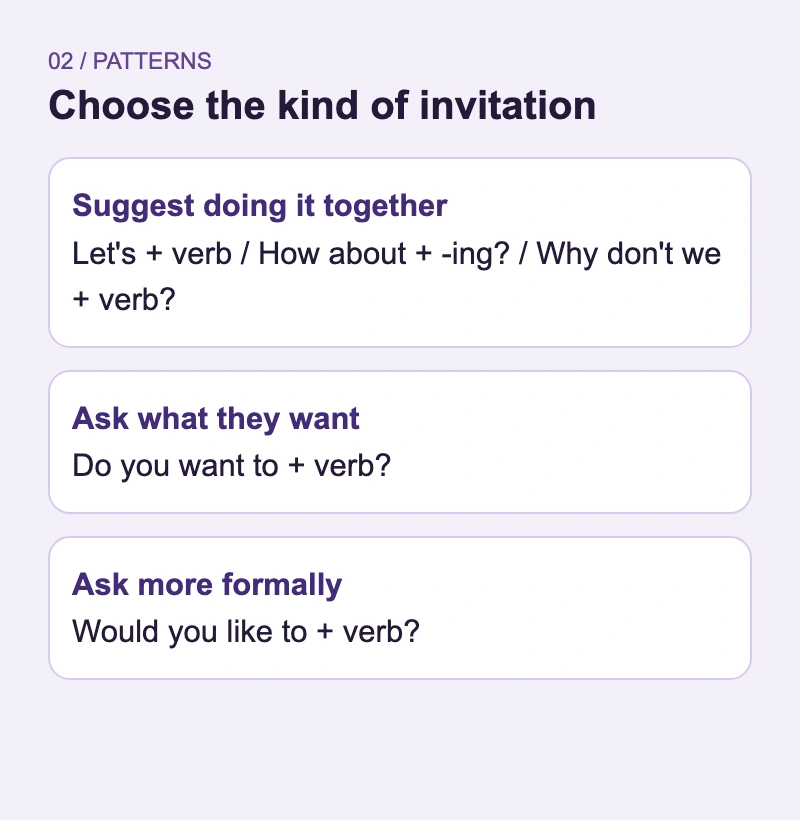
1. Let’s + verb: suggest doing it together
Let’s try the pottery workshop on Sunday.
Listen: Let’s
Cambridge’s Let, let’s guide describes let’s as a suggestion including the speaker. It can fit a conversation where you are already choosing an outing together. If you have not established their interest, asking what they want is another option.
2. Do you want to + verb?: ask informally
Do you want to browse the night market at six?
Listen: Do you want to
This is more informal than the exhibition invitation above. Use to and the base verb after want. Naming the night market gives the listener more to respond to than a vague invitation to do something sometime.
3. Would you like to + verb?: ask more formally
Use the exhibition line at the start of this page. It also works with friends; choosing would does not mean every conversation has to sound ceremonial. Keep would and to in place: Do you like…? normally asks about a general preference rather than making this particular invitation.
4. How about + -ing?: put an idea forward
How about joining the canal clean-up this weekend?
Listen: How about
Cambridge’s Suggestions guide gives this pattern for suggesting an activity. Use joining, the -ing form, here. In this scene you intend to join the clean-up too.
5. Why don’t we + verb?: suggest a joint plan
Why don’t we try the beginner’s climbing session?
Listen: Why don’t we
This is another suggestion pattern. Here you are putting forward a climbing session, rather than demanding an explanation for not going. Follow we with the base verb.
6. Are you up for + noun / -ing?: ask about willingness
Are you up for a board-game evening at my place on Thursday?
Listen: Are you up for
Cambridge labels this meaning of up for informal: willing and able to take part in an activity. It suits the casual gathering in this example. For a first invitation to a client, the more formal Would you like to pattern is a safer starting choice.
7. Do you fancy + -ing?: ask what someone feels like doing
Do you fancy going to the sculpture park?
Listen: Do you fancy
Cambridge marks this meaning of fancy UK. Recognize it in British English conversations. If you want one opening to practise first across settings, choose Do you want to or Would you like to.
Add a plan and make declining possible
The night-market line names the activity and six o’clock. You may still need to agree on a meeting point. In the exhibition invitation, with me identifies who is going, on Saturday gives the day, and the final sentence allows for a busy schedule.
Spell out what the choice involves so the listener can decide whether to take part. For an optional work session, say it is optional and accept the decision. An easy-out sentence should not become a preface to asking the listener to justify a refusal.
After the answer: confirm or step back
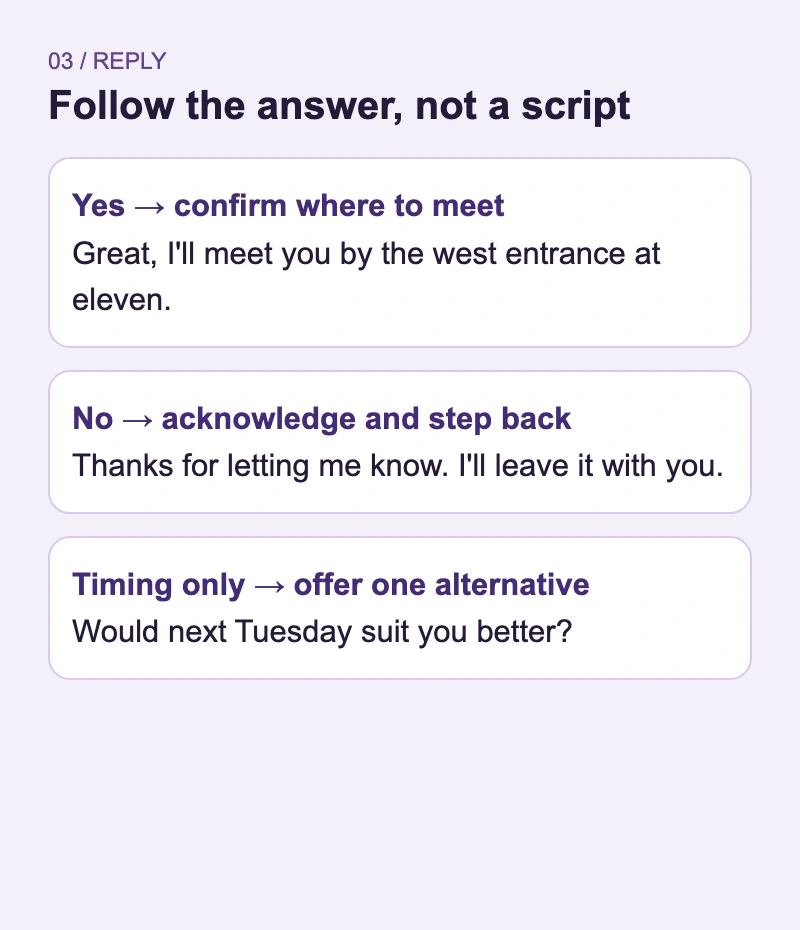
If the other person accepts the exhibition invitation and you have agreed on eleven:
Great, I’ll meet you by the west entrance at eleven.
Listen: confirm a meeting point
If they decline, you can acknowledge the answer and leave the decision with them:
Thanks for letting me know. I’ll leave it with you.
Listen: acknowledge a no
If they specifically say they want to come but cannot make that day, you could offer one alternative:
Would next Tuesday suit you better?
Listen: offer an alternative date
After a clear no, or no response, do not keep proposing new plans. For the other side of the conversation, see ways to say no in English.
At work: make an optional invitation truly optional
For a skills exchange with colleagues, give the time and make the choice explicit:
Would you like to join our optional skills exchange at four on Wednesday? Feel free to skip it.
Listen: an optional work session
For a client dinner after a trade fair, say whether the team is coming:
Would you like to have dinner with our team after the trade fair? It’s fine if you already have plans.
Listen: a team dinner invitation
If you manage the person, your actions should support the stated freedom to decline. Do not present required work as an optional social invitation. When you need someone to complete a task, use a request in English instead.
For a date: be clear and respect the answer
If you want to avoid ambiguity about whether this is a date, you can name it:
Would you like to go on a date with me to the ceramics fair on Sunday? It’s fine if you’d rather not.
Listen: an invitation to a date
Would does not secure consent. If the answer is no, acknowledge it without offering a succession of other places and dates. The goal is a question the other person can answer freely.
Practise three invitations you might actually use
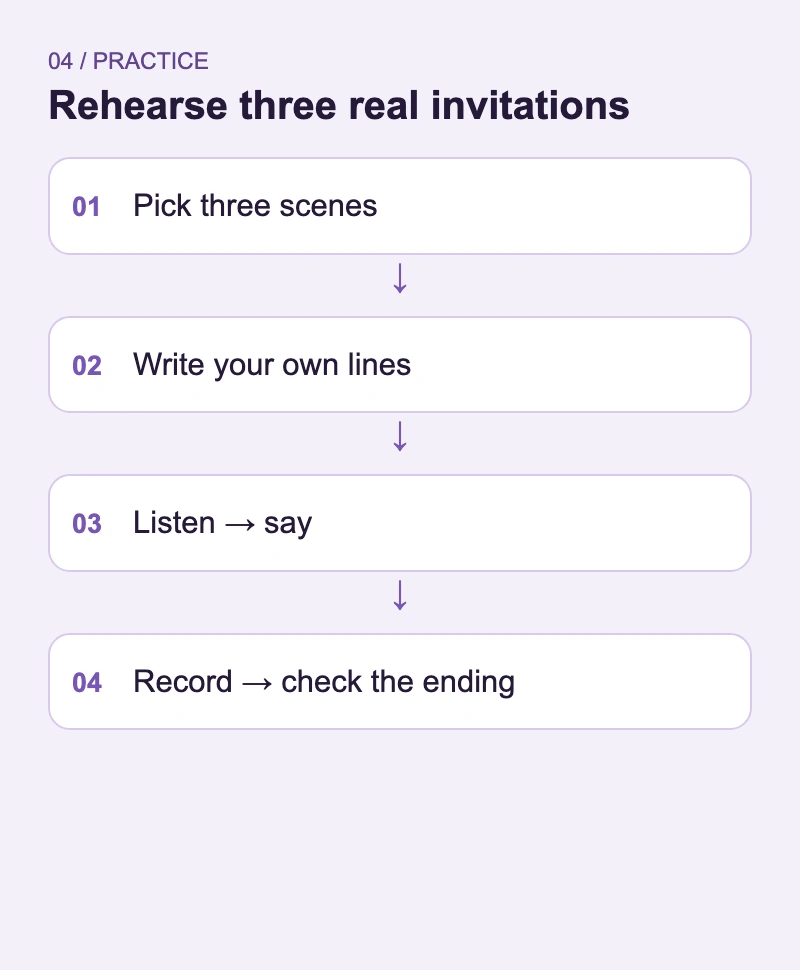
- List three people and activities you might suggest next week.
- Write a line for each: opening pattern, useful details and an easy out if needed.
- Listen to the relevant audio here, then say your own version with your details.
- Record it on your phone. Listen once with attention only to the end of the question.
The British Council’s intonation guide explains that yes/no questions usually rise at the end. Listen to the Would you like to invitation, then notice the pitch movement in your own recording.
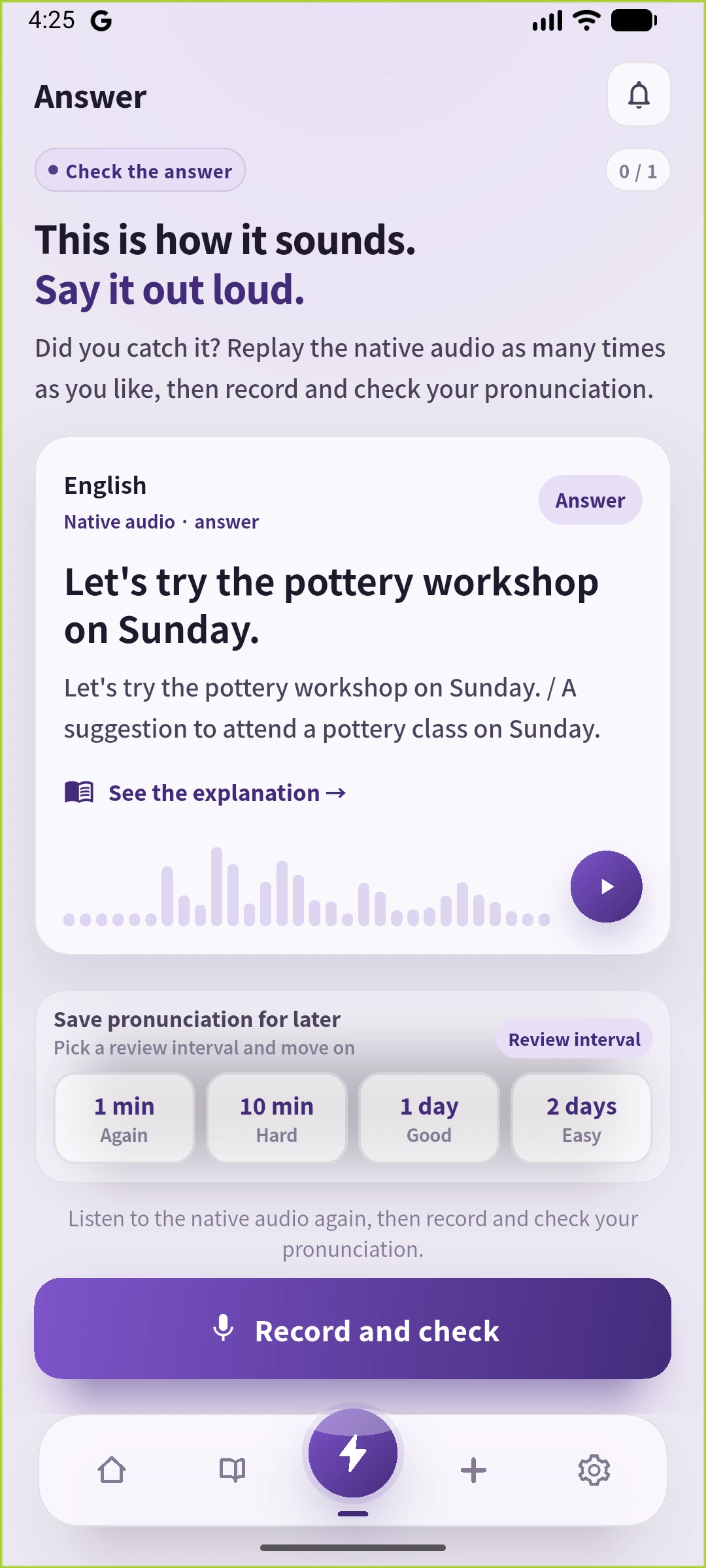
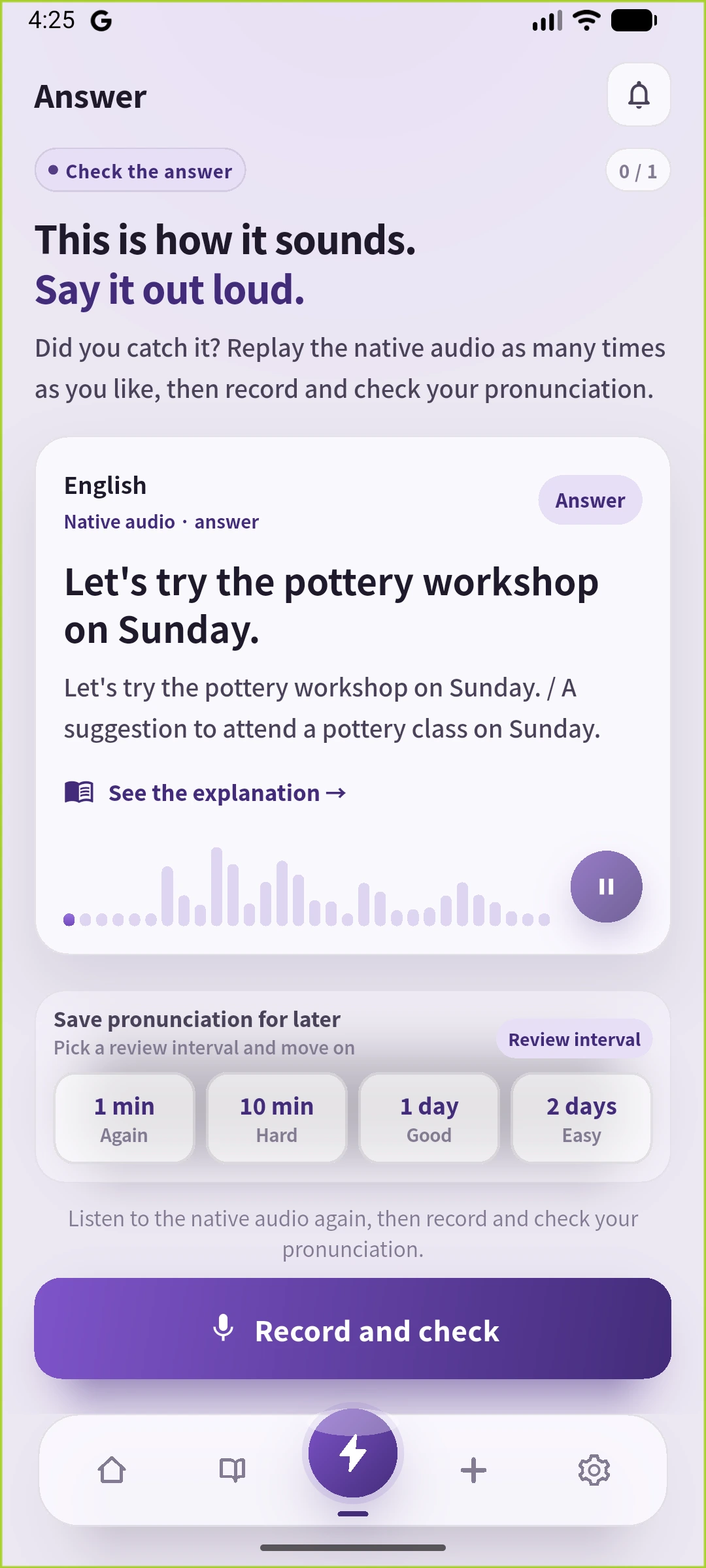
Our app SpeakGain can help you return to your own invitation lines. Save an English sentence through Add, then open Library → View → Learn this card → Reveal answer to play its generated audio alongside the saved line. These real English-interface screens show the pottery invitation created through the normal app flow; the English sentence is shared across all versions of this article.
Frequently asked questions
What is the difference between invite and ask?
Invite can mean asking whether someone wants to go somewhere or do something. Ask is broader: it covers questions and requests as well as invitations. When speaking directly to the person, a Would you like to question can convey the invitation itself.
Is Let’s rude?
It makes a suggestion that includes you. The form alone cannot decide whether it fits the situation. When interest is uncertain, asking about the listener’s preference and leaving room for a no is a useful alternative.
Can I use these patterns in a message?
Yes: keep the opening, details and any necessary easy out. Because the reader cannot hear your tone, clearly name the day and who is coming. A read receipt or silence is not an acceptance.
How do I invite someone to join a group?
The team-dinner example uses with our team to name the group. Inviting people to reply individually can reduce the need to answer on the spot in front of everyone.
Choose your next invitation
Pick one person and one real activity. Add enough detail for a decision, practise the line aloud, and be ready either to confirm a plan or accept a no.