
Bilingual Books for Learning English: How to Use the Translation
Published

Bilingual books can be a useful way to start reading in English. The key is not to follow the English and translation line by line. Read a short section in English first, check only what you need in your first language, and then return to the same English passage.
You also do not need a book with two languages printed side by side. A separate translated edition or an easier graded reader may fit you better. This guide helps you choose and use each option.
For Japanese manga in English, see our official-edition selection guide and chapter-to-speaking routine, which uses a familiar plot before an independently written sentence.
Three ways to read with translation support
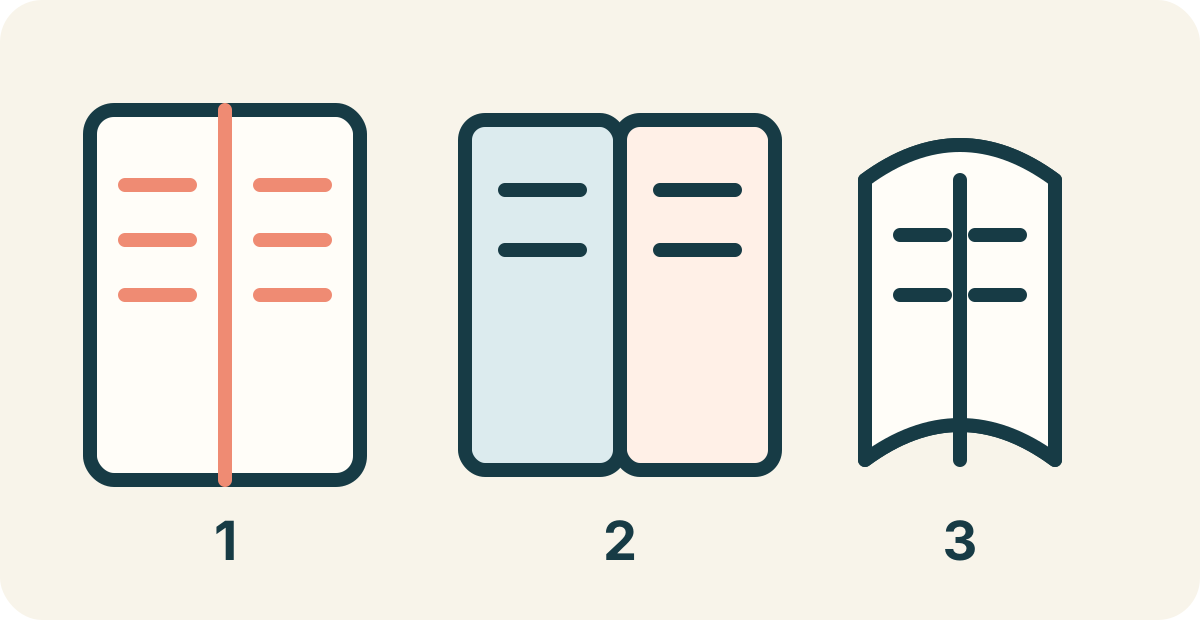
1. A parallel-text bilingual book
English and your first language appear on facing pages or near each other. It is quick to check meaning and works well for short stories, speeches, and essays.
The drawback is that the translation is always visible. If your eyes keep jumping to it, cover that page and reveal it only after finishing a paragraph.
2. An English edition plus a translated edition
This works when the book you want has no parallel-text edition. A story you have already read in your first language can also be easier to follow in English because you know the characters and plot.
Page and paragraph breaks may not match between editions. Use the translation to confirm a scene or chapter, not to align every sentence.
3. A graded reader
If you need the translation every few lines, the English book may simply be too difficult. Graded readers control vocabulary and grammar for language learners. They include simplified classics, original stories, and nonfiction.
The Extensive Reading Foundation notes that labels such as “Starter” or “Level 1” are not standardized across publishers. Always preview a real page instead of trusting the number alone.
Preview one page before choosing
Read one sample page without a dictionary and ask:
- Can I roughly tell who is doing what?
- Can I skip a few unknown words and still want to continue?
- After checking the translation, can I find the English that carries that meaning?
The Extensive Reading Foundation suggests a practical five-finger rule: raise one finger for each difficult word on a page. If you use the whole hand, the book may be too hard for comfortable reading. Treat this as a signal to try an easier book, not as a strict test.
A four-step bilingual reading loop
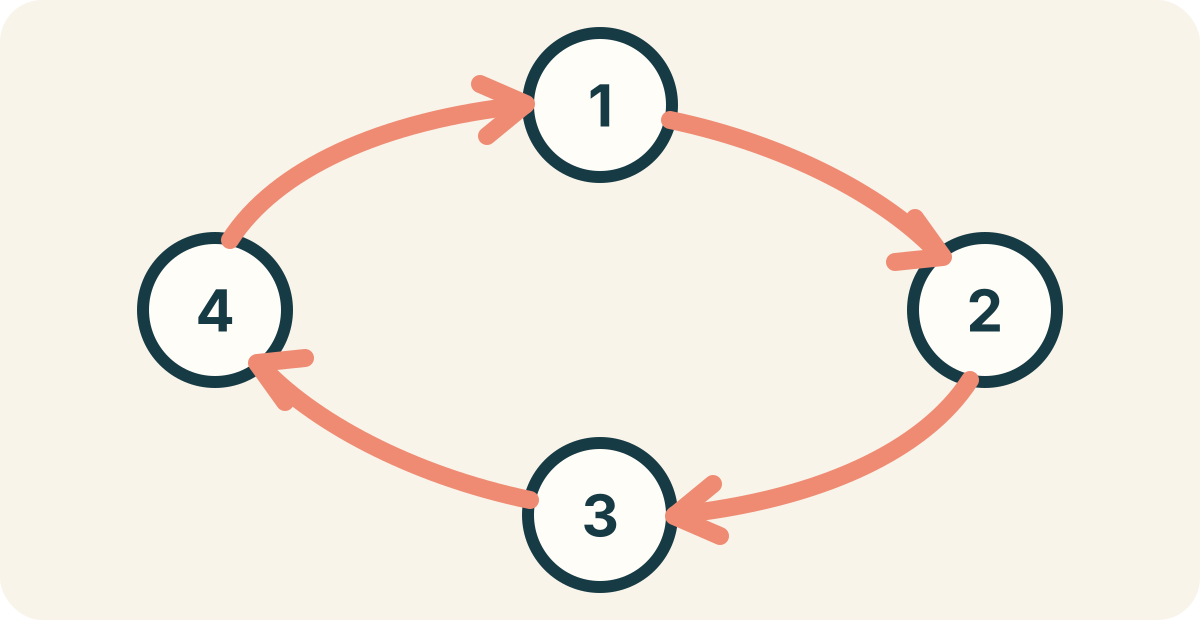
1. Read a short section in English
Read one paragraph or one short scene. You do not need to solve every word. Continue if you can identify a person, action, or place.
2. State the gist
Before looking at the translation, say in one sentence what you think happened. This is not a translation exercise. It gives you a prediction to check.
3. Check only what blocked you
Look at the translation for a plot point, relationship, or expression that you could not infer. A meta-analysis by Yanagisawa, Webb, and Uchihara (2020) combined 42 studies and found better vocabulary-learning results for glossed than unglossed reading, with first-language glosses outperforming second-language glosses.
That evidence concerns word glosses and short annotations, not full parallel translations. It does not prove that reading every translated sentence is the best method. Use translation as targeted support.
4. Return to the same English
Read the English passage again. Find where the wording creates the meaning you just confirmed. If you stop after reading the translation, you may understand the story without noticing how the English expressed it.
Try it with an original example
Read this original passage before the translation:
The rain had stopped, but the stone path still shone under the streetlights. Mina folded the map and said, “Let’s take the long way home.”
The gist is: after the rain, Mina suggests taking a longer route home.
Now check the wording in your first language, then return to the English. Notice how still shone paints the wet path and take the long way home expresses choosing a longer route.
Keep only one sentence you want to use
Do not turn reading into endless word collection. From a chapter or short story, keep one sentence you could imagine saying yourself, such as Let’s take the long way home. Record the sentence, its meaning in context, the book and location, and why you chose it. Keep copyrighted quotations brief and for personal study.
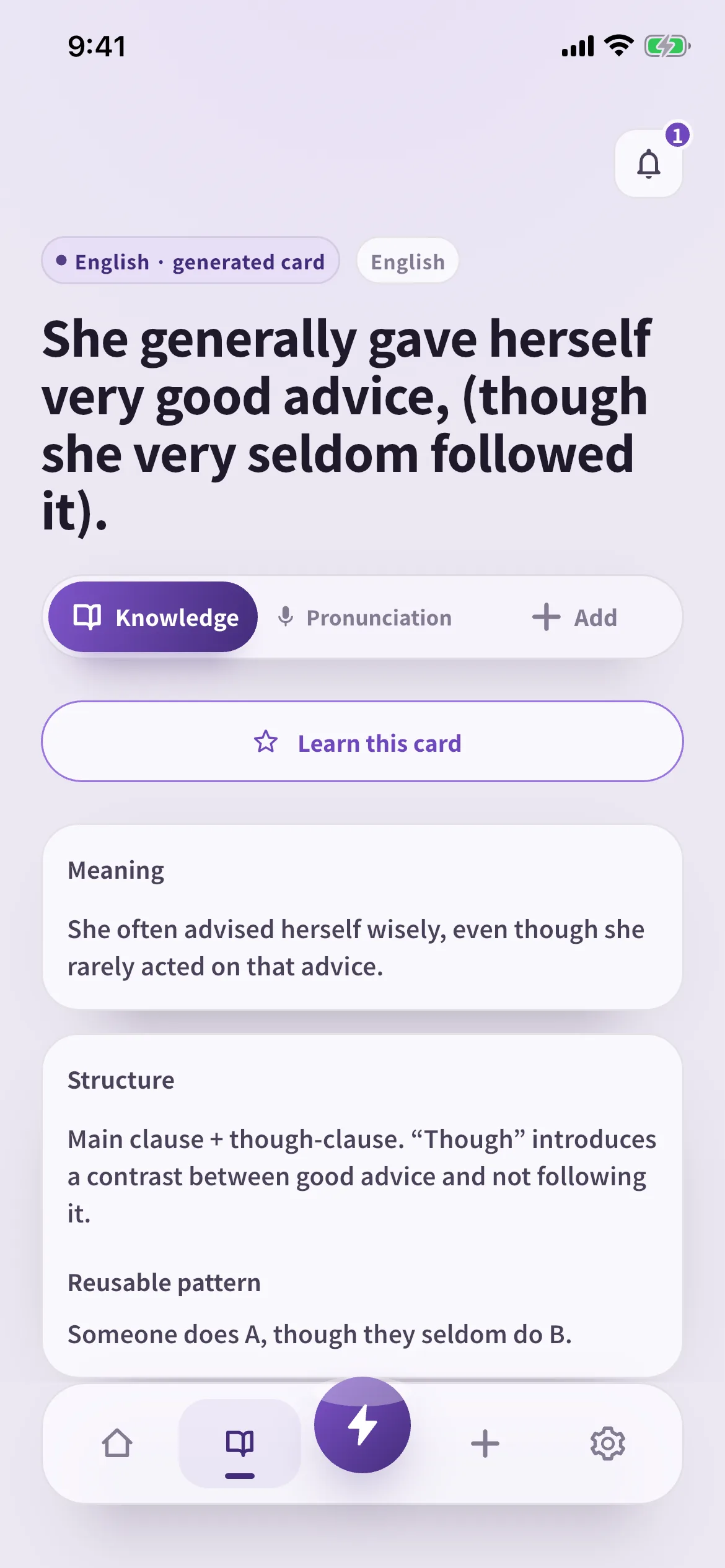
If you want to hear and practise that sentence, one option is SpeakGain, the app we develop. A saved sentence becomes a card with generated English audio and AI explanations of meaning and structure. You can listen and speak it aloud; pronunciation scoring is optional. SpeakGain does not replace the bilingual book. It is a place to practise the one sentence you chose after reading.
Common questions
Will translation stop me thinking in English?
Using a translation does not automatically prevent direct understanding. The common trap is finishing the content in your first language before giving the English a real attempt. Keep the order: English, targeted check, English again.
Should I translate every sentence?
That may suit close-reading or translation practice, but it is slow for finishing a story. For reading continuity, work in paragraphs or short scenes.
What if a bilingual book is still too hard?
Choose an easier graded reader, a short story, a children’s book, or a book whose plot you already know. More translation cannot fully compensate for text that is far above your current reading level.
Summary
- Bilingual books are valid support for beginners.
- Choose among parallel text, separate editions, and graded readers.
- Read English, state the gist, check only what you need, and return to the English.
- If you need constant translation, lower the difficulty.
- Keep one personally useful sentence and practise it after reading.
For specific titles, compare our six beginner English books and editorial verdicts.
References
- Yanagisawa, A., Webb, S., & Uchihara, T. (2020). How do different forms of glossing contribute to L2 vocabulary learning?. Studies in Second Language Acquisition, 42(2), 411–438.
- Extensive Reading Foundation. ER Toolkit.
- Extensive Reading Foundation. Graded Readers.