
English dictionary apps: learner definitions, audio and offline costs
Published Updated
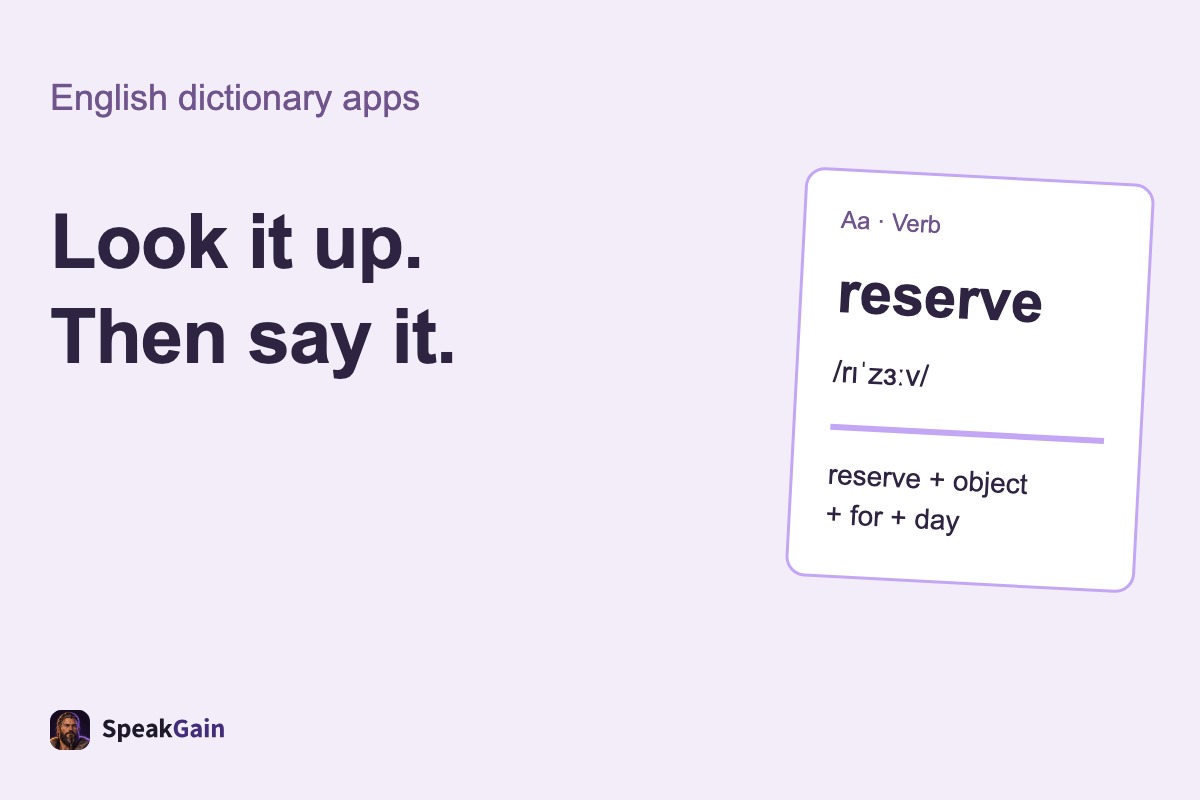
For a learner’s English dictionary app, start with Oxford Advanced Learner’s Dictionary when you need clear definitions, sentence patterns and British/American audio. Choose Merriam-Webster for American English reference, or Livio’s English Dictionary – Offline if free offline definitions matter most. Compare the audio connection requirements and full-access cost before installing: an offline definition does not always include offline sound.
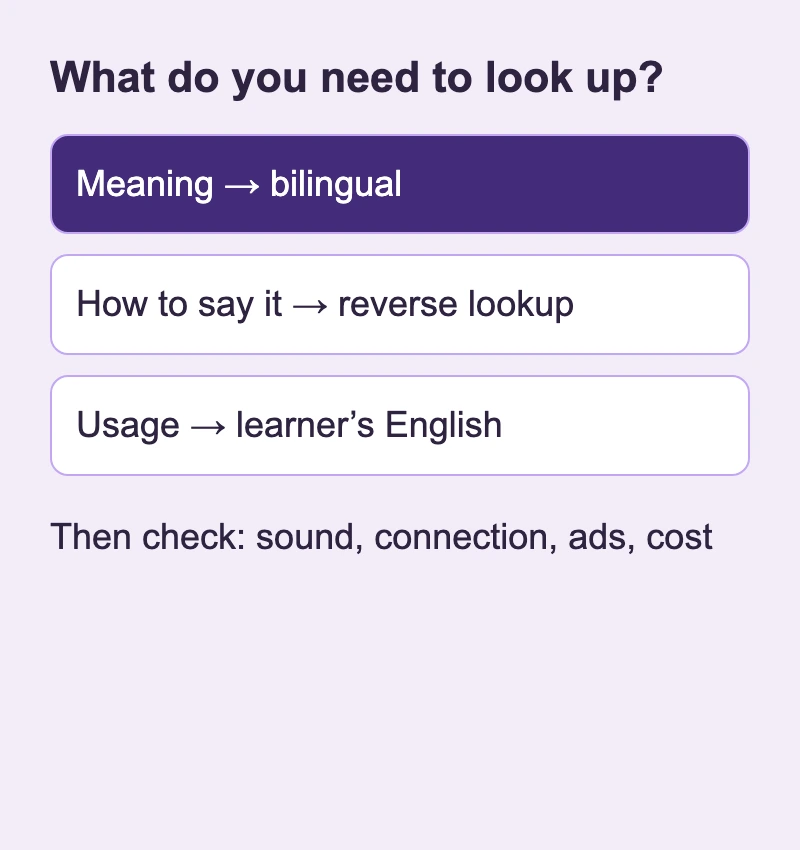
Compare the dictionary, not just the download button
Checked against publisher pages and US store listings on 26 October 2026; a dash (—) marks an attribute we could not verify.
| App / dictionary content | Audio and examples / Offline / saved words / Ads, free access and price / Platform / market checked |
|---|---|
| Oxford Advanced Learner’s Dictionary, OUP / OALD10 | Audio and examples Learner definitions, example patterns, recorded UK/US voices; Collocations and Thesaurus are separate products Offline / saved words Purchased content offline; organised Favourites Ads, free access and price Free sample and short full trial; US iOS: $9.99 for one year of OALD10, $3.99 for one month. Ads: — Platform / market checked Android / iOS; US |
| Merriam-Webster Dictionary, publisher’s English dictionary and thesaurus | Audio and examples Human word pronunciations and example sentences; American reference rather than a UK/US learner pair Offline / saved words Definitions and synonyms offline; audio, illustrations and voice search need a connection. Favourites/history Ads, free access and price Free with ads. Optional ad-removal subscription; price: — Platform / market checked Android listing; US |
| English Dictionary – Offline, Livio / English Wiktionary | Audio and examples English definitions; device text-to-speech with UK/US voice selection, not recorded dictionary speakers Offline / saved words Offline definitions; voice data must be installed for speech. Bookmarks, notes, history Ads, free access and price Free, $0. Ads: — Platform / market checked Android; US |
| SpeakGain — our product; no dictionary database | Audio and examples Generated audio for your own sentence and speaking practice Offline / saved words Saved practice card and replay verified; no offline dictionary lookup Ads, free access and price Practice app, not free dictionary access. Pro subscription terms and local price appear in your store Platform / market checked Android / iOS; capture on Android Dev |
All amounts above were checked on 26 October. Oxford’s annual figure buys a year, not a month. Android billing can differ from iOS; check your platform’s renewal total.
Which one fits your next lookup?
Oxford: choose it when a short definition alone leaves you unsure how a word fits a sentence. Its learner examples and separate collocations resource help you inspect a verb’s object and nearby prepositions. Start with the sample: if reading a definition requires several more lookups, use a bilingual dictionary alongside it rather than forcing every search into English. The free download is not permanent access to the whole dictionary.
Merriam-Webster: choose it for American usage, synonyms and a conventional reference dictionary. Its official listing makes a useful distinction: definitions travel offline, but pronunciation audio requires internet. It is less suitable when your main requirement is comparing a recorded British voice with a recorded American one during a flight.
Livio: choose it when cost and offline text are decisive. The dictionary comes from English Wiktionary, and speech comes from the phone’s text-to-speech engine. That makes installed voice data important; a silent phone does not mean the entry has no pronunciation. It is not the same editorial product as an Oxford learner dictionary.
For Cambridge, use the current website as a separate browser resource. The publisher’s legacy-app notice says its old dictionary apps have been removed from the stores. An older “best apps” list can therefore lead to a product you cannot newly install.
Read an entry so you can use the word
Imagine a community tool library: you want a repair kit ready for Saturday. Search reserve, then open the verb, not the noun about a supply kept for later. Check the sense that matches booking an item, then inspect the pattern with an object and for.
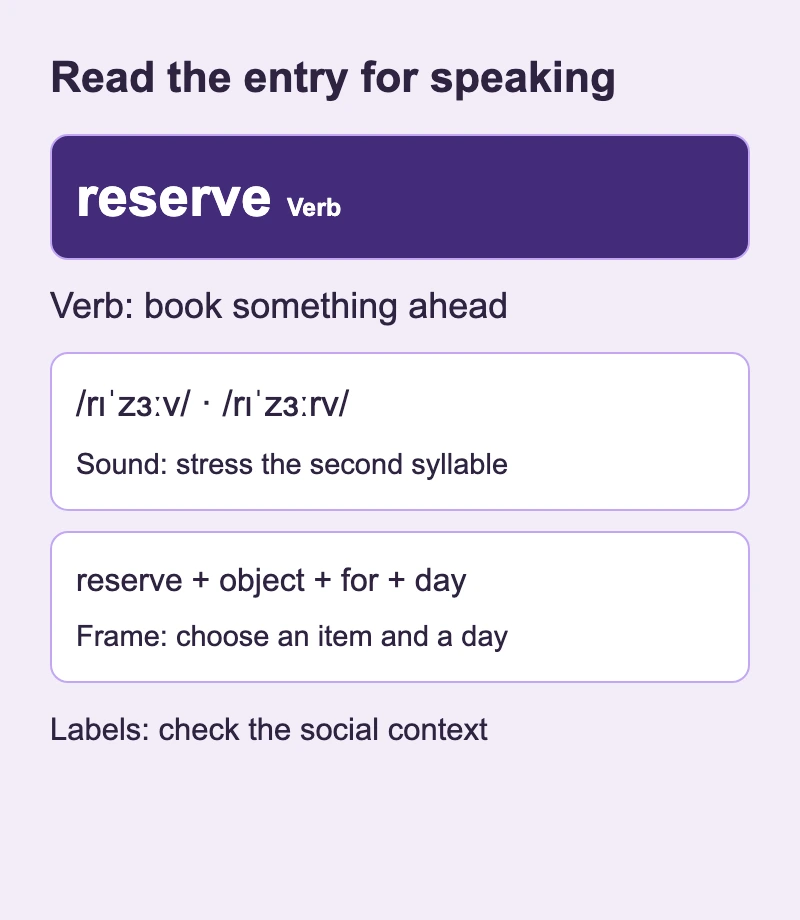
The Oxford verb entry gives UK /rɪˈzɜːv/ and US /rɪˈzɜːrv/. The stress mark ˈ points to the following syllable. Listen to one model and say the word before changing accents. Choose an example for its grammatical frame, then replace the item and date with your actual plan.
Usage labels such as formal or informal describe context; they are not instructions to use the first synonym everywhere. For a phrasal verb, keep the particle in the lookup; for a collocation, check the noun that goes with the verb. A sentence translator can suggest an overall meaning, but an entry makes these smaller choices easier to inspect.
SpeakGain — our product, for the sentence after the lookup
SpeakGain is not a dictionary app. Its role here starts after you have checked the meaning and grammar: keep the sentence you intend to say, replay its generated audio, and practise speaking it. Return to your dictionary if an AI explanation leaves a usage question unresolved.
Could I reserve a repair kit for Saturday?
Listen to the generated practice audio
Practice speech generated in SpeakGain.
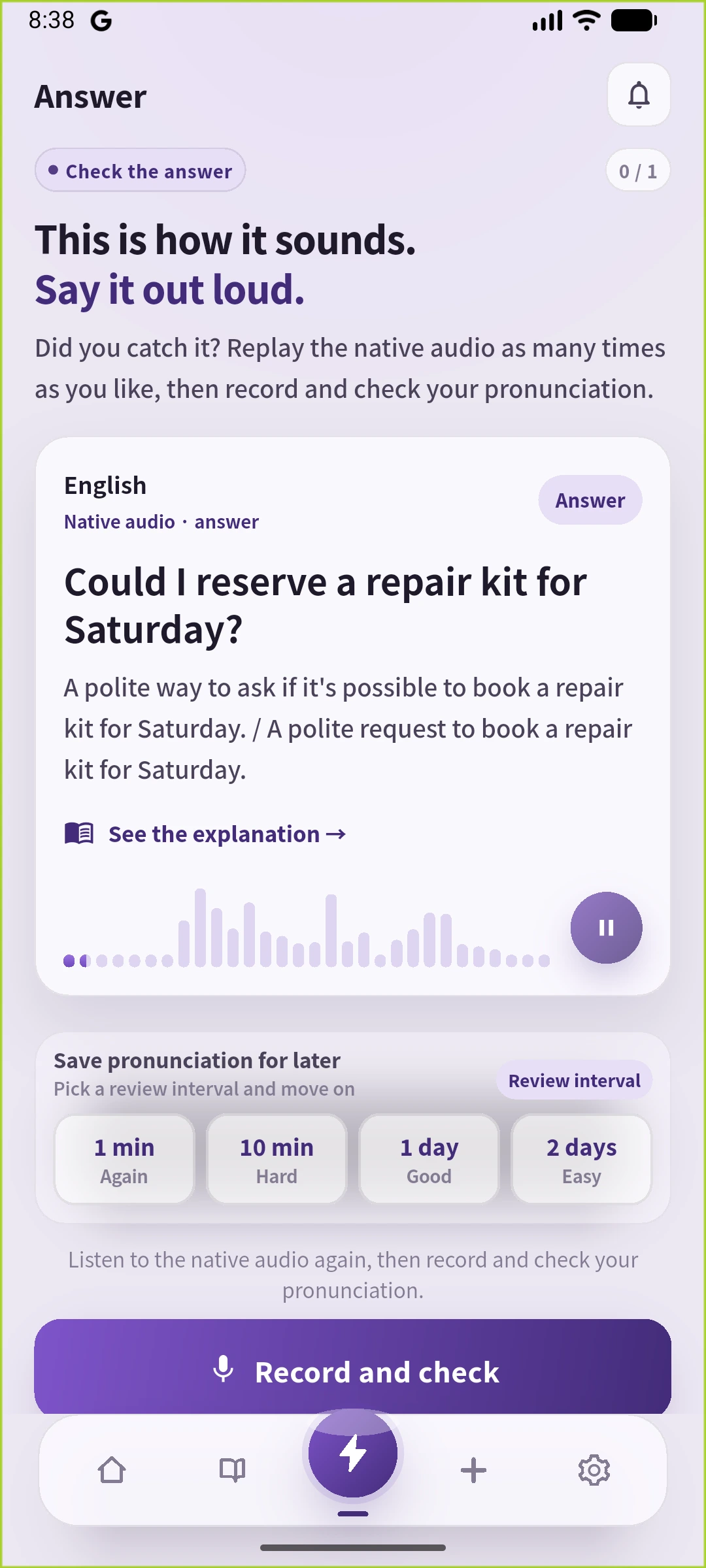
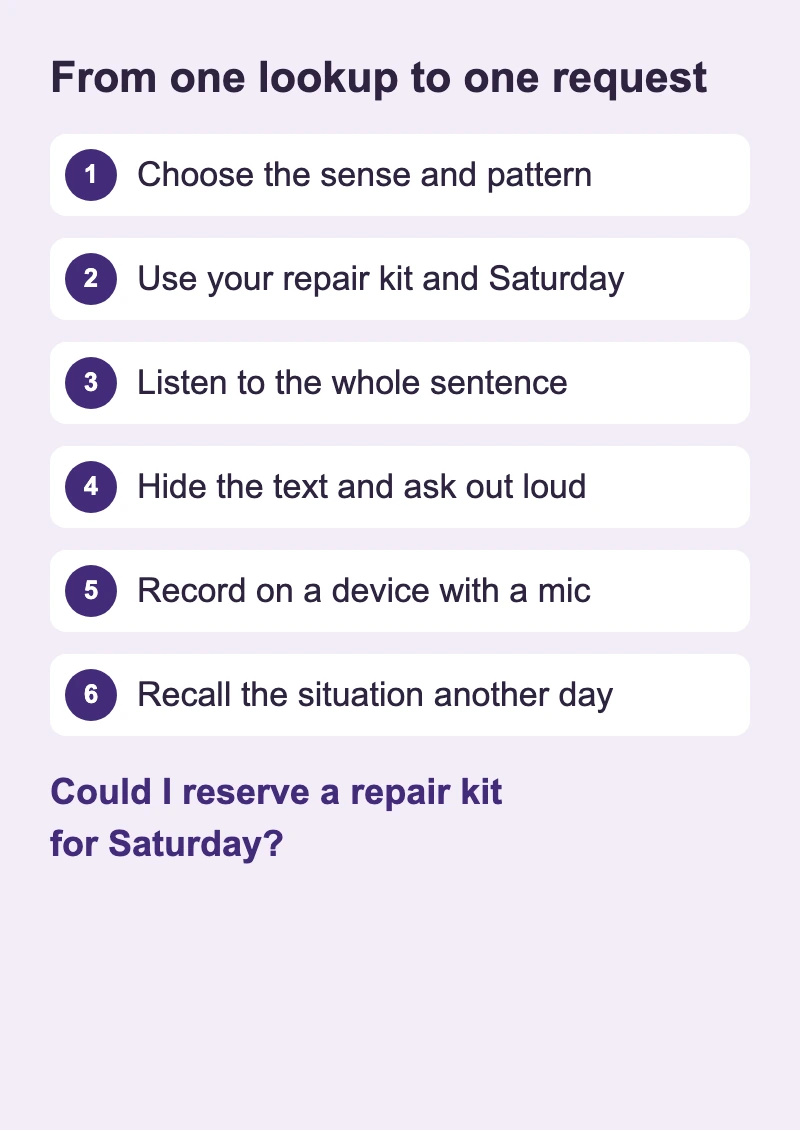
Try asking for the kit without reading. If you lose the word’s sound, replay reserve; if you lose the sentence frame, check the object and date phrase. You can record and check your own voice on a device with a working microphone. On the next review, recall the request from the tool-library situation, rather than merely recognising the definition.
Questions before you choose
Can I stay entirely free?
For offline definitions, Livio is a reasonable starting point; Merriam-Webster adds publisher reference content with ads. A paid learner dictionary becomes relevant when you need its particular explanations, examples or offline recorded voices. More installed dictionaries do not automatically make a lookup clearer.
How do I check offline sound and ads?
Download the dictionary and voice data first, then try a lookup, a word pronunciation and any example audio separately in airplane mode. An “offline” label can refer only to text. Check the ad-removal purchase separately from the dictionary download.
Should I replace a paper dictionary?
Only if the phone makes your actual task easier. A paper dictionary can still help compare senses and usage; an app adds portability and accessible sound. Keep the reference you can navigate and understand, then test whether you can say one useful sentence from it.
Our choice: sample Oxford for learner use, keep Merriam-Webster in mind for American reference, and use Livio when offline text at no cost is the priority. Finish a lookup with something you can ask a person.
Sources
- Official app specifications and checked store prices are linked in the table, accessed 26 October 2026.
- Oxford reserve, verb: pronunciation and usage pattern.
- Cambridge legacy apps notice: current installation availability.