
Why Movie Dialogue Is Hard to Understand—and How to Practise It
Published

If you cannot understand movie dialogue, do not assume that your listening is simply “bad.” Check which of three problems you have: the English is unclear even in captions; the captions make sense but the audio does not; or the scene remains difficult even after you match the words to the sound. Each problem needs a different response.
You do not need to replay a whole film. Use one clear 20–40 second scene: listen without captions, check English captions, confirm meaning, replay and speak one short chunk, then listen once more without captions. If the scene is still opaque, choose another.
If a familiar line is hard to segment, practise one boundary with connected-speech exercises before returning to the movie dialogue.
Diagnose the problem with English captions
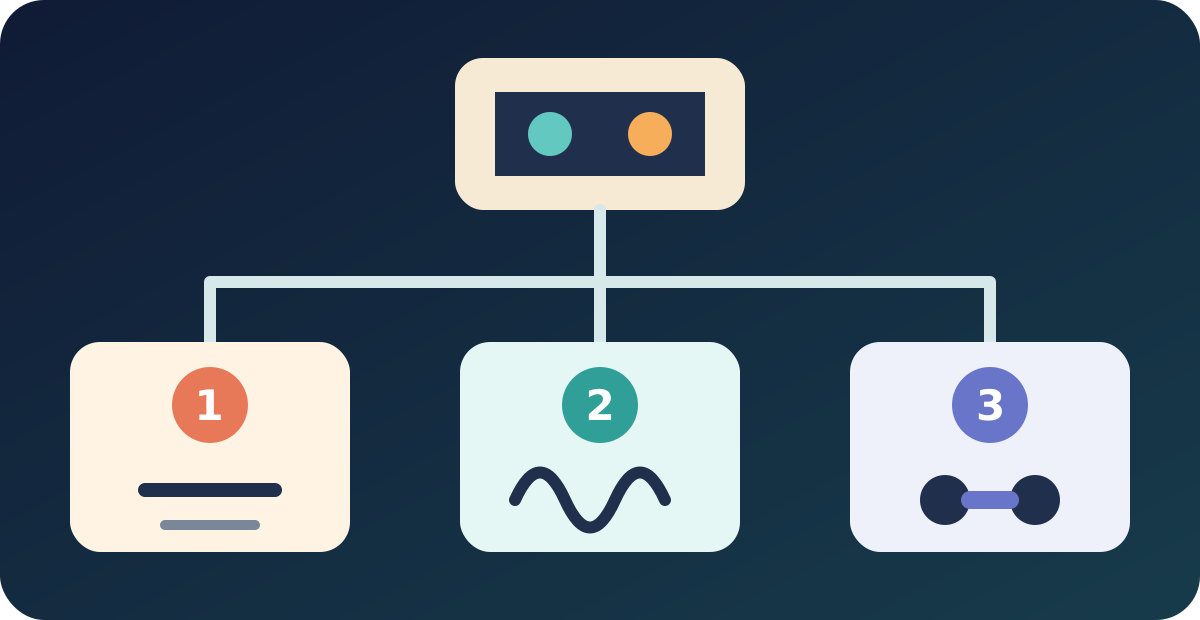
1. The captions still do not make sense
This is mainly a vocabulary, grammar, or context problem. Before replaying the audio, look up only the words needed to follow the exchange. Confirm who is speaking, what they want, and what has just happened. A plot summary or first-language subtitles can restore context.
If an unfamiliar casual expression appears in the subtitles, check its meaning and when to use it before returning to the audio.
2. The captions make sense, but the audio does not
Words you know can be weakened, shortened, or joined in casual speech. In experiments on spontaneous English, Mulder and colleagues found that reduced words were recognised less accurately and more slowly than unreduced forms, with a larger reduction cost for L2 listeners. Sometimes the missing link is not vocabulary but the connection between a familiar written form and its spoken variants.
3. The scene itself is difficult
Music, effects, whispering, overlapping speakers, strong accents, and proper names all add difficulty. A 2025 caption study also found greater caption reliance with multi-speaker videos. You cannot control a film’s sound mix. Switching to a clear one-to-one conversation is a useful learning decision, not a failure.
A five-step loop for one short scene
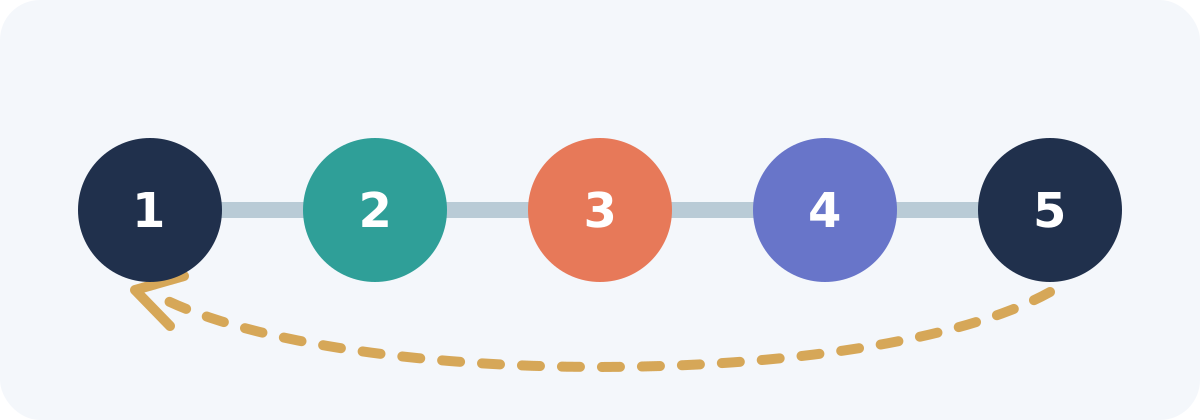
- Listen once without captions. Note any words you catch and the purpose of the exchange.
- Turn on English captions. Pick just one mismatch between what you heard and what was written.
- Confirm the meaning. If the written line is unclear, check the phrase or its context.
- Replay and speak a short chunk. Imitate two to five words after the audio. You do not need to reproduce the actor’s voice.
- Listen once more without captions. Stop if the target chunk is now recognisable. If not, finish after roughly three attempts.
For a copyright-safe invented example, suppose you read Could you give me a minute? easily but cannot locate the word boundaries in the audio. Isolate give me, listen while looking at the words, say the chunk, and return to the full sentence. The goal is not to invent a fixed phonetic spelling; it is to connect this written sequence with the sound you heard in context.
Yang and Chang (2014) studied 44 EFL university students using full, keyword, and annotated-keyword captions. All three groups improved over the pre-test, and the annotated-keyword group had the highest mean performance. This was a small study using instructional material, not proof that the five steps above are the one best method for every film.
Use captions for comparison, not as a test of worth
Captions do not have to stay on forever or disappear immediately. In Montero Perez and colleagues’ experiment, the full-caption group outperformed the no-caption and keyword-caption groups on global comprehension, while the groups did not differ on detailed questions that allowed audio replay. Captions can support comprehension and decoding, but merely displaying them does not guarantee detailed listening.
Use first-language subtitles when you are enjoying the story. On a study day, compare the audio and English captions for one scene. For the broader workflow—choosing a film, switching subtitle modes, and reviewing phrases—see How to learn English with movies.
Save one sentence in SpeakGain
The diagnosis above only needs your player, captions, a dictionary, and notes. If you want to keep one useful sentence with audio, speaking practice, and later review, you can also use SpeakGain, which we develop.
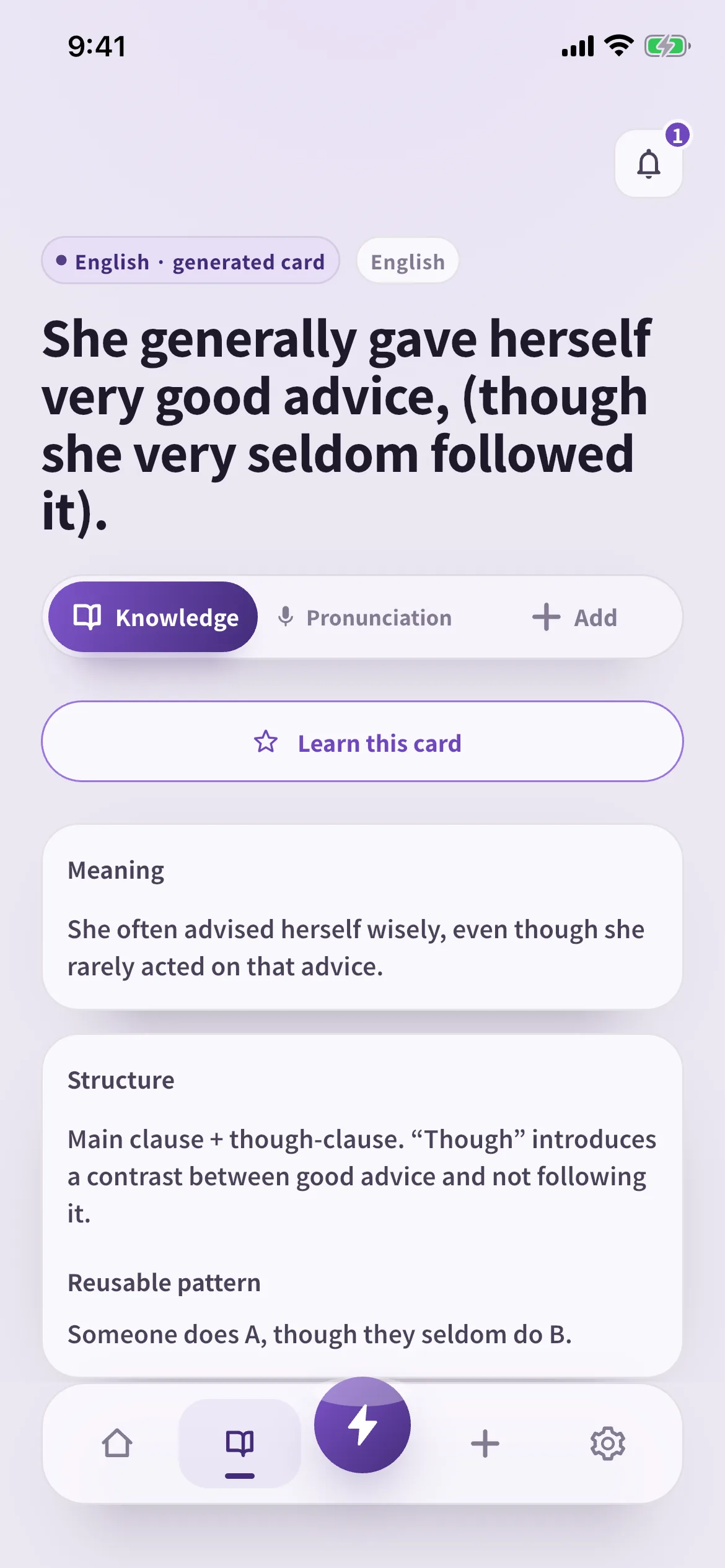
SpeakGain creates a card from English you enter, with generated audio and AI explanations, and lets you listen and speak. Recording is optional; if you record, online pronunciation feedback is available. Enter only the short portion you need for personal study and respect the copyright in film dialogue.
Takeaway
- If the captions are unclear, check meaning and context first.
- If the captions are clear, compare the written words with reduced and connected speech.
- If the scene remains difficult, move to cleaner dialogue.
- Practise 20–40 seconds and stop after a few attempts.
- Keep film enjoyment separate from short analytical practice.
One difficult scene is not a grade for your overall English. Start with one short, clearly recorded exchange in the next film you watch.
To practise following English you already understand in writing, use our six-step shadowing guide. Work from meaning to recording and one specific repair with original short audio.
To choose a practice tool, compare material types, free limits and the check after listening in our English listening app picks.
References
- Mulder, K., et al. (2024). Phonetic reduction in native and non-native English speech: Assessing the intelligibility for L2 listeners. Bilingualism: Language and Cognition, 27(1), 148–162.
- Yang, J. C., & Chang, P. (2014). Captions and reduced forms instruction: The impact on EFL students’ listening comprehension. ReCALL, 26(1), 44–61.
- Montero Perez, M., Peters, E., Clarebout, G., & Desmet, P. (2014). Is less more? Effectiveness and perceived usefulness of keyword and full captioned video for L2 listening comprehension. ReCALL, 26(1), 21–43.
- Lyu, B., et al. (2025). Listen or Read? The Impact of Proficiency and Visual Complexity on Learners’ Reliance on Captions. Behavioral Sciences, 15(4), 497.