
PTE Speaking: task times, repeat-sentence drills and image practice
Published
PTE Speaking uses short recorded responses: reading aloud, repeating sentences, describing images and responding to spoken information. Academic and Core have different task sets and timings; prepare by practising the exact task, holding sentences in meaning chunks, and checking one timed recording at a time. Start with your booked test version, then use the audio and graph below to find where your speech breaks down.
Check the clock for your version
As checked on 23 October 2026, Academic has seven oral-response task types within a 76–84-minute Speaking & Writing section containing nine question types in total. Core has five oral-response types within 50–65 minutes, with seven question types including writing. These are combined section times, not a Speaking-only allowance. Personal Introduction is unscored in both: 25 seconds to prepare and 30 seconds to speak. (Academic, Core)
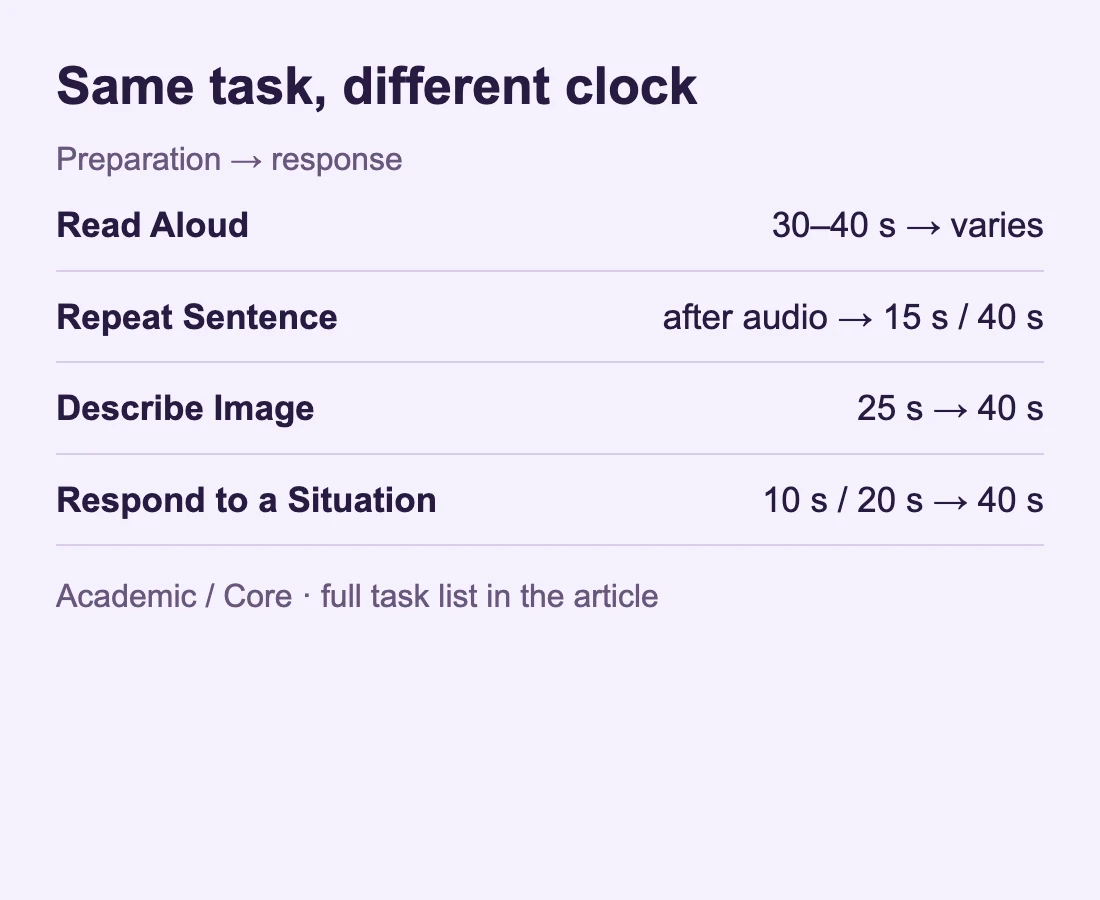
PTE Academic
| Task / Items | Prepare | Respond | Do |
|---|---|---|---|
| Read Aloud 6–7 | 30–40 s | By text length | Read the text |
| Repeat Sentence 10–12 | After audio | 15 s | Repeat exactly |
| Describe Image 5–6 | 25 s | 40 s | Describe details |
| Retell Lecture 2–3 | 10 s | 40 s | Retell a lecture |
| Answer Short Question 5–6 | After audio | 10 s | Give a short answer |
| Summarize Group Discussion 2–3 | 10 s | 120 s | Summarize 3 speakers |
| Respond to a Situation 2–3 | 10 s | 40 s | Respond to the person |
PTE Core
For Core, use this separate clock. It has no Retell Lecture or Summarize Group Discussion. Respond to a Situation allows 20 seconds of preparation, compared with 10 in Academic.
| Task / Items | Prepare | Respond | Do |
|---|---|---|---|
| Read Aloud 6–7 | 30–40 s | By text length | Read the text |
| Repeat Sentence 10–12 | After audio | 40 s | Repeat exactly |
| Describe Image 3–4 | 25 s | 40 s | Describe details |
| Respond to a Situation 2–4 | 20 s | 40 s | Respond to the person |
| Answer Short Question 5–6 | After audio | 10 s | Give a short answer |
What should your recording preserve?
Read Aloud rewards the words on the screen; Repeat Sentence rewards words in their original sequence. Both also assess pronunciation and oral fluency. For images, lectures and discussions, preserve the actual information and relationships, rather than reciting general phrases. Academic uses AI scoring and also human content review for Describe Image, Retell Lecture, Summarize Group Discussion and Respond to a Situation. Answer Short Question assesses vocabulary accuracy and contributes to Listening in Academic; in Core it contributes to Listening and Speaking. Core’s situation task uses appropriacy, fluency and pronunciation. The score guides explain these differences. (Academic, Core)
Repeat Sentence: keep the relationships, then the exact words
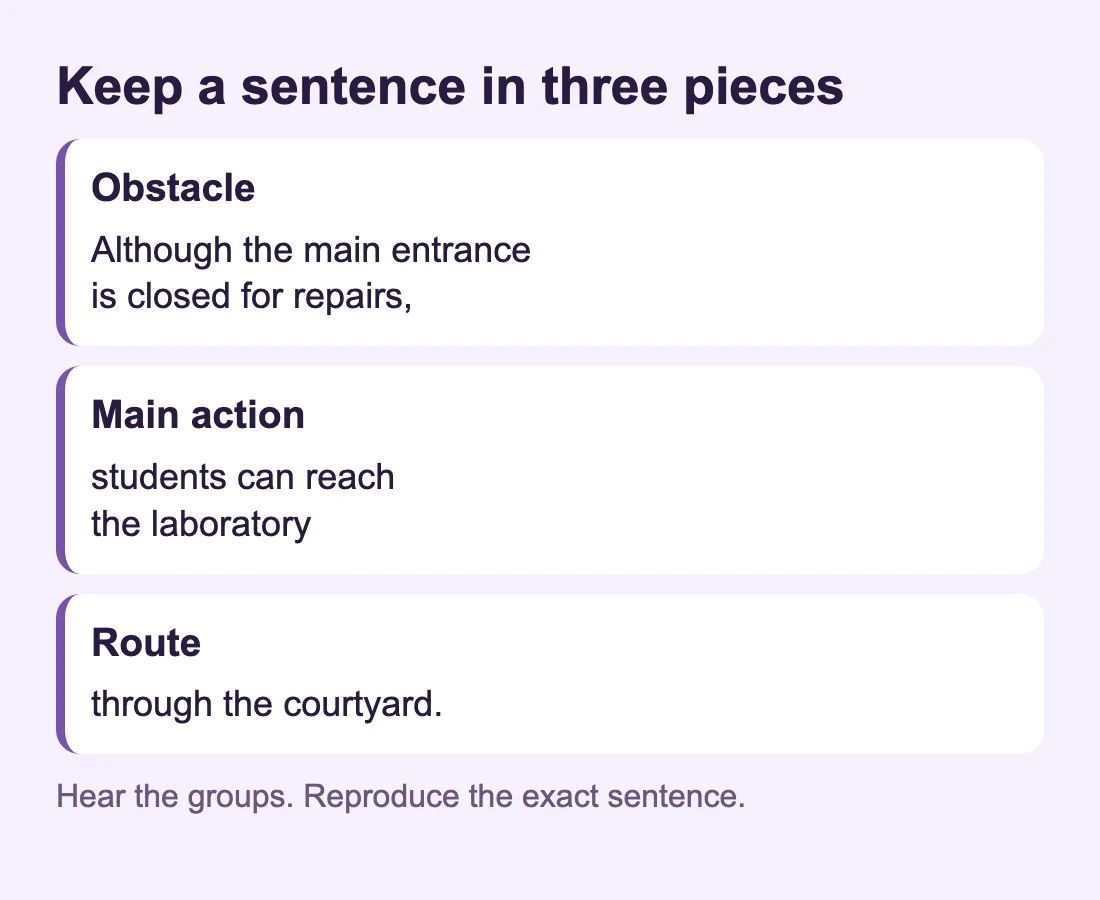
Listen to the short sentence once with the text hidden. Repeat it immediately, then reveal the line and mark what changed. For the medium line, hold action → object → place; for the long one, hold obstacle → alternative route → destination. This is a way to remember the original sequence, not permission to paraphrase it.
Short
The workshop starts at noon.
Listen to the repetition sentences
Medium
Please leave your completed form beside the reception desk.
Listen to the repetition sentences
Long
Although the main entrance is closed for repairs, students can reach the laboratory through the courtyard.
Listen to the repetition sentences
If the long sentence collapses, listen again and practise each meaning group separately. Join two groups, then the whole sentence; finish with one listen and one unprompted repetition. Compare missing articles, endings and word order before increasing speed. Replays support learning here; the test recording is played only once. For continuous follow-along practice beyond this task, see English shadowing.
Read Aloud: spend preparation time on joins
Read this three-sentence passage once silently. Mark a small boundary after study rooms, home and month; give weight to booking system, reserve and fewer visitors. Then read it continuously. A boundary helps phrasing; it should not become a long silence. The official response allowance varies with text length, so follow the screen rather than assuming every passage has the same timer.
A city library tested a new booking system for its study rooms.
Students could reserve a desk online before leaving home.
After one month, fewer visitors had to wait for a quiet place to work.
Listen to the passage
Record once without the model, listen to the audio, then try again. If you stumble on “reserve”, practise that word inside “reserve a desk” and return to the whole passage. Restarting from the beginning after every slip hides the transition you need to practise. For the broader routine, see reading English aloud.
Describe Image: make the listener see the change
Use the 25-second preparation window to identify the topic, units and biggest contrast. On this practice chart, counts are average bicycle trips per day, not percentages: River 20 → 35, Park 30 → 40, Hill 15 → 15. Try a 40-second response before listening. The four sentences below move from the whole chart to details and a conclusion.
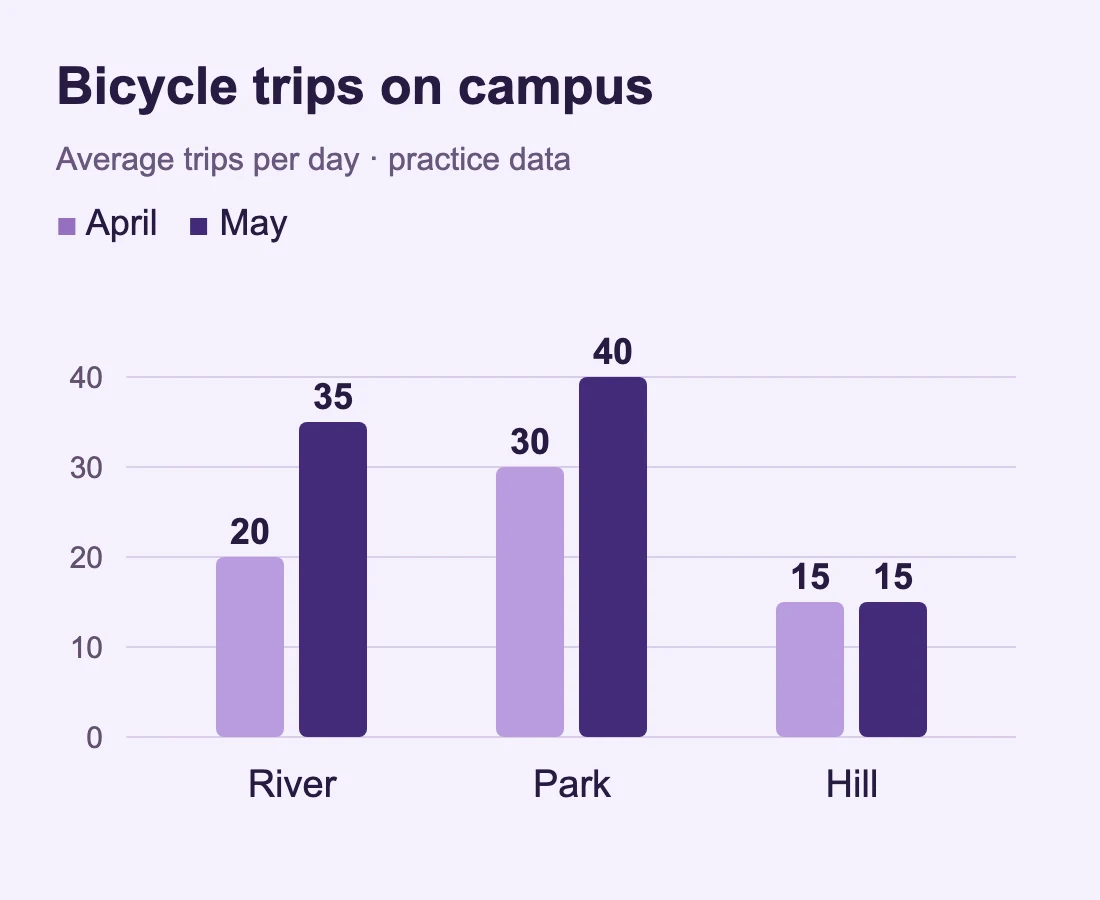
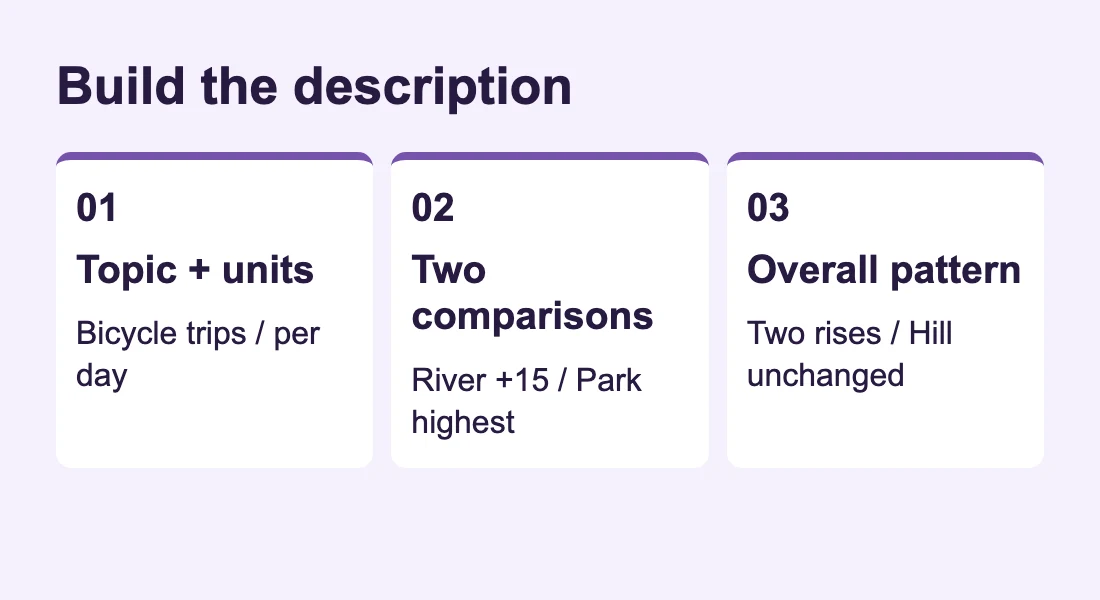
The chart compares bicycle trips on three campus routes in April and May.
The river route rose from twenty to thirty-five trips per day.
The park route increased from thirty to forty, while the hill route stayed at fifteen.
Overall, cycling increased on two routes, with the largest rise on the river route.
Listen to the graph description
Park has the highest count in both months, but River has the largest increase: 15 trips per day. Do not call River the busiest route or claim that better weather caused the increase; the chart does not establish either. Use the model to check the relationships, then describe the graph again with your own wording.
A lecture needs a thread; a discussion needs speakers
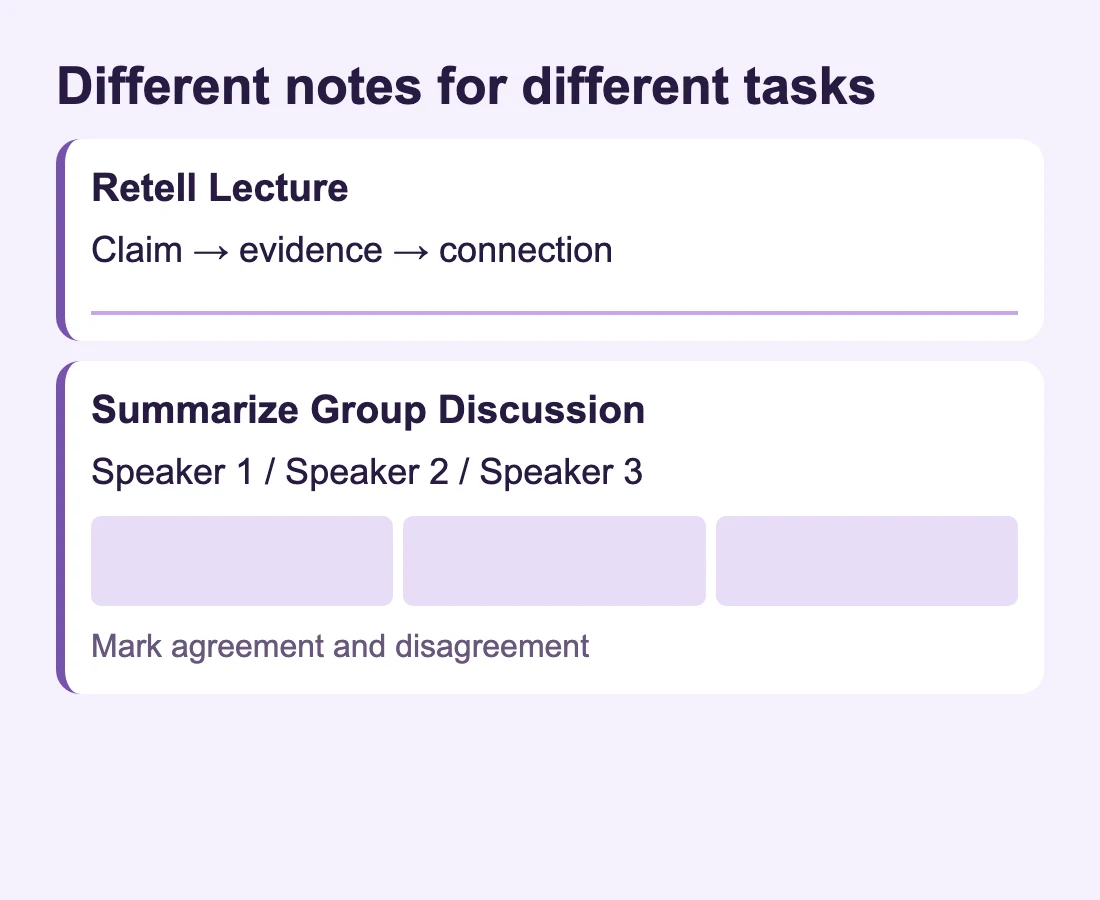
For Retell Lecture, note the topic, the main claim and two supporting details while listening, then use the 10-second preparation to connect them for a 40-second response. Do not try to reconstruct every sentence. In Summarize Group Discussion, draw three note columns: one per speaker. Add a mark for agreement or disagreement, then connect the views in your two-minute summary after 10 seconds of preparation. Both tasks require you to reformulate information; repeating an isolated list of keywords loses the relationships. (Pearson)
Short answers and situations need different endings
For Answer Short Question, identify the requested category and give the accurate word or short phrase. Extra explanation is unnecessary. For Respond to a Situation, identify who you are speaking to, what went wrong and what you need them to do. For example, at a library desk you might start with these two sentences, then add any further details the prompt requires. This short opening is a starting point to expand, not a complete 40-second response.
I booked a study room for two, but the door is locked.
Please check my reservation and help me find another room.
Listen to the situation opening
Use two weeks to diagnose, then retest
On days 1–3, record one passage, three repetitions and one image description. Keep the first attempts. On days 4–7, spend about 15 minutes a day on your biggest problem: a lost clause, a difficult transition or an inaccurate comparison. During the second week, alternate these drills with the remaining tasks for your version, using unfamiliar official material. Compare a fresh recording with day 1. If you have three or four weeks, repeat the cycle with new material rather than memorising these answers. This is a practice schedule, not a score forecast.
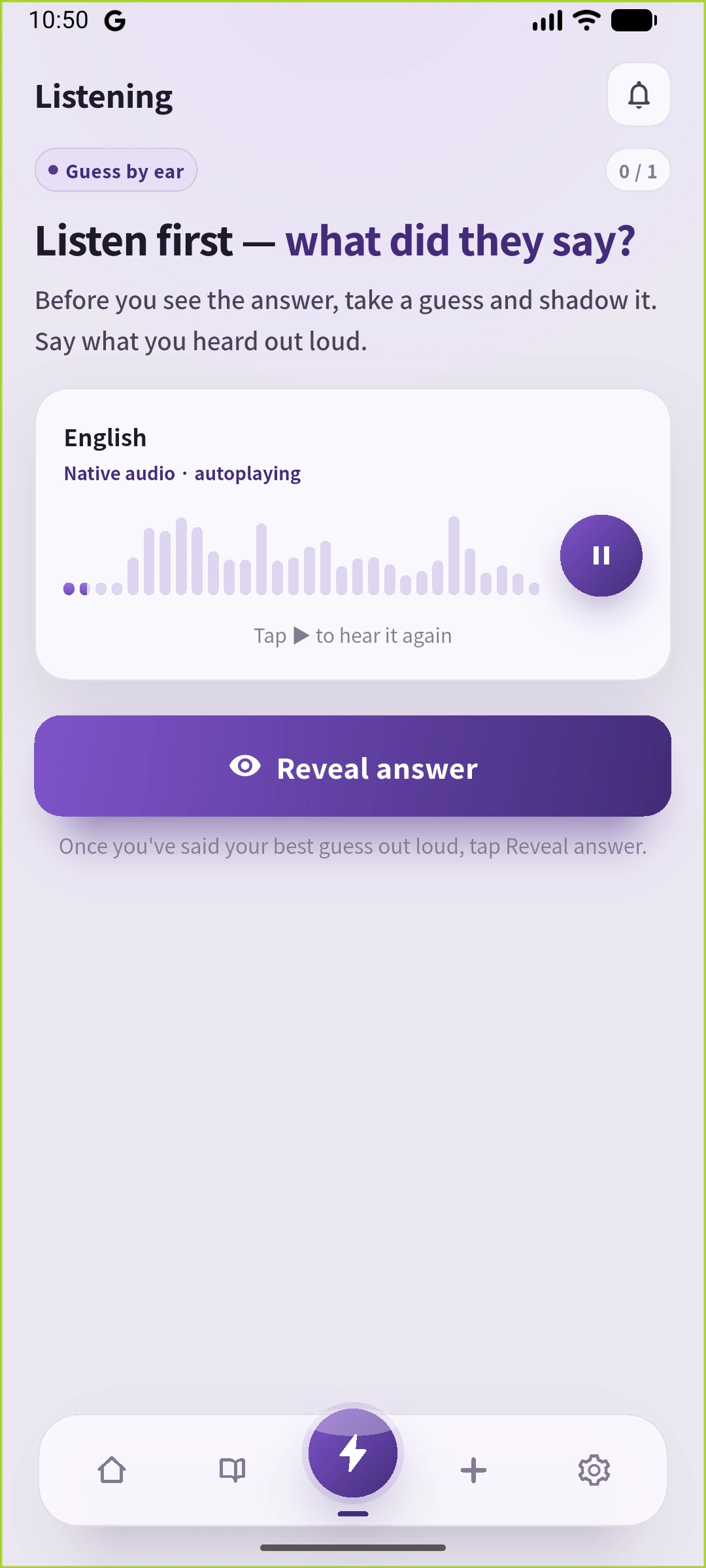
We make SpeakGain. For a sentence that needs more work, save it through Add, play its model audio, and practise saying it. On a device with a microphone, you can record and inspect word-level pronunciation feedback; FSRS schedules later reviews. The screenshots show the saved English sentence and model playback. SpeakGain feedback is separate from Pearson scoring: it does not provide a PTE score prediction or a PTE mock test.
Before your next attempt
Should I memorise a template?
Remember an order of ideas, such as overview → comparison → conclusion. Fill it with the actual prompt. A memorised paragraph that misses the image or situation cannot replace relevant content; the Academic guide explicitly treats memorised irrelevant responses as zero content. (Academic)
Should I correct a mistake?
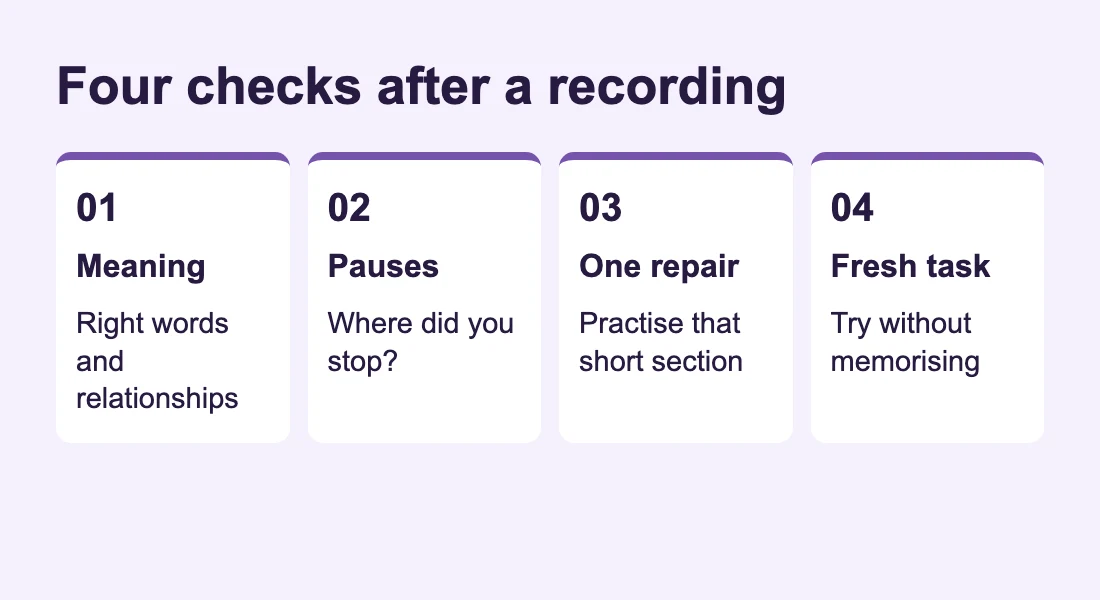
Avoid repeatedly restarting. Pearson’s task guidance notes that correction, repetition and hesitation consume time and can affect fluency. In practice, note the mistake after the recording and repair that short section before a fresh full attempt. (Pearson)
What about the microphone and room?
At home, test whether a normal speaking voice is clearly audible, keep the microphone position consistent and check for clipping or background noise. At the test centre, follow the equipment checks and ask staff if something is wrong before proceeding. Read the handbook for your booked version. (Pearson)
Your next recording
Choose one line you could not repeat or one comparison you misstated. Repair it, then test it in a complete response. The useful result is a clearer, accurate answer that fits the task clock.