
Fun vs. funny vs. interesting: say what you enjoyed
Published
Fun describes enjoyment; funny describes something that makes you laugh. Choose interesting when something holds your attention or makes you want to learn more. A puppet tour can be all three, but each word tells your listener a different part of the experience.
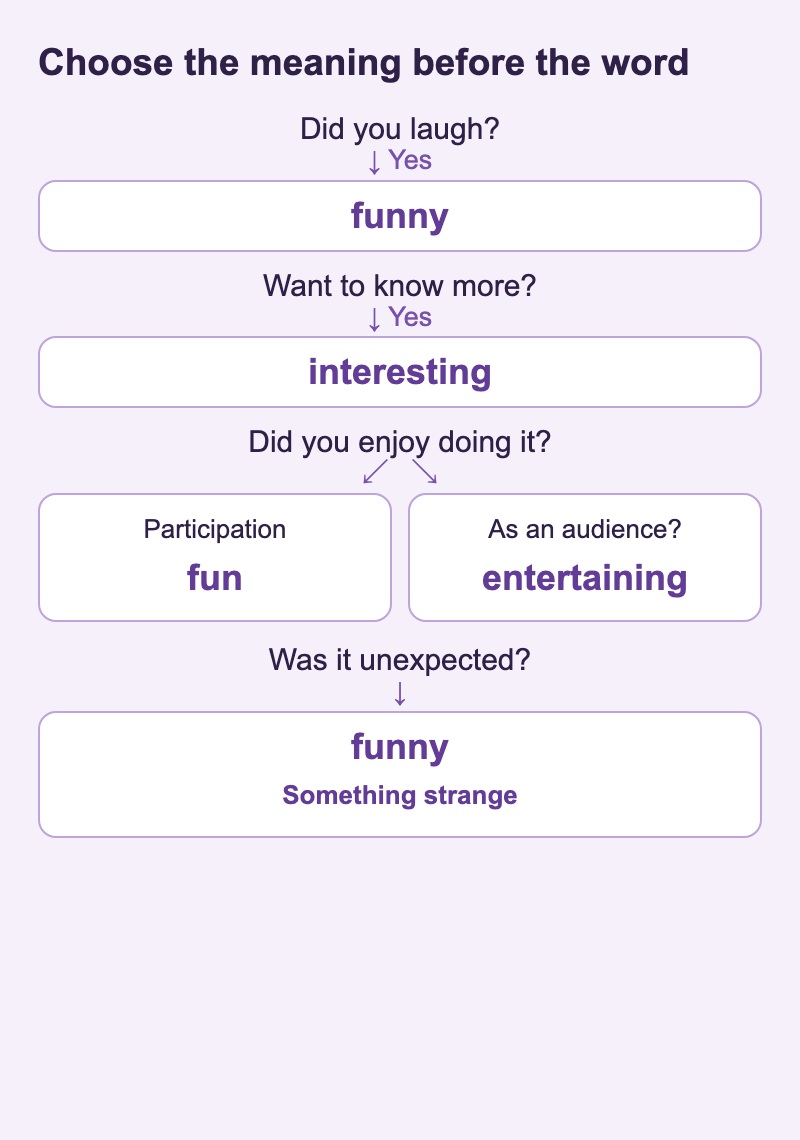
Choose the meaning before the word
The five choices below describe reactions, rather than five different types of object. A show can entertain you, teach you something, and make you laugh. Cambridge Grammar also explains the strange sense of funny; see its entries for interesting and entertaining for the other distinctions.
| Your meaning · English | Example |
|---|---|
| Laughter funny |
The puppet tour was funny. |
| Curiosity interesting |
The puppet tour was interesting. |
| Enjoyable experience fun |
The puppet tour was fun. |
| An engaging show entertaining |
The puppet show was entertaining. |
| Something strange funny |
The curtain smells funny. |
Funny vs. interesting: one tour, different reactions
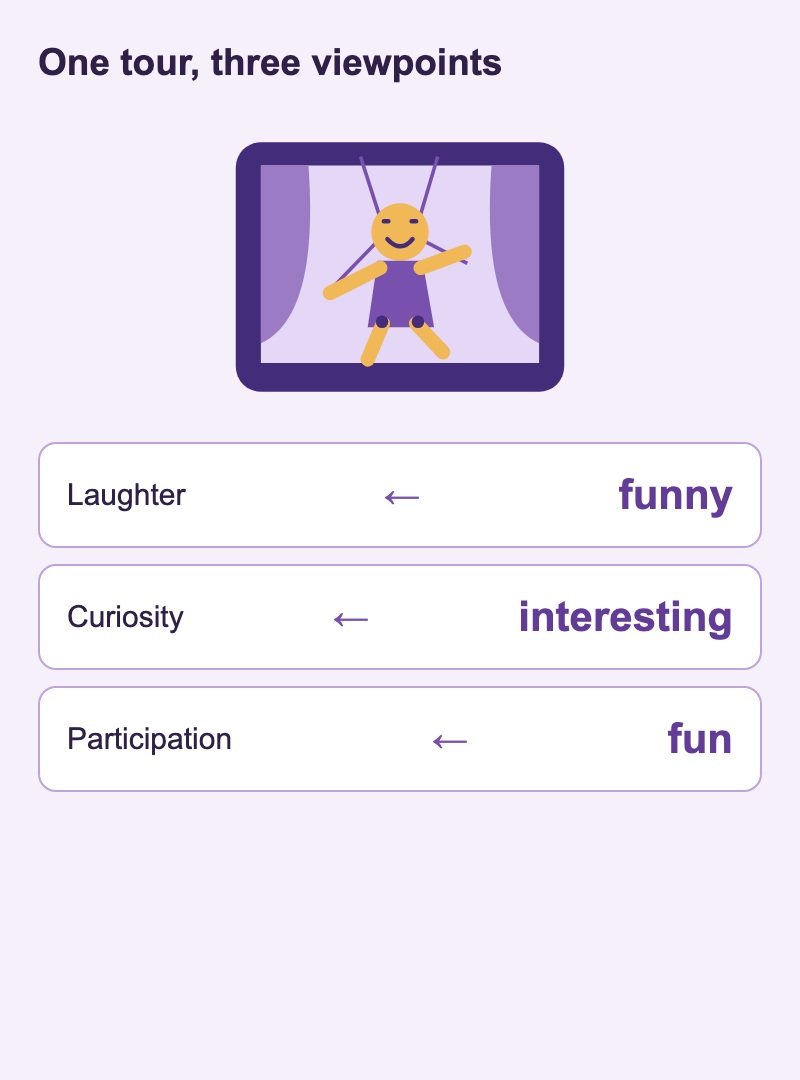
Imagine a backstage tour where visitors watch a wooden puppet move. With funny, you highlight a comic movement. With interesting, you highlight a discovery about its strings or joints. The subject stays the same; the adjective selects the reaction you want to share. Neither word prevents the other from being true.
The puppet tour was funny.
The puppet tour was interesting.
Fun vs. funny: enjoying an activity or laughing at it
If you enjoyed moving a puppet yourself, fun fits the experience. Funny draws attention to laughter, so it changes what you tell someone about that activity. Cambridge Grammar treats fun as an uncountable noun and also as an adjective in informal speech: have fun uses the noun; a fun tour uses the adjective.
The puppet tour was fun.
Fun describes the experience; funny describes the joke
A paper race can be enjoyable without a single joke. The paper horse can also look comical: use a separate adjective for that observation, then ask whether the racer finished. This keeps enjoyment and humour apart in a real exchange.
The paper race was fun.
The paper horse looked funny.
Did yours reach the finish line?
Describe an enjoyable person precisely
The three descriptions of Mara praise different qualities: making people laugh, holding their interest, or being enjoyable company. Because funny can also mean strange, adding the actual comic moment helps make a compliment clear. The person sense of interesting is included in Cambridge’s entry.
Mara is funny.
Mara is interesting.
Mara is fun to be around.
Amusing, hilarious, fascinating: meaning and register
Intensity and formality answer different questions. Hilarious strengthens the laughter meaning; it does not make a sentence more formal. Amusing describes something that entertains or makes you laugh. Entertaining focuses on enjoyment, including shows and stories. Use the meanings below rather than treating every synonym as a higher score.
- amusing: Entertaining or making you laugh. Cambridge.
- entertaining: Enjoyable to watch or hear. Cambridge.
- hilarious: Extremely funny. Cambridge.
- fascinating: Extremely interesting. Cambridge.
- intriguing: Interesting through mystery or unusualness. Cambridge.
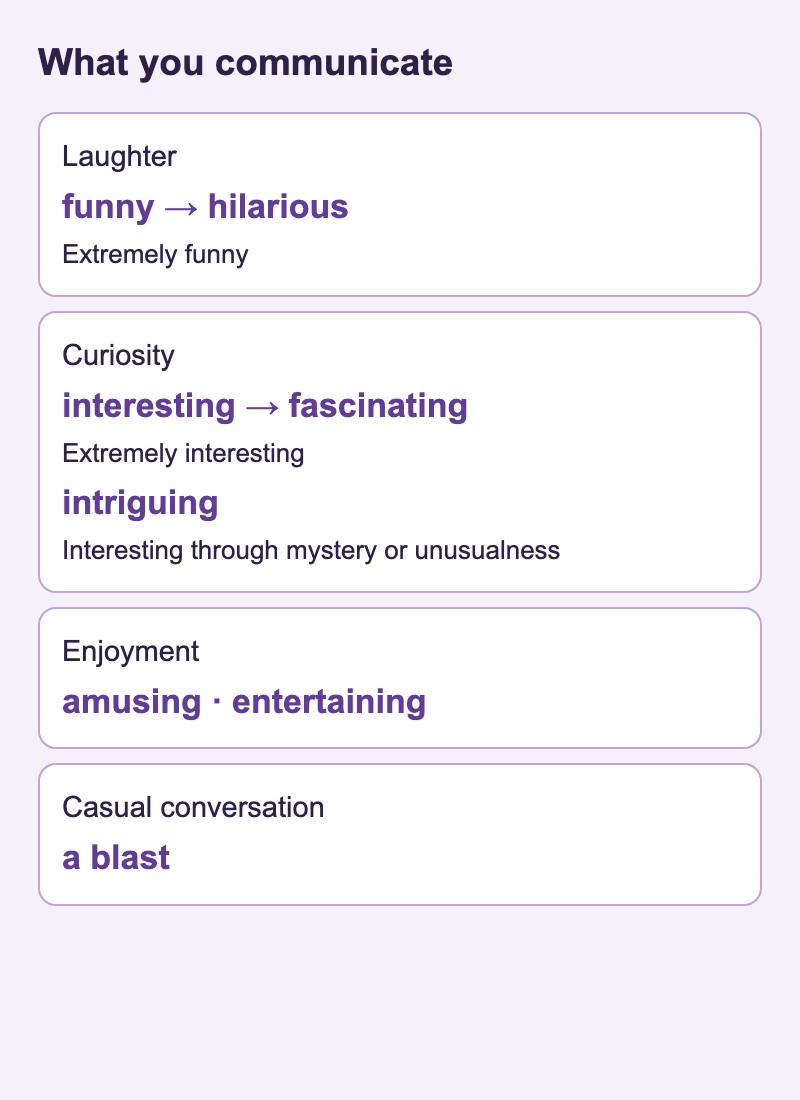
A blast is a US informal expression for an exciting, enjoyable experience. Save this slang-like choice for casual conversation; fun or enjoyable can make a more neutral report. Cambridge: blast.
Respond to a story, then ask about it
When someone tells you about a puppet mishap, react to the joke and ask about that moment. When they explain its mechanism, respond to the discovery. A follow-up question gives your partner something specific to answer.
That's so funny! Did the puppet really fall asleep?
That's interesting. How did they hide the strings?
Interesting is not automatically sarcastic. Cambridge also records a humorous sense meaning strange or different, so the single word cannot establish the speaker’s intention. If you mean sincere curiosity, name the feature that caught your attention or ask about it. Cambridge: interesting.
Silly but funny; sounds fun or interesting
For a deliberately ridiculous scene, silly plus a statement about laughing can express both reactions. For an invitation, sounds fun predicts enjoyment; sounds interesting predicts curiosity. You are responding to what you have heard, rather than reporting a completed experience.
It's silly, but it makes me laugh.
That sounds fun.
That sounds interesting.
Turn your own reaction into two sentences
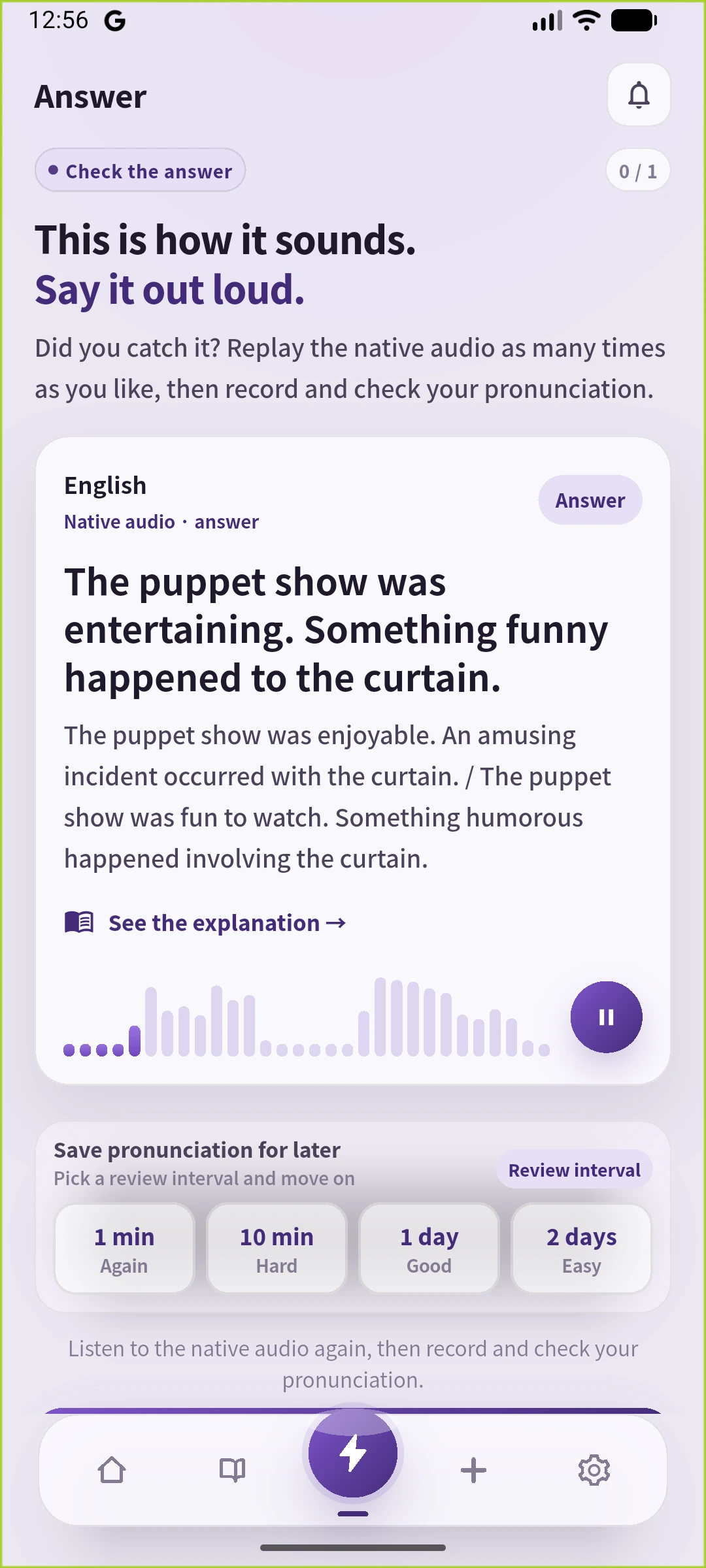
Think of a show or activity you recently enjoyed. Give your reaction first, then identify the moment behind it. In the puppet-show pair below, the curtain incident supplies a concrete detail after the overall opinion.
Here funny means amusing: the curtain moment made you laugh, which explains why you enjoyed the show.
The puppet show was entertaining.
Something funny happened to the curtain.
In our app SpeakGain, hearing and recording this curtain-story pair gives you a way to rehearse the change from entertaining to funny before telling someone about the show.
Questions learners ask
Is funny rude? It can refer to humour or strangeness. When praising a serious proposal, interesting plus a reason can express the curiosity you actually mean.
What if I liked a film? Funny highlights laughter, interesting highlights what held your attention, and entertaining highlights the enjoyable viewing experience. The noun film alone does not decide.
Interested or interesting? Interested describes your attention to puppet design; interesting describes the joint design that attracts it. Cambridge: interested / interesting.
I'm interested in puppet design.
The joint design is interesting.
Takeaway and references
Choose the reaction you want to report, then add the scene that explains it. A more precise adjective helps, but a concrete second sentence makes the experience easier for your listener to picture.