
Learn English with Harry Potter: Books, Films, and One Scene at a Time
Published
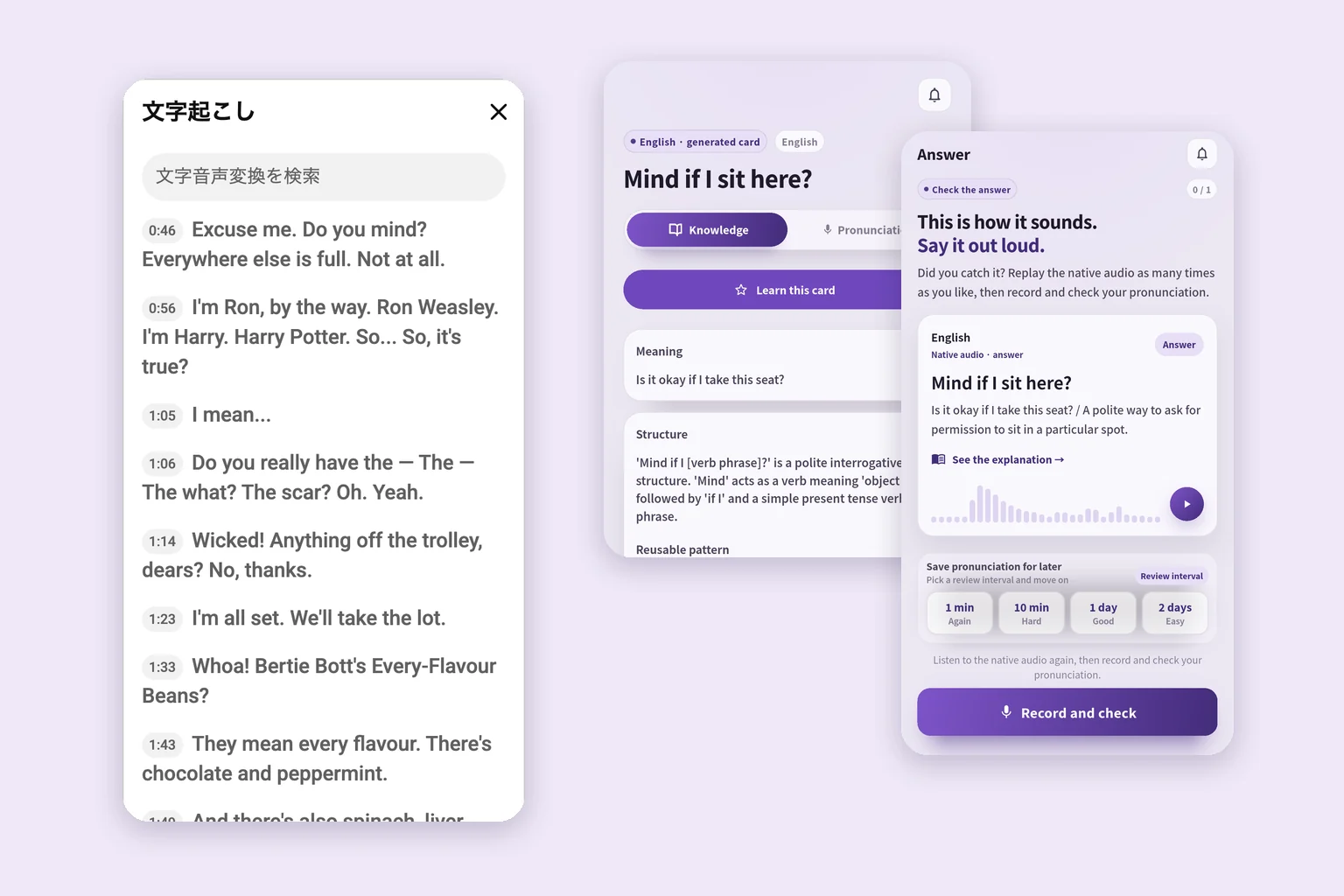
To learn English with Harry Potter, watch a familiar scene from the first film, read the corresponding passage in the original book, say one useful sentence aloud, and recall it before your next reading session. Start with a clear exchange, such as asking to sit beside someone on a train. Try a short passage and check whether you can explain who did what before deciding to read the whole series or watch without subtitles.
We will use the train scene and chapter 6 of the first book, then try wand shopping, the Sorting Hat, and Fluffy. If you already know the story—or previously gave up on the opening pages—start where Ron meets Harry. Finish each session with something you might actually say, rather than a page-count target.
Can you read the original? Test one scene
Before buying your first English novel, use a sample to try both dialogue and narration. Explain who is speaking to whom and who is doing what, in whatever language helps you think clearly. If the sample only covers the opening, identify which member of the Dursley family each paragraph describes.
If you own the book, open chapter 6 where Ron enters Harry’s compartment. Read one exchange, identify what happens, then add the descriptions of movements and belongings around it. You can stop after a passage you can explain; you do not need to translate the whole chapter.
| What happens when you read? | What to try next |
|---|---|
| Some words are unfamiliar, but you follow the people and events | Continue the scene, then return to one interesting sentence |
| Dialogue makes sense, but you lose the subject in narration | Find names and actions; note who does what |
| You stop at every sentence and lose the plot | Revisit the scene in the film or a translation, then reread just the dialogue |
| Even a familiar scene is too demanding | Practise with a shorter, easier book, then return to a favourite scene |
Being a children’s book does not make it effortless for an English learner. Scholastic’s listing includes ages and reading levels, but those are not a required English-exam score for starting the novel. Use your sample reading to decide. Our guide to choosing a first English book explains how to try alternatives.
Choose a volume and an edition you can return to
Start with book one; choose a scene for practice
If the story is new to you, begin with Harry Potter and the Philosopher’s Stone and read in order, as shown in Bloomsbury’s series guide. If you already know the story, you can separate reading in sequence from practising a scene in chapter 6.
Already own a favourite volume? Find an exchange where you understand the relationship and purpose before buying another book. A short request to a friend gives you a clearer speaking task than a long speech. To avoid spoilers, watch only scenes you have already read.
Check the UK and US titles and ISBNs
The first book appears under two English titles. These are two specific paperback editions; match the publisher and ISBN when shopping.
| Detail | UK: Bloomsbury | US: Scholastic |
|---|---|---|
| Title | Harry Potter and the Philosopher’s Stone | Harry Potter and the Sorcerer’s Stone |
| ISBN | 9781408855652 | 9781338299144 |
| Pages | 352 | 336 |
| Publisher listing | Bloomsbury | Scholastic |
Page numbers vary, so save “book 1, chapter 6, Ron enters the compartment” as well as your page. A film and book sharing a title does not mean their wording matches; check each source separately.
For regional vocabulary, start with a dictionary label. Cambridge’s entry for trolley includes the British use for a wheeled carrier or food cart and the US equivalent cart. This explains usage; it does not establish that these editions replace that exact word. Look up the wording in your own copy.
Choose paper or an ebook by how you will find the passage again
In print, place a sticky note at the scene and write down the chapter. In an ebook, bookmark it and adjust the text size to read a paragraph comfortably. Make returning to the same passage easy.
Before purchasing, check that the language is English and the book contains J.K. Rowling’s novel. A study guide or companion may explain the original without containing it. Decide whether you need the novel itself or help with a copy you already own.
Watch about 15 seconds of the train scene first
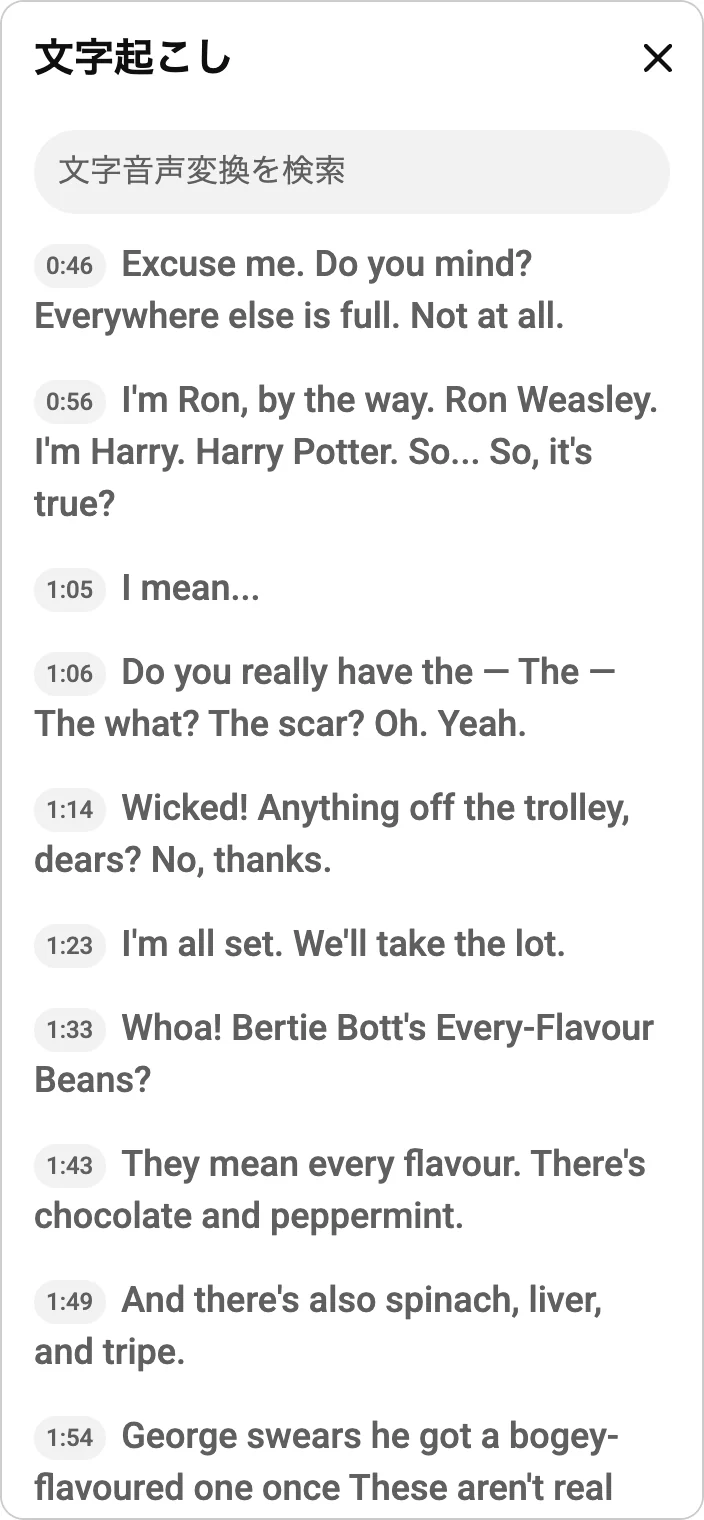
The official Harry Potter channel’s The Hogwarts Express is a roughly 28-minute compilation from several films. Use only 0:46–1:01 initially, when Ron enters and the two introduce themselves. Later sections include later films; stop here to stay with the first encounter.
- Load the clip and go to about 0:46. First notice who enters and who replies.
- Select the British English caption track and replay the exchange. On 26 September 2026, the clip had manual
en-GBcaptions and automatically generated English captions. - Stop after Ron asks permission and Harry accepts. Summarise the intention: a stranger wants to sit here.
- Look away from the text and listen to the question and response, including the pause. Replay the complete exchange if necessary.
You only need the basic context: they meet on the train to Hogwarts. If their relationship is unclear, establish the situation in a language you understand before returning to English. See our film-based English practice guide for working with subtitles across a longer film.
If captions are unavailable in the embed, open the YouTube page and check its caption menu. If only automatic captions are available, compare them with the audio before learning an uncertain word. An unfamiliar name need not stop you from understanding the request and reply.
Read the matching scene in chapter 6
Open book 1, chapter 6, The Journey from Platform Nine and Three-Quarters. The official chapter guide covers the Hogwarts Express and events on board. Find Ron entering Harry’s compartment by following names and actions, rather than relying on a page number.
Read the dialogue, the surrounding description, and then the dialogue again. Identify the speakers first, then the movements or feelings described. If a long sentence holds you up, find the person doing the action before translating everything. Write Ron’s and Harry’s names in separate columns to track their turns.
| Note | What to look for |
|---|---|
| Shared event | Ron enters the compartment and starts talking to Harry |
| What the film conveys | Pauses, eye contact, and the sound of the response |
| What the book adds | Descriptions of appearance, actions, or thoughts around the dialogue |
You can write “not sure yet” and continue. If a film sentence is absent from the book, find the exchange serving the same purpose instead of hunting for identical words. Label a film example with its film and clip time; label a book example with its volume and chapter. Subtitles are not the novel’s text.
Separate magical names from English you want to use
Put Hogwarts and other story-specific names in your story notes; put a useful request in your speaking practice. If trolley prevents you from picturing the seller’s action, look it up now. If you understand that they are buying sweets, an unfamiliar sweet’s name can wait. Our unknown-word guide offers a way to make that choice.
Mark only what serves today’s purpose, such as the seating exchange. You can enjoy another description without saving it for practice. See annotating English books for turning a marked passage into one sentence to say aloud.
Choose one sentence and say it in your own situation
In the first film, Ron asks Do you mind? at about 0:48 and Harry replies Not at all. at about 0:51. Ron’s movement makes the implied request clear: may he sit here? Here, mind means object to or be bothered by something, so Harry is giving permission. Check the action as well as the words. Source: the official clip from 0:46.
For a café, practise Do you mind if I sit here? This is our practice example, not a quotation from the novel or film. It states the request even without a gesture toward the seat.
- Write a situation cue: you want to use the chair beside someone in a café.
- Read the sentence aloud through
here, then pause for an imagined reply. - Hide the English and say it from the cue. Check any missing part and repeat the whole sentence.
- Try a classroom instead. To change the action, practise
Do you mind if I open the window?.
Practise both sides: permission can be Not at all. followed by Go ahead. If the chair is occupied, explain with Sorry, this seat is taken.
For a favourite quotation, note who says it to whom and why, with the chapter or film timestamp. For conversation practice, ask who you might say something similar to this week. Keep quotations you enjoy and sentences you plan to use under separate headings.
Three more scenes, one useful sentence each
Pick a scene you enjoy. These timestamps refer to the official clips, not the full film. The short quotations are from the first film, Harry Potter and the Philosopher’s Stone; the everyday alternatives are original practice examples.
Ollivanders: finding something that suits you
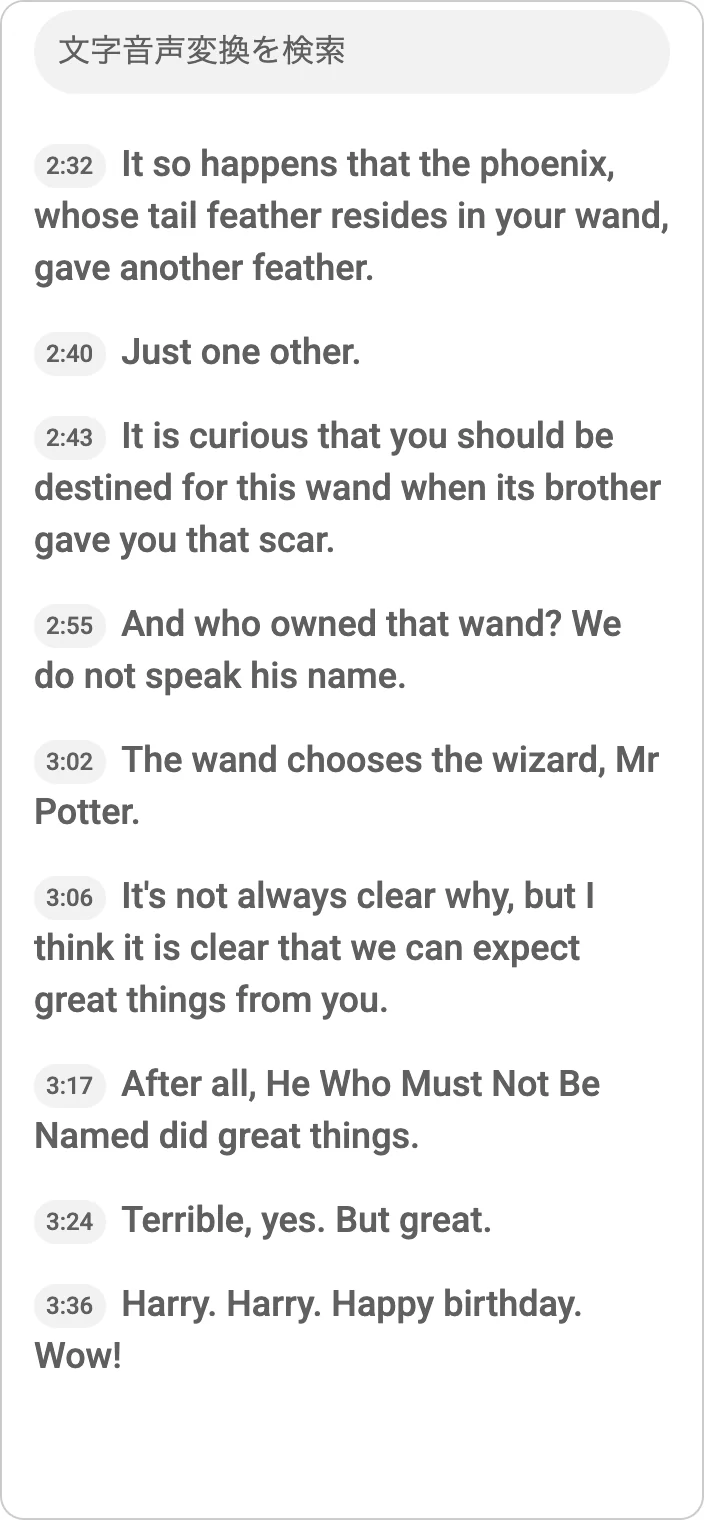
At 3:02, Ollivander says, The wand chooses the wizard, Mr Potter. A wand’s connection with its wizard is not determined solely by the buyer’s preference. The matching book scene is in book 1, chapter 5, Diagon Alley, also covered by the official chapter guide.
After trying on clothes or testing a tool, say This one feels right for me. You are describing a good fit, without importing the magical rule into everyday conversation.
The Sorting Hat: expressing a preference
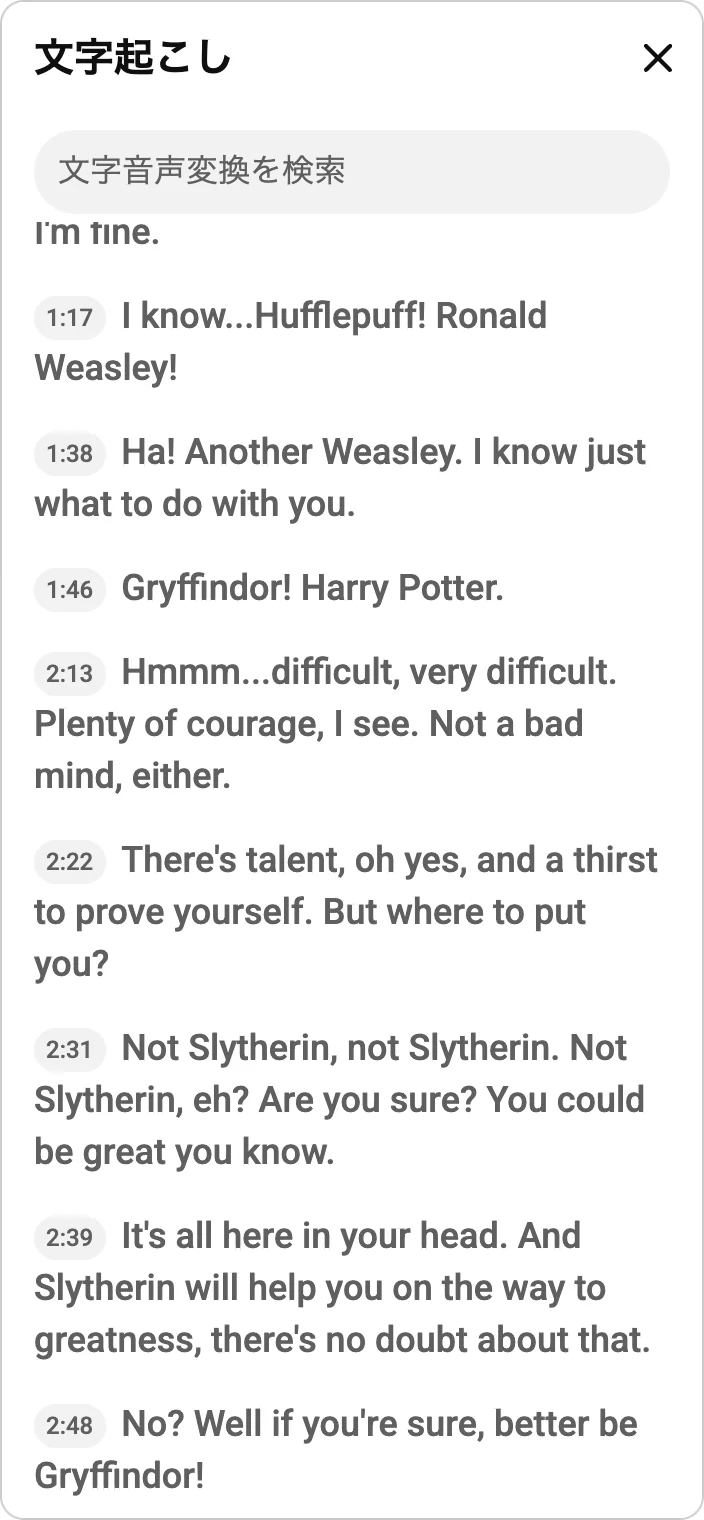
At 2:31, Harry says, Not Slytherin. He hopes the hat will not place him in that house. Read book 1, chapter 7, The Sorting Hat, and the official chapter guide for the corresponding event.
When discussing a group assignment, try I'd prefer a different group. This states your preference instead of merely rejecting a name.
Fluffy: saying what someone is looking after
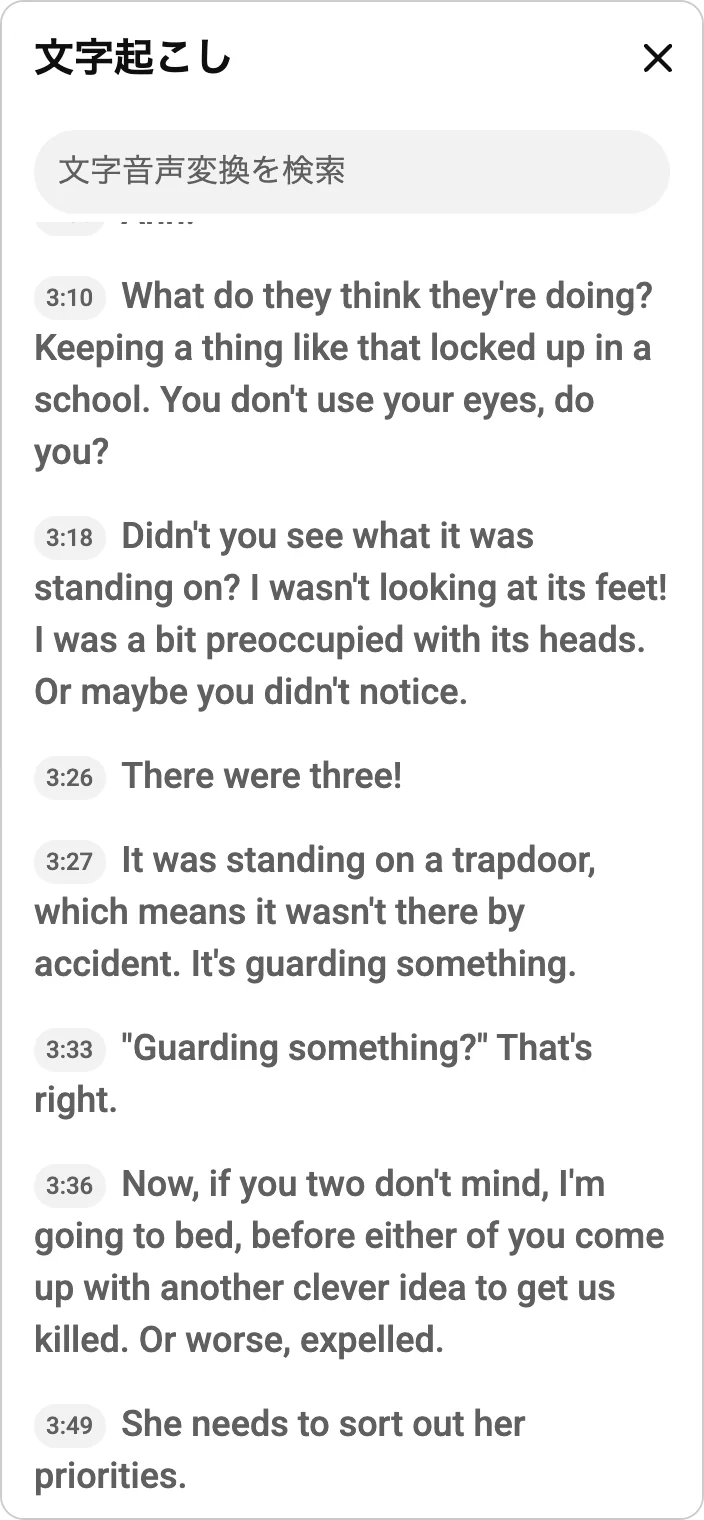
At 3:31, Hermione says, It's guarding something. Seeing the trapdoor beneath the dog helps her understand its role. The encounter corresponds to book 1, chapter 9, The Midnight Duel, as confirmed by the official chapter quiz.
If a friend has left you with a bag, say I'm looking after my friend's bag. This is an everyday way to explain what you are keeping an eye on.
Save a sentence in SpeakGain and review before reading again
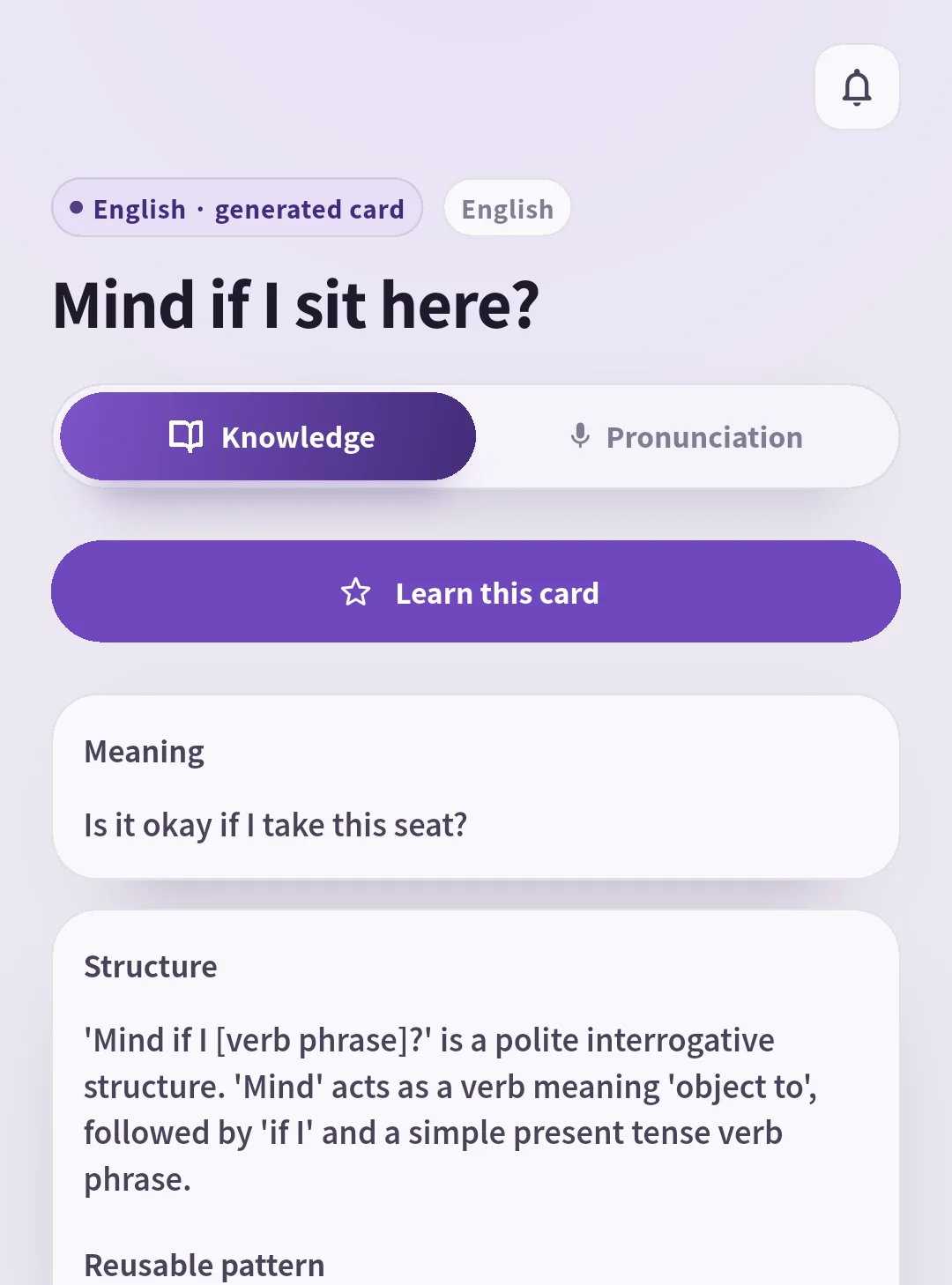
We develop SpeakGain, where you can turn a sentence you enter into a card, hear a character voice, say it aloud, and review it later. For example, register Mind if I sit here?, a conversational variant of the line you practised above, then check its meaning and structure for asking permission to sit down.
Listen and say it once yourself. SpeakGain uses its own character voices; return to the official clip to hear the actors. Use the card for your sentence and the film for the exchange between characters.
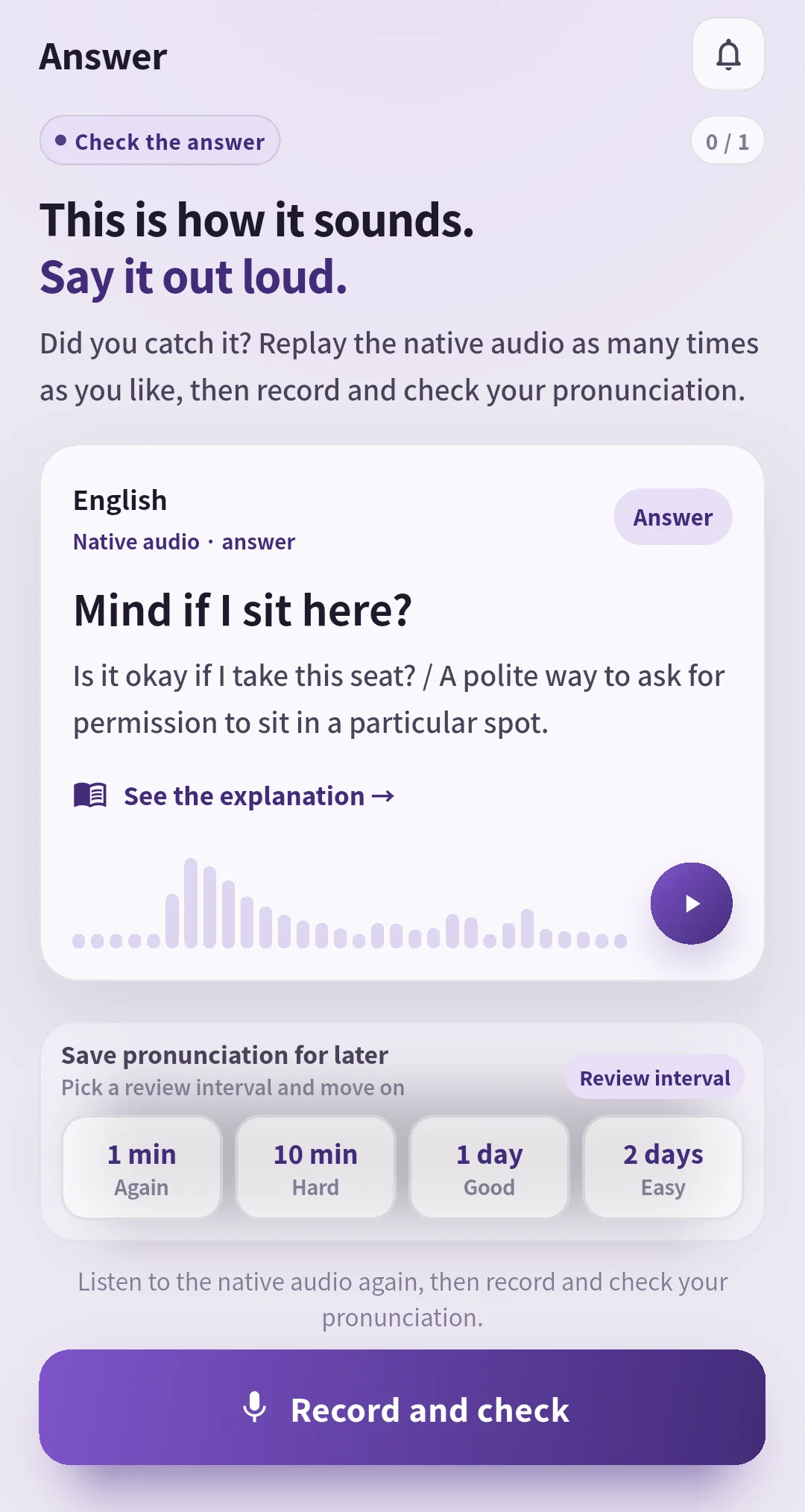
Before opening the book next time, recall the sentence from the situation cue. Reveal the answer, check the text and audio, and choose the next review interval from the displayed options. If you missed something, check that part and say the whole sentence again.
Then continue chapter 6. Note a restart point such as “the sweets trolley” so saving a card does not replace reading. You can use the same sequence with a notebook by covering the English.
When you get stuck
The narration keeps you on the same paragraph
Check whether it continues the dialogue or describes a person or place. Follow names and actions. If the event is still unclear, consult the same chapter in a translation and return to English with a question such as “Who entered the room?” Our bilingual reading guide explains how to return to the original without matching every sentence.
You understand subtitles but not the audio
Go back to the question and reply. Read the English captions, replay the sound, then look away and listen. Decide whether the obstacle is an unknown word or familiar words running together. See why film dialogue can be hard to understand for that distinction.
You miss days and keep restarting
Open your bookmark instead of page one. Read your notes—Ron enters the compartment; you practised asking for a seat—then say the saved sentence once. Reread the previous exchange and continue. A chapter, scene, and sentence are enough to locate your progress.
Start with one exchange today
Watch 0:46–1:01, identify Ron’s request, and read the corresponding scene in chapter 6. Say Do you mind if I sit here? for your own situation, save your restart point, and recall the sentence before your next session. One scene connects reading the book with enjoying the film.
Sources and official references
Use the publisher’s ISBN to check an edition and the chapter or clip time to find a practice passage. Bibliographic and caption information was checked on 26 September 2026.