
A Teen Beginner's First English Book: How to Choose One
Published
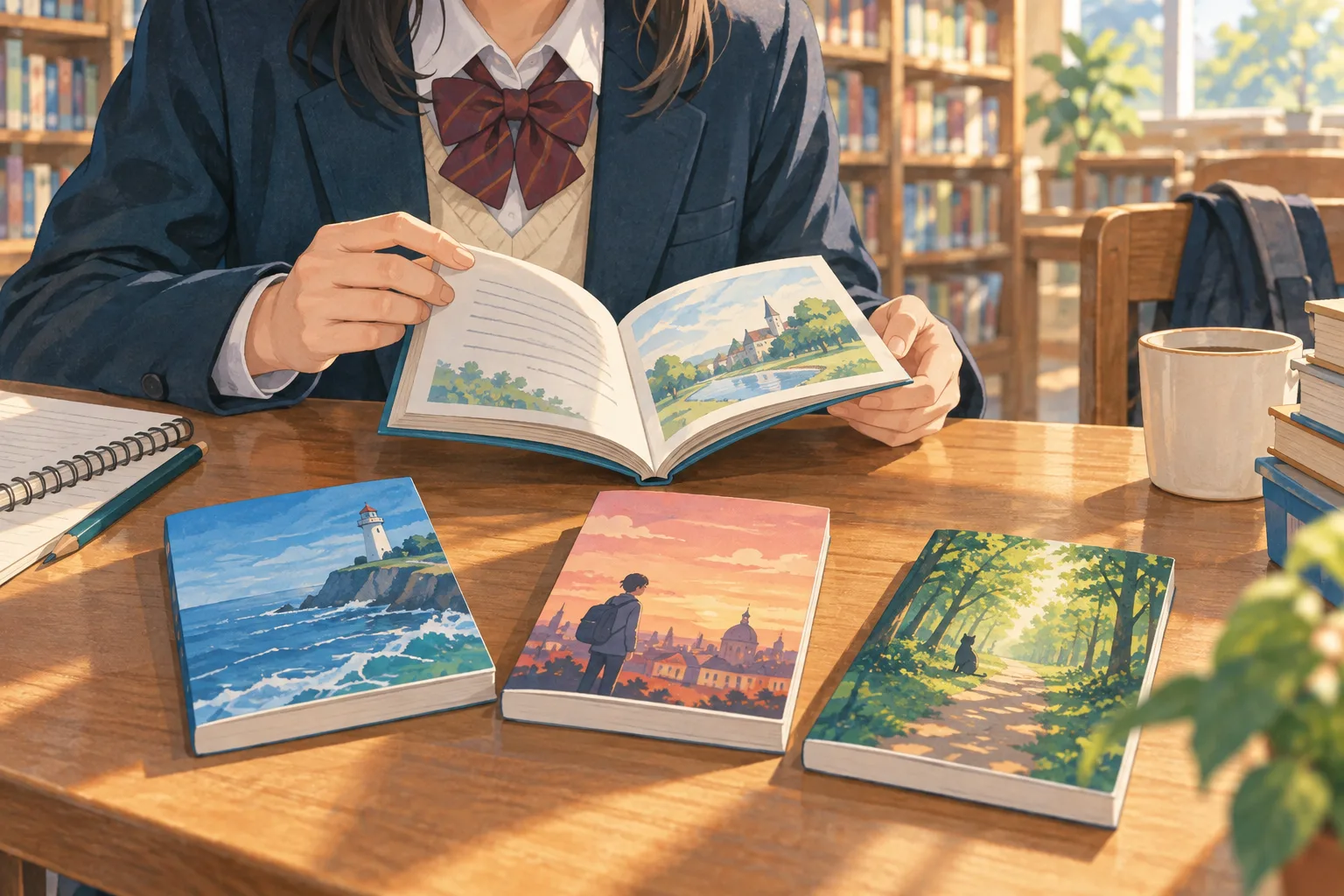
If you are a teenager reading your first full book in English, start with a short graded reader and sample a page before committing. Choose one whose story you can follow without checking every sentence and whose next page you actually want to read. Your school year or exam level alone cannot tell you which book will feel comfortable.
To choose a manageable reading level and a routine you can continue, see our extensive reading guide with official level comparisons and a first-week plan.
What kind of book should you look for?
A graded reader is written or adapted for language learners. Its vocabulary and structure are controlled, unlike those in an unadapted novel. The Extensive Reading Foundation notes that labels such as “Starter” and “Level 1” are not standardized across publishers. Use them to shortlist books within a series, then judge a real page yourself.
Reading a large amount of understandable material can support reading development over time, as Grabe and Yamashita’s review explains. That is not a promise that finishing one book will raise your test score. For your first book, finishing an enjoyable, manageable story is a sensible goal.
Three books to sample
Oxford University Press’s reading list for teenagers includes these examples. Levels below are the publisher’s labels; check the particular edition and availability before buying or borrowing.
| Book | Listed level | Try it if… |
|---|---|---|
| Pirate Treasure (Oxford Bookworms Library) | Starter / A1 | You want a short adventure to finish first. |
| Maria’s Summer in London (Oxford Bookworms Library) | Level 1 / A1–A2 | Everyday and travel situations interest you. |
| Deep Trouble (Dominoes) | Level 1 / A1–A2 | A story with suspense keeps you reading. |
These are starting points, not a ranking or a guarantee that every teenager will find them easy. If Level 1 makes you stop constantly, try Starter. If Starter feels dull, change either the topic or level.
The one-page test
At a library, bookshop, or publisher preview, read one whole page of each candidate. Ask yourself: Can I tell who is doing what without a dictionary? Does an unfamiliar word stop the story every sentence? Do I want to know what happens next? If a book fails the first two questions, try an easier one; if it fails the third, try a different story at the same level.
The Extensive Reading Foundation’s five-finger rule offers a quick way to notice unfamiliar words on a page. It is a rough signal, not an exam: page lengths vary, and interest matters too.
Finish the book without turning every page into homework
Begin with a short session—ten minutes is a convenient example, not an evidence-based optimum. Write down one line about the people or event, then continue the next day. Look up words that repeatedly block the plot; let less important unknown words wait. If several pages remain frustrating, exchanging the book is a better adjustment than forcing yourself through it.
When you find a short sentence you would like to say, note its situation and page number. Do not copy or publish long passages from a copyrighted book. The aim is still to read the story.
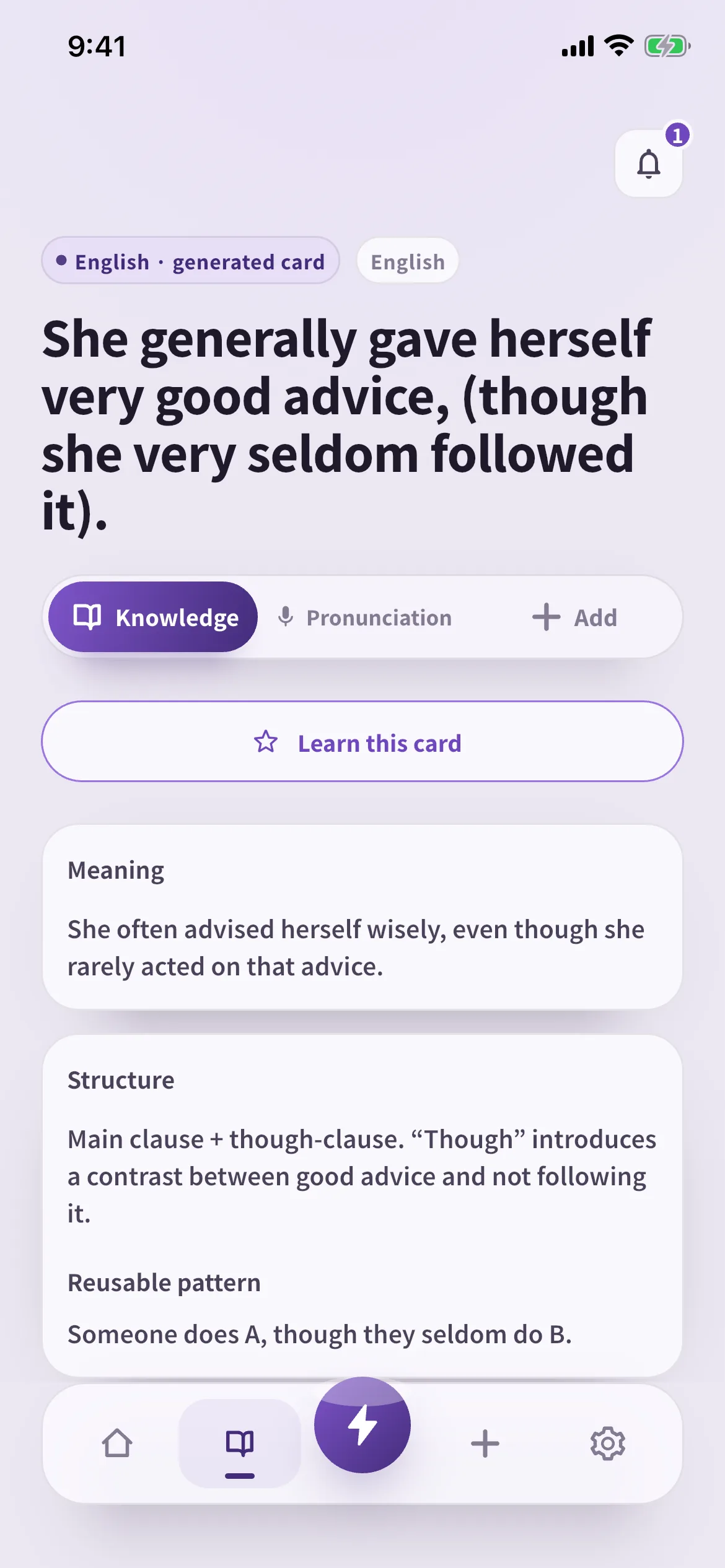
If you want to practise that one sentence aloud, you can type it into SpeakGain, which we develop. The card provides generated English audio and AI explanation. You can listen, speak, and optionally record for an online pronunciation assessment. SpeakGain does not automatically extract book text; enter only the short portion you need for personal study.
Quick answers
Can I start with an unadapted novel? Yes, if a sample page is enjoyable and manageable. Otherwise, a graded version or shorter story can be your first step.
Is a children’s book too childish for a teenager? Reading level and intended age are different. Choose a subject you enjoy; Oxford’s teen list itself includes Starter books.
Should I translate every sentence? Not when your goal is to follow a story. Check the parts that prevent you from understanding what happens.
For specific titles, compare our six beginner English books and editorial verdicts.
Sources
- Oxford University Press, reading recommendations for teenagers.
- Extensive Reading Foundation, graded readers and five-finger rule.
- Grabe and Yamashita (2022), Extensive Reading, Cambridge University Press.