
5 Switch games for learning English: text, voices and time to read
Published
For adult English learners, start with Snowman Story for a short story you can read at your own pace, Animal Crossing: New Horizons for everyday vocabulary, or Detective Pikachu Returns if you also want spoken English. Pokémon Scarlet suits readers who already know the RPG’s mechanics. Betia is a separate option for practising short spoken sentences, provided you can use its Japanese instructions.
This comparison checks Japanese Nintendo store editions, useful if you own or are considering a Japanese copy. It does not establish the price or availability in your country. One hardware exception matters immediately: the Japan-only Japanese-language Switch 2 cannot change its system language to English. Software needs its own language setting to get around that restriction; English appearing on a product page is not enough by itself. Nintendo’s model information
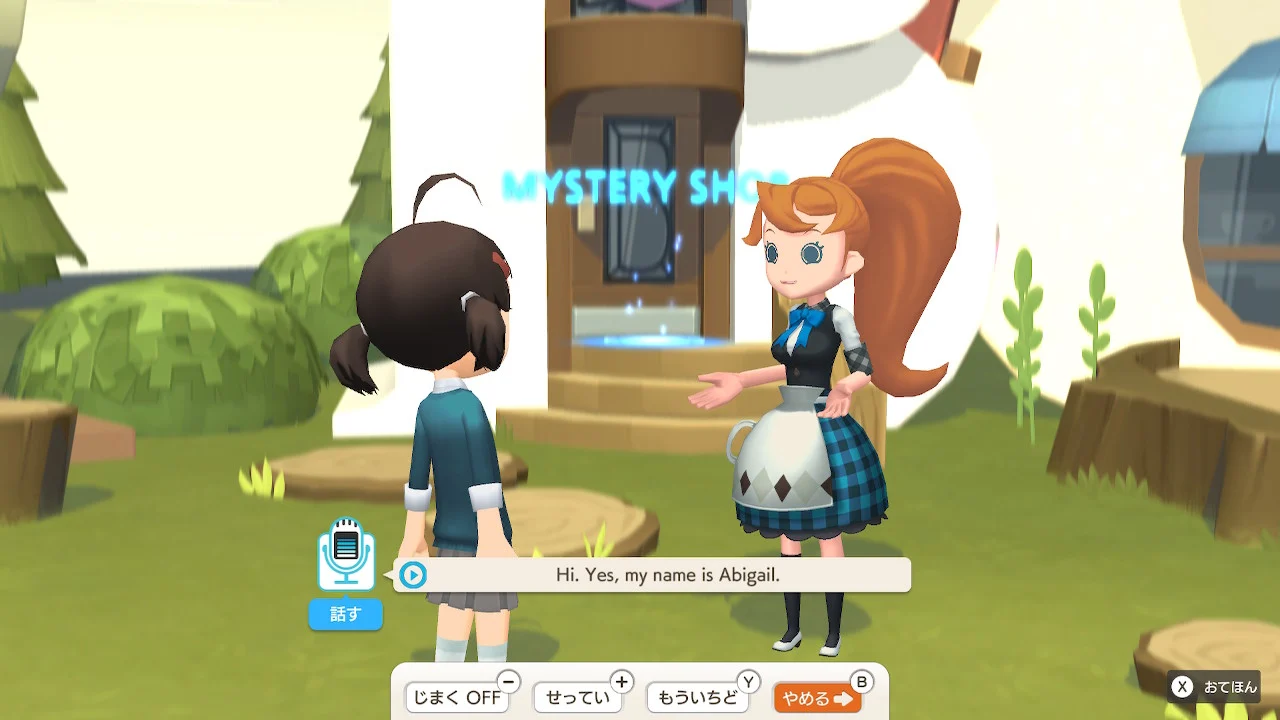
The opening image shows how Betia presents a short introduction to read and practise. Image source: Nintendo Japan store. ©DELUXE GAMES INC.・FunCrew inc. All Rights Reserved.
Choose a learning activity before choosing a game
A teaching game builds listening, speaking or answering into progress. An ordinary game gives you a reason to understand English: find a clue, make an item or decide what to do next. Both can provide material, but they require different decisions. After work, do you want to complete a speaking exercise or read a conversation in a world you enjoy?
This is not an exam-preparation ranking. Test drills may suit an exam goal, while a familiar adventure can suit reading. Nor does a long play session automatically mean a long English session: you can fish, explore or decorate without reading much at all.
Five games compared
Checked on 29 September 2026. Prices below are the displayed Japanese digital-store prices including tax, in yen. Text amount and pace are qualitative selection guidance based on official descriptions and screens, not measured word counts or certified difficulty levels.
| Game and purpose | English in the Japanese edition | Text and speech | Pace | Japanese price |
|---|---|---|---|---|
| Betia: short speaking exercises | Store interface language: Japanese; English learning content | Short dialogue; spoken models and microphone input | Exercise by exercise | ¥3,520 for Lesson 1 |
| Snowman Story: a short narrative | English listed | Dialogue to read; voice effects rather than English narration | Advance dialogue yourself | ¥600 |
| Animal Crossing: New Horizons: everyday vocabulary | English listed | Conversations, recipes and items; no natural English dialogue audio | Read at your pace; amount depends on activity | ¥6,578 |
| Pokémon Scarlet: familiar RPG reading | English listed | Dialogue, descriptions and names; no full English dialogue voice acting | Time to choose regular battle commands; exceptions exist | ¥6,500 |
| Detective Pikachu Returns: listening plus reading | English listed | Investigation dialogue; English and Japanese voices | Investigation and cinematic scenes differ | ¥6,500 |
The last four store pages report no problems found in Nintendo’s Switch 2 testing. Betia reports some differences in behaviour without blocking progress. These are compatibility statements, not promises that every console model can display English. Betia’s specific microphone issue is described below.
1. Betia: say a short sentence, rather than only recognise it
Betia is an English-learning adventure with Japanese guidance. Its store language field says Japanese because that field is not a list of languages it teaches. Choose it for English models and speaking activities, not as an ordinary RPG with a fully English interface. Official product information
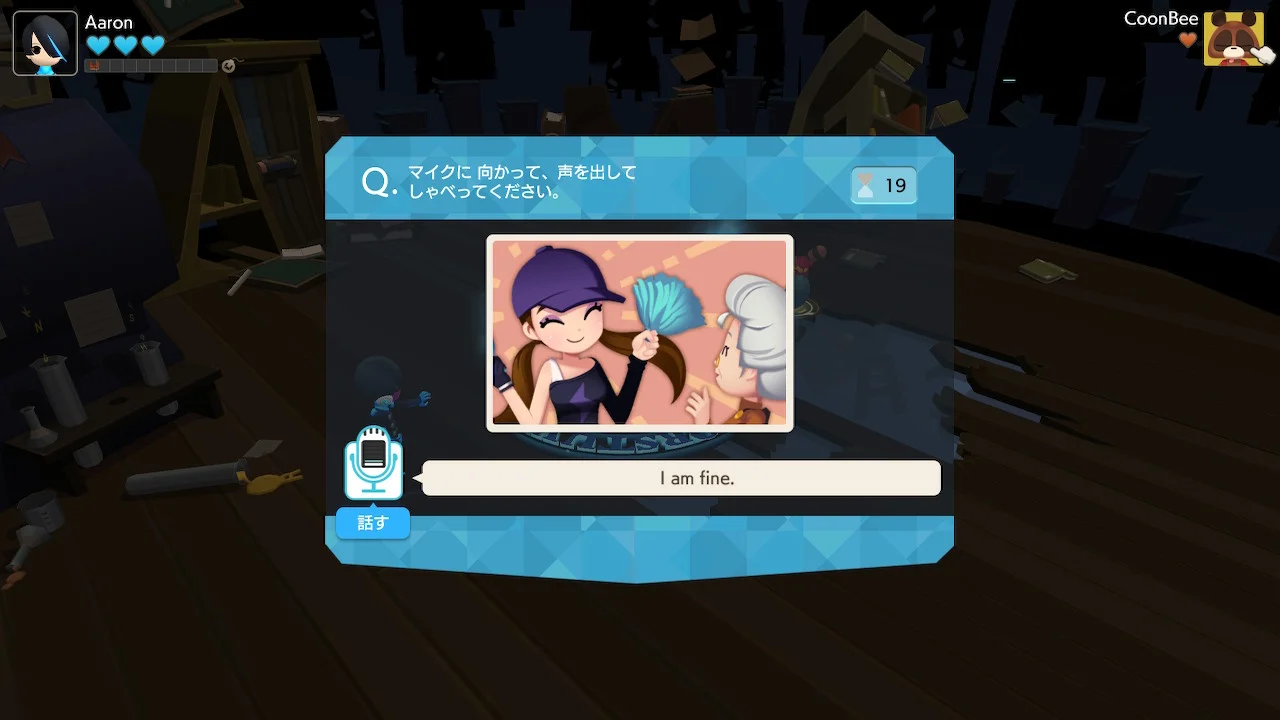
The illustrated I am fine. gives you a manageable response to say aloud. Hello there, also used in the official product explanation, is a friendly greeting. The useful unit is a phrase you might actually say, not an isolated list of words. However, Japanese instructions do not mean every conversation has a Japanese translation: the publisher’s FAQ says the conversations do not. For readers unfamiliar with Japanese, an ordinary English-enabled game is the more straightforward option. Publisher FAQ
Check where you can speak and what microphone you have. Original Switch models require a compatible external microphone. Switch 2 can use its built-in microphone, but the store’s notice updated on 4 August 2026 warns that a long silence during the microphone check can stop recognition; begin speaking promptly when prompted.
The listed price covers Lesson 1, with Lesson 2 sold separately. The publisher ended demo distribution on 16 July 2024, so do not plan a purchase around downloading that demo today. This is a third-party product; the comparison does not imply a partnership or endorsement.
2. Snowman Story: finish a small piece of a story
A snowman travels to escape the arrival of spring. Dialogue supplies a reason to keep reading, and the Japanese store edition includes English. The publisher describes a normal playthrough as roughly two to three hours; reading with a dictionary can take longer. Store · Publisher announcement
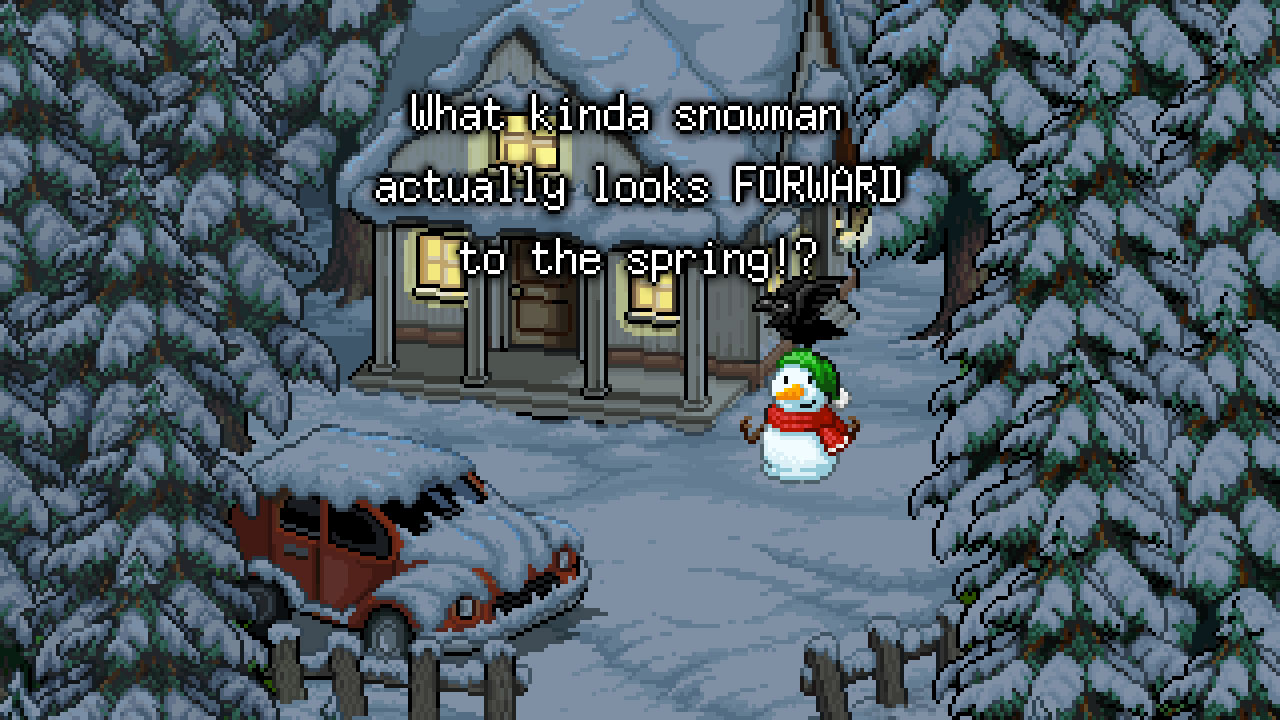
An official English screen includes looks FORWARD to the spring. The phrase look forward to means to anticipate something with pleasure. Spring threatens a snowman, which gives the question its point. In the same line, kinda is an informal form of kind of. This is a useful reminder that a cute-looking game can contain conversational forms rather than textbook sentences. Official English gallery
The character sounds are voice effects, not a recording of the English dialogue. Choose it for reading, not spoken-English practice. If progress stops at a puzzle, decide whether the obstacle is the wording or the puzzle itself. For a first session, one exchange is enough: explain who is worried and why before continuing.
3. Animal Crossing: connect words to familiar actions
Shopping, making tools and talking to neighbours provide visible context. If you already own an English-enabled copy, try it before buying a new learning product. Treat the villagers’ stylised voices as part of the game, not natural English listening material. Japanese product page
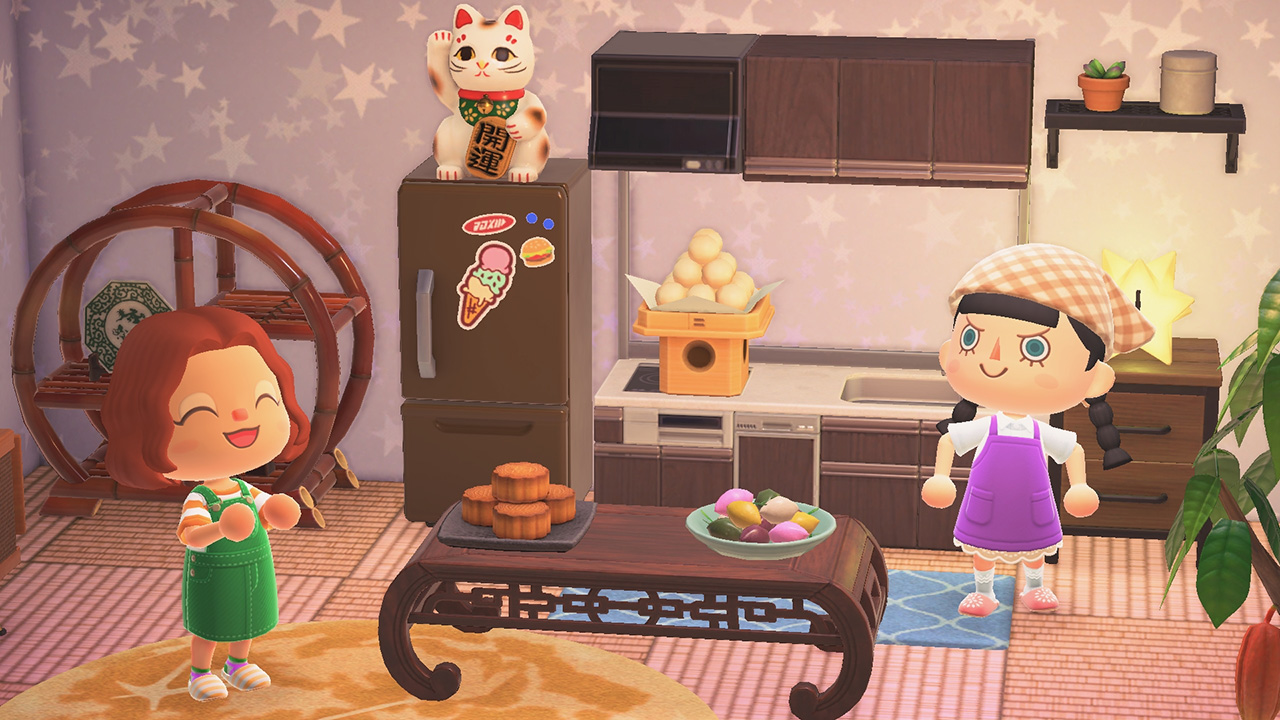
DIY recipes tell you how to craft things; a fishing rod is a tool you then use. Nintendo’s English guide connects recipes, required materials and actions. Instead of translating a name and stopping, work out what you need to make one item, then do it. Nintendo’s guide
Relaxed play does not guarantee easy English. Creature names, jokes and individual speaking styles can be unfamiliar. Pick a reading target: a recipe today, a shop conversation tomorrow. Fifteen minutes spent fishing may be enjoyable while providing very little reading. That is a reason to change the activity, not necessarily the game.
4. Pokémon Scarlet: use knowledge of the RPG as a clue
If you already understand Pokémon battles and items, you can use that knowledge to interpret English descriptions. Here we checked the Japanese Scarlet product individually; do not treat one verified listing as verification of every Pokémon release. Official store
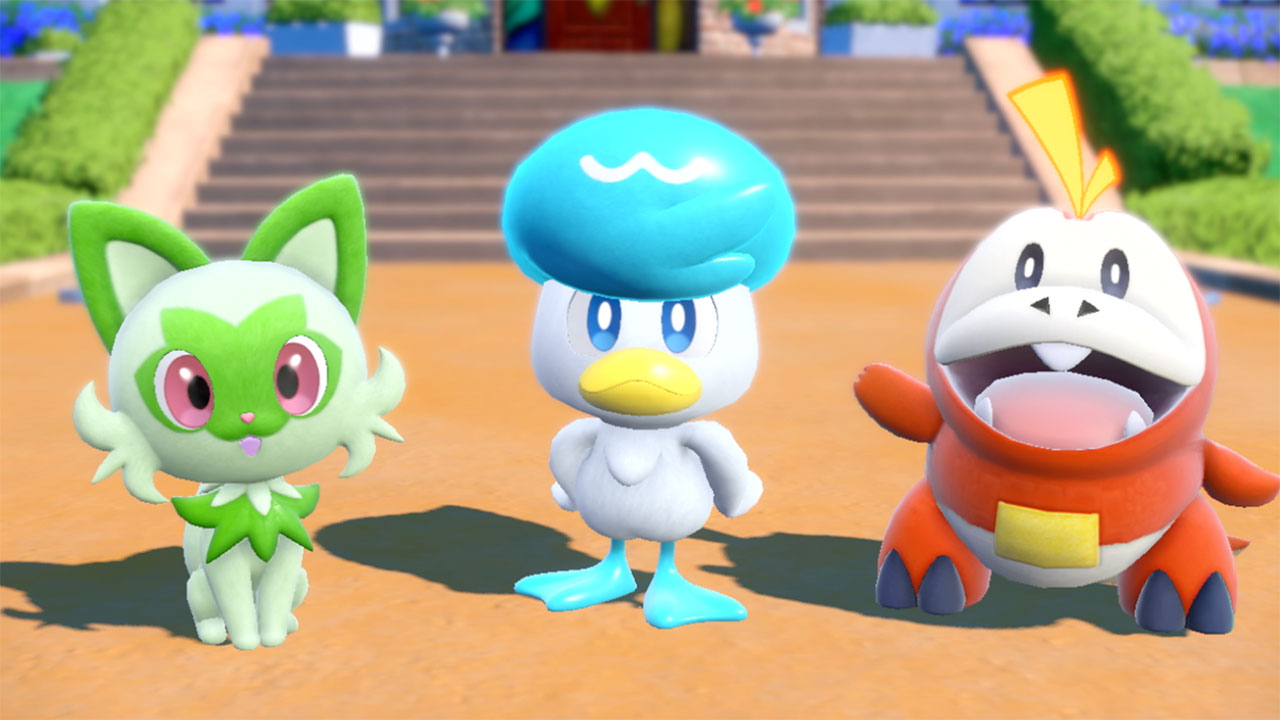
Sprigatito is a Pokémon’s English name, not an everyday word you need to find in a general dictionary. Separate names from useful descriptive language. Start with one favourite Pokémon’s description and explain a characteristic, rather than memorising every unfamiliar label. Official English character page
For reusable vocabulary, compare the type labels Grass, Fire and Water. Read the name separately from its type: you can understand a classification without memorising every creature name.
Regular command selection gives you time to think, but exploration and timed raids are different activities. There is no full spoken-English dialogue to shadow. If voices matter, compare Detective Pikachu below rather than assuming all Pokémon games work alike.
Check the game’s language selection when starting, instead of assuming a system-language change will change an existing save. Keep your established save: you do not need to erase a game simply to experiment with English learning.
5. Detective Pikachu Returns: listen to a useful question
This investigation adventure explicitly lists Japanese and English voice audio in its official specifications. That makes it a different choice from Scarlet when you want to connect spoken dialogue with text. Official specifications
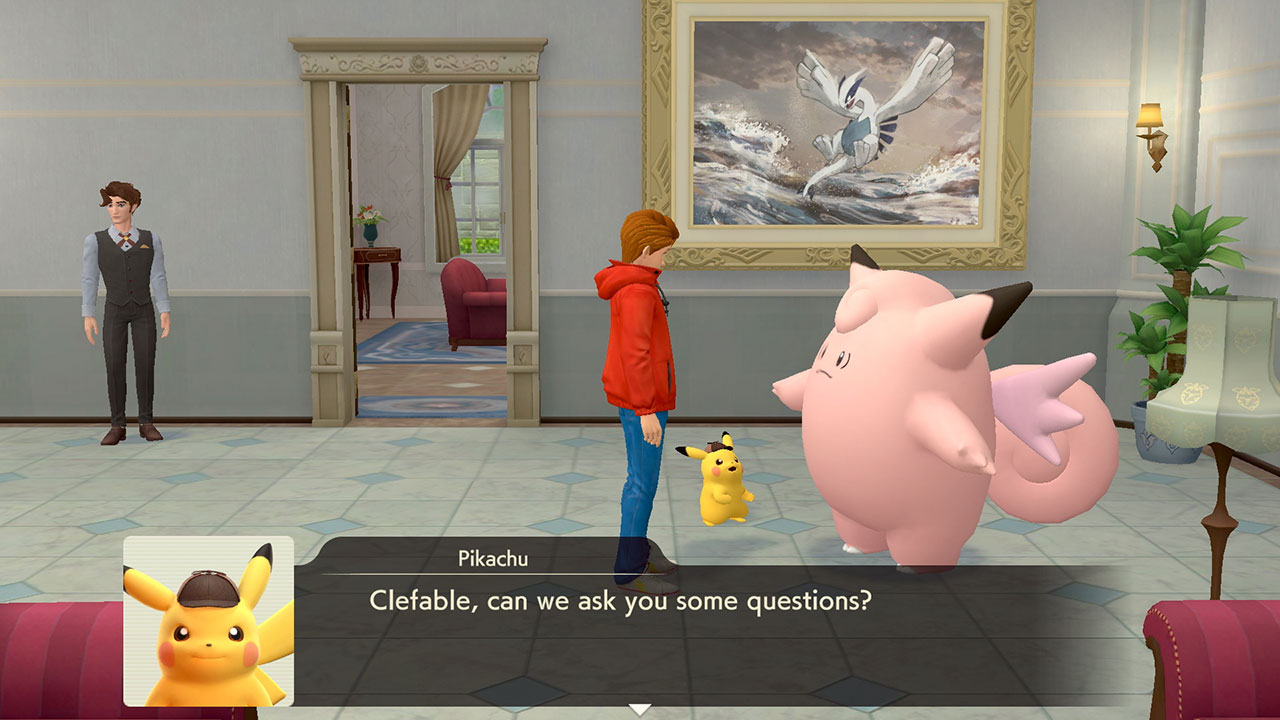
An official English screen asks Clefable, can we ask you some questions? Separate the character’s name from Can we ask you some questions? The latter is a reusable way to ask permission to question someone. The example gives you both a grammatical pattern and an obvious situation in which to use it. Official English gallery
The official guide describes hint and answer assistance, so you need not struggle with both the mystery and the English at once. Investigation dialogue and cinematic scenes have different pacing; do not expect every spoken line to wait for your reading. Begin with one question you want to understand. Official play guide
Set the language without confusing software and hardware
On an original Switch, Switch Lite, OLED model or a Switch 2 that supports system-language changes:
- Save and close your game.
- Open System Settings from HOME, then System → Language → English.
- Restart when prompted and launch the game.
- If it remains in another language, check the exact edition’s supported languages and any in-game language setting.
Nintendo explains that this change requires a restart and that some games have independent settings. You are changing language, not the console’s region. The Japanese-language Japan-only Switch 2 lacks this system-language option. Nintendo support
Check the specific product you will buy. The Animal Crossing price above is for the Switch edition, not the separate Switch 2 Edition. Likewise, Betia Lesson 1 is not the combined cost of all lessons. Outside Japan, check your own store listing for availability, price and supported languages.
A five-minute test using a game you own
Choose one conversation or item description. Can you explain who wants what? Does the game wait while you read? Is there one phrase worth keeping? These are more useful questions than whether you translated every word. Before buying, use official gameplay footage to inspect text size and pacing.
If Animal Crossing produces no reading, begin with a recipe. If a Snowman exchange is overwhelming, shorten the reading target. If a Detective cinematic moves too fast, focus on investigation dialogue. Change the amount, audio or pace that is causing trouble rather than deciding that games simply do not work for you.
From one game phrase to a SpeakGain card
Use Hello there., the greeting in Betia’s official description, for a small worked example. Remember the situation: warmly greeting another person.
- Finish the scene and note the short phrase with its situation.
- Type Hello there. into SpeakGain and create a card. Check its meaning. This is manual entry, not an automatic import from the game.
- Start a listening review. Listen before revealing the answer and try saying what you heard.
- Reveal the text, replay the audio, look away and greet an imagined person aloud. Use the recording feature if you want to check your pronunciation.
- Return at a later review and see whether you can recall the sound and meaning again.
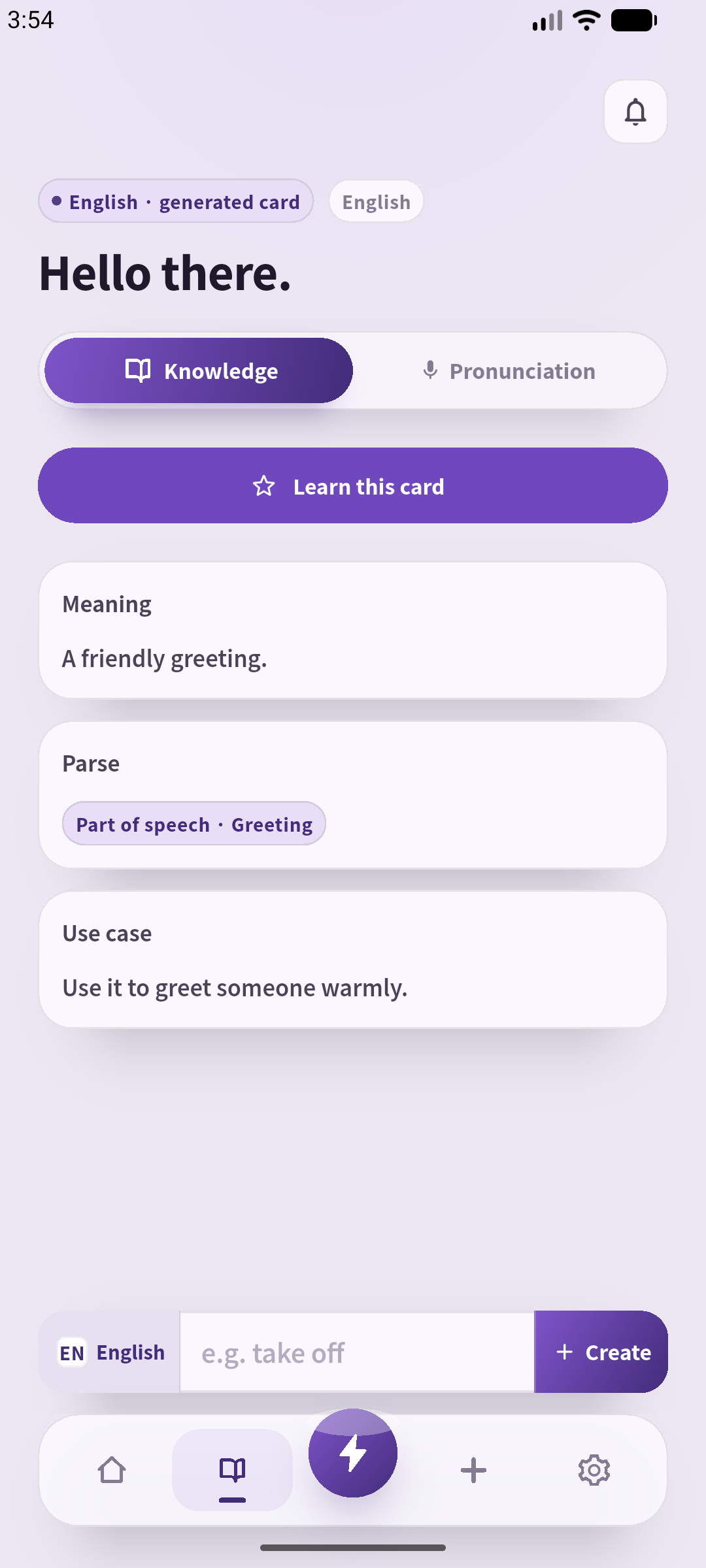
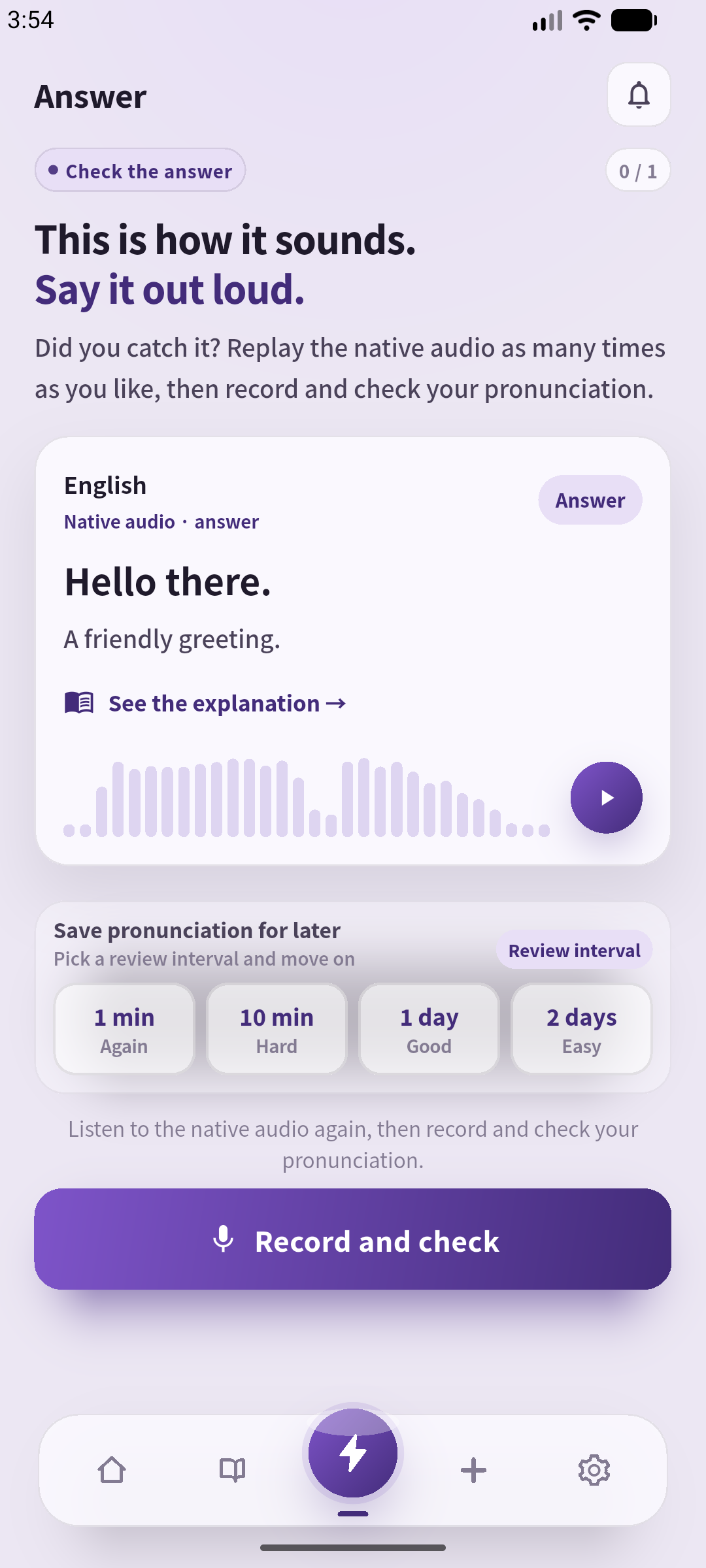
We develop SpeakGain. Its role here is to turn one interesting phrase into something you listen to, say and revisit. It does not transfer the game’s original character voice into the app. See what SpeakGain does for its feature scope.
For a broader routine, use the video-game English study guide. For PC alternatives, see the Steam game comparison and the Steam language-setting and phrase-saving walkthrough.
Questions before buying
Which game is best for a beginner?
Betia suits short speaking practice if you can follow Japanese guidance and speak aloud. For quiet reading, try a small part of Snowman Story. Familiarity with Animal Crossing or Pokémon can also help. Judge by whether you understand one scene, not the age suggested by the artwork.
Does “English supported” include English voices?
Not necessarily. Betia and Detective Pikachu are the spoken-English options here. Snowman’s voice effects, Animal Crossing’s stylised speech and Pokémon cries do not read the English sentences aloud.
Is playing enough to practise speaking?
Reading and listening create opportunities to understand; speaking requires an occasion to speak. After understanding a question in Detective Pikachu, say it yourself once. Review the sentence you tried to use rather than only counting hours played.
Choose the activity first, verify the edition and console settings, then try one scene. A game that leaves you with one usable phrase is a more practical starting point than a long list of titles you never open.