
Learn English With Friends: A 5-Step Guide to One Scene
Published
To learn English with the TV show Friends, choose one short scene whose action you understand. Check one line with English captions, say it aloud, and recall it before your next viewing. This guide works through Ross carrying a couch upstairs: understand the scene, check the caption, choose a line, speak it, then review it.
You do not have to follow an entire episode at conversation speed. In this example, all you need to know is that Ross is trying to move a new couch up a narrow staircase.
Which episode should you start with?
For the story, Season 1 Episode 1, Pilot, introduces the six friends. For a short exercise, choose a scene with a visible goal. Monica welcoming Rachel into a new life gives you one clear speaker and listener. In Season 3 Episode 2, The One Where No One’s Ready, Joey piles on clothes to annoy Chandler; the physical joke makes the lines easier to place.
Season 5 Episode 16, The One with the Cop, has an even clearer task: turn a couch on a staircase. That is our worked example. Season 2 Episode 14, The One with the Prom Video, is better once you know Ross and Rachel’s history; Phoebe’s “lobster” line depends on that relationship. Browse it with the Friends quotes guide
Step 1: Pick a short scene you can explain
Watching an episode for pleasure and practising a line are different jobs. Choose a moment where you can see what the characters are trying to do. Here Ross and the others are moving a large couch around a tight corner.
This clip comes from the official Friends channel. Tap the thumbnail to load YouTube. Watch once for who is doing what and where. If you can say “Ross is telling the others to turn the couch,” you have enough context.
If this clip does not play in your region or on your device, open the official Pivot clip. Save the clip title and your chosen short line for later review.
Step 2: Match the sound to English captions
Turn on English captions in the player after you understand the action. The English captions on this official clip were automatically generated when checked on 25 September 2026; there was no manual English track. Use them to check what you hear rather than treating every word as certain.
Pause near the moment the couch catches at the corner. Ross shouts Pivot! as the group tries to turn it. Watch the movement, listen to the word, then read the caption at the same moment.
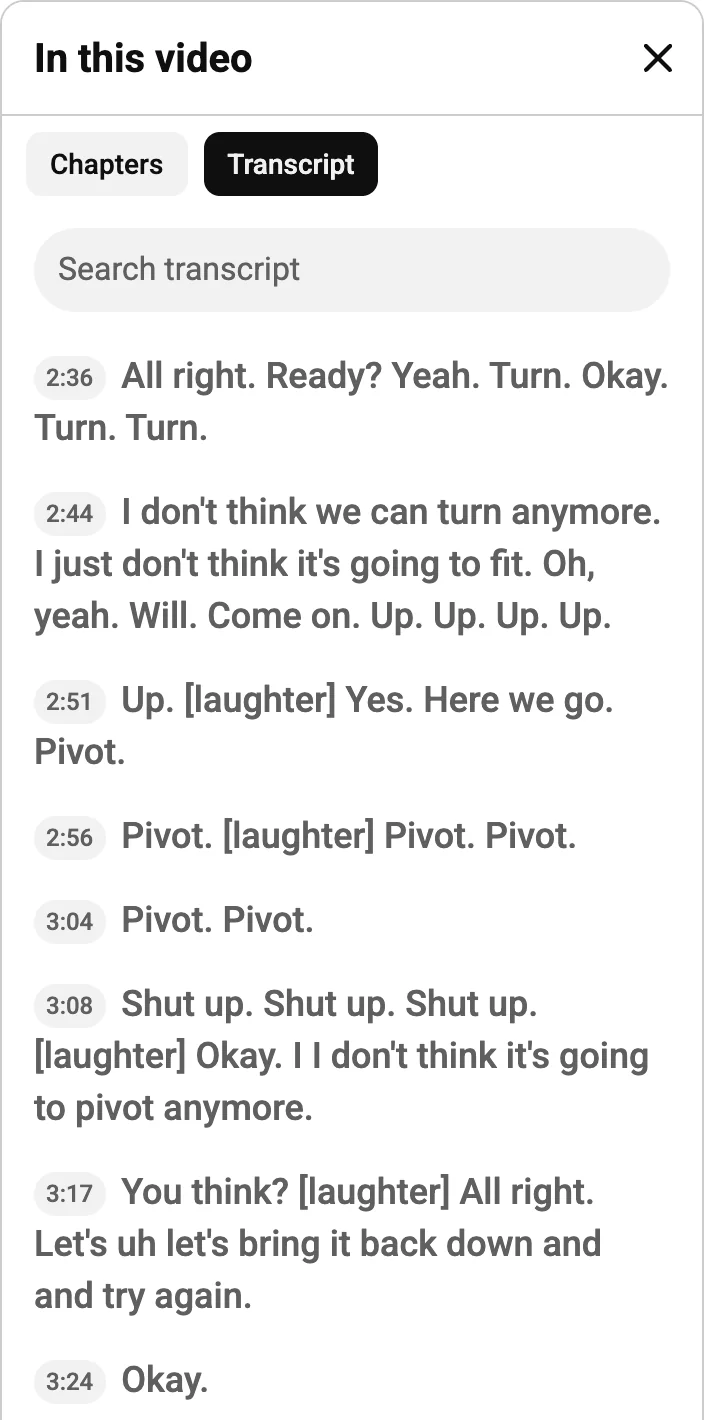
If the word does not appear in captions, go back a few seconds and listen again. If your viewing service offers Japanese or another familiar-language subtitle, use it once for the plot, then return to English. On three short replays, look first at the couch, then at Ross’s cue, then at the caption. Summarize the action in two lines before moving on.
Use a script only to check the captions
For a longer exchange, open “Show transcript” in the YouTube video description and find the lines around the few seconds you are studying. If it is unavailable, check whether your legitimately accessed viewing service offers English subtitles or official script material. The exercise does not depend on unofficial full-episode transcript sites.
Read one line around the couch getting stuck, then return to the video to see who says it. Hide the text, listen to those seconds again, and check the caption once more. A script alone cannot convey the urgency of Pivot! or the others’ movements.
Step 3: Keep one line you can use in a situation
Choose just one line, even if the scene contains many unfamiliar words. You should be able to name its speaker and listener, say it aloud, and imagine a similar moment in your own life.
Ross’s Pivot! means “turn it” while they carry the couch. Note the staircase, couch, and Ross’s instruction together. For ordinary teamwork, Turn it this way. gives the other person a clearer direction.
If another sentence catches your attention, say both options aloud. Keep the one whose scene you can recall without replaying the clip. The difference between memorable quotes and everyday wording appears in the Friends quotes guide
Step 4: Say it in your own voice
Pause the video, picture the couch, and say Pivot! once. Listen to Ross’s emphasis and pause, then say it again as an instruction to a real person. You do not need to copy his full speed.
Now imagine carrying a table with someone. Point in the intended direction and say Turn it this way. If the audio is too quick, slow playback briefly to locate the word, restore the speed, and listen again without captions.
Step 5: Recall the line before you watch again
The next day, hide the English and read only “turn a couch on a narrow staircase.” Say Pivot!, then your practical version, Turn it this way. If neither comes to mind, replay the few seconds, check the caption, and try again.
In SpeakGain, you can enter your chosen sentence on a card, listen to one of 15 character voices, speak, and review it later. The voices are SpeakGain’s own characters, not the Friends cast. Add “Ross turning a couch” to the card so the situation comes back with the words.
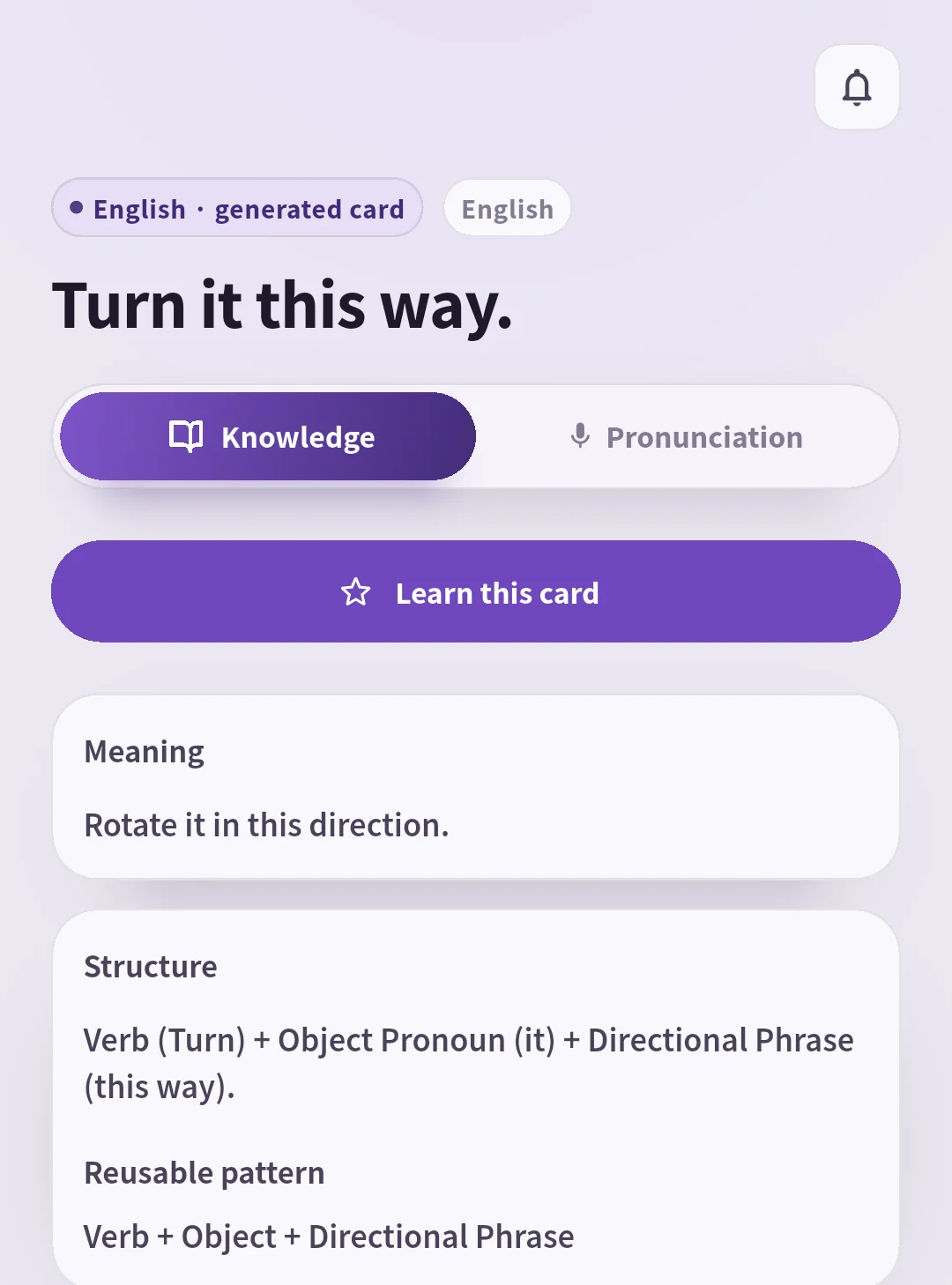
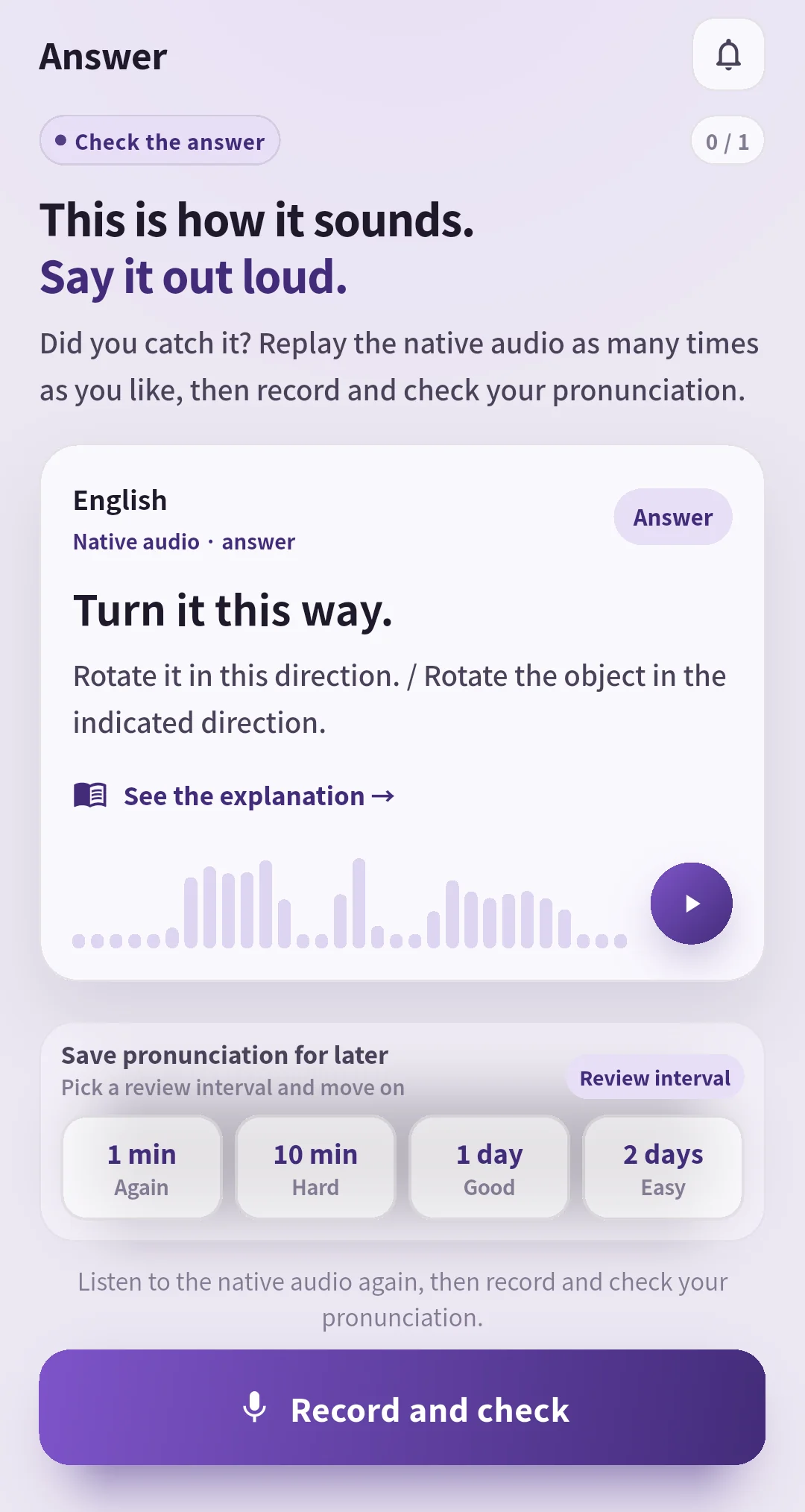
Before looking for another clip, recall this line from the situation. If you cannot, replay the same scene. Move to a new line only after you have tried to retrieve the first one.
Common questions
Friends is too fast. Should I start with English captions?
On the first play, follow the action. On the second, pause near one short line and check its English caption. You can enjoy a full episode separately from this small exercise.
What if the transcript differs from what I hear?
Automatically generated captions can mishear speech. Replay a few seconds and use the action as context. If the line still does not match, choose a clearer one instead.
Must I watch from the start of the episode?
No. A scene with a visible task can stand alone. If a joke needs relationship history, start with a more physical scene such as the couch or Joey’s layers of clothes.
In short
Use one official short clip, describe the scene, check one English line, say it, and recall it next time. Pivot! makes sense with the couch; Turn it this way. is a more useful instruction off screen. For more scene-based lines, see the Friends quotes guide