
How to Learn English on TikTok Without Just Scrolling
Published
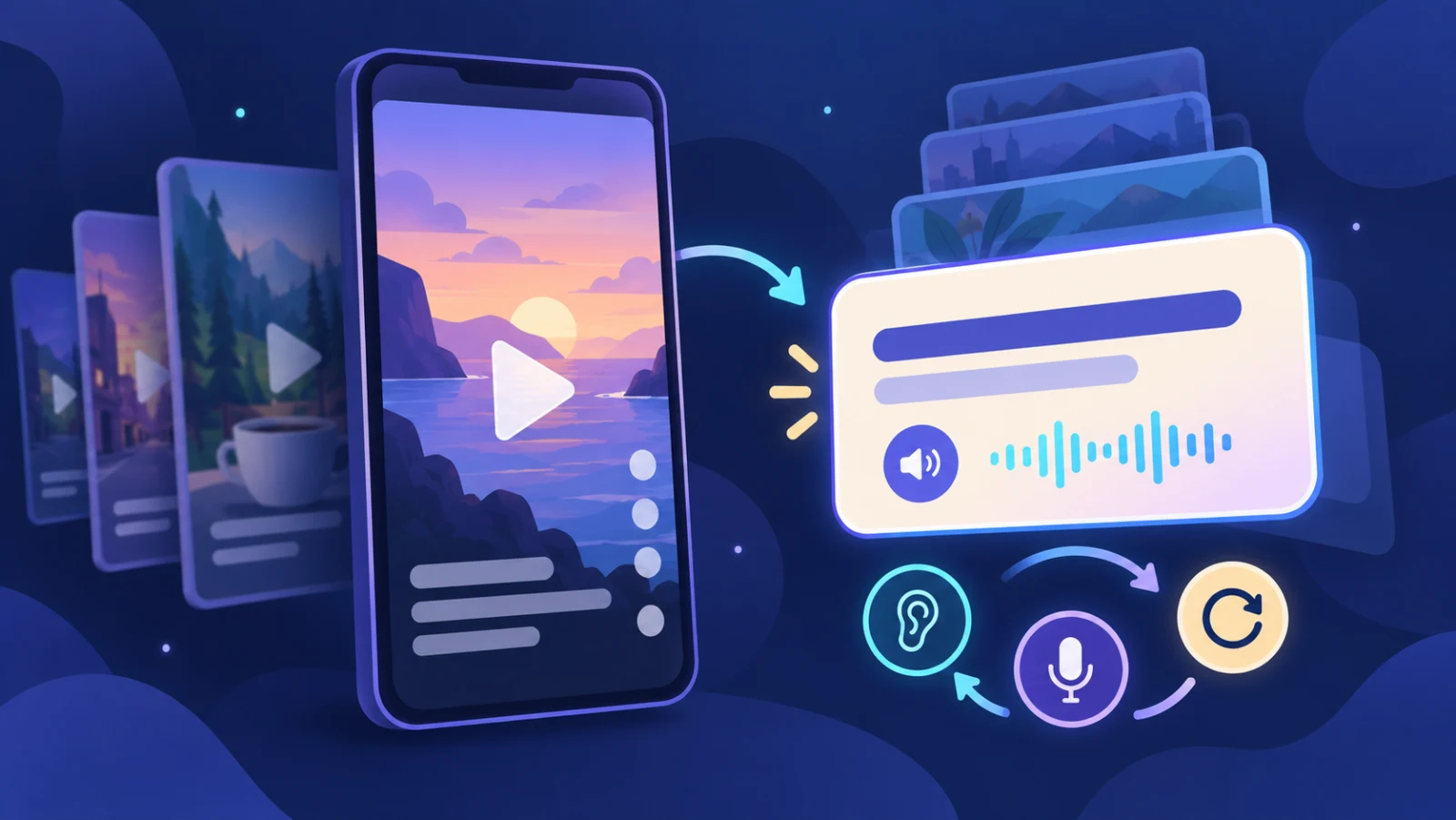
To learn English on TikTok, focus less on how many clips you watch and more on what you can take away from one. Set a stopping rule before opening the app, choose one useful clip, check one phrase against its context and captions, say it aloud, and recall it later without replaying the video.
TikTok can help you discover short, memorable examples. It cannot by itself replace structured grammar study or sustained listening practice. Separating browsing from deliberate practice makes the result of each session clear.
Step 1: decide when you will stop before you open TikTok
Choose one simple finish line:
- stop after 5–10 minutes, or
- stop after finding one phrase you could actually use.
These numbers are a practical starting point, not a scientifically optimal dose. TikTok’s official help explains that you can set a daily screen-time limit and schedule break reminders. Use those controls if a timer outside the app is easy to ignore.
If the timer ends before you find a useful clip, stop anyway. The number of videos watched is not a meaningful measure of learning.
Step 2: choose one clip that matches your goal
Language-teaching clips and ordinary English-language clips serve different purposes.
- Choose a teaching clip when you want a quick explanation of meaning or usage.
- Choose an ordinary English clip about cooking, games, work, or daily life when you want to notice how a phrase sounds in context.
In either case, look for relatively clear audio, English captions or visible English text, and enough context to infer what is happening. If almost nothing is understandable, switching to an easier clip is usually more useful than slowing down an unsuitable one repeatedly.
Do not judge accuracy only by a creator’s follower count or credentials in a profile. Check whether the clip explains who would say the phrase, in what situation, and with what level of politeness.
Step 3: listen once, then check the English captions
On the first viewing, hide captions if possible—or simply avoid reading them—and identify who is speaking and what they are trying to do. On the second viewing, use the English captions to compare one unclear stretch of sound with the written words.
TikTok offers auto-generated captions, but availability varies by video, language, and region. Automatic or translated captions are clues, not guaranteed transcripts. Be especially cautious with names, slang, overlapping speech, and background noise. If a line does not make sense, compare the creator’s examples, a reliable dictionary, and other authentic examples.
Before using an expression from a video, distinguish slang worth understanding from expressions you can use yourself.
A meta-analysis of 18 studies by Montero Perez and colleagues (2013) reported benefits of same-language captions for second-language listening comprehension and vocabulary learning. That does not show that replaying any TikTok guarantees progress. Use captions to connect sound with written language, not as proof that every line is correct.
Step 4: keep one phrase together with its situation
One phrase is enough for a session. Prefer a phrase that is:
- short enough to say as a complete thought;
- useful in a situation you can imagine;
- clear about audience and politeness;
- not dependent on a private joke or proper noun from the clip.
Suppose a fictional clip shows someone responding to a suggestion with That could work. Do not store only a translation. Record the situation too: a response that accepts a possibility without fully committing to the plan.
The British Council warns learners to watch for TikTok lessons that emphasize obscure words, omit essential context, teach unnatural phrases, or promise fluency in an implausibly short time. When a clip makes an absolute claim such as “native speakers never say this,” verify it before learning it.
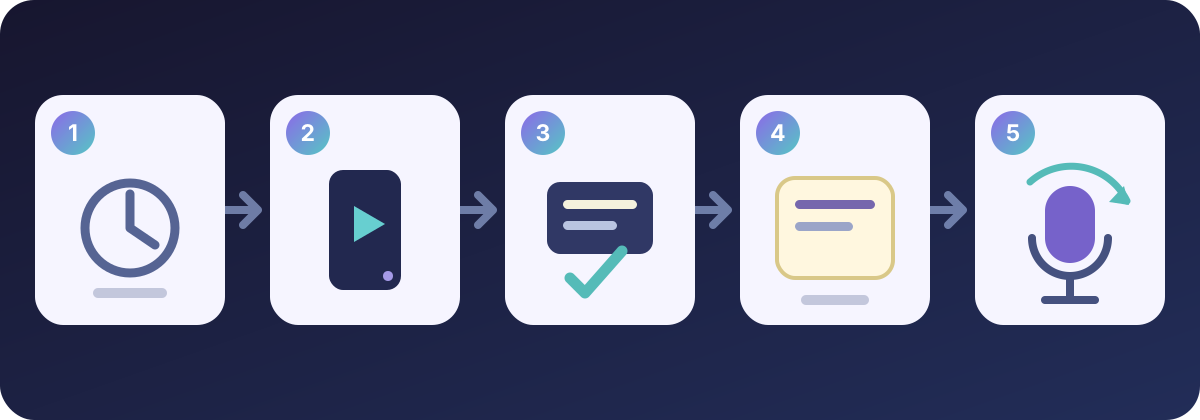
Step 5: say it, then recall it later without the video
After checking the meaning and situation, listen once and say the phrase slowly while reading it. Then imitate it once immediately after the speaker. You do not need to reproduce the speaker’s speed or personality. First confirm that you can produce the sentence while knowing what it means.
Instead of replaying it many times in one sitting, return the next day and try to recall:
- the situation in which the phrase was used;
- the English phrase itself;
- who you could say it to and any politeness limits.
In a foreign-language vocabulary experiment, Karpicke and Roediger (2008) found better later performance when learners continued retrieving items they had already learned. Karpicke and Bauernschmidt (2011) also found that spacing retrieval during learning supported retention one week later. These studies did not test TikTok phrases or speaking skill directly. “The next day” is simply an easy schedule to begin with; extend the interval when recall is successful.
Connect one phrase to speaking and review with SpeakGain
You can complete this process with TikTok, a dictionary, and a note. If you want one place for generated audio, explanation, speaking, and later review, you can also use SpeakGain, which we develop.
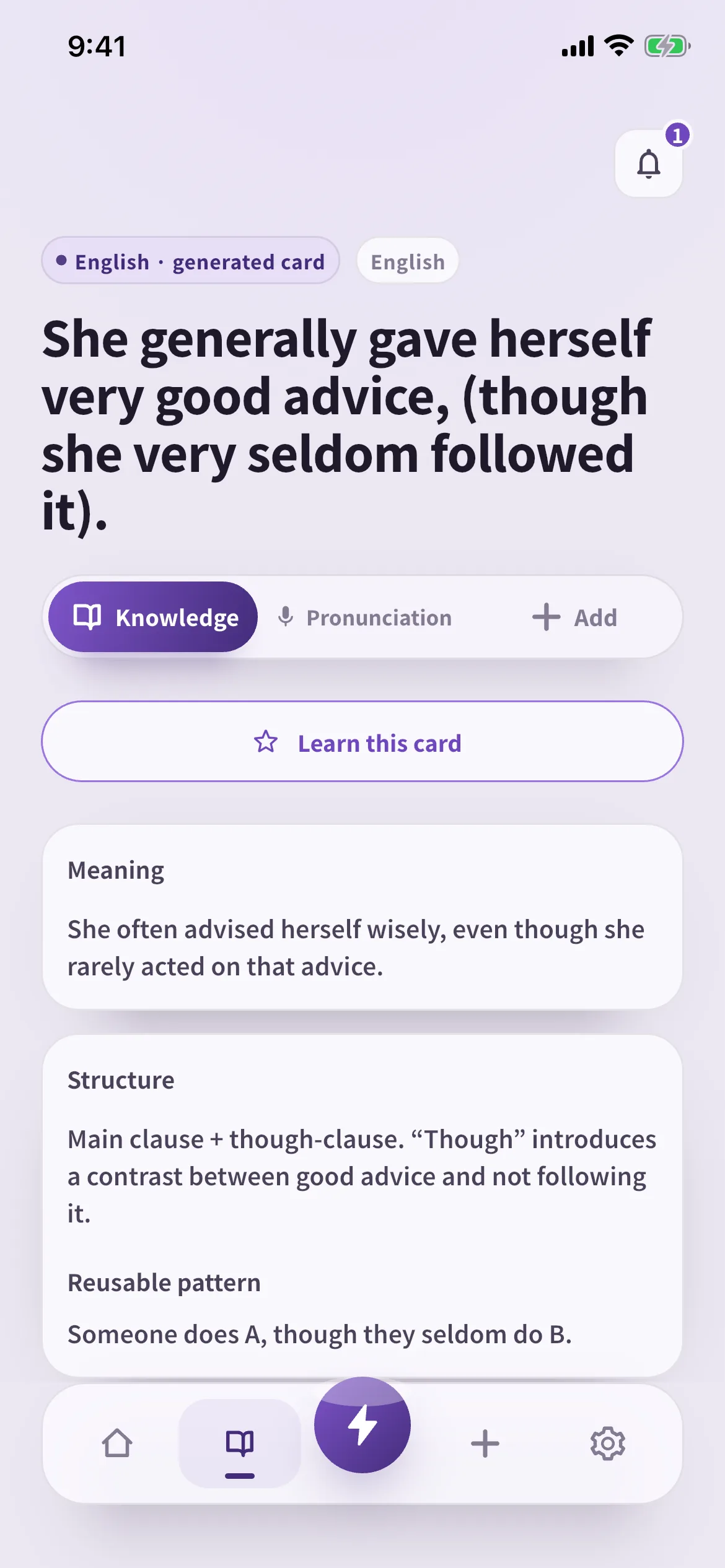
SpeakGain lets you type an English sentence and create a card with generated English audio and AI-produced notes. You can listen and speak the sentence; recording is optional, and an online pronunciation assessment is available when you record. Check the caption first and enter only the short portion needed for personal study.
When TikTok or YouTube is the better tool
TikTok works well for discovering one compact expression and imitating it immediately. YouTube may be easier when you need a longer explanation, the structure of a full talk, or several minutes of sustained listening. Our guide to learning English with YouTube covers video choice, transcripts, and reviewing several expressions.
You do not have to choose one platform permanently. You can discover a phrase on TikTok, then verify its meaning in a dictionary or a longer lesson.
Summary
- Set a 5–10 minute or one-phrase finish line before opening TikTok.
- Use teaching clips and ordinary English clips for different purposes.
- Listen once, then check only one unclear point against English captions.
- Verify dramatic claims and phrases that lack context.
- Say one phrase and recall it later without the clip.
Before your next session, decide: “I will close the app after I find one phrase.” Watching is only the input; the study session ends when you can recall and use the selected sentence later.
References and official information
- TikTok Help Center. Screen time.
- TikTok Newsroom. Discover a world of entertaining content with new accessibility and translation tools.
- British Council. Learning English on TikTok: Helpful Tips and Red Flags to Watch Out For.
- Montero Perez, M., Van Den Noortgate, W., & Desmet, P. (2013). Captioned video for L2 listening and vocabulary learning: A meta-analysis. System, 41(3), 720–739.
- Karpicke, J. D., & Roediger, H. L. III. (2008). The critical importance of retrieval for learning. Science, 319(5865), 966–968.
- Karpicke, J. D., & Bauernschmidt, A. (2011). Spaced retrieval: Absolute spacing enhances learning regardless of relative spacing. Journal of Experimental Psychology: Learning, Memory, and Cognition, 37(5), 1250–1257.